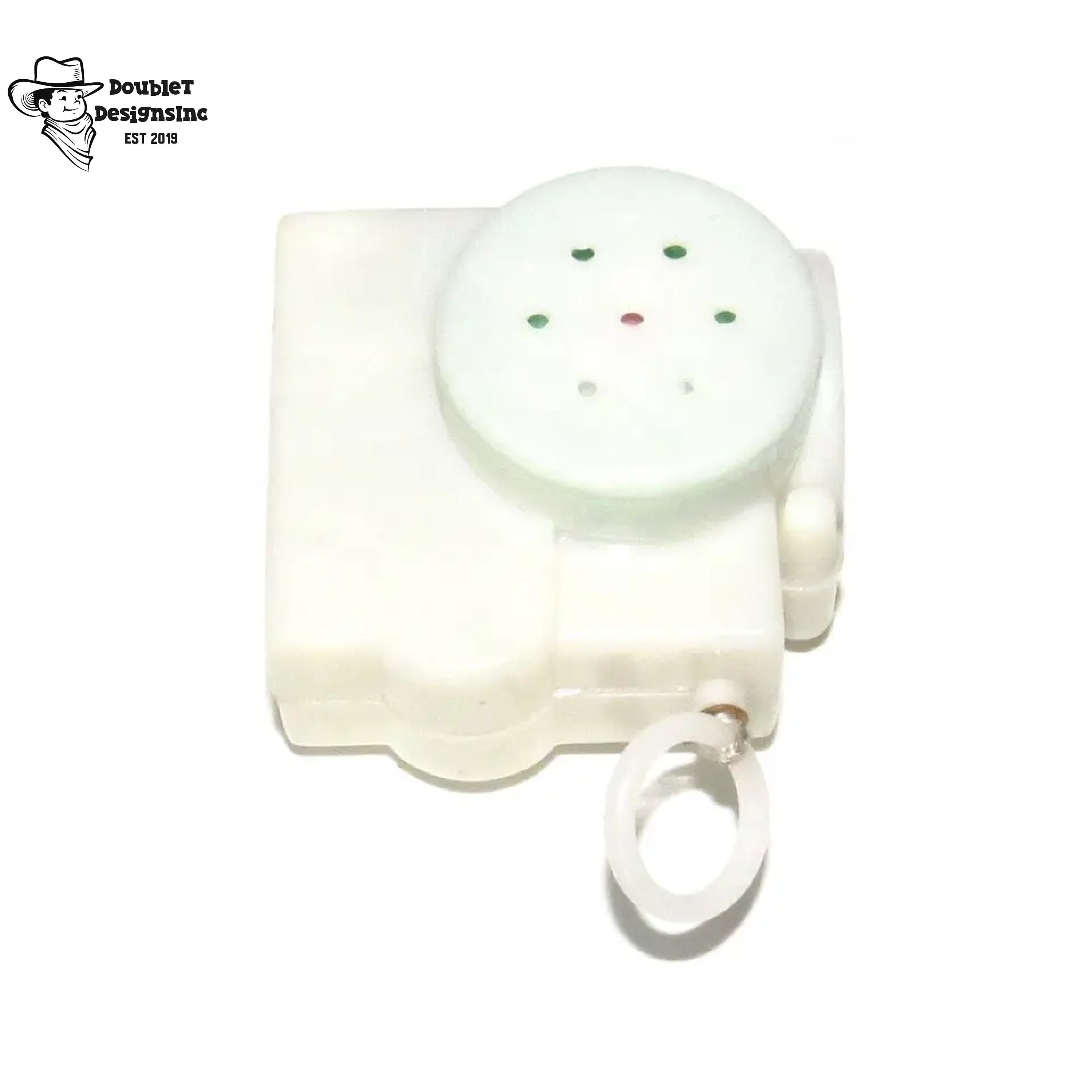
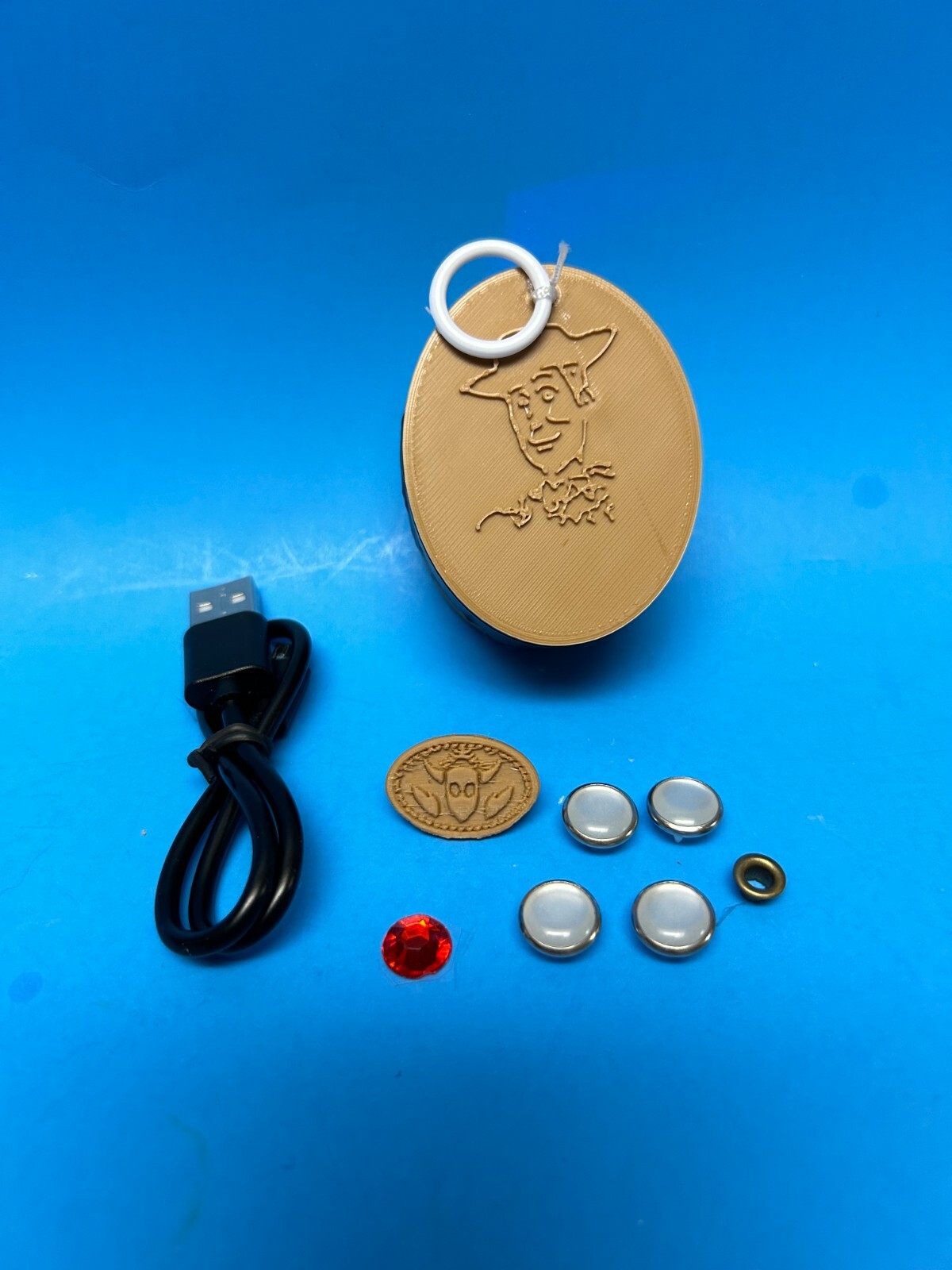
To achieve an accurate Woody voice box effect, you must combine high-quality digital sound files (recorded at 44.1kHz) with a hardware trigger—typically a micro-controller like an Adafruit Audio FX board or a DFPlayer Mini—and a speaker housing that replicates the specific "lo-fi" resonance of a 1950s-style pull-string toy. This guide explores the hardware, software, and acoustic engineering required to generate movie-authentic Woody sound effects as of 2026.
Understanding the Anatomy of an Accurate Woody Voice Box
The "Woody" character from the Toy Story franchise is modeled after mid-century pull-string dolls. In the films, Woody’s voice box is a mechanical marvel: a small, internal phonograph record played by a needle attached to a spring-loaded string. For a sound FX generator to be considered "accurate" in 2026, it must mimic the specific sonic characteristics of that mechanical era while utilizing modern digital reliability.
The core of the "movie sound" is not just the clarity of the voice, but the specific imperfections of the playback. The original cinematic Woody (voiced by Tom Hanks) features a slightly compressed, mid-range heavy frequency response. When recreating this for a prop or a digital project, creators must distinguish between the "clean" studio recordings and the "in-universe" toy sounds. The latter includes the mechanical "whir" of the string retracting and the slight pitch fluctuations inherent in a physical record player.
Furthermore, there is a distinct difference between Tom Hanks' movie dialogue and the "toy" dialogue. For decades, Tom’s brother, Jim Hanks, has provided the voice for the commercial merchandise. An "accurate" generator for a movie-style prop should ideally feature the Tom Hanks recordings extracted from the films' isolated vocal tracks, whereas a replica of the commercial toy would use Jim Hanks' lines.
Hardware Components for Realistic Sound Generation
To build a physical generator, the choice of hardware determines the latency and audio fidelity. In 2026, the hobbyist market favors specialized audio boards over general-purpose micro-controllers for this specific task because they offer "instant-on" capabilities and zero-latency triggers.
Micro-controllers and Audio Boards
The Adafruit Audio FX Sound Board remains a primary choice for high-end prop builders. Unlike an Arduino, which requires complex coding to handle audio files, this board acts like a USB mass storage device. You simply drag and drop WAV or OGG files onto the board. When a pin is grounded (via a pull-string trigger), the sound plays instantly.
For those on a tighter budget, the DFPlayer Mini is a common alternative. It supports MP3 and WAV files and includes a built-in 3-watt amplifier. However, it requires a separate micro-controller to send serial commands, which can introduce a marginal delay—something to avoid if you are aiming for the "snappy" response of a real pull-string toy.
The Speaker and Resonance Chamber
The most overlooked aspect of an accurate sound FX generator is the speaker. To replicate the "Toy Story" sound, you should avoid high-fidelity, full-range speakers. Instead, a small 28mm to 40mm thin-plastic cone speaker is preferred. These speakers naturally roll off the bass and accentuate the high-mids, providing that classic "tinny" toy quality. The speaker must be mounted in a "chest cavity" (a small plastic enclosure) to provide enough resonance to be audible without sounding like a modern smartphone speaker.
Mechanical Triggers: The Pull-String Simulation
A "real" movie sound FX generator for Woody is incomplete without the pull-string interaction. Modern builders use one of two methods to trigger the sound:
- The Limit Switch Method: A physical string is attached to a spring-loaded mechanism. When the string is pulled to its full length, it hits a small limit switch or tactile button, grounding a pin on the sound board. This is the simplest method but only allows for one sound per pull.
- The Rotary Encoder Method: For those seeking ultimate accuracy, a rotary encoder can be attached to the string spool. This allows the generator to track how far the string has been pulled. Advanced setups can use this data to play "winding" sounds as the string is pulled and "clicking" sounds as it retracts, just like the cinematic version of Woody.
By 2026, many creators have moved toward hall-effect sensors. These use magnets to detect the string's position, eliminating the friction and mechanical wear associated with traditional switches, ensuring the toy's "voice" lasts for years of operation.
Digital Sound Processing for Movie Accuracy
If your goal is to generate these sounds for a digital medium (such as a fan film or video game), the hardware is less important than the Digital Signal Processing (DSP) applied to the audio. To make a clean recording sound like an authentic Woody voice box, you must apply three specific effects:
- Band-pass Filtering: Set a high-pass filter at around 400Hz and a low-pass filter at 4kHz. This removes the deep lows and crisp highs, focusing the energy into the "telephonic" range typical of toy speakers.
- Bitcrushing: Reducing the bit depth to 8-bit or 12-bit can simulate the digital compression found in early 1990s sound chips.
- Mechanical Layering: An accurate generator should "layer" the voice clip with the sound of a mechanical centrifugal brake. This is the subtle "zzzz" sound heard in the background of Woody's voice in the Toy Story films.
Comparison of Sound FX Generation Methods
| Feature | Adafruit Audio FX Board | DFPlayer Mini (with Arduino) | Custom App / Smartphone |
|---|---|---|---|
| Audio Format | WAV, OGG (uncompressed) | MP3, WAV | Any (Digital) |
| Latency | Near-Zero | 50ms - 100ms | Variable (High) |
| Setup Complexity | Low (No coding required) | Medium (Requires C++) | High (App development) |
| Power Requirements | 3.3V - 5.5V | 3.2V - 5.0V | Battery-heavy |
| Best Use Case | High-end movie-accurate props | Budget-conscious DIY toys | Digital media/SFX design |
| Authenticity | High (Discrete hardware) | Moderate | Low (Requires external speaker) |
Sourcing Authentic Audio Files
The final hurdle in creating an accurate generator is the audio source material. Using a microphone to record a toy will result in poor quality due to "double-filtering" (the toy's speaker followed by your microphone's characteristics).
The most accurate method in 2026 involves extracting the Center Channel from a 5.1 or 7.1 surround sound mix of the Toy Story films. In many scenes, Woody’s pull-string lines are isolated in the center channel with minimal background music or ambient noise. Once extracted, these "dry" lines can be loaded into your hardware generator. For those seeking the "Signature Collection" toy lines, several online archives maintain high-bitrate rips of the original Jim Hanks recordings, which are often clearer and longer than the movie snippets.
Troubleshooting Common Sound Issues
When building or using a Woody sound generator, you may encounter a few standard technical hurdles:
- Static or Popping: This is usually caused by an inadequate power supply. Digital sound boards draw a burst of current when the speaker activates. Adding a 100µF capacitor across the power and ground rails can smooth out these spikes and eliminate the pop.
- Muffled Audio: If the voice sounds too deep or "muddy," the speaker is likely air-locked. Small speakers need "breathing room." Ensure there are small vent holes in the doll’s back or chest to allow the sound waves to escape the internal cavity.
- Looping Problems: If the sound plays repeatedly, check your trigger switch. Pull-string mechanisms are prone to "contact bounce," where the switch vibrates and triggers the sound multiple times. This can be fixed in software (de-bouncing) or by using a pull-up resistor.
Can I use a real pull-string mechanism from an old toy?
Yes, but it is difficult. Original mechanical voice boxes use a needle and a plastic record. If the record is scratched or the needle is dull, the sound will be distorted. Most restorers in 2026 prefer to gut the mechanical internals and replace them with a digital sound board triggered by the original string assembly to maintain the tactile feel while upgrading the audio quality.
What is the most iconic Woody line for a generator?
"There's a snake in my boot!" is the most requested, followed closely by "Someone's poisoned the water hole!" For movie accuracy, ensure you use the Tom Hanks versions, which have a slightly higher energy and faster delivery than the commercial toy versions.
How do I get the "Tom Hanks" voice instead of the "Jim Hanks" voice?
You must source audio specifically from the film soundtracks. Commercial toys almost exclusively use Jim Hanks. To find Tom's recordings, look for "isolated vocal tracks" or "dialogue stems" from the Toy Story Blu-ray releases.
Is it legal to use these sounds in my own projects?
For personal use, such as a cosplay or a gift, it generally falls under fair use. However, if you are selling a "Woody Voice Box Generator" commercially, you would be infringing on Disney/Pixar’s intellectual property and the voice actor's publicity rights.
What battery is best for a portable voice box?
A small 3.7V LiPo (Lithium Polymer) battery is ideal for 2026 builds. They are thin enough to fit inside a doll’s torso and can be recharged via a micro-USB or USB-C module hidden in the doll’s clothing.
Recommendations for Prop Builders and Enthusiasts
For the highest level of movie accuracy, we recommend utilizing the Adafruit Audio FX Sound Board paired with a 40mm plastic-cone speaker. Avoid using MP3 files; stick to 16-bit WAV files to ensure there is no digital artifacting or delay when the string is pulled.
If you are a digital creator, focus on the acoustic environment. Use a convolution reverb plugin with an "interior small plastic box" impulse response to make your digital sound files feel like they are emanating from a physical toy. Whether building a physical replica or a digital tribute, the key to accuracy lies in the marriage of Tom Hanks' original delivery and the charmingly imperfect acoustics of mid-century toy technology.