Accountability and ethics are the dual pillars of modern governance, ensuring that individuals and organizations act with integrity and remain answerable for their decisions. While ethics provides the moral framework of "doing the right thing," accountability provides the structural mechanism to verify those actions and enforce consequences. In 2026, these concepts have merged into a unified standard of transparency driven by global regulation and public demand for corporate responsibility.
Defining the Core Relationship Between Accountability and Ethics
To understand the modern landscape of professional conduct, one must first distinguish between the internal drive of ethics and the external framework of accountability. Ethics refers to the system of moral principles that guide behavior. It is the "internal compass" that helps a leader or employee decide what is fair, just, and beneficial to stakeholders. In contrast, accountability is the obligation to report, explain, and be answerable for the resulting consequences.
The relationship is symbiotic: ethics without accountability leads to "performative morality," where values are stated but never enforced. Conversely, accountability without ethics results in "malicious compliance," where rules are followed to the letter but the spirit of fairness is ignored. In 2026, the convergence of these two concepts is most visible in the rise of Integrated Reporting, where financial outcomes are inseparable from ethical impact assessments.
Accountability serves as the "evidence gate" for ethical claims. For example, a corporation may claim to value environmental sustainability (an ethical stance). Accountability mechanisms, such as independent audits or public ESG (Environmental, Social, and Governance) disclosures, provide the data to prove whether that ethical stance is being realized. Without the threat of accountability, ethical codes of conduct remain aspirational rather than operational.
The Evolution of Accountability in the Digital Age
As we navigate 2026, the definition of accountability has expanded beyond human-to-human interaction to include algorithmic and systemic oversight. The rapid integration of artificial intelligence into decision-making processes has created a "responsibility gap" that modern ethical frameworks are rushing to fill.
Ethical accountability now requires organizations to explain how their AI models reach conclusions. This is often referred to as "Explainable AI" (XAI). If an automated system denies a loan or filters a job application, the institution is ethically and legally accountable for ensuring the algorithm did not use biased data. The EU AI Act, which has reached full implementation maturity by 2026, exemplifies this shift by categorizing AI systems by risk and mandating strict human oversight for high-risk applications.
Furthermore, the "decentralized" nature of the modern workforce—composed of remote employees, gig workers, and autonomous agents—demands a new form of digital accountability. Traditional oversight methods have been replaced by outcome-based performance metrics. This shift requires a higher degree of trust, placing the burden of ethics directly on the individual contributor. In this environment, personal accountability is no longer just about following instructions; it is about owning the ethical implications of one’s output in a vacuum of direct supervision.
Ethical Frameworks for Modern Governance
Organizations typically rely on three primary ethical frameworks to guide their accountability structures. Understanding these helps leaders design better compliance programs.
- Deontology (Duty-Based Ethics): This framework focuses on rules and duties. Accountability is measured by how well an individual follows the established code of conduct. If a rule exists, it must be followed regardless of the outcome. This is common in highly regulated sectors like aerospace and healthcare.
- Utilitarianism (Results-Based Ethics): This approach prioritizes the "greatest good for the greatest number." Accountability is measured by the impact of a decision. While this allows for flexibility, it can lead to ethical lapses if the minority is marginalized for the benefit of the majority.
- Virtue Ethics (Character-Based Ethics): Rather than focusing on rules or outcomes, virtue ethics focuses on the character of the decision-maker. In 2026, many leadership development programs have returned to this Aristotelian root, emphasizing "integrity" as a core competency.
By integrating these frameworks, organizations can create a "layered" approach to accountability. For instance, a pharmaceutical company might use deontology to ensure safety protocols are met, utilitarianism to allocate research budgets effectively, and virtue ethics to hire leaders who prioritize patient well-being over quarterly profits.
Implementing Systems of Responsibility: The RACI Model
One of the most practical ways to bridge the gap between abstract ethics and concrete accountability is through the implementation of the RACI matrix. This tool ensures that for every task or decision, there is a clear trail of responsibility.
- Responsible: The person who performs the work. They are ethically bound to complete the task to the best of their ability.
- Accountable: The person who ultimately answers for the success or failure of the task. Crucially, there can only be one "Accountable" person for any given task to prevent the "diffusion of responsibility."
- Consulted: Those whose opinions are sought; often subject-matter experts who provide ethical guidance.
- Informed: Those who are kept up-to-date on progress.
In 2026, high-performing organizations have integrated RACI models directly into their project management software. This creates a real-time audit trail, making it impossible for individuals to claim "I didn't know I was responsible" when an ethical lapse occurs. This level of granular clarity is essential for maintaining trust in large, complex organizations.
Comparison of Accountability, Responsibility, and Ethics
It is common for these terms to be used interchangeably, but in a professional and legal context, they have distinct functions. The following table highlights the differences that govern modern organizational behavior.
| Feature | Ethics | Responsibility | Accountability |
|---|---|---|---|
| Source | Internal values and moral philosophy. | Job description and assigned tasks. | Organizational structure and legal mandates. |
| Direction | Proactive (What should I do?). | Task-oriented (What must I do?). | Reactive/Evaluative (What did I do?). |
| Focus | Principles and character. | Completion and effort. | Outcomes and consequences. |
| Measurement | Qualitative (Alignment with values). | Quantitative (Completion of tasks). | Verifiable (Audit trails and reports). |
| Timing | Before and during an action. | During the performance of a role. | After the action or decision is made. |
The Consequences of Failure: Risk and Remediation
When accountability systems fail to catch ethical lapses, the damage in 2026 is swifter and more severe than in previous decades. The speed of information flow means that a "private" ethical failure can become a global brand crisis within hours.
The primary risks of failing to maintain accountability include:
- Legal and Regulatory Sanctions: With the strengthening of the United Nations Global Compact guidelines, cross-border legal accountability has increased. Companies can now be held liable in their home countries for ethical violations committed by subsidiaries abroad.
- Erosion of "Social License": Society grants organizations the right to operate based on trust. When accountability fails (e.g., a data breach covered up by executives), the public withdraws this license, leading to boycotts and difficulty in hiring top talent.
- Internal Culture Collapse: If employees see that leaders are not held accountable for ethical violations, they lose the incentive to act ethically themselves. This leads to "quiet quitting" or, worse, active sabotage.
Remediation requires more than just an apology. In the current landscape, "accountability-led remediation" involves three steps: Acknowledgment of the specific failure, Restitution to the affected parties, and Reform of the systems that allowed the failure to occur.
Cultivating an Ethical Culture through Leadership
Accountability cannot be purely automated; it must be modeled by leadership. The concept of "Tone at the Top" remains the most significant predictor of an organization’s ethical health. In 2026, leaders are expected to practice "Radical Transparency," which involves sharing not just the successes, but also the failures and the lessons learned from them.
Leaders promote accountability by:
- Setting Clear Expectations: Ethics must be defined in concrete terms, not vague platitudes. Instead of saying "be honest," a leader should say, "all data discrepancies must be reported within 24 hours."
- Psychological Safety: Creating an environment where employees feel safe to "blow the whistle" on unethical behavior without fear of retaliation. According to ISO 37000, the international standard for the governance of organizations, a robust whistleblowing mechanism is a prerequisite for ethical governance.
- Consistent Enforcement: Accountability loses its meaning if it is applied selectively. High-performers must be held to the same ethical standards as everyone else. If a top-performing salesperson violates the code of ethics, their termination sends a more powerful message than any training manual ever could.
Frequently Asked Questions
What is the difference between individual and organizational accountability?
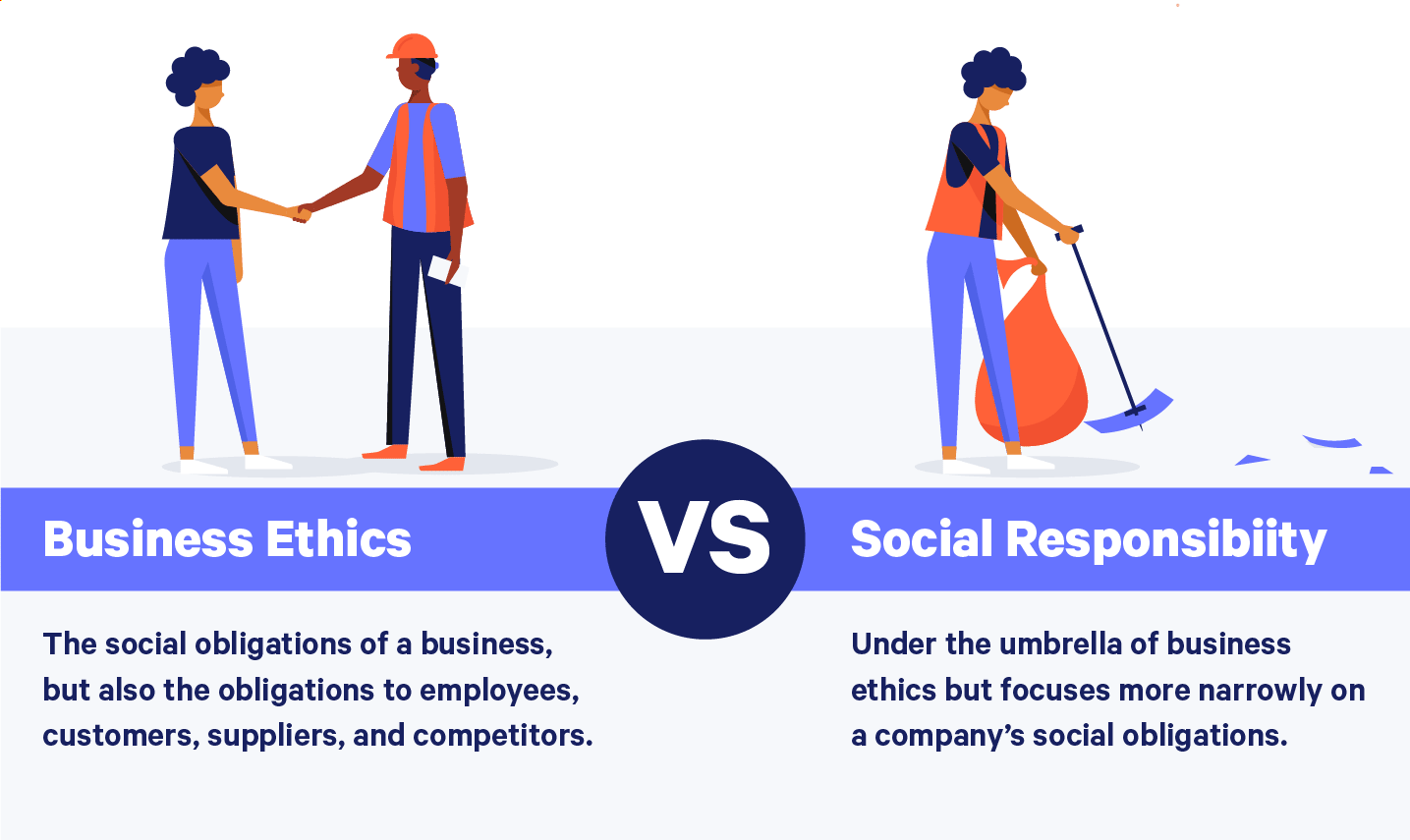
Individual accountability refers to a person owning their specific choices and actions. Organizational accountability refers to the collective responsibility of a company to its stakeholders, including shareholders, employees, customers, and the environment. While individuals might be fired for ethical lapses, organizations face fines, lawsuits, or the loss of their operating licenses.
Can ethics be taught, or is it an inherent trait?
While basic moral leanings are formed early in life, professional ethics can certainly be taught and reinforced. Most modern ethical failures are not the result of "evil" people, but of "good" people operating in systems that reward unethical behavior. Training focuses on recognizing "ethical blind spots" and understanding the specific compliance requirements of an industry.
How does "Accountability by Design" work in technology?
Accountability by Design is a framework where transparency and reporting mechanisms are built directly into software and hardware at the development stage. For example, a financial trading app might include an unalterable "blockchain ledger" that records every transaction and the identity of the person who authorized it, ensuring a permanent and verifiable audit trail.
Why is accountability often seen as negative?
Historically, accountability has been associated with "blame" and punishment. However, in a healthy 2026 workplace, accountability is viewed as a supportive mechanism. It provides employees with clear goals, reduces ambiguity, and ensures that those who work hard and act ethically are recognized and protected from the actions of bad actors.
How do ethics impact a company's bottom line?
Ethical behavior and strong accountability are directly linked to financial performance. Organizations with high ethical ratings generally enjoy lower costs of capital, higher employee retention rates, and stronger customer loyalty. Conversely, the "cost of non-compliance" (fines, legal fees, and lost revenue) frequently outweighs any short-term gain from cutting ethical corners.
Establishing a Personal Accountability Protocol
To thrive in the 2026 professional environment, individuals should move beyond simply "following the rules" and adopt a proactive personal accountability protocol. Start by conducting an "ethical audit" of your daily tasks: identify where you have the most autonomy and where your decisions impact others.
Next, seek out a "transparency partner"—a colleague or mentor with whom you can discuss difficult ethical dilemmas. By vocalizing these challenges, you move from internal moralizing to external accountability. Finally, document your decision-making process for major projects. By keeping a record of why you chose a specific path, you create a preemptive defense of your integrity, ensuring that if questions arise, you have the evidence required to remain fully answerable for your actions.