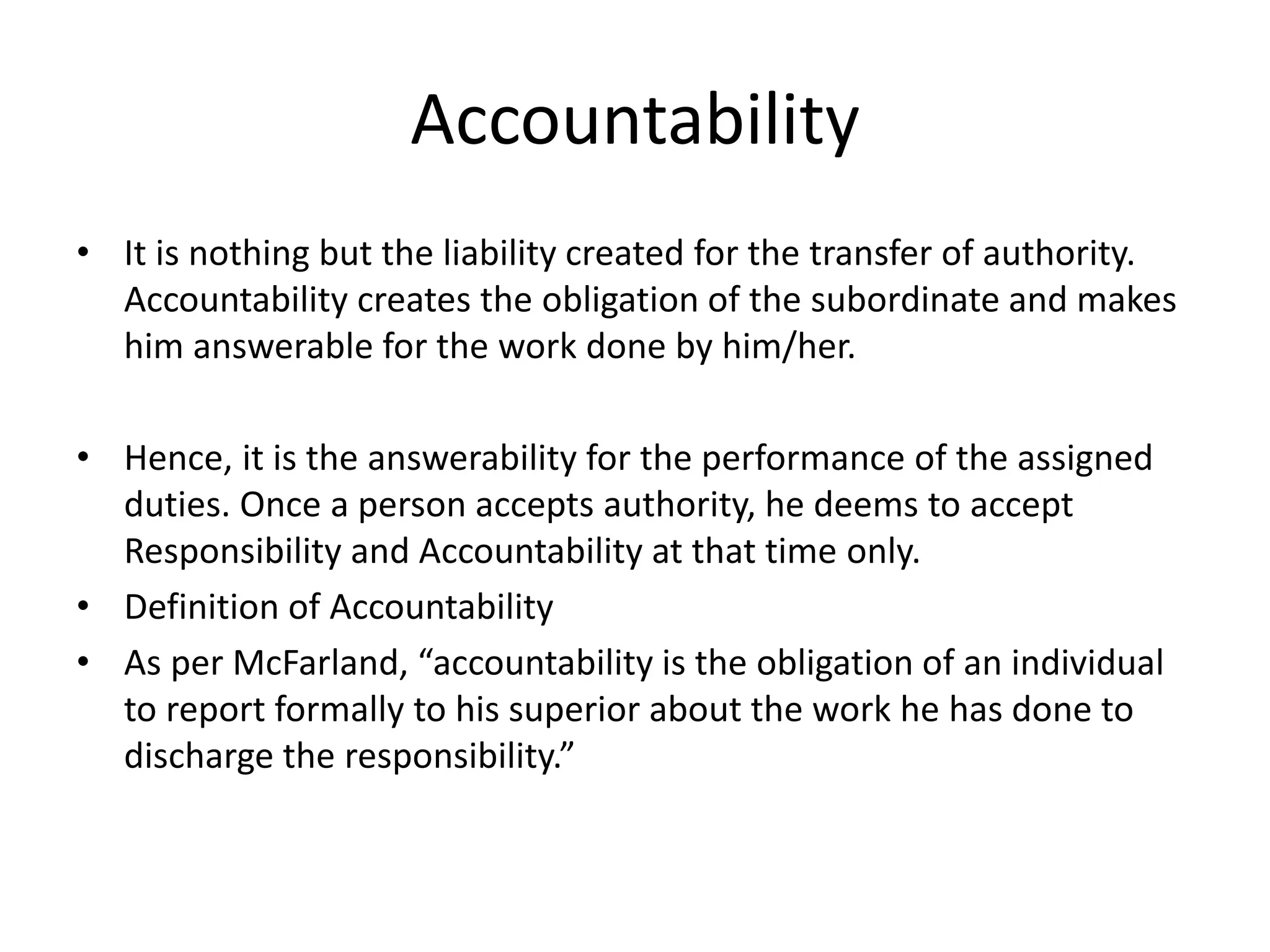
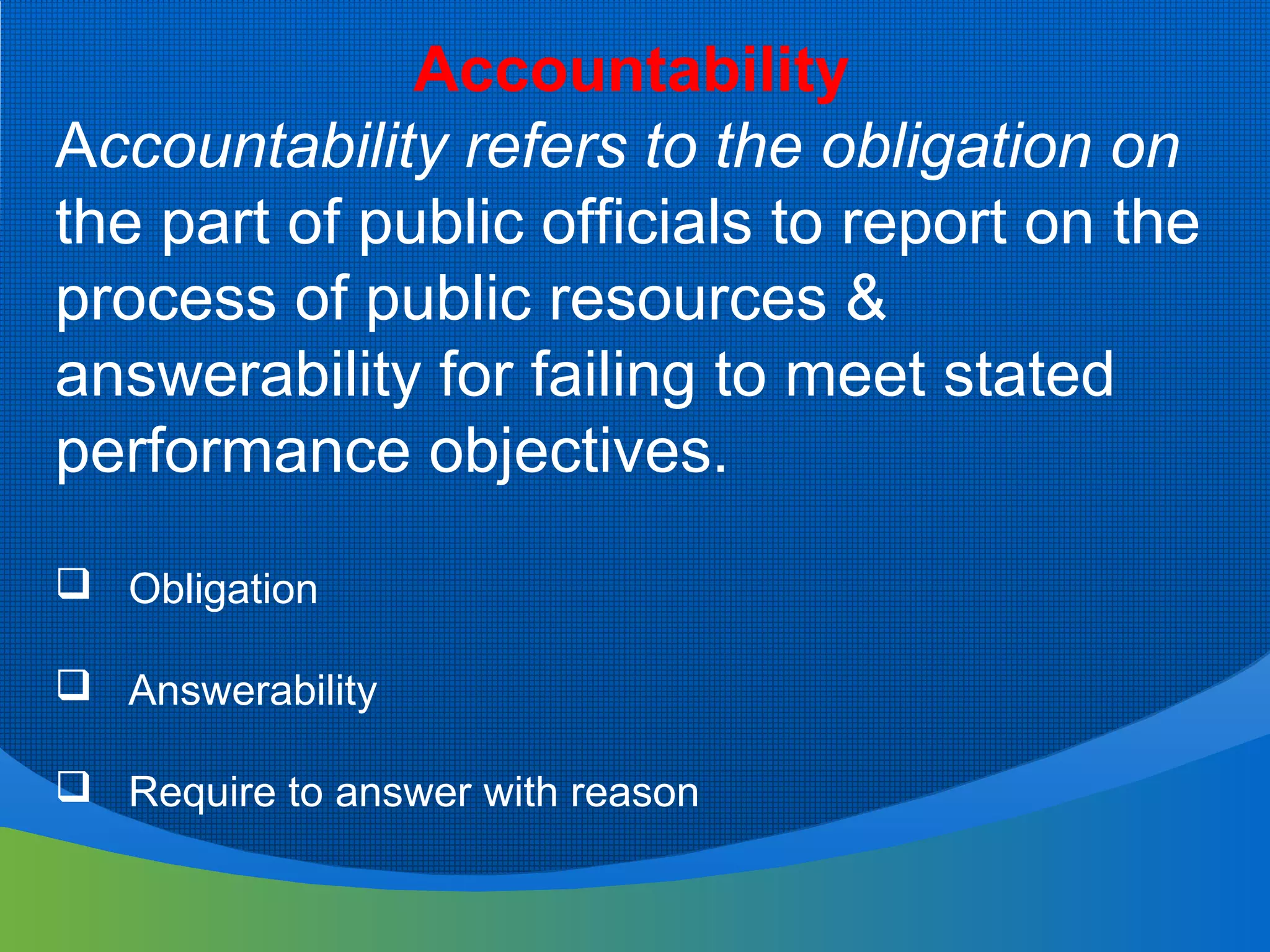
Accountability conditions are the specific prerequisites—such as transparency, authority, and answerability—that must be established to hold individuals or entities responsible for their actions. These conditions ensure that roles are clearly defined, performance is measurable, and consequences are enforceable within corporate, legal, or technological frameworks, providing a structured path for oversight and remedial action.
The Foundations of Accountability Conditions
To understand how accountability functions in a professional or legal setting, one must first recognize that it is not a singular event but a state of being derived from specific "conditions." These conditions act as the structural pillars that support the weight of responsibility. Without these prerequisites, any attempt to assign blame or credit becomes arbitrary and difficult to defend in a court of law or a board meeting.
In 2026, the landscape of accountability has shifted significantly due to the integration of decentralized autonomous organizations (DAOs) and advanced AI governance. However, the three primary conditions remain constant: Transparency, Authority, and Answerability.
Transparency is the condition that requires all relevant actions and decisions to be visible to the delegating party or the public. Without visibility, it is impossible to verify if an actor has met their obligations. This involves not just the disclosure of results, but the disclosure of the processes that led to those results.
Authority (or Capacity) refers to the power granted to an individual to make decisions. One cannot be held accountable for an outcome if they lacked the authority to influence the variables leading to that outcome. This is a common point of failure in organizational design, where managers are given responsibility without the requisite decision-making power.
Answerability is the requirement for the actor to provide a reasoned explanation for their actions. It is the "discursive" element of accountability. In 2026, this increasingly involves "explainable AI" (XAI) conditions, where automated systems must provide human-readable logic for their outputs to meet regulatory standards.
The Principal-Agent Relationship and Ex-Ante Conditions
The framework of accountability is often viewed through the lens of the Principal-Agent theory. In this model, a "Principal" (such as a shareholder or a citizen) delegates a task to an "Agent" (such as a CEO or a politician). For this relationship to function without friction, specific ex-ante accountability conditions must be established before any work begins.
Ex-ante conditions are those set "before the fact." These typically include:
- Clear Mandates: Documentation that defines the scope of work and the limits of the agent’s power.
- Reporting Protocols: Predetermined schedules and formats for how information will be shared back to the principal.
- Performance Metrics (KPIs): Objective benchmarks that will be used to judge whether the agent has succeeded or failed.
When these conditions are vague, the "agency problem" arises, leading to moral hazard where the agent acts in their own interest rather than the principal's. In 2026, many corporations utilize Smart Contracts to codify these ex-ante conditions, ensuring that accountability is "baked into" the digital infrastructure of the project.
Accountability Conditions in Corporate Governance
In the corporate world, accountability conditions are defined by a mix of internal bylaws and external regulations. As of 2026, the focus has sharpened on the Duty of Care and the Duty of Loyalty.
The Duty of Care requires directors and officers to act with the same level of care that a reasonably prudent person would use in a similar position. The "condition" here is the exercise of due diligence. If a director fails to review financial statements or ignores red flags, they have breached the conditions of their accountability.
The Duty of Loyalty focuses on conflicts of interest. The condition here is "disinterestedness." An executive must prove that their decisions were made solely in the best interest of the corporation, free from personal financial gain or outside influence.
The Role of the Audit Committee
The audit committee serves as the primary enforcer of accountability conditions within a public company. Their role is to ensure that the financial reporting is accurate and that internal controls are robust. Under current 2026 standards, audit committees are also increasingly responsible for "ESG Accountability Conditions," ensuring that environmental and social claims are backed by verifiable data rather than "greenwashing."
Technical and Algorithmic Accountability Conditions
As we move deeper into 2026, the concept of accountability has expanded from humans to machines. Algorithmic accountability conditions are the requirements placed on software developers and operators to ensure their systems do not cause harm or exhibit bias.
For an AI system to meet modern accountability conditions, it must satisfy the following:
- Auditability: The system must maintain a log of all data inputs and decision-making steps.
- Verifiability: External third parties must be able to test the system and replicate its results.
- Rectifiability: There must be a mechanism to override the system or correct its "learning path" if it begins to deviate from ethical or legal standards.
The European Union's AI Act, which reached full implementation maturity by 2026, mandates these conditions for "high-risk" AI applications. Failure to meet these technical conditions can result in massive fines, similar to the GDPR frameworks of previous years.
Comparing Accountability Frameworks
Different sectors prioritize different conditions. The following table compares how accountability is structured across various domains in 2026.
| Feature | Public Sector (Government) | Private Sector (Corporate) | Technical (AI/Data) |
|---|---|---|---|
| Primary Principal | The Electorate / Citizens | Shareholders / Board | Data Subjects / Regulators |
| Key Condition | Constitutional Legality | Fiduciary Duty | Algorithmic Fairness |
| Mechanism | Elections & Judicial Review | Audits & Proxy Voting | Automated Logs & XAI |
| Consequence | Removal from Office | Litigation / Termination | System Decommissioning / Fines |
| Information Flow | Freedom of Information (FOI) | Financial Disclosures (SEC) | Data Impact Assessments |
Common Challenges in Maintaining Accountability Conditions
Despite the best intentions, accountability often breaks down. This usually happens when one of the core conditions is eroded.
The Problem of "Many Hands"
In large organizations, decisions are often made by committees or spread across multiple departments. This creates a "diffusion of responsibility," where no single person feels they meet the condition of being "accountable." To solve this, organizations in 2026 use RACI Matrices (Responsible, Accountable, Consulted, Informed), which explicitly name a single "A" (Accountable) person for every major task.
Information Asymmetry
Accountability conditions fail when the Principal knows significantly less than the Agent. If a CEO has access to internal data that shareholders do not see, they can mask failures. Modern 2026 governance seeks to close this gap through real-time data dashboards and blockchain-based transparency, reducing the time lag between an action and its oversight.
Enforceability Gaps
A condition is only as strong as its enforcement. If a breach of accountability occurs but there are no "sanctioning" mechanisms (such as fines, demotions, or legal penalties), the condition of answerability becomes a mere formality. Effective frameworks must include a "ladder of consequences" that scales with the severity of the breach.
Legal and Regulatory Implications of Breach
When accountability conditions are not met, the result is often legal liability. In the United States, the Department of Justice (DOJ) continues to emphasize individual accountability in corporate wrongdoing.
The Yates Memo principles, which have been refined through 2026, state that for a company to receive any credit for cooperation, it must identify all individuals involved in or responsible for the misconduct at issue. This places a heavy burden on corporations to maintain clear "condition logs" showing who was authorized to do what and when.
In the realm of data privacy, the accountability principle under frameworks like the GDPR and its 2026 successors requires that organizations not only comply with data protection rules but also demonstrate that compliance. This "demonstrability" is perhaps the most rigorous accountability condition in modern law, moving the burden of proof from the regulator to the entity being regulated.
Frequently Asked Questions
What is the difference between responsibility and accountability?
Responsibility is the obligation to perform a task or behave in a certain way. Accountability is the specific condition of being answerable for the outcome of that task. You can delegate responsibility to a team, but accountability usually rests with a single individual who must explain the results and face the consequences.
Can accountability conditions be automated?
Yes, in 2026, many accountability conditions are automated through software. For example, financial systems may require two-factor authorization from specific high-level roles before a large transaction can be processed. This "technical condition" ensures that the accountability trail is automatically generated and cannot be bypassed or deleted.
What are the four pillars of accountability?
The four pillars are generally considered to be Transparency (visibility of actions), Responsibility (clear roles), Evaluation (measuring performance), and Consequences (the results of those measurements). If any of these pillars are missing, the framework for holding an entity accountable will eventually collapse.
How do "soft" accountability conditions work?
Soft conditions refer to social or ethical expectations that aren't necessarily encoded in law but are vital for organizational culture. This includes "mutual accountability" among peers, where team members hold each other to high standards through social pressure and performance reviews, rather than strictly through legal contracts.
How does "Answerability" apply to modern AI?
Answerability in AI, often called "Explainability," is the condition that an AI's decision (such as denying a loan) must be explainable in human terms. By 2026, regulations in many jurisdictions require that "black box" algorithms be replaced or supplemented by models that can provide a "Statement of Reasons" for their outputs.
Practical Recommendations for Establishing Accountability
To effectively implement accountability conditions in any project or organization, follow these structured steps:
- Define the "Accountable One": For every major objective, assign exactly one person to be the ultimate point of accountability. While many can be "responsible" for doing the work, only one should be "accountable" for the result.
- Establish Baseline Metrics: Before the work begins, agree on what success looks like. These metrics must be objective, measurable, and accessible to both the Principal and the Agent.
- Secure Access to Data: Ensure that those who are providing oversight have an uninterrupted stream of data. Information asymmetry is the enemy of accountability.
- Formalize the Explanation Process: Schedule regular intervals for "answerability sessions." These are not just progress reports but deep dives into the why behind the numbers.
- Codify Consequences: Be clear about what happens if the conditions are not met. This includes both "negative" consequences (reprimands) and "positive" accountability (rewards for exceeding standards).
By treating accountability as a set of manageable conditions rather than a vague concept of "blame," leaders can build more resilient, transparent, and high-performing organizations in the complex landscape of 2026.