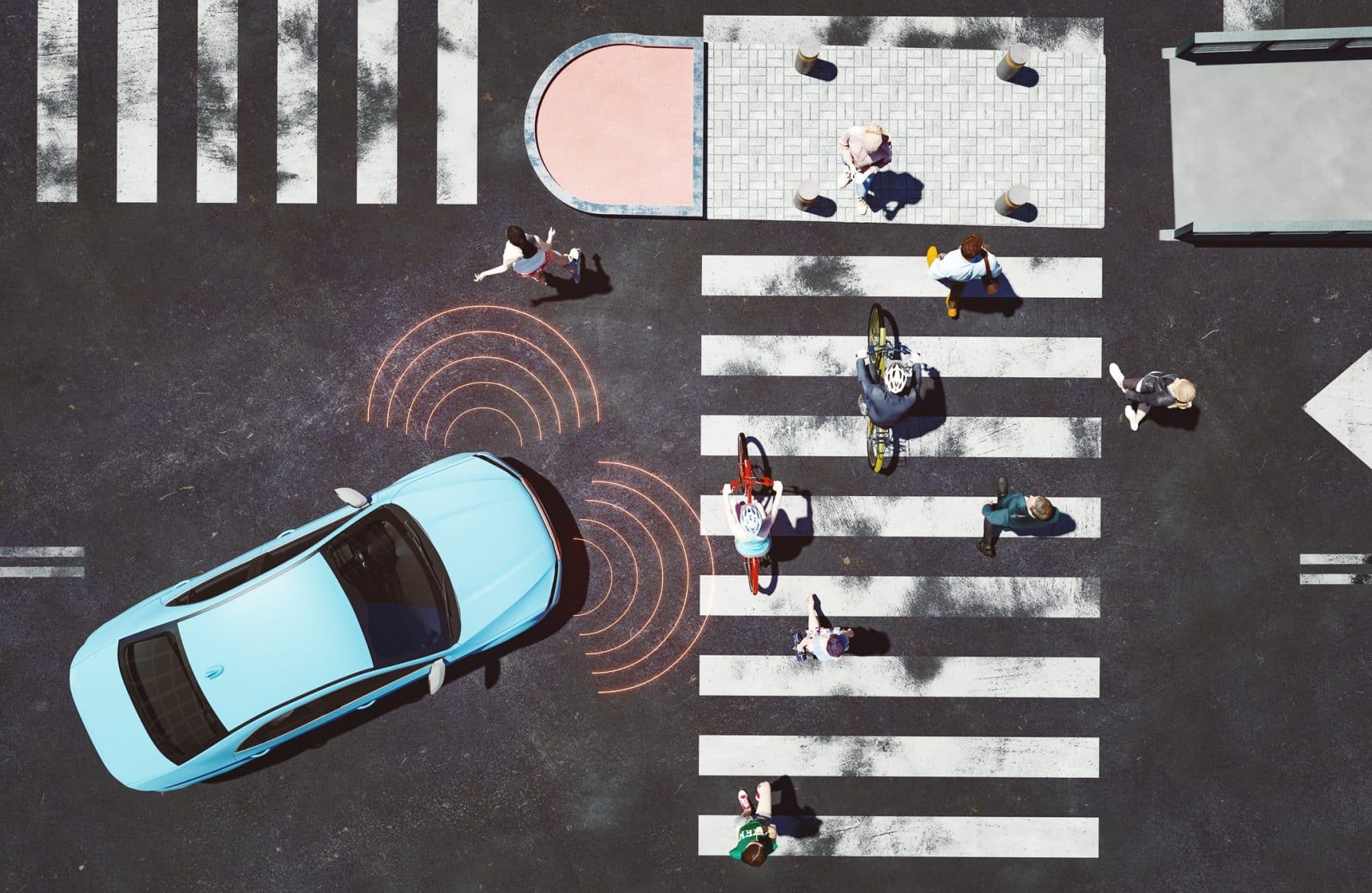
As of 2026, accidents involving driverless cars are primarily caused by complex "edge case" scenarios, sensor perception failures in adverse weather, and the transition of control back to human operators. While statistics show that autonomous vehicles (AVs) generally have lower accident rates per million miles than human drivers, their unique failure modes continue to drive rigorous safety regulations and liability debates.
Understanding the Landscape of Autonomous Vehicle Accidents in 2026
The year 2026 represents a pivotal era for autonomous mobility. We have moved past the initial trial phases of the early 2020s into broader commercial deployment of Level 4 autonomous systems in major urban centers. However, the integration of fully autonomous vehicles into a world still dominated by human-driven cars has created a unique set of safety challenges. The "driverless" category now encompasses robotaxis, long-haul trucking, and personal vehicles equipped with advanced automated driving systems (ADS).
Safety performance in 2026 is measured not just by the absence of collisions, but by the "severity-to-mileage" ratio. While human drivers are prone to errors caused by fatigue, intoxication, and distraction, autonomous systems face their own set of systemic vulnerabilities. Understanding these accidents requires a shift from blaming "driver error" to analyzing "systemic latency" and "algorithmic misinterpretation."
Primary Causes of Driverless Car Collisions
The causes of accidents in autonomous vehicles are fundamentally different from traditional automotive crashes. Because the "driver" is a suite of sensors and software, the failures are technical and environmental rather than behavioral.
Sensor Perception and Environmental Occlusion
Modern AVs rely on a "sensor fusion" approach, combining LiDAR, Radar, and high-resolution cameras. Despite the sophistication of these systems in 2026, environmental occlusion remains a leading cause of accidents. Heavy precipitation—such as dense fog, torrential rain, or "whiteout" snow conditions—can scatter LiDAR beams and obscure camera lenses. When the system receives "noisy" data, it may struggle to distinguish between a harmless plastic bag blowing across the road and a small child. These perception gaps lead to "phantom braking" or, in worse cases, a failure to detect stationary objects in the path of travel.
The "Edge Case" Dilemma
Autonomous systems are trained on massive datasets, yet they still encounter "edge cases"—scenarios so rare or unique that the AI has not been programmed to handle them effectively. Examples include an oddly shaped construction vehicle, a person in a specialized mobility device, or a chaotic scene involving multiple emergency vehicles with flashing lights. In these moments, the software's predictive logic may default to an unsafe state or fail to execute a maneuver that a human's intuitive "common sense" would handle easily.
The Human-Machine Interface (HMI) and Handover Problem
For vehicles that are not fully Level 5 (truly driverless in all conditions), the "handover" remains a critical danger point. When a Level 3 or Level 4 system reaches its operational design domain (ODD) limit, it requests the human occupant to take control. Research in 2026 continues to show that humans require several seconds to regain situational awareness. Accidents frequently occur during this window of "re-engagement," where neither the machine nor the human is effectively "driving" the vehicle.
Analyzing 2026 Accident Statistics and Safety Performance
Statistical analysis in 2026 indicates a widening gap between autonomous and human performance, though the data is nuanced. According to reports from organizations like the National Highway Traffic Safety Administration (NHTSA), autonomous vehicles participate in fewer high-speed, fatal collisions compared to humans, but they are over-represented in low-speed, "awkward" collisions—often involving being rear-ended by human drivers who do not expect the AV's cautious braking patterns.
| Metric (Estimated 2026 Data) | Autonomous Systems (per 1M Miles) | Human Drivers (per 1M Miles) |
|---|---|---|
| Fatal Accidents | 0.04 | 1.10 |
| Injury-Causing Accidents | 0.85 | 2.45 |
| Property Damage Only | 4.20 | 3.10 |
| Reaction Time (Average) | 0.1 - 0.3 Seconds | 1.5 - 2.0 Seconds |
| Perception Range | 360 Degrees (300m+) | ~180 Degrees (Variable) |
The table above illustrates the 2026 safety paradox: while AVs are significantly better at avoiding fatal errors, they are more prone to minor property damage incidents. This is largely attributed to the "over-cautious" programming of many AI drivers, which can lead to unpredictable behavior in mixed-traffic environments.
Legal and Ethical Implications of Autonomous Failures
As accidents occur, the legal framework has shifted from "driver liability" to "product liability." In 2026, when a driverless car causes an accident, the investigation focuses on the software version, sensor calibration, and the manufacturer's safety protocols.
The Shift in Liability
Insurance companies have adapted by creating specific policies for autonomous fleets. If an accident is caused by a software glitch or a sensor failure, the liability typically falls on the manufacturer or the software provider. This has led to a massive increase in "black box" data forensics, where every millisecond of data leading up to a crash is scrutinized by federal investigators.
Ethical Programming and the "Trolley Problem"
The safety implications also extend to ethics. How should a car be programmed to react when a collision is unavoidable? While the "Trolley Problem" was once a philosophical exercise, it is now a matter of regulatory compliance. In 2026, most jurisdictions have mandated that autonomous vehicles must prioritize the safety of the most vulnerable road users (pedestrians and cyclists) while adhering strictly to traffic laws, even if it results in damage to the vehicle itself.
Safety Systems and Mitigation Strategies
To combat the causes of accidents, the industry has implemented several layers of redundancy. These are not merely "features" but are required components of the 2026 safety ecosystem.
- Redundancy in Sensing: Most Level 4 vehicles now utilize "triple-modular redundancy," where the vehicle can still navigate safely even if one primary sensor (like LiDAR) fails.
- V2X Communication: Vehicle-to-Everything (V2X) technology allows driverless cars to "talk" to smart intersections and other vehicles. This helps prevent accidents at blind corners where on-board sensors might fail.
- Remote Assistance Centers: When a vehicle encounters an edge case it cannot solve, it doesn't just stop; it pings a remote human operator. These "tele-operators" can see the car's surroundings via 5G/6G video feeds and provide a "path of travel" for the AI to follow.
Challenges of Mixed-Traffic Environments
The greatest safety implication in 2026 remains the "mixed-traffic" phase. Driverless cars are logical, rule-following entities, whereas human drivers are often erratic, emotional, and prone to breaking minor rules (like creeping through a stop sign).
Accidents often occur because human drivers "bully" autonomous vehicles, knowing the AV will always yield. This behavior creates a dangerous mismatch in road expectations. Safety experts suggest that until the majority of vehicles on the road are autonomous and interconnected, the friction between human intuition and machine logic will remain a primary source of road incidents.
FAQs about Driverless Car Accidents
Who is legally responsible for a driverless car accident in 2026?
Liability generally depends on the level of autonomy and the cause of the failure. For Level 4 and 5 vehicles, where the occupant is a passenger, liability typically rests with the manufacturer or the service provider (e.g., the robotaxi company). For Level 3 systems, liability may be split if the human driver failed to take control when prompted.
Are driverless cars safer than human drivers now?
Statistically, yes. As of 2026, autonomous vehicles are involved in significantly fewer fatal accidents per million miles driven compared to humans. Their primary advantage is the elimination of distracted and impaired driving. However, they still struggle with minor collisions and complex environmental conditions that humans handle intuitively.
Can driverless cars drive in snow and heavy rain in 2026?
While capabilities have improved, extreme weather remains a significant challenge. Most autonomous fleets in 2026 operate with "Operational Design Domains," meaning they may automatically pull over or limit their speed during severe weather to prevent sensor-related accidents.
What is a "disengagement," and does it count as an accident?
A disengagement occurs when the autonomous system fails and a human must take over, or when the system voluntarily hands back control. A disengagement is not an accident itself, but high disengagement rates are often seen as a precursor to safety risks and are closely monitored by regulators like the California DMV.
How do driverless cars handle "unpredictable" pedestrians?
Autonomous vehicles use "intent prediction" algorithms. By 2026, these systems are highly adept at tracking the skeletal movement of pedestrians to predict if they are about to step into the street. If a pedestrian's intent is unclear, the vehicle is programmed to reduce speed and increase its safety buffer.
Recommendation for Safe Engagement with Autonomous Tech
For those utilizing or sharing the road with driverless vehicles in 2026, the best course of action is predictability. Autonomous systems thrive on logical flow and standardized traffic behavior. If you are a passenger in an automated system, always remain seated and buckled, as the vehicle may perform "emergency maneuvers" or "hard braking" to avoid obstacles that you might not yet see. For human drivers, treating autonomous vehicles as "student drivers"—giving them extra space and avoiding aggressive maneuvers—is the most effective way to prevent the common rear-end and side-swipe collisions that characterize the current era of mixed-traffic mobility.