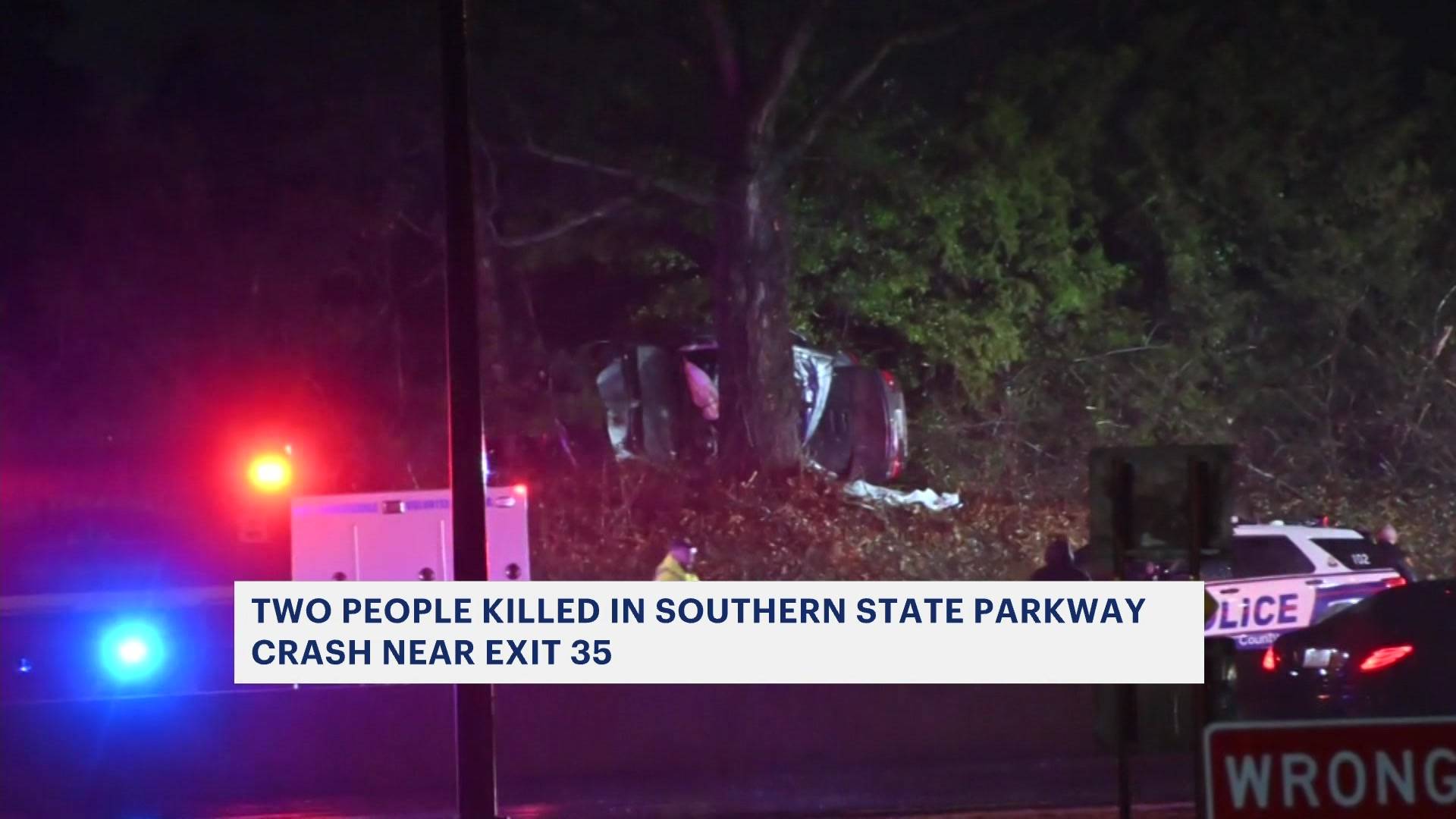
For real-time updates on an accident on the Southern State Parkway, commuters should consult the 511NY official traffic map or local Long Island emergency radio bands. In 2026, the parkway remains under intensive monitoring through the NYSDOT Integrated Corridor Management system, providing instant alerts for lane closures, emergency response, and significant delays.
The Southern State Parkway (SSP) is one of the most heavily traversed and historically complex arteries in the New York metropolitan area. Stretching across Nassau and Suffolk counties, it serves as a primary link for Long Island residents. However, its 1920s-era design—characterized by narrow lanes, short merging ramps, and low stone overpasses—continues to present significant safety challenges. As of 2026, state and local authorities have implemented several technological and infrastructural upgrades to mitigate the frequency and severity of collisions on this vital roadway.
Real-Time Accident Monitoring and Emergency Resources
Navigating an accident on the Southern State Parkway requires immediate access to accurate data. Because the parkway handles over 200,000 vehicles daily in certain segments, a single fender-bender can trigger a "butterfly effect" of delays stretching for miles.
To stay informed of current conditions:
- 511NY Portal: The New York State Department of Transportation provides a comprehensive 511NY website and mobile app. This tool offers a live traffic map with icons representing accidents, roadwork, and weather-related hazards.
- TRANSCOM Alerts: Regional transportation agencies use TRANSCOM to coordinate data across the tri-state area, ensuring that if an accident on the SSP affects the Meadowbrook or Wantagh State Parkways, drivers are notified via overhead electronic signs.
- Social Media and Local News: Platforms like X (formerly Twitter) under the handle @511NYLI or local news outlets often provide the quickest visual confirmation of accident scenes and the expected duration of clear-up operations.
In 2026, the "Smart Parkway" initiative has integrated AI-driven sensors every half-mile between the Belt Parkway transition and the Sagtikos Parkway. These sensors detect sudden drops in average speed, automatically triggering "Caution: Slow Traffic Ahead" warnings on digital displays to prevent secondary rear-end collisions.
The Infrastructure Challenge: Why Accidents Occur Frequently
The Southern State Parkway was originally designed by Robert Moses as a scenic route for passenger cars to reach state parks. It was never intended to support the volume or the speeds of modern 2026 commuters. Several factors contribute to its status as a high-accident corridor.
Geometric Limitations and Short Ramps
Many entrance and exit ramps on the Southern State Parkway lack adequate acceleration and deceleration lanes. This forces drivers to merge into 55-65 mph traffic from a near-standstill, a primary cause of sideswipe and rear-end collisions. The tight "cloverleaf" designs at older interchanges also lead to "weaving" maneuvers where entering and exiting traffic must cross paths in a limited space.
The "Blood Alley" Designation
A specific stretch of the Southern State Parkway, historically referred to as "Blood Alley," typically spans from Exit 17 (Hempstead Avenue) to Exit 32 (Route 110). This segment is notorious for its winding curves and high density of interchanges. In 2026, while safety barriers and improved lighting have been installed, the inherent curvature of the road requires drivers to maintain strict lane discipline, which is often ignored by speeding motorists.
Low Overpasses and Commercial Vehicle Strikes
One of the most disruptive types of accidents on the Southern State Parkway involves unauthorized commercial vehicles striking low stone bridges. The parkway's overpasses, some as low as 7 feet 10 inches, cannot accommodate trucks, buses, or large moving vans. Despite "No Commercial Vehicle" signs and 2026-era GPS height warnings, bridge strikes remain a significant cause of total parkway shutdowns.
Recent 2026 Safety Upgrades and Infrastructure Improvements
Following a series of multi-year safety studies conducted by the New York State Department of Transportation (NYSDOT), several critical improvements were finalized by 2026 to reduce the accident rate.
- Wrong-Way Driver Detection Systems: Thermal cameras and radar sensors have been installed at most off-ramps. If a vehicle enters in the wrong direction, high-intensity red LED strobes flash to alert the driver, while simultaneously notifying New York State Police and updating overhead parkway signs to warn oncoming traffic.
- Enhanced Pavement Markings: The use of "highly reflective" recessed pavement markers has improved visibility during Long Island’s frequent coastal fog and heavy rain events. These markers are designed to be "plow-resistant," ensuring they remain functional throughout the winter season.
- High-Friction Surface Treatment (HFST): On the most dangerous curves, such as those near the Eagle Avenue exit, the DOT has applied specialized aggregates to the asphalt. This treatment increases tire grip, significantly reducing hydroplaning and run-off-road accidents during inclement weather.
Protocol: What to Do After an Accident on the Southern State Parkway
If you are involved in a collision on the SSP, the environment is extremely high-risk due to the narrow shoulders and high speeds.
- Prioritize Personal Safety: If your vehicle is operable, the New York State DMV and State Police recommend the "Steer It, Clear It" policy. Move your vehicle to the right shoulder or, ideally, off the parkway at the nearest exit to avoid being struck by oncoming traffic.
- Call 911 Immediately: Dispatchers can coordinate the New York State Police (who have primary jurisdiction over the parkways) and Inform (Information for Motorists) trucks to provide a safety buffer with their arrow boards.
- Stay Inside the Vehicle: If you cannot move your car to a safe location, keep your seatbelt fastened and remain inside the vehicle until emergency responders arrive. Walking on the Southern State Parkway is extremely dangerous.
- Document the Scene Safely: Use your smartphone to take photos of the vehicles and the surrounding area only if you can do so without stepping into a travel lane. Exchange insurance and contact information as required by New York State law.
New York is a no-fault insurance state, meaning your own insurance company typically covers your medical expenses and lost wages regardless of who caused the accident. However, for "serious injuries" as defined by NY Insurance Law § 5102(d), you may be eligible to pursue a liability claim against the at-fault driver.
Comparison of High-Risk Segments on the Southern State Parkway
The following table outlines the most frequent accident types and the 2026 safety status of specific high-traffic segments of the parkway.
| Parkway Segment (Exit Range) | Primary Accident Risk | 2026 Safety Enhancements | Monitoring Level |
|---|---|---|---|
| Exits 13 - 17 (Valley Stream/Malverne) | Merging collisions / Rear-ends | Extended acceleration lanes; LED signage | High (CCTV coverage) |
| Exits 18 - 22 (Hempstead/Uniondale) | High-speed lane changes | Median barrier reinforcements | Moderate |
| Exits 25 - 28 (Wantagh/Massapequa) | Interchange weaving | Wrong-way detection sensors | High (Radar-linked) |
| Exits 32 - 37 (Farmingdale/Babylon) | Wildlife crossings / Run-off-road | Enhanced perimeter fencing; HFST curves | Moderate |
| Exits 41 - 44 (Bay Shore/Islip) | Commuter congestion stalls | Smart Corridor AI sensors | High (Integrated) |
Safety Regulations for Different Vehicle Classes
Safety on the Southern State Parkway is heavily dependent on vehicle compliance with parkway-specific rules. Unlike the Long Island Expressway (I-495), the SSP has strict limitations enforced by the New York State Police.
- Passenger Vehicles: Only vehicles registered as passenger cars are permitted. SUVs and pickup trucks are generally allowed as long as they do not have commercial plates or modifications.
- Prohibited Vehicles: Commercial trucks, trailers of any kind (boat, landscaping, etc.), buses, and any vehicle over 10 feet tall are strictly prohibited. The fines for illegal commercial use of the parkway increased in 2025 to reflect the high cost of emergency responses to bridge strikes.
- The "Move Over" Law: In 2026, New York’s Move Over Law remains strictly enforced. Drivers must shift lanes or slow down significantly when approaching any vehicle stopped on the shoulder with hazard lights or emergency beacons, including police, tow trucks, and disabled motorists.
FAQ: Common Questions Regarding Southern State Parkway Safety
Where can I see live camera feeds of the Southern State Parkway?
Live camera feeds are accessible through the 511NY website and app. While not all cameras are available to the public due to privacy and security protocols, major interchanges such as the SSP transition to the Meadowbrook, Wantagh, and Seaford-Oyster Bay parkways are usually visible to help drivers gauge traffic density.
Why are there so many accidents on the "Blood Alley" section?
"Blood Alley" (Exits 17-32) suffers from a combination of high traffic volume and challenging road geometry. The curves in this area were designed for much lower speeds. When drivers exceed the 55 mph limit, they often lose control or cannot react in time to vehicles merging from the short, obscured entrance ramps.
What should I do if I see a truck on the Southern State Parkway?
If you observe a commercial truck on the parkway, maintain a safe distance and do not attempt to pass it in a way that might cause the driver to swerve. You can report the vehicle to the New York State Police by calling 911, as these vehicles pose an immediate risk of striking low overpasses and causing a major accident.
How has the 2026 "Smart Parkway" technology changed safety?
The 2026 technology suite includes AI-driven incident detection. Rather than waiting for a 911 call, sensors detect the "signature" of an accident (sudden stops, erratic swerving) and automatically alert the nearest State Police patrol and NYSDOT HELP (Highway Emergency Local Patrol) truck, reducing response times by an average of 30%.
Are there specific times when accidents are more likely on the SSP?
Historically, Friday afternoons and Monday mornings see the highest frequency of accidents due to commuter volume. Additionally, the "sun glare" periods during sunrise and sunset are particularly dangerous on the east-west oriented parkway, leading to frequent multi-car pileups near the Nassau-Suffolk border.
Recommended Action for Long Island Commuters
To ensure maximum safety when traveling the Southern State Parkway, drivers should adopt a proactive defensive driving stance. Before departing, check the 511NY mobile app for active accident alerts. Given the parkway’s 2026 infrastructure, the most effective way to avoid becoming part of an accident statistic is to maintain a three-second following distance and strictly adhere to the 55 mph speed limit, especially through the "Blood Alley" curves. If you encounter an accident, resist the urge to "rubberneck," as secondary collisions are a leading cause of injuries on this specific roadway.