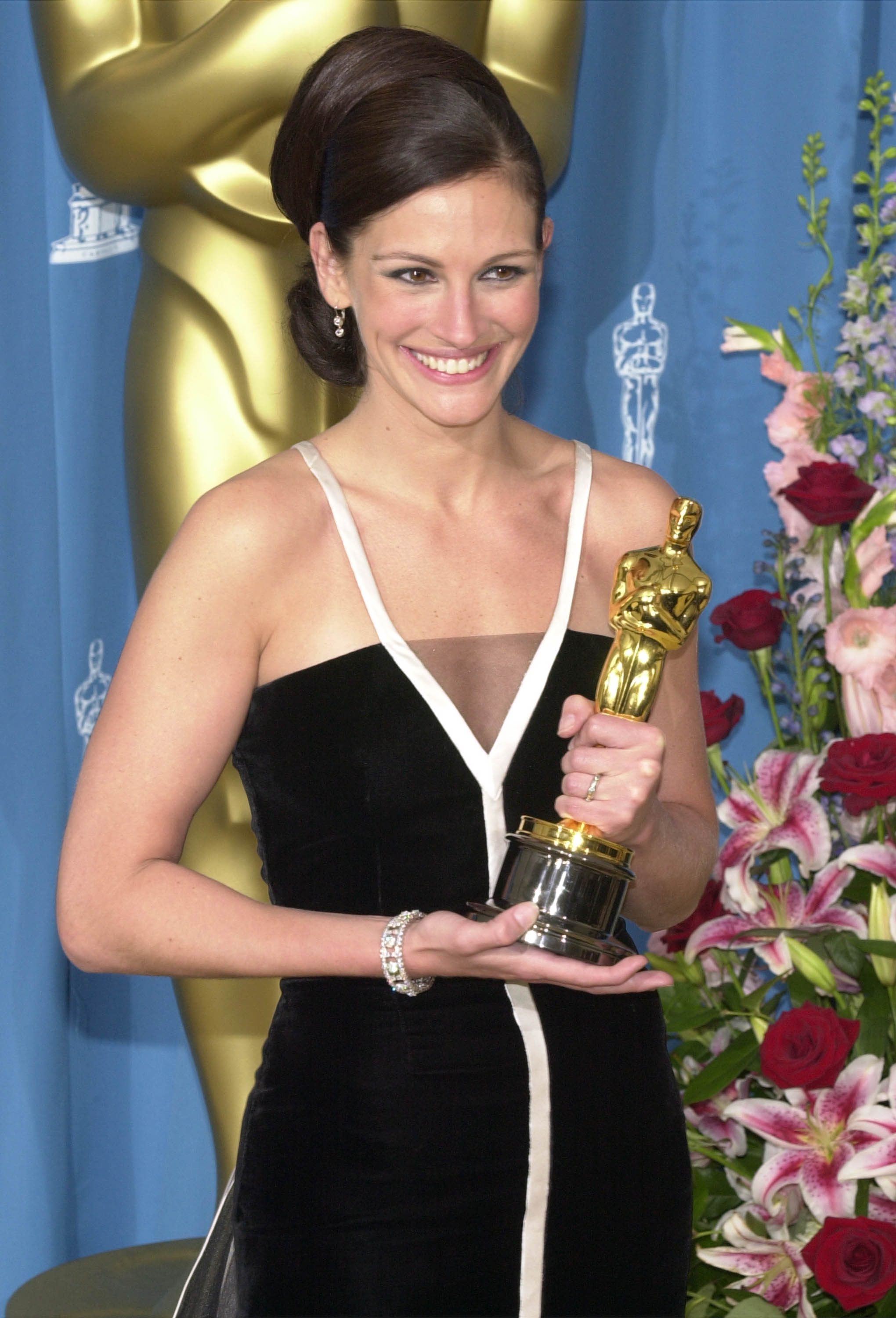
The 73rd Academy Awards, held on March 25, 2001, at the Shrine Auditorium in Los Angeles, honored the best films released in 2000. Hosted by Steve Martin, the ceremony is most remembered for the sweeping victory of Ridley Scott’s Gladiator, which took home five awards, including Best Picture and Best Actor for Russell Crowe, marking a significant moment in the resurgence of the historical epic genre.
Historical Context and Venue
The 2001 Academy Awards ceremony was a pivotal night for the film industry, acting as a bridge between the classic filmmaking techniques of the late 20th century and the evolving digital landscape of the new millennium. By 2001, the ceremony had established a well-defined format, but it remained firmly rooted in the tradition of the Shrine Auditorium, the venue that hosted the Oscars for much of the 1990s and early 2000s before the permanent move to the Dolby Theatre (then the Kodak Theatre) in 2002.
For the Academy of Motion Picture Arts and Sciences (AMPAS), the 2001 ceremony represented a challenge in balancing traditional prestige with the shifting tastes of global audiences. The film slate of 2000 was marked by a blend of high-concept blockbusters and intimate character-driven dramas. The nomination list reflected this tension, featuring everything from the expansive, visual spectacle of Gladiator to the quiet, poetic martial arts mastery of Crouching Tiger, Hidden Dragon.
The Dominance of Gladiator
The most significant narrative of the 73rd Academy Awards was the coronation of Gladiator. Directed by Ridley Scott, the film was nominated for 12 Academy Awards and ultimately won five. Beyond the prestige of the Best Picture win, the film’s success signaled a broader industry trend toward high-budget, "event" cinema that could satisfy both critics and general audiences. Russell Crowe’s win for Best Actor was a career-defining moment, cementing his status as one of Hollywood’s most bankable and critically respected lead performers.
The technical achievements of Gladiator also underscored the industry's focus on production design and costume design at the time. By winning for Best Costume Design and Best Sound, the film demonstrated how foundational technical craftsmanship could elevate a narrative, a hallmark of the Academy's traditional voting preferences during that era.
Recognition of International Cinema
The 2001 ceremony is frequently cited by film historians for its landmark recognition of international cinema. Crouching Tiger, Hidden Dragon, directed by Ang Lee, entered the night with 10 nominations, an unprecedented number for a non-English language film. Its success in winning four awards—including Best Cinematography, Best Art Direction, Best Original Score, and Best Foreign Language Film—shattered the glass ceiling for global cinema at the Oscars.
This shift was not merely symbolic. The presence of Crouching Tiger, Hidden Dragon in the Best Picture race forced the American film establishment to acknowledge that the "best" films in the world were not restricted by language or cultural geography. It catalyzed a decade of increased visibility for international directors and narratives within the mainstream Hollywood awards circuit.
Comparative Analysis of Key Categories
The following table outlines the major winners across selected key categories from the 2001 ceremony. These categories represent the foundational pillars of the Academy's recognition process, balancing creative vision, performance, and technical proficiency.
| Category | Winner | Film |
|---|---|---|
| Best Picture | Douglas Wick, David Franzoni, Branko Lustig | Gladiator |
| Best Director | Steven Soderbergh | Traffic |
| Best Actor | Russell Crowe | Gladiator |
| Best Actress | Julia Roberts | Erin Brockovich |
| Best Supporting Actor | Benicio del Toro | Traffic |
| Best Supporting Actress | Marcia Gay Harden | Pollock |
| Best Original Screenplay | Cameron Crowe | Almost Famous |
| Best Adapted Screenplay | Stephen Gaghan | Traffic |
The "Traffic" Factor and Steven Soderbergh
While Gladiator swept the primary awards for its scale, Steven Soderbergh’s Traffic provided the intellectual and artistic counterweight to the night. Soderbergh achieved a rare feat by being nominated for Best Director twice in the same year—once for Traffic and once for Erin Brockovich. He ultimately won for Traffic, a gritty, multi-narrative examination of the illegal drug trade.
The success of Traffic highlighted the Academy's willingness to reward socially conscious, unconventional filmmaking. It served as a reminder that the Oscars were not solely interested in grand epics, but also in films that employed sophisticated editing, non-linear storytelling, and intense sociopolitical commentary.
Technical Challenges and Production Requirements
Organizing the 2001 broadcast involved rigorous logistical requirements. The Academy has strict rules regarding the eligibility of films, which must have been released in a commercial theater in the qualifying region (typically Los Angeles County) for at least seven consecutive days during the calendar year. For the 2001 ceremony, all films were required to meet these thresholds by December 31, 2000.
The production of the telecast itself was a massive technical undertaking. Television producers had to manage complex satellite feeds and live stage management to ensure that the three-hour ceremony maintained pace. The 2001 event was notable for its attempt to keep speeches concise, though the sheer volume of categories—ranging from documentary shorts to complex visual effects—meant that the broadcast was a marathon effort for both the presenters and the technical crew behind the scenes.
Frequently Asked Questions
Which film won the most awards at the 73rd Academy Awards?
Gladiator won the most awards at the 73rd Academy Awards, securing five statuettes in total. These included Best Picture, Best Actor, Best Costume Design, Best Sound, and Best Visual Effects.
Who hosted the 73rd Academy Awards in 2001?
The ceremony was hosted by comedian and actor Steve Martin. This was his first time hosting the Oscars; he would go on to host the ceremony again in 2003 and 2010.
Was the 2001 Oscar ceremony held at the Dolby Theatre?
No. In 2001, the Oscars were held at the Shrine Auditorium in Los Angeles. The Academy moved to the Kodak Theatre (now the Dolby Theatre) in 2002 and has remained there ever since.
Why is the 2001 ceremony considered a turning point for foreign-language films?
The ceremony is considered a milestone because Crouching Tiger, Hidden Dragon received 10 nominations, including Best Picture, which was a record-breaking achievement for a film not in the English language at the time.
How did the Academy handle the dual-director nomination of Steven Soderbergh?
Steven Soderbergh was nominated twice for Best Director for two different films, Traffic and Erin Brockovich. This was a rare occurrence, permitted because both films met the individual eligibility requirements for the year, and he ultimately won the award for Traffic.
Strategic Perspectives for Film Enthusiasts
For those looking to understand the history of the Academy Awards, the 2001 ceremony is an essential case study. It marks the moment when the modern Oscar machine began to synthesize the blockbuster-driven business model with an increasing appreciation for diverse, global voices. When researching films from this period, prioritize the archives maintained by the Academy of Motion Picture Arts and Sciences (AMPAS) database. Their official records offer the most accurate verification of voting tallies, eligibility documentation, and historical seating charts, ensuring that your research is based on primary, rather than anecdotal, evidence.