An academic profile is a dedicated digital representation of a researcher's identity, scholarly publications, affiliations, and scientific contributions. Maintaining curated profiles across platforms like ORCID, Google Scholar, and institutional portals ensures accurate author attribution, consolidates citation metrics, enhances research visibility, and streamlines career advancement opportunities across the global scientific community.
What Is an Academic Profile and Why Does It Matter?
An academic profile serves as the central digital portfolio for scholars, scientists, faculty members, and research professionals. Unlike a general professional resume or LinkedIn page, an academic profile focuses primarily on research outputs, scholarly impact, peer-reviewed publications, datasets, grants, teaching history, and academic service.
In an increasingly digitized research ecosystem, maintaining an updated academic profile is no longer optional. Thousands of papers are published daily across disciplines, creating severe challenges with author disambiguation. Researchers with common surnames, those who change their names, or scholars who switch institutional affiliations throughout their careers frequently face the problem of misattributed work. A structured profile connected to persistent digital identifiers resolves these identity collisions by binding published works directly to a verified individual.
Furthermore, academic funding bodies, tenure committees, grant reviewers, and prospective collaborators actively examine academic profiles during evaluation processes. A complete and searchable profile boosts research discoverability, increasing the likelihood that peer-reviewed publications are cited, shared, and translated into practice.
Core Components of a High-Impact Academic Profile
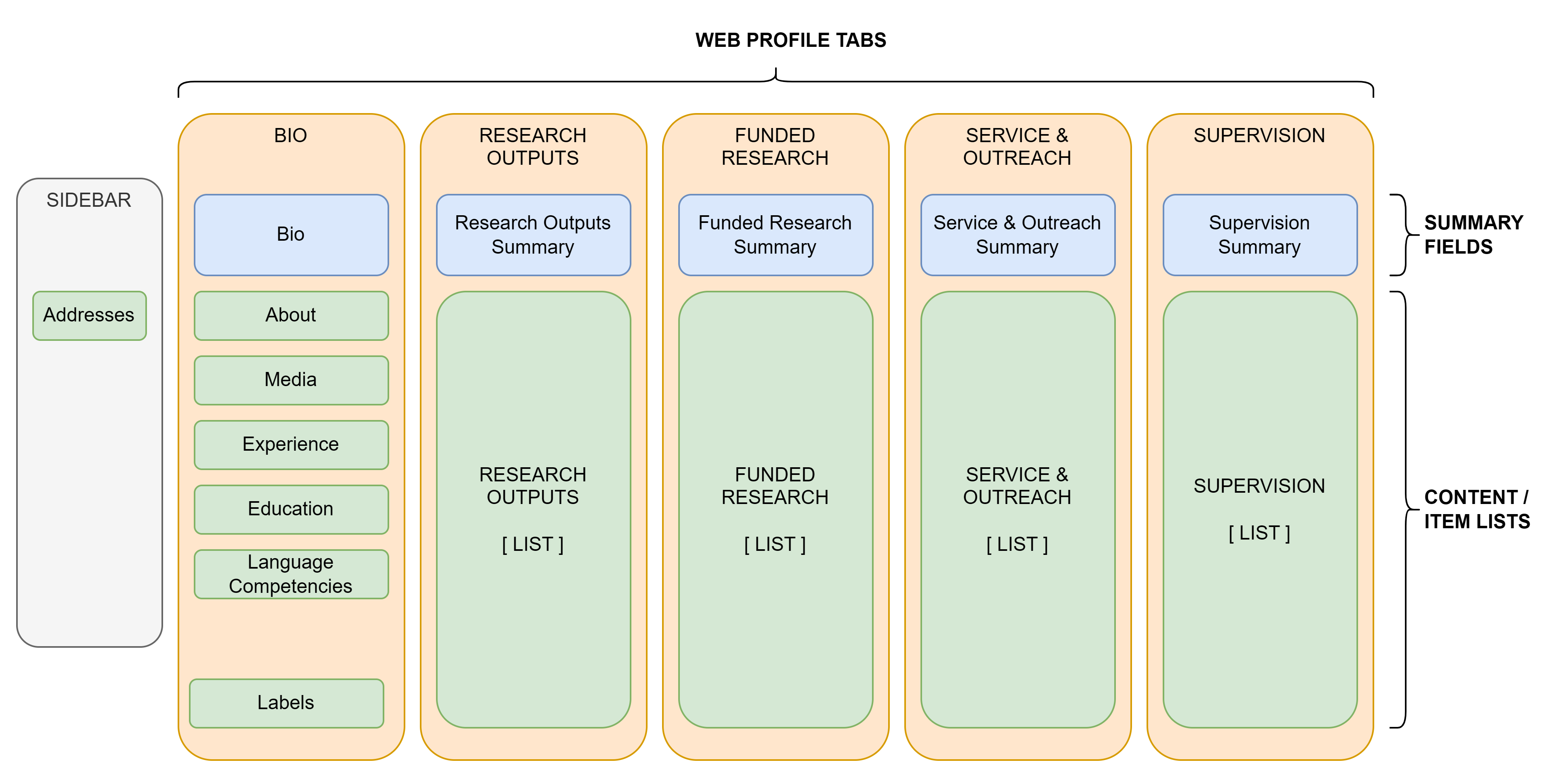
Building an authoritative academic profile requires aggregating key assets into a cohesive digital presence. While individual platform formats vary, a high-impact profile consistently incorporates several standard elements:
- Persistent Researcher Identifiers: Unique identifiers—most notably an ORCID iD—that permanently link a scholar's identity to their professional activity regardless of employment or surname changes.
- Standardized Name Variants: Explicit documentation of all publication name formats (e.g., Smith, J., Smith, John A., Smith-Jones, J.) to ensure indexing engines pull all relevant items into the profile.
- Current and Past Institutional Affiliations: Verified affiliations with academic departments, research institutes, university centers, or corporate laboratories.
- Research Summary and Keywords: A concise 100-to-250-word statement defining core research domains, methodologies, theoretical frameworks, and active investigation lines.
- Curated Publication Record: A comprehensive catalog of published journal articles, conference proceedings, books, chapters, preprints, and research datasets, ideally paired with direct Digital Object Identifiers (DOIs).
- Grants and Intellectual Property: Documented external research funding, awards, fellowships, patents, and technical disclosures.
- Academic Service and Peer Review History: Records of journal editorial board memberships, peer review contributions (often verified via Web of Science), conference committee roles, and professional society leadership.
Comparing Major Academic Profile Platforms
Scholars must navigate multiple profile engines, each serving distinct roles in search indexing, citation tracking, networking, and institutional reporting. The table below details the primary platforms used across academia.
| Platform | Primary Purpose | Disambiguation Engine | Key Metrics Tracked | Access Model | Best Used For |
|---|---|---|---|---|---|
| ORCID | Non-profit registry of persistent researcher IDs | 16-digit unique identifier (ORCID iD) | None (focuses on accurate record metadata) | Open access / Non-profit | Universal baseline identity across journals & funders |
| Google Scholar Profile | Automated search engine indexing & citation tracking | User-confirmed publication clusters | Total citations, h-index, i10-index | Free public access | Maximizing public visibility & tracking broad citation counts |
| Scopus Author ID | Curated indexing database by Elsevier | Automated algorithmic matching & manual review | Citations, h-index, SciVal topic prominence | Subscription-based (profiles publicly viewable) | Institutional reporting, formal tenure, & grant evaluations |
| Web of Science ResearcherID | Clarivate analytics platform for publications & peer review | Unique ResearcherID & Clarivate index | Citations, h-index, verified peer reviews | Subscription-based (basic profile free) | Journal publishing metrics & official peer review recognition |
| ResearchGate | Academic social networking & preprint sharing | User self-reporting & community confirmation | RG Interest Score, reads, self-reported citations | Free registration required | Direct networking, preprint sharing, & informal peer Q&A |
Step-by-Step Strategy to Build and Synchronize Profiles
Establishing a functional, low-maintenance profile infrastructure involves creating a foundational identifier and synchronizing secondary systems to pull metadata automatically.
- Register ORCID iD (Central Authority)
- Google Scholar Profile Setup
- Scopus / Web of Science Sync
- Institutional Repository Sync
- Automated Metadata Sync Via DOI & RIS/BibTeX
Step 1: Claim Your Central Identifier (ORCID)
Begin by creating a free account with ORCID. Obtain your 16-digit identifier and configure your profile settings to public or trusted-party visibility. Enter your employment history, educational background, and funding grants. Use ORCID’s "Search & Link" wizard to pull past publications directly from Crossref, DataCite, and PubMed.
Step 2: Establish Automated Search Index Profiles
Create a public Google Scholar Profile using your institutional email address. Review the automated publication suggestions carefully to remove misattributed papers written by authors with similar names. Enable the setting to allow Google Scholar to automatically update your publication list, but set up periodic email alerts to audit auto-added citations for accuracy.
Step 3: Link Commercial Database Profiles
Claim your Scopus Author ID and Web of Science ResearcherID. Because these profiles are connected to curated indexing databases, check for split profiles—where the database accidentally created two separate profiles for your work due to slight variations in your institutional name or initials. Merge duplicate records using the platforms' built-in author feedback wizards.
Step 4: Configure Institutional Directories and Repositories
Ensure your faculty profile page on your university or organizational domain links directly to your ORCID iD and Google Scholar profile. Deposit open-access versions of your accepted manuscripts into your institution's digital repository, adhering to publisher embargo rules.
Understanding Profile Metrics: Citations, h-index, and Altmetrics
Academic profiles display quantitative metrics designed to indicate scholarly reach and impact. Interpreting these numbers requires an understanding of how distinct algorithms calculate research influence.
Traditional Bibliometrics: The h-index and Citation Counts
The most widely cited metric on academic profiles is the h-index, introduced by physicist Jorge E. Hirsch. A researcher has an h-index of N if they have published N papers that have each been cited at least N times.
- Example: If a scholar has 10 publications cited 45, 22, 18, 12, 10, 8, 4, 3, 1, and 0 times, their h-index is 5 (because 5 papers have at least 5 citations).
While the h-index balances productivity (number of papers) and impact (citation counts), it varies widely by academic discipline. Medical and biological sciences typically generate higher absolute citation counts and h-indices than mathematics or the humanities due to field-specific authorship standards and citation behaviors.
Modern Metrics: Altmetrics and Broader Impact
Beyond traditional citations within peer-reviewed literature, modern academic profiles increasingly capture altmetrics (alternative metrics). Platforms like Altmetric.com and PlumX track immediate non-academic engagement, such as:
- Citations in public policy documents and clinical practice guidelines.
- Mentions in mainstream news outlets and scientific blogs.
- Reference inclusions within Wikipedia articles.
- Data repository downloads and open-source code software forks.
Integrating altmetrics into your profile offers a real-time view of public engagement long before traditional journal citations accumulate, which can take several years.
Common Mistakes in Profile Management and How to Avoid Them
Even experienced researchers encounter pitfalls that reduce profile efficacy, dilute metrics, or violate legal agreements.
1. Inconsistent Author Name Formatting
Publishing under varying name formats across journals creates fragmented search database records.
- Solution: Establish a single, standardized professional name string (e.g., always including or omitting a middle initial) and include your ORCID iD on every manuscript submission.
2. Violating Journal Copyright Terms
Uploading final publisher PDF files directly to public academic networks like ResearchGate or Academia.edu without checking publisher policies can cause copyright infringement.
- Solution: Consult the SHERPA/RoMEO database to verify what version of a manuscript (Preprint, Author Accepted Manuscript, or Published Version) your journal permits you to share self-archived on personal or institutional sites.
3. Orphaned Profiles Post-Career Transition
Moving between universities often leads to locked accounts when profiles are tied exclusively to temporary institutional email addresses.
- Solution: Always register your primary ORCID account and external database logins with a persistent personal email address alongside your official institutional address.
4. Ignoring Profile Audits
Automated profile engines occasionally import papers written by researchers with identical names, inflating or confusing your bibliography.
- Solution: Schedule a biannual audit of your Google Scholar, Scopus, and Web of Science profiles to merge duplicate entries and delete misassigned works.
Frequently Asked Questions
What is the difference between an ORCID iD and a Google Scholar Profile?
An ORCID iD is a unique, persistent identifier managed by a non-profit organization that acts as a official digital identity connecting your work across publishers and grant agencies without tracking metrics. A Google Scholar Profile is a public search engine listing that automatically tracks publication citations and calculates metrics like the h-index, but relies on search algorithms rather than persistent unique IDs.
How do I merge duplicate academic profiles on Scopus or Web of Science?
Log into the platform, navigate to the author search page, and identify the duplicate profiles containing your work. Use the platform’s "Request Author Detail Corrections" or "Merge Profiles" tool to select the split records and submit a request. Database editors usually review and complete structural profile merges within a few business days.
Should early-career researchers create an academic profile before publishing papers?
Yes. Creating an ORCID profile early allows graduate students and junior scholars to log preprints, conference presentations, grant applications, and institutional affiliations before their first peer-reviewed journal article is published. This establishes an identity baseline early in your research career.
Are commercial academic social networks like ResearchGate sufficient as a primary academic profile?
No. While social platforms are useful for informal networking and direct paper requests, they are proprietary, commercial walled gardens not indexed uniformly by official institutional reporting software. Scholars should use ORCID and institutional repositories as their primary records, using social platforms only as secondary distribution channels.
Strategic Action Plan for Scholars
To maintain an effective, low-effort academic profile strategy, adopt a structured annual workflow:
- Immediate Set Up: Claim your ORCID iD. Link it to your institutional directory and include it on every manuscript submission, grant application, and dataset upload.
- Quarterly Review: Log into Google Scholar to clear misattributed citations and confirm that newly published accepted manuscripts are correctly indexed.
- Annual Maintenance: Perform a complete audit across Scopus, Web of Science, and ORCID. Update your bio statement, upload newly funded grants, and ensure your self-archived preprints comply with publisher copyright guidelines via SHERPA/RoMEO.
By establishing persistent identifiers and keeping your profile metadata up to date, you ensure your scholarly contributions remain accurately attributed, discoverable, and fully recognized across the global academic landscape.