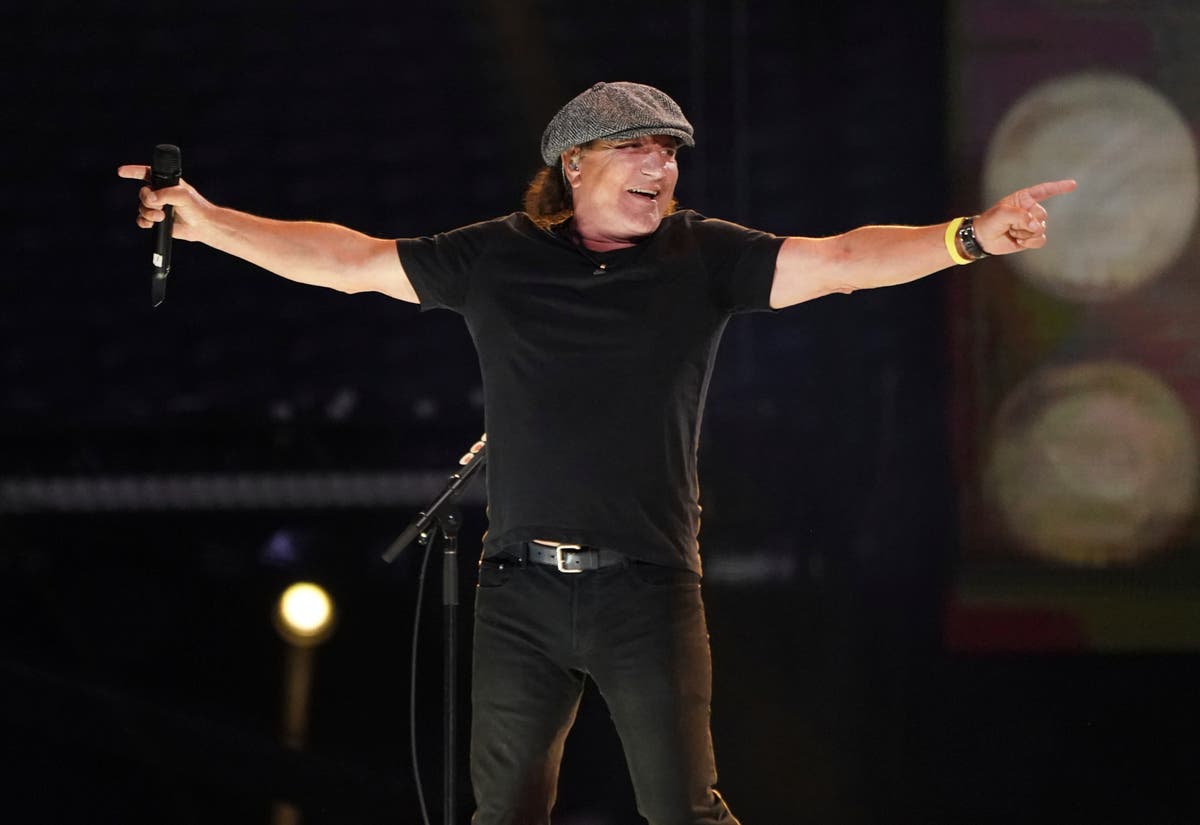
In 2016, Brian Johnson was forced to depart AC/DC during the "Rock or Bust" World Tour after doctors warned him of imminent, total hearing loss. His exit was marked by a sudden press release and the controversial recruitment of Axl Rose, though Johnson eventually returned for the 2020 album Power Up thanks to revolutionary hearing technology.
The Medical Crisis: A Diagnosis of Total Deafness
The story of Brian Johnson’s departure from AC/DC is fundamentally a medical one, rooted in decades of high-decibel exposure and a specific incident that pushed his auditory health over the edge. While most fans assumed his hearing loss was the result of standing in front of wall-to-wall Marshall stacks for 36 years, Johnson has clarified that the catalyst was actually his passion for auto racing. During a race at Watkins Glen International, he forgot to put in his earplugs. The roar of the engine ruptured his eardrum, leading to a permanent decline in his hearing capability.
By the time the "Rock or Bust" tour reached its North American leg in early 2016, Johnson’s condition had become untenable. He reported that he was "getting by on muscle memory and shapes," unable to hear the guitars or the rhythm section clearly. The situation reached a breaking point after a consultation with a specialist in Sydney, Australia. The medical verdict was blunt: if Johnson continued to perform in stadium environments, he faced the very real prospect of never hearing again.
The physiological stakes were immense. Hearing loss in musicians often involves the destruction of the tiny hair cells in the cochlea, but for Johnson, the immediate threat was the extreme sound pressure levels (SPL) typical of an AC/DC concert. These levels often exceed 130 decibels, which can cause immediate and irreversible mechanical damage to the inner ear. Faced with the choice between his career and his ability to hear his grandchildren’s voices, Johnson was forced to step away from the stage.
The "Rock or Bust" Tour and the Abrupt Announcement
On March 7, 2016, AC/DC issued a formal statement that shocked the music world. The band announced they were rescheduling the remaining ten dates of their U.S. tour, stating that Brian Johnson had been advised by doctors to stop touring immediately or risk total deafness. The brevity of the announcement led to significant speculation and a sense of coldness among the fanbase.
The transition was handled with a clinical efficiency that some fans found jarring. Rather than a sentimental farewell to a man who had fronted the band since 1980’s Back in Black, the communication focused primarily on the logistics of the tour. This sparked rumors of a rift between Johnson and the band’s founder, Angus Young. While the band was navigating the loss of rhythm guitarist Malcolm Young to dementia and the legal troubles of drummer Phil Rudd, the sudden "departure" of Johnson felt like a final blow to the classic lineup.
For Johnson, the departure was not a voluntary retirement but a forced medical leave. He later described the period as one of the darkest in his life. He felt as though he had let the fans down, despite the physical impossibility of continuing. The emotional weight of leaving a band he had led for over three decades was compounded by the speed at which the music industry—and his own band—moved to find a replacement.
Axl Rose and the Controversial Transition
The most polarizing chapter of the departure was the recruitment of Guns N’ Roses frontman Axl Rose to fulfill the remaining tour dates. Announced in April 2016, the "AC/DC featuring Axl Rose" lineup divided the community. Purists argued that AC/DC could not exist without Johnson’s signature gravelly vocals, while others were curious to see how the mercurial Rose would handle the rigors of the Young brothers’ songwriting.
Technically, Rose was a fit for the vocal range required for the Brian Johnson and Bon Scott eras. His performance during the European and rescheduled U.S. legs received surprisingly positive reviews from critics, who noted his discipline and vocal accuracy. However, for Johnson, seeing another singer take his place was a difficult experience. He famously stated that he could not bring himself to watch any footage of the Axl-fronted shows, comparing it to seeing a stranger in his own home.
The logistical complexity of this transition cannot be overstated. Axl Rose was simultaneously preparing for the Guns N’ Roses "Not in This Lifetime" reunion tour. The fact that Angus Young chose to continue with a guest vocalist rather than cancel the tour underscored the "show must go on" mentality that has defined AC/DC since the death of Bon Scott. It also highlighted the contractual obligations involving promoters, venues, and ticket holders that often outweigh personal sentiments in the high-stakes world of stadium rock.
Brian Johnson’s Perspective: The Emotional Toll
In the years following his departure, Johnson has been candid about the psychological impact of the 2016 events. In his 2022 memoir, The Lives of Brian, and subsequent interviews through 2024 and 2025, he detailed the "despair" he felt. He described the sensation of having his life's work snatched away by a biological failure he couldn't control.
There was also a perceived lack of communication. Johnson felt that the band’s management had moved on too quickly. While he understood the necessity of completing the tour, the lack of a public "thank you" or a more nuanced explanation for his absence felt like a dismissal. However, he also acknowledged the stoic, business-like nature of the Young family. In the AC/DC camp, emotions are rarely televised, and the focus is always on the endurance of the brand and the music.
The isolation Johnson felt was mitigated by the support of his peers in the industry. Fellow rockers, including Robert Plant and Joe Walsh, reached out to offer solidarity. This period of forced exile allowed Johnson to focus on his health and his other interests, such as his television show Cars That Rock, but the "unfinished business" with AC/DC remained a heavy burden until the late 2010s.
Technological Breakthroughs: The Path to "Power Up"
The story of Brian Johnson’s departure is unique because it has a definitive "third act" involving scientific innovation. Johnson’s return to the band was made possible by Stephen Ambrose, the inventor of the first wireless in-ear monitor. Ambrose contacted Johnson after his departure, claiming he had developed a new type of hearing technology that could allow him to perform without further damaging his ears.
This technology, developed by Asius Technologies, uses a synthetic eardrum to absorb harmful static pressure. Unlike traditional hearing aids or in-ear monitors that seal the ear canal and increase pneumatic pressure on the delicate inner ear, this device—often referred to as ADEL (Ambrose Diaphonic Ear Lens)—filters out the "hammering" effect of sound waves while delivering high-fidelity audio.
Comparing the 2016 Departure vs. the 2020 Return
| Feature | 2016 Departure | 2020/2021 Return |
|---|---|---|
| Primary Cause | Imminent total deafness | Technological solution (ADEL) |
| Official Reason | Medical necessity (Doctor's orders) | Successful testing of hearing prototypes |
| Band Status | Mid-tour ("Rock or Bust") | Studio album (Power Up) |
| Vocal Solution | Replacement by Axl Rose | Restoration of the classic lineup |
| Communication | Brief, clinical press release | Celebratory social media campaign |
| Fan Sentiment | Shock, confusion, and division | Universal acclaim and relief |
After three years of testing these prototypes in secret, Johnson found that he could hear the music with "startling" clarity. This breakthrough facilitated the secret recording sessions in Vancouver for the Power Up album. The 2020 release served as a tribute to Malcolm Young and a triumphant "second coming" for Johnson. By 2026, this technology has become a standard reference point for musicians suffering from occupational hearing loss, proving that Johnson’s departure was a temporary setback rather than a career finale.
The Legacy of the 2016 Departure in 2026
As we look back from 2026, the 2016 departure is viewed as a pivotal moment in rock history. It highlighted the physical toll of a lifelong career in loud music and the vulnerability of even the most iconic figures. More importantly, it catalyzed advancements in auditory technology that have benefited countless other performers.
The "Axl-DC" era is now remembered as a curious footnote—a high-quality "what if" scenario that allowed the band to survive a catastrophic health crisis. Meanwhile, Johnson’s resilience has solidified his status as a legendary figure who beat the odds. His story serves as both a cautionary tale regarding hearing safety and an inspirational account of how modern medicine can preserve artistic legacies.
Today, AC/DC continues to be a case study in perseverance. The 2016 departure, which once looked like the end of an era, turned out to be the prologue to one of the most successful late-career revivals in the history of the genre.
Frequently Asked Questions
Did Brian Johnson quit AC/DC or was he fired?
Technically, it was neither. Johnson was medically advised to stop touring immediately to avoid permanent deafness. While he felt the band’s public handling of the situation was abrupt, the decision was driven by health necessity rather than a desire to leave or a disciplinary firing.
How did Axl Rose end up replacing Brian Johnson?
Axl Rose reportedly reached out to the AC/DC camp himself when he heard about Johnson's hearing issues. As a lifelong fan, he offered to help the band finish their tour dates. After a successful audition in Atlanta, Angus Young decided to proceed with Rose to fulfill the band’s contractual obligations.
What technology allowed Brian Johnson to return to singing?
Johnson uses a specialized hearing device developed by Stephen Ambrose of Asius Technologies. This device employs a "synthetic eardrum" that manages the air pressure within the ear canal, allowing the user to hear clearly without the high sound pressure levels that cause damage to the inner ear.
Is Brian Johnson still in AC/DC in 2026?
Yes, Brian Johnson remains the official lead singer of AC/DC. Since his return for the Power Up album, he has participated in various performances and recording projects, maintaining his health through the continued use of advanced hearing protection and monitoring systems.
Was there a rift between Angus Young and Brian Johnson in 2016?
While there was tension regarding the way the departure was communicated to the public, both parties have since clarified that there was no personal animosity. The "coldness" of the 2016 announcement was largely attributed to the band's management and the Young brothers' characteristically private and business-oriented nature.
Recommendations for Fans and Musicians
The story of Brian Johnson’s departure serves as a critical reminder of the importance of auditory health. For musicians and concertgoers alike, preserving hearing is paramount. The following actions are recommended based on the lessons learned from Johnson’s experience:
- Prioritize High-Fidelity Ear Protection: Musicians should invest in custom-molded earplugs that reduce decibel levels without muffling sound quality. This prevents the "muffled" sensation that often leads performers to remove their protection mid-set.
- Monitor Sound Pressure Levels (SPL): Use digital meters to ensure that practice and performance environments do not consistently exceed 85-90 dB for extended periods without protection.
- Routine Auditory Check-ups: Performers should undergo annual audiograms to detect early signs of frequency loss or tinnitus, allowing for adjustments before damage becomes irreversible.
- Adopt Modern In-Ear Technology: For those already experiencing loss, exploring pneumatic-pressure-reducing technology (like the ADEL system used by Johnson) can extend a performing career significantly while preventing further degradation.