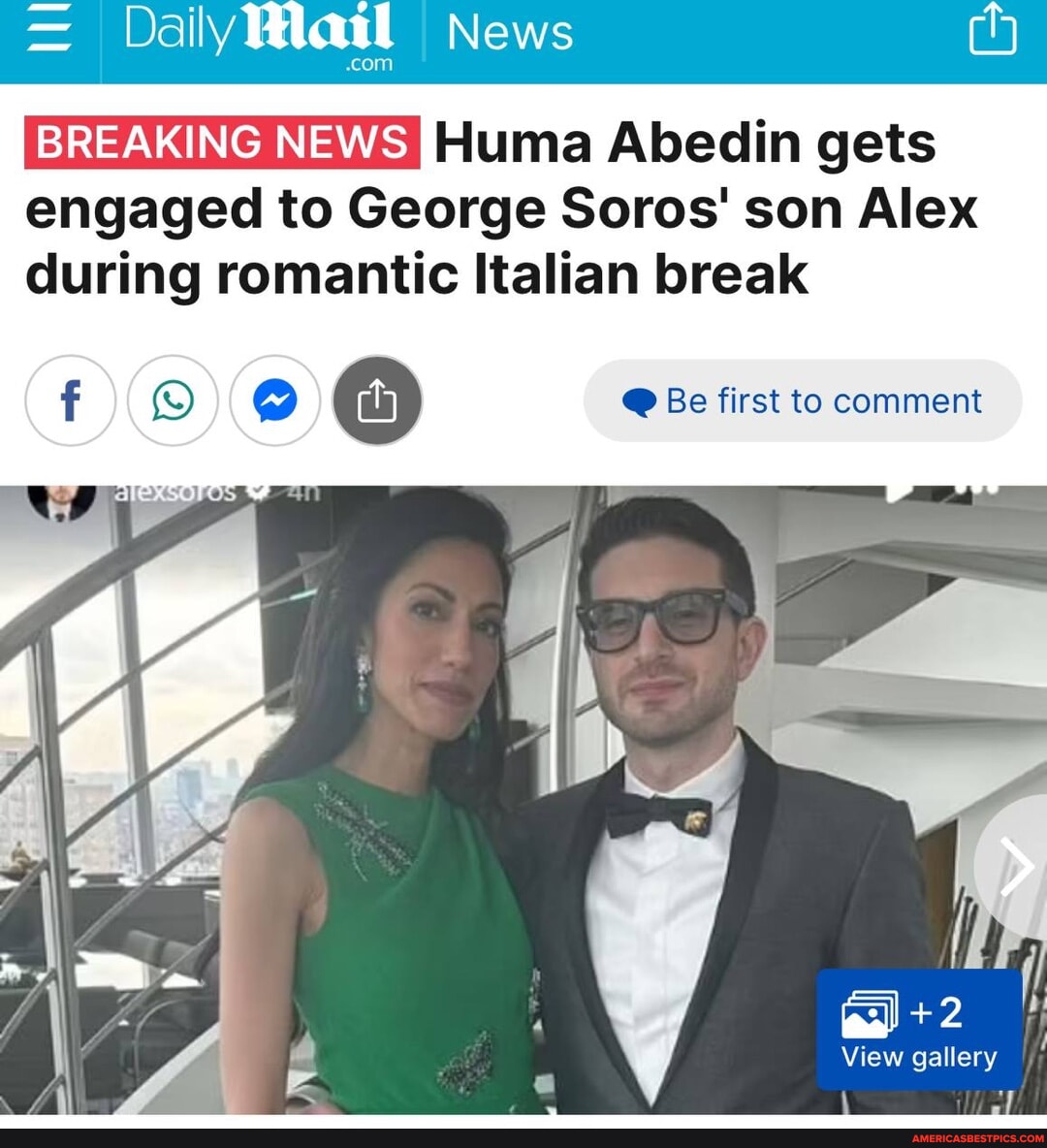
The high-profile partnership between veteran Democratic political strategist Huma Abedin and Open Society Foundations Chair Alex Soros represents a major convergence of American political strategy and global progressive philanthropy. News and ongoing analysis surrounding the couple focus on their combined influence across Democratic campaign fundraising, international civil society initiatives, and media strategy.
The Background and Evolution of the Abedin-Soros Relationship
The public announcement of Huma Abedin and Alex Soros’s engagement in mid-2024 marked a notable moment at the intersection of political strategy, global donor networks, and media attention. Both individuals bring decades of high-level involvement in national politics, diplomacy, and philanthropic governance.
Huma Abedin spent over two decades as one of the most trusted advisors to former Secretary of State and presidential candidate Hillary Clinton. Beginning as an intern in the White House First Lady’s office in 1996, Abedin rose through the ranks to serve as Traveling Chief of Staff during Clinton’s 2008 presidential campaign, Deputy Chief of Staff at the U.S. Department of State from 2009 to 2013, and Vice Chair of Hillary for America during the 2016 presidential election. Her 2021 memoir, Both/And: A Life in Many Worlds, detailed her extensive career in international diplomacy and crisis management, as well as her high-profile personal life.
Alexander Soros, the son of billionaire financier and philanthropist George Soros, emerged as a prominent figure in global philanthropy and domestic political fundraising over the past decade. Holding a PhD in history from the University of California, Berkeley, Alex Soros was officially named Chair of the Board of Directors of the Open Society Foundations (OSF) in late 2022, formally taking the helm of the $25 billion philanthropic network in 2023. In addition to directing OSF's global grantmaking operations, he serves as the principal political lead for the Soros family’s domestic political contributions, including Democracy PAC.
Their relationship, which began after meeting at a mutual friend’s event, rapidly attracted interest across political, financial, and media circles. By combining Abedin’s deep operational roots in the Democratic Party establishment with Soros’s immense financial and institutional resources, their union represents a unique bridge between legacy political networks and modern philanthropic power.
Strategic Analysis: Convergence of Clinton Strategy and Soros Philanthropy
The alignment between Huma Abedin and Alex Soros is more than a personal milestone; it serves as a analytical case study in how political networks consolidate influence. The merger of their respective spheres creates key operational synergies across political organizing, donor access, and international policy.
[Huma Abedin Network] [Alex Soros Network] • Clinton Establishment Strategists • Open Society Foundations ($25B) • State Dept & Diplomatic Contacts • Democracy PAC & Major Donor Funds • Institutional Party Leadership • Global Civil Society & NGOs \ / \ / [Combined Sphere of Influence] • High-Dollar Political Fundraising • Strategic Civil Society Grantmaking • International Media & Diplomatic Reach
1. Integration of Establishment Party Networks
Abedin’s background provides direct access to veteran political operatives, foreign policy advisors, and institutional Democratic donors developed over thirty years within the Clinton ecosystem. This network complements Alex Soros’s efforts to modernize progressive political infrastructure. While George Soros historically focused much of his foundation’s efforts on open society initiatives in post-Soviet Eastern Europe, Alex Soros has explicitly prioritized domestic U.S. political defense, electoral access, and protecting democratic institutions against authoritarian trends.
2. Operational Modernization of Philanthropy
Under Alex Soros’s leadership, the Open Society Foundations underwent significant organizational restructuring, aimed at streamlining operations and focusing resources on high-impact initiatives. Abedin’s background in high-stakes campaign leadership and executive management within the State Department aligns closely with OSF's ongoing emphasis on message coordination, agile grantmaking, and strategic public engagement.
3. Global Diplomatic and Cultural Footprint
Both figures operate fluidly on the world stage. Abedin’s diplomatic experience and international contacts from her State Department tenure mirror Soros’s routine engagement with heads of state, European Union leaders, and international non-governmental organization (NGO) executives. Their combined schedule frequently includes high-level international summits, such as the Munich Security Conference and the World Economic Forum, reinforcing their presence in global policy discussions.
Media Reception and Public Scrutiny Across the Political Spectrum
Coverage of the Abedin-Soros partnership reflects the polarized nature of contemporary political media. The news has generated distinct narratives depending on the media outlet and political orientation of the audience.
Mainstream and Lifestyle Media Coverage
In mainstream publications and lifestyle outlets such as Vogue, The New York Times, and Washington Post, the relationship has been framed primarily through the lens of a high-profile political power couple. Coverage highlights their shared commitment to public service, modern arts, human rights, and political engagement. Photos from high-society events, fashion galas, and diplomatic functions present them as prominent figures in international civic life.
Conservative Political Analysis and Criticism
Conversely, conservative media platforms and political commentators view the union through a tactical lens, framing it as a consolidation of Democratic mega-donor capital and party insider strategy. Critics often highlight the pairing to argue that establishment Democratic networks and mega-donor organizations share an interconnected structure. Commentary from conservative think tanks frequently scrutinizes Alex Soros's domestic political donations through Democracy PAC alongside Abedin’s long-standing connection to institutional Democratic politics.
Public Relations and Crisis Management
Both Abedin and Soros are experienced in navigating intense public and media scrutiny. Abedin’s career involved managing complex public relations challenges during major political campaigns and governmental shifts. Alex Soros has similarly managed public debates surrounding his family’s philanthropic endeavors. Consequently, their public communications maintain a carefully calibrated balance between personal privacy and active participation in public affairs.
Key Entity Comparison: Profiles, Networks, and Spheres of Influence
To understand the institutional power brought together by this partnership, the following table compares the distinct organizational bases, primary focus areas, and strategic assets of Huma Abedin and Alex Soros.
| Metric / Dimension | Huma Abedin | Alex Soros |
|---|---|---|
| Primary Organizational Base | Legacy Democratic Party Campaigns, State Department | Open Society Foundations (OSF), Soros Fund Management |
| Current Executive Role | Author, Political Strategist, Corporate Consultant | Chair of the Board of Directors, Open Society Foundations |
| Key Core Competencies | Campaign management, crisis communications, diplomatic protocol | Philanthropic governance, mega-donor fundraising, capital allocation |
| Primary Geographic Focus | Washington D.C., New York, International Diplomatic Corridors | Global (USA, Europe, Latin America, Africa) |
| Key Associated Networks | Clinton Global Initiative, State Department Alumni, DNC Leadership | Democracy PAC, European Council on Foreign Relations, Global NGOs |
| Primary Media Profile | Political memoirs, mainstream political commentary, lifestyle features | Financial media, philanthropic reporting, policy opinion editorials |
Political and Institutional Implications for Progressive Networks
The combined influence of Abedin and Soros carries practical consequences for campaign operations, philanthropic priorities, and progressive policy formulation.
Democratic Campaign Finance and Donor Mobilization
Alex Soros plays a leading role in directing millions of dollars in political donations to Democratic candidates, political action committees (PACs), and voting rights groups. Abedin’s deep familiarity with party infrastructure allows for highly targeted political investments. Rather than relying solely on traditional grantmaking models, the combined expertise supports integrated strategies that connect electoral mobilization with long-term policy advocacy.
Strategic Priorities at the Open Society Foundations
Under Alex Soros's leadership, OSF has refocused its multi-billion-dollar endowment on critical challenges facing democratic societies. Key strategic priorities include:
- Voting Rights and Electoral Protection: Funding legal challenges and grassroots organizations dedicated to expanding voter access in the United States.
- Judicial and Legal Reform: Supporting organizations advocating for judicial transparency, criminal justice reform, and civil liberties protection.
- Independent Journalism and Fighting Disinformation: Allocating grants to investigative journalism initiatives and digital civil rights advocacy groups globally.
Cross-Sector Network Building
Abedin's involvement in private sector consulting and non-profit advisory roles enhances the ability of progressive organizations to build coalitions across business, technology, and governance. By bringing together corporate leaders, foreign diplomats, and non-profit executives, the Abedin-Soros network operates at the intersection of private enterprise, government policy, and global advocacy.
Frequently Asked Questions
Who are Huma Abedin and Alex Soros?
Huma Abedin is a long-time political strategist, author, and former top aide to Hillary Clinton who served as Deputy Chief of Staff at the U.S. State Department. Alex Soros is an American philanthropist and the Chair of the Board of Directors of the Open Society Foundations, succeeding his father, George Soros.
When did Alex Soros assume leadership of the Open Society Foundations?
Alex Soros was elected Chair of the Board of Directors of the Open Society Foundations in December 2022, with the formal public announcement of his leadership takeover occurring in mid-2023.
What is the political significance of their engagement and partnership?
Their partnership unites one of the most experienced strategists within the Democratic Party establishment with the leader of one of the world's largest progressive philanthropic endowments and political action funds, creating a powerful hub for political fundraising, media strategy, and civil society advocacy.
How does Alex Soros's philanthropic strategy differ from his father's historical approach?
While George Soros initially focused heavily on international democratization in Eastern Europe post-Cold War, Alex Soros has placed a stronger emphasis on domestic U.S. politics, voting rights defense, legal reform, and adapting philanthropic funding to combat modern digital disinformation.
What role does Democracy PAC play in their political activities?
Democracy PAC is the primary political action committee used by the Soros family to support Democratic political campaigns, legislative funds, and voter mobilization initiatives across federal and state-level elections.
Tracking the Future Impact of the Abedin-Soros Network
For policy analysts, political donors, and non-profit leaders, the evolving role of Huma Abedin and Alex Soros provides valuable insights into modern political organization. Understanding how elite strategic management pairs with mega-scale philanthropy requires monitoring three key operational metrics:
- PAC Allocation Patterns: Track how Democracy PAC funds are distributed between national campaign committees and local, state-level voting rights operations.
- OSF Organizational Realignment: Monitor ongoing shifts in Open Society Foundations grant distribution, particularly regarding U.S. domestic civil society versus international initiatives.
- High-Level Coalition Building: Observe how major non-profit initiatives leverage diplomatic, media, and political networks to influence key legislative debates and international governance agreements.
By evaluating these indicators, political observers can measure how this partnership influences progressive fundraising, policy formulation, and global civil society.