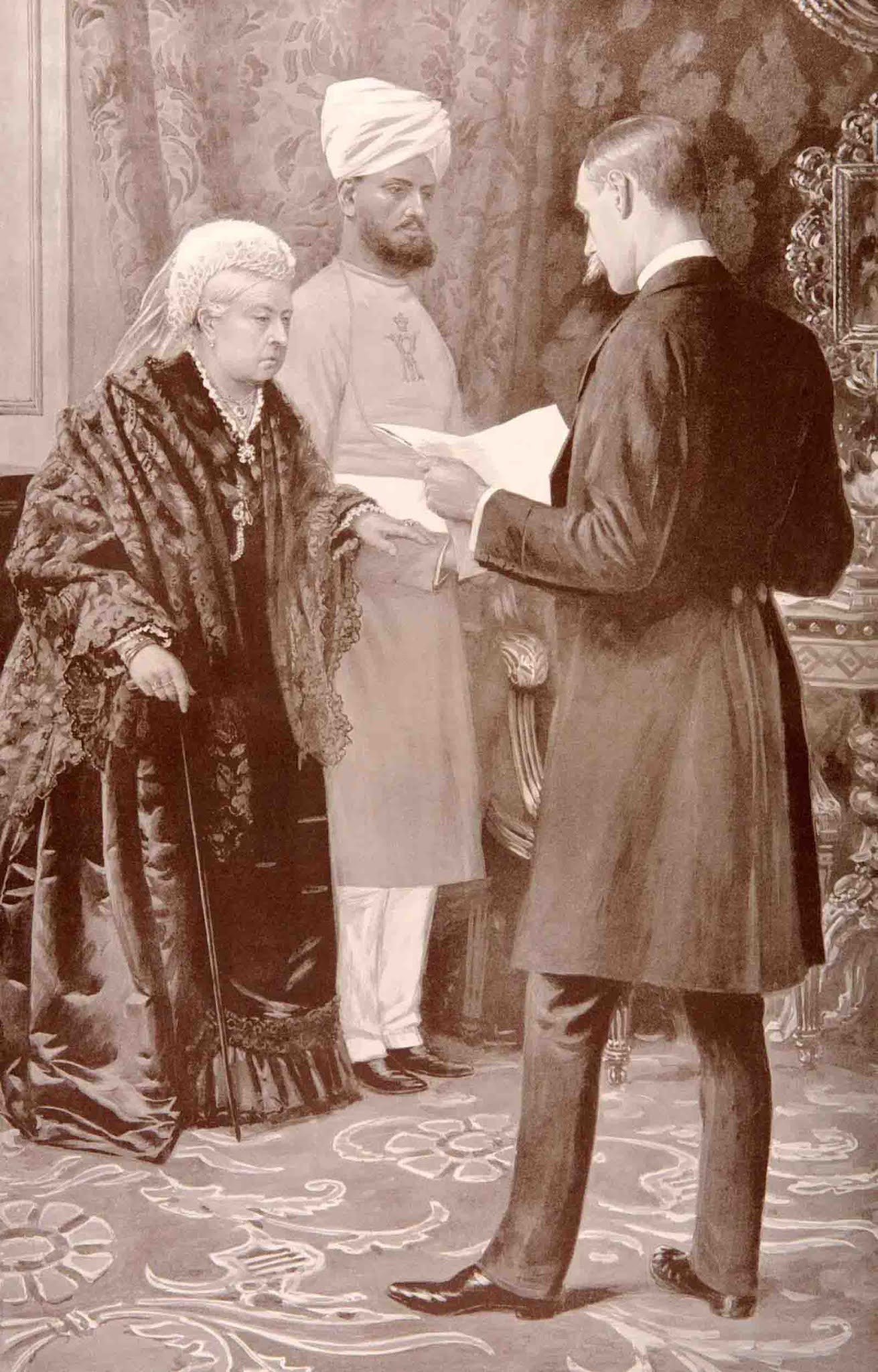
The relationship between Queen Victoria and her Indian secretary, Abdul Karim—affectionately known as the "Munshi"—was a deeply personal, platonic bond that defied the rigid racial and social hierarchies of the British Empire. Emerging in the final decade of Victoria's reign, this friendship provided the lonely monarch with emotional support and cultural enlightenment, while simultaneously provoking a near-revolt within the Royal Household.
For over a century, the full extent of this relationship remained a mystery, largely due to a systematic effort by the Royal Family to erase Karim from history after Victoria’s death. It was only with the discovery of Karim’s private diaries and the research of historian Shrabani Basu that the "untold story" finally surfaced, revealing a narrative of devotion, institutional racism, and a Queen who refused to bow to the prejudices of her court.
From Agra to Windsor: The Arrival of the Munshi
The story begins in 1887, the year of Queen Victoria’s Golden Jubilee. As the Empress of India, Victoria requested that two Indian servants be recruited to assist with the festivities and to provide a "palpable" connection to the subcontinent she ruled but had never visited. Abdul Karim, a 24-year-old clerk from a prison in Agra, was one of the men selected.
Karim was the son of a hospital assistant, a fact that would later become a point of contention among the British elite who wished to cast him as a "low-born" peasant. Upon his arrival at Windsor Castle, he was initially employed as a khidmatgar (waiter). However, his impact on the Queen was immediate. Victoria, then 68 and still mourning the loss of her previous confidant John Brown, was struck by Karim’s poise and handsomeness.
Within months, Karim moved from waiting tables to teaching the Queen "Hindustani" (Urdu). This transition marked his elevation to the status of "Munshi," or teacher. Victoria’s journals from this period reflect a renewed zest for life; she filled page after page with Urdu script, documenting her lessons and her growing affection for her new instructor. By 1888, he was no longer a servant but a formal member of her inner circle.
The Evolution of a Bond: Teacher, Secretary, and Confidant
What began as a linguistic interest quickly evolved into a profound intellectual and emotional partnership. Karim was not merely a language teacher; he became a primary source of information regarding Indian affairs, often bypassing the official channels of the India Office. He spoke to the Queen about the tensions between Hindus and Muslims, the grievances of her Indian subjects, and the cultural richness of his homeland.
Victoria rewarded Karim with unprecedented honors. She granted him the title of "Indian Secretary," provided him with private cottages at Windsor, Osborne, and Balmoral, and allowed him to bring his wife and other family members to England. He was eventually awarded the Order of the Indian Empire (CIE) and the Royal Victorian Order (MVO).
The nature of their intimacy was maternal yet intensely protective. Victoria often signed her letters to him as "your loving mother" or "your closest friend." In a court characterized by stiff formality, Karim offered the Queen a sense of novelty and a bridge to the "Jewel in the Crown" of her empire. However, this proximity to power made him the most hated man in the Royal Household.
A Household in Revolt: Racism and Classism at Court
The presence of an Indian man in such a high position of influence triggered a sustained campaign of hostility from the Queen’s staff, her family, and government officials. The "Household," led by figures such as the Queen’s private secretary Sir Henry Ponsonby and her physician Sir James Reid, viewed Karim with a mixture of class-based elitism and virulent racism.
The objections to Karim were multifaceted:
- Social Status: The court insisted Karim was of "low birth" and therefore unfit to associate with royalty. They frequently attempted to dig up "scandalous" details about his father’s occupation to discredit him.
- Political Influence: Officials feared that Karim was an agent for Muslim interests in India, suspecting him of coloring the Queen’s views on sensitive religious and political conflicts.
- Racial Prejudice: The idea of an Indian man being treated as an equal—or in some cases, a superior—to white British courtiers was intolerable to the Victorian establishment.
Despite numerous threats of collective resignation from her staff, Victoria remained steadfast. She famously rebuked her courtiers, accusing them of "race prejudice" and stating that she would not have her "dear Munshi" treated with anything less than respect. This tension reached its peak in the late 1890s, but Victoria never wavered in her support, continuing to elevate Karim’s status until her final days.
Comparative Dynamics: John Brown vs. Abdul Karim
To understand the controversy surrounding Abdul Karim, it is helpful to compare his role with that of John Brown, Victoria’s previous favorite. Both men served as "outsider" figures who provided the Queen with the emotional intimacy she lacked from her peers and children.
| Feature | John Brown | Abdul Karim (The Munshi) |
|---|---|---|
| Origin | Scotland (Highlands) | India (Agra) |
| Years of Service | 1865–1883 | 1887–1901 |
| Primary Role | Personal Ghillie / Protector | Teacher / Indian Secretary |
| Official Titles | Esquire | CIE, MVO, Hafiz |
| Nature of Opposition | Class-based (The "Scottish Upstart") | Racial, Religious, and Class-based |
| Legacy Protection | Mostly preserved, though scrutinized | Deliberately erased and records destroyed |
While John Brown was mocked by the press (often referred to as "Mrs. Brown"), the opposition to Karim was more institutionalized and aggressive. The racial component of the "Munshi" controversy added a layer of perceived "national threat" that the Scottish Brown never faced.
The Great Erasure: Post-1901 Purge
Upon Queen Victoria’s death in January 1901, the Royal Household acted with ruthless efficiency to remove all traces of Abdul Karim. Her son, King Edward VII, who had long harbored a deep resentment for the Munshi, ordered a raid on Karim’s residence at Frogmore Cottage.
While the Queen’s body was still lying in state, guards were sent to seize and burn every letter Victoria had written to Karim. The Munshi was forced to watch as the evidence of his fourteen-year friendship with the Empress was turned to ash. He was summarily dismissed from his post and ordered to return to India immediately.
For the next century, Abdul Karim became a footnote in history, often portrayed in biographies as a manipulative charlatan or a mere curiosity. The Royal Family’s desire to sanitize Victoria’s legacy and remove the "stain" of her closeness to an Indian subordinate was almost entirely successful until the 21st century.
Rediscovering the Truth: The 2010 Breakthrough
The "untold story" remained hidden until 2010, when historian Shrabani Basu discovered Karim’s lost diaries in the possession of his descendants in Agra and Karachi. These journals, along with Victoria’s Hindustani exercise books preserved in the Royal Archives, provided the first-hand evidence needed to reconstruct their relationship.
The diaries revealed a man who was deeply devoted to the Queen and a monarch who was far more progressive regarding race than her contemporaries. They showed that Victoria was not merely a passive recipient of Karim’s attention but an active student of his culture. She defended him not out of senility, as her courtiers claimed, but out of a genuine belief in his merit and a distaste for the bigotry of her court.
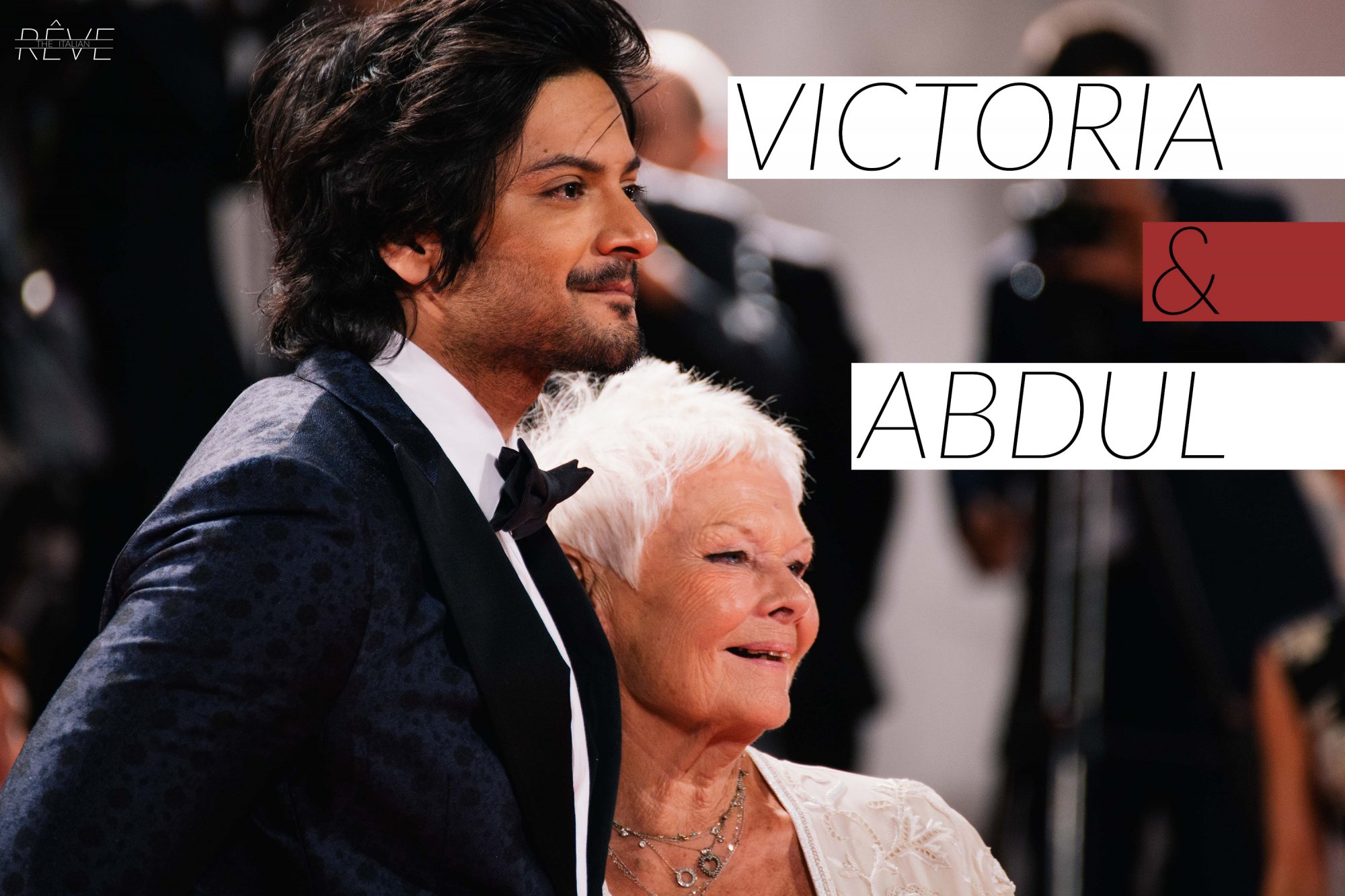
The publication of Basu's work and the subsequent 2017 film Victoria & Abdul brought this narrative into the public consciousness, challenging the traditional, stoic image of the "Widow of Windsor." In 2026, this story is recognized as a vital lens through which to view the complexities of the British Raj and the personal human connections that existed within a framework of colonial oppression.
Navigating the Historical Legacy of the Munshi
As we evaluate the story of Victoria and Abdul in 2026, it is essential to view it neither as a simple fairy tale of friendship nor a pure tale of exploitation. It was a complex intersection of power, loneliness, and cultural exchange.
For those interested in exploring this history further, the following steps are recommended:
- Consult the Primary Research: Read Shrabani Basu’s Victoria & Abdul: The True Story of the Queen’s Closest Confidant. It remains the definitive source of the discovered diaries.
- Examine the Royal Archives: While many letters were burned, the Queen’s Hindustani journals and official records of Karim’s titles still exist and are occasionally featured in royal exhibitions.
- Analyze the Post-Colonial Context: Consider how the "erasure" of Karim reflects broader historical patterns where the contributions and relationships of colonized subjects were systematically deleted from the imperial record.
Frequently Asked Questions
Was there a romantic relationship between Queen Victoria and Abdul Karim?
There is no historical evidence to suggest a sexual or romantic relationship in the modern sense. Victoria was in her 70s and 80s during the height of their friendship. Their bond was characterized by a deep emotional intimacy, a teacher-student dynamic, and a maternal affection. Victoria often treated him like a son, a role that Karim, who was much younger, filled after the death of her previous favorites.
Why did the Royal Family want to destroy their correspondence?
The Royal Household, particularly King Edward VII, viewed the relationship as a disgrace to the crown. They were motivated by a combination of Victorian morality, class snobbery, and racism. They feared that the letters might reveal the Queen’s vulnerability or show that she was being influenced by an Indian "commoner," which would undermine the perceived dignity and authority of the monarchy.
What happened to Abdul Karim after he returned to India?
Karim lived out his remaining years in Agra on the estate (Karim Lodge) that Queen Victoria had secured for him. Despite the destruction of his letters, he remained a respected figure in his local community. He died in 1909 at the age of 46. His family continued to reside in India until the Partition in 1947, after which some descendants moved to Pakistan.
How did Abdul Karim influence Victoria’s views on India?
Karim provided Victoria with a perspective that was independent of her official advisors. He helped her understand the religious nuances of her Indian subjects, leading her to advocate for more equitable treatment of Muslims within the colonial administration. He also encouraged her to adopt a more empathetic tone in her proclamations regarding Indian affairs, often much to the annoyance of the Viceroy and the Secretary of State for India.
Is the movie "Victoria & Abdul" historically accurate?
While the film captures the emotional core and the central controversy of the relationship, it takes some creative liberties with the timeline and certain character motivations. It accurately portrays the hostility of the Royal Household and the discovery of the Urdu lessons, but it simplifies the complex political atmosphere of the time for the sake of narrative brevity.