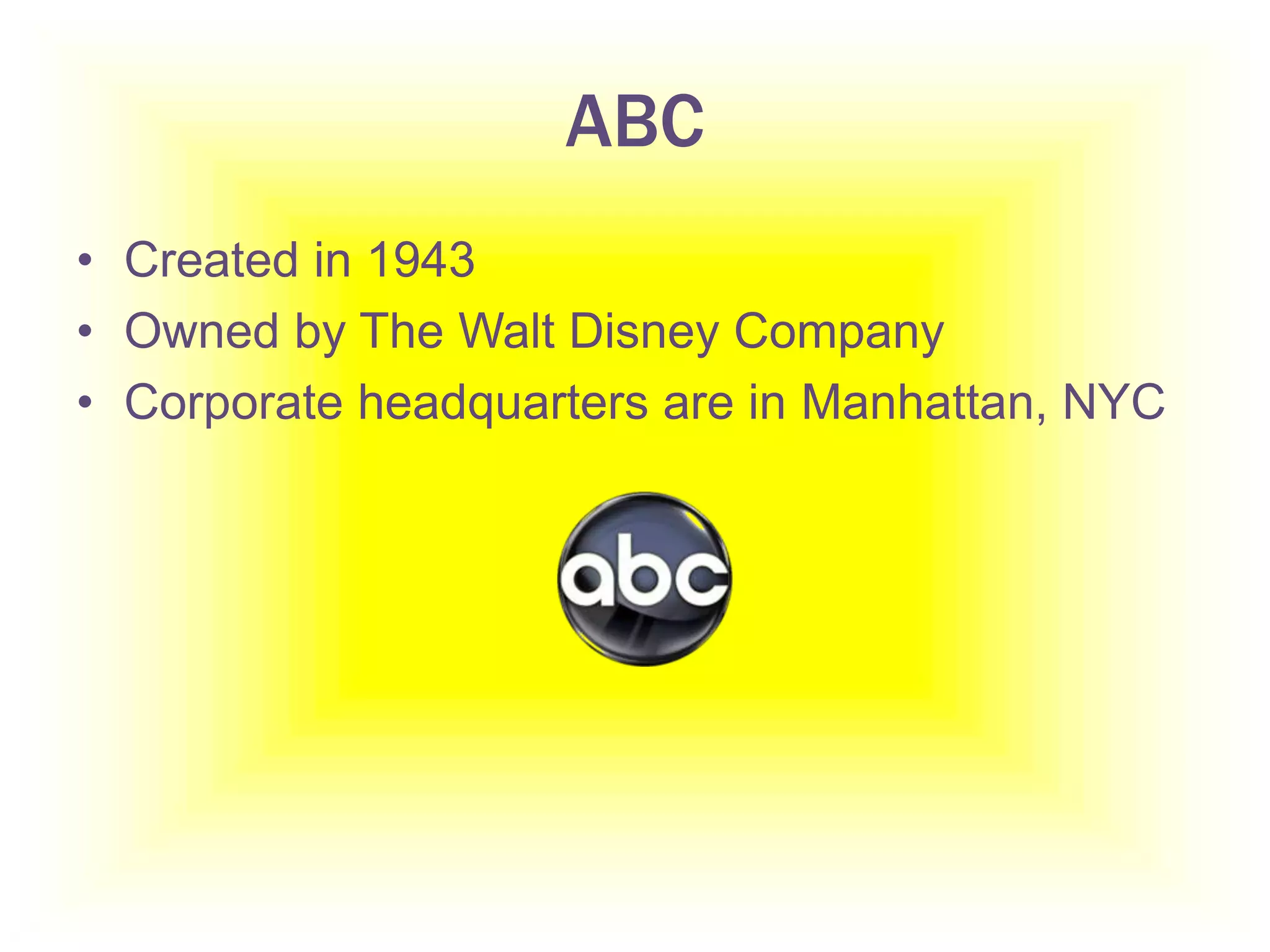
The American Broadcasting Company (ABC) is a major commercial broadcast television network owned by The Walt Disney Company through its Disney Entertainment division. Disney acquired the network in 1996 following a merger with Capital Cities/ABC, Inc. Distinct entities using the same acronym include the Australian Broadcasting Corporation, a publicly owned statutory corporation funded by the Australian Commonwealth Government.
Disambiguating "ABC": Corporate vs. Public Entities
When examining "ABC ownership," it is critical to distinguish between several prominent international organizations and private enterprises that share the three-letter acronym. Search intent and financial reporting frequently intersect across three primary entities:
- American Broadcasting Company (ABC): The American commercial broadcast television and radio network, which operates as an indirect, wholly owned subsidiary of The Walt Disney Company. This entity forms the primary focus of media ownership studies, stock research, and domestic entertainment reporting.
- Australian Broadcasting Corporation (ABC): Australia’s national public broadcaster. Unlike its American namesake, the Australian ABC is an independent statutory corporation owned by the public through the Commonwealth of Australia and governed under the Australian Broadcasting Corporation Act 1983.
- ABC Supply Co., Inc. (American Builders & Contractors): One of North America's largest wholesale distributors of roofing, siding, and window products. This entity is privately owned by Hendricks Holding Co., Inc., founded by Ken and Diane Hendricks.
Understanding the specific organizational structure of the American Broadcasting Company requires analyzing how a commercial radio network established in the 1940s transformed into a cornerstone segment of an integrated multinational entertainment conglomerate.
The Corporate Hierarchy of the American Broadcasting Company
The American Broadcasting Company does not trade as an independent entity on public stock exchanges. Instead, its corporate governance, capital allocation, and executive leadership are integrated directly into The Walt Disney Company (NYSE: DIS).
Within Disney’s corporate governance architecture, ABC sits under the Disney Entertainment business segment. This division manages the company's full portfolio of entertainment media and content businesses globally, including direct-to-consumer streaming services and linear broadcast networks.
- The Walt Disney Company (Ultimate Parent Entity - NYSE: DIS)
- Disney Entertainment (Corporate Division)
- ABC Entertainment / ABC News Group
- ABC Television Network (Broadcast Distribution)
- ABC Owned Television Stations (Local O&O TV Stations)
- ABC News (News Production Division)
- Freeform & Associated Cable Properties
- ABC Entertainment / ABC News Group
- Disney Entertainment (Corporate Division)
Key Assets Included in ABC Network Ownership
- ABC Television Network: The central programming service that distributes prime-time, daytime, news, and sports content to over 200 affiliated, independently owned television stations across the United States and its territories.
- ABC Owned Television Stations Group: A subsidiary division operating eight major-market local broadcast stations, including WABC-TV (New York), KABC-TV (Los Angeles), and WLS-TV (Chicago). These "Owned and Operated" (O&O) stations give Disney direct linear broadcast reach in the largest media markets in the nation.
- ABC News: The newsgathering and broadcast division responsible for network programs such as World News Tonight, Good Morning America, Nightline, and 20/20, alongside digital news syndication feeds.
- Disney Branded Television & ABC Signature: Production units that develop content for linear transmission on ABC as well as streaming distribution on Hulu and Disney+.
Historical Timeline of ABC Ownership Transitions
The evolution of ABC's ownership reflects broader shifts in federal media regulation, corporate antitrust oversight, and global media consolidation over the past century.
1. The RCA and NBC Blue Split (1943)
The origins of ABC lie in the National Broadcasting Company (NBC), founded by the Radio Corporation of America (RCA) in 1926. NBC operated two distinct radio networks: NBC Red and NBC Blue.
Following a landmark Federal Communications Commission (FCC) investigation into chain broadcasting, the United States Supreme Court upheld regulations prohibiting a single entity from operating two national networks in the same market (National Broadcasting Co. v. United States, 1943). Forced to divest one network, RCA sold the NBC Blue Network in 1943 to Edward J. Noble, co-founder of Life Savers candy and owner of the Rexall drugstore chain, for $8 million. Noble renamed the enterprise the American Broadcasting Company in 1945.
2. The United Paramount Theatres Merger (1953)
Seeking capital to expand into the emerging medium of broadcast television, Noble negotiated a merger between ABC and United Paramount Theatres (UPT) in 1953. UPT was the theatre operations arm spun off from Paramount Pictures following the landmark Supreme Court antitrust ruling United States v. Paramount Pictures, Inc. (1948).
Led by UPT executive Leonard Goldenson, the newly merged entity—American Broadcasting-Paramount Theatres—secured the capital necessary to build out ABC's television network, invest in original Hollywood production partnerships (such as its historic arrangement with Walt Disney in 1954), and achieve operational parity with CBS and NBC.
3. The Capital Cities Acquisition (1985–1986)
In March 1985, Capital Cities Communications, a media company smaller than ABC but recognized for strict cost containment and high operational efficiency, announced a surprise acquisition of ABC for $3.5 billion. Supported financially by Warren Buffett’s Berkshire Hathaway, the acquisition represented one of the largest non-oil corporate mergers of the 1980s.
The combined entity, Capital Cities/ABC, Inc., operated television stations, radio networks, trade publications, and cable networks, including a controlling stake in ESPN, which ABC had acquired in 1984.
4. The Walt Disney Company Acquisition (1995–1996)
In August 1995, The Walt Disney Company, under Chief Executive Officer Michael Eisner, entered into an agreement to acquire Capital Cities/ABC, Inc. for approximately $19 billion in cash and stock. Approved by shareholders and regulatory bodies in early 1996, the deal united Hollywood’s premier family entertainment studio with a distribution platform spanning a national television network, owned broadcast stations, publishing units, and sports broadcasting networks (ESPN).
| Era / Year | Controlling Entity / Parent Company | Transaction Type / Milestone | Primary Regulatory Context |
|---|---|---|---|
| 1926–1943 | Radio Corporation of America (RCA) | Operating as NBC Blue Network | FCC Monopoly Investigation & Chain Broadcasting Rules |
| 1943–1953 | Edward J. Noble (American Broadcasting System) | Divestiture purchase from RCA for $8M | Supreme Court Order (NBC v. United States) |
| 1953–1985 | AB-PT / American Broadcasting Companies, Inc. | Merger with United Paramount Theatres | Post-Paramount Pictures Theatre Divestiture |
| 1985–1996 | Capital Cities/ABC, Inc. | Leveraged buyout/merger ($3.5B) | FCC Relaxation of Station Ownership Caps |
| 1996–Present | The Walt Disney Company (Disney Entertainment) | Acquisition ($19B Cash/Stock) | Telecommunications Act of 1996 Integration |
Disney’s Operational Control and Current Governance Status
As of 2026, ABC operates fully under the operational leadership and strategic vision of The Walt Disney Company. Strategic decision-making—ranging from rights acquisition for major live sports to newsroom capital expenditures and digital platform distribution—is supervised by Disney corporate leadership.
Financial Reporting Structure
Disney does not publish a standalone income statement or balance sheet for the ABC network alone. Instead, financial metrics for ABC are embedded within the Linear Networks sub-segment of Disney Entertainment in Disney's periodic filings (Form 10-K and Form 10-Q) with the U.S. Securities and Exchange Commission (SEC).
Revenue generated by ABC includes:
- Retransmission Consent Fees: Payments received from cable, satellite, and virtual multichannel video programming distributors (vMVPDs) for the right to retransmit local broadcast signals.
- Advertising Revenue: Commercial inventory sales generated across prime-time programming, news broadcasts, and special events.
- Affiliate Fees: Contractual payments made by independently owned local station groups to carry ABC network programming.
Digital Strategy and Integration with Streaming
Under Disney's ownership, the classic linear operational model of ABC has been linked with direct-to-consumer (DTC) streaming infrastructure. Content produced by ABC Studios and broadcast on ABC’s linear feed generally streams next-day on Hulu and Disney+. This dual-window strategy allows Disney to monetize ABC-branded content simultaneously across traditional broadcast advertising markets and subscriber-based digital ecosystems.
International Counterpart: Ownership of the Australian Broadcasting Corporation
Because search queries for "ABC ownership" frequently originate in or pertain to Australian media markets, it is vital to outline the distinct statutory ownership model of the Australian Broadcasting Corporation.
Unlike the American network, the Australian ABC is a publicly owned statutory authority established by the Parliament of Australia. It operates under the Australian Broadcasting Corporation Act 1983 and is responsible directly to the federal parliament through the Minister for Communications.
Key characteristics of Australian ABC ownership and governance include:
- Public Ownership: The Australian public effectively holds beneficial ownership of the corporation; it carries no private equity or public shareholders.
- Funding Allocation: The broadcaster is funded primarily through triennial operational appropriations granted by the Australian Federal Government, supplemented by commercial revenue from international content licensing and retail merchandise sales.
- Editorial Independence: Section 8 of the ABC Act explicitly mandates that the ABC Board maintain the independence and integrity of the corporation, ensuring freedom from political interference or commercial sponsorship pressures.
Regulatory Frameworks Governing Media Ownership
Commercial network ownership in the United States is subject to regulatory oversight by the Federal Communications Commission (FCC) under the authority of the Communications Act of 1934 and the Telecommunications Act of 1996. These statutes dictate the limits of cross-ownership, national audience reach, and local market consolidation.
1. National Audience Reach Cap
Federal law caps the total percentage of national television households that a single broadcast station owner can reach. Currently, no single media company—including Disney through its ABC Owned Television Stations—may own local television stations that collectively reach more than 39% of U.S. television households.
To calculate compliance, the FCC historically utilized the "UHF Discount," which weighted Ultra High Frequency stations at 50% of their market reach compared to Very High Frequency (VHF) stations. The statutory limit prevents broadcast networks from purchasing local affiliates indefinitely.
2. Local TV Multiple Ownership Rule
The FCC limits the number of full-power commercial television stations a single entity can own in a single market. Generally, an owner may only hold two commercial television stations in the same market (a "duopoly") if specific criteria are met regarding signal overlap and market rankings (e.g., preventing ownership of two of the top four stations in a single market).
3. Dual Network Rule
The FCC’s Dual Network Rule prevents any of the top four national television networks—ABC, CBS, NBC, and Fox—from merging with or buying one another. This rule preserves competition in national news gathering, prime-time program procurement, and broadcast advertising sales.
Comparative Matrix: Major Broadcast Network Ownership Structures
To put ABC’s corporate structure into context within the broader media landscape, the table below outlines the ownership structures, ultimate parent entities, and regulating jurisdictions for major television networks:
| Network / Enterprise | Parent Entity | Ultimate Controlling Shareholder / Entity Type | Primary Business Segment | Governing Regulatory Body |
|---|---|---|---|---|
| American Broadcasting Company (ABC) | Disney Entertainment | The Walt Disney Company (Publicly Traded: DIS) | Linear Networks | FCC (United States) |
| CBS Television Network | Paramount Media Networks | Paramount Global (Controlled via National Amusements) | TV Media | FCC (United States) |
| National Broadcasting Company (NBC) | NBCUniversal | Comcast Corporation (Publicly Traded: CMCSA) | Media & Entertainment | FCC (United States) |
| Fox Broadcasting Company | Fox Corporation | Murdoch Family Trust / Public Shareholders (FOXA) | Television Segment | FCC (United States) |
| Australian Broadcasting Corporation (ABC) | Independent Board | Commonwealth of Australia (Statutory Public Corp) | Public Broadcasting | ACMA / Parliament (Australia) |
| British Broadcasting Corporation (BBC) | Royal Charter Board | Public Trust / U.K. License Fee Payers | Public Service Broadcaster | Ofcom (United Kingdom) |
Frequently Asked Questions
Is ABC owned by the U.S. government?
No. The American Broadcasting Company (ABC) is a private, investor-owned commercial entity owned by The Walt Disney Company, a publicly traded corporation listed on the New York Stock Exchange.
Who owns the Australian ABC?
The Australian Broadcasting Corporation is owned by the public of Australia as a statutory public corporation created under federal legislation (Australian Broadcasting Corporation Act 1983). It is funded by government appropriations but operates with statutory editorial independence.
Does Disney own 100% of ABC?
Yes. The Walt Disney Company acquired 100% of Capital Cities/ABC, Inc. in 1996. ABC operates as an indirect, wholly owned subsidiary within Disney's corporate structure.
How does ABC News differ from ABC network ownership?
ABC News is a specialized division within the broader American Broadcasting Company. While the ABC network handles overall channel operations, affiliate relations, and prime-time content distribution, ABC News specifically produces news, current affairs, and political programming across television and digital platforms.
Are local ABC stations owned by Disney?
Not all of them. Disney owns and operates eight local stations in major markets such as New York, Los Angeles, Chicago, and Philadelphia. The remaining ~200 local ABC affiliates across the country are independently owned by regional broadcast groups (such as Nexstar Media Group, Sinclair, Inc., or TEGNA Inc.) that maintain contractual affiliation agreements to broadcast ABC network programming.
Recommendations for Corporate Media Researchers and Analysts
When conducting corporate research, legal analysis, or financial evaluations regarding ABC ownership, consider the following procedural steps:
- Review Official SEC Filings: For financial metrics, risk factors, and divisional structure regarding the American network, consult the latest Form 10-K annual report filed by The Walt Disney Company (Ticker: DIS) via the SEC EDGAR database.
- Verify FCC Ownership Records: For station-level licensing, duopoly approvals, and ownership disclosures of local ABC affiliates, search the Federal Communications Commission’s Licensing and Management System (LMS).
- Distinguish Regional Jurisdictions: Ensure institutional documentation correctly differentiates between US-based commercial operations (The Walt Disney Company) and Australian public service broadcasting (Commonwealth of Australia) to avoid governance classification errors.