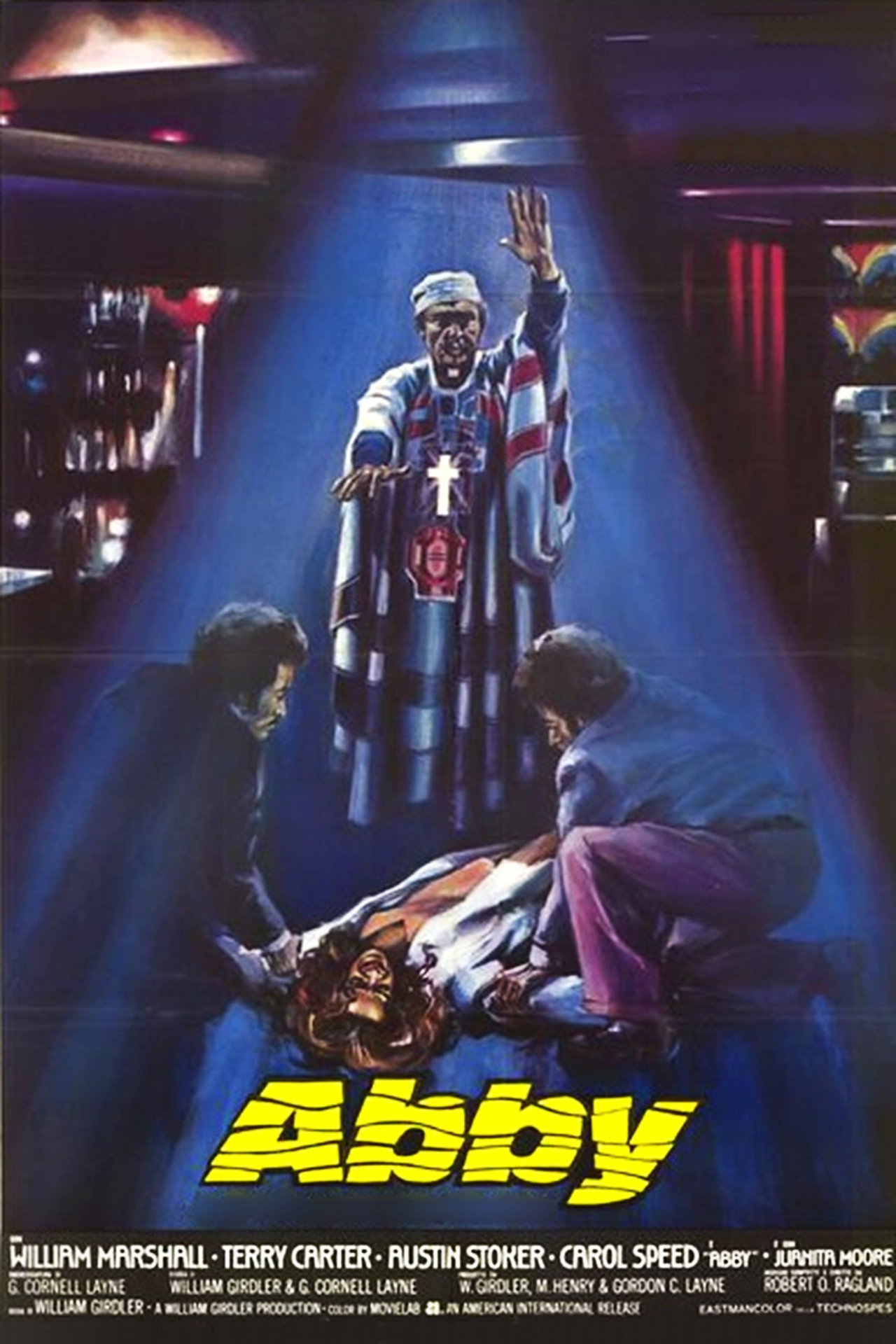
Abby is a 1974 American supernatural horror film directed by William Girdler and starring Carol Speed, William Marshall, and Austin Stoker. The story follows a marriage counselor who becomes possessed by an ancient West African Yoruba deity of sexuality and discord. It achieved box-office success upon release before being pulled from theaters due to a high-profile copyright lawsuit filed by Warner Bros.
Plot Summary and Narrative Themes
The narrative of Abby revolves around the Williams family. Dr. Garret Williams (played by William Marshall), a prominent archaeologist and bishop, conducts an excavation in Nigeria where he unearths a small ceremonial statue representing Eshu, the Yoruba Orisha of sexuality, trickery, and chaos. Unbeknownst to Dr. Williams, unearthing the artifact releases the ancient entity from its physical container.
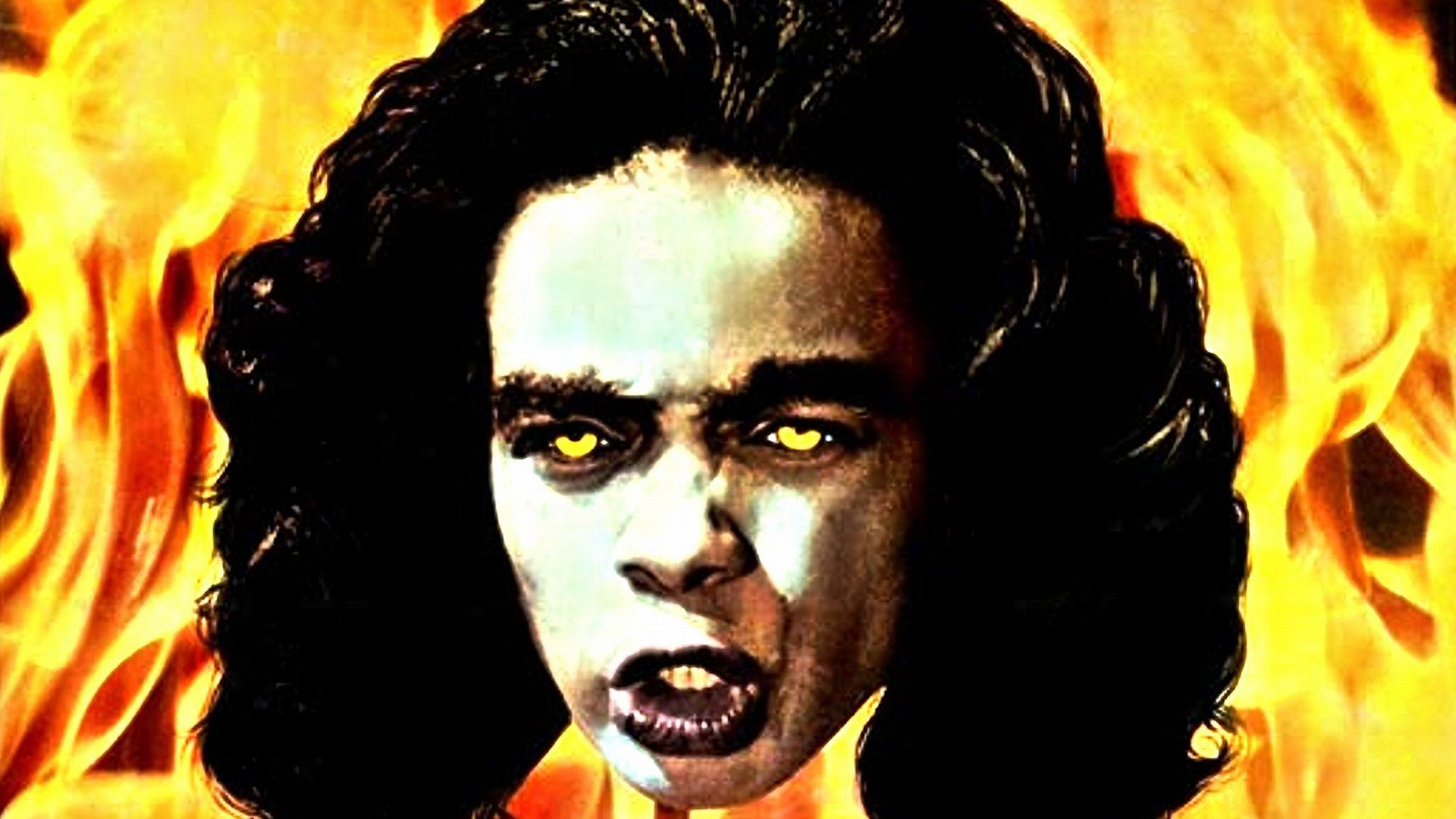
The spirit travels across the Atlantic to Louisville, Kentucky, targeting Dr. Williams's daughter-in-law, Abby Williams (Carol Speed). Abby is an active community member, singer, and marriage counselor married to Reverend Emmett Williams (Terry Carter). Initially presenting as mild behavioral shifts, the possession rapidly accelerates into violent personality changes, extreme sexual aggression, and physical manifestations of telekinesis and vocal distortion.
- Archaeological Excavation in Nigeria (Eshu Released)
- Abby Williams Possessed in Louisville (Escalating Violence)
- Dr. Garret Williams Conducts Exorcism
Unlike Western possession narratives of the era that focused strictly on Judeo-Christian demonology, Abby weaves West African religious mythology into a American domestic setting. The film contrasts traditional African spiritual beliefs with Protestant Christian theology. While the central conflict involves exorcising an evil force, the narrative highlights the collision between ancient African folklore, modern Black middle-class life, and institutional religion.
Cast and Key Creative Roles
Abby brought together established actors from 1970s Black cinema, stage, and television, alongside a crew that specialized in low-budget independent filmmaking.
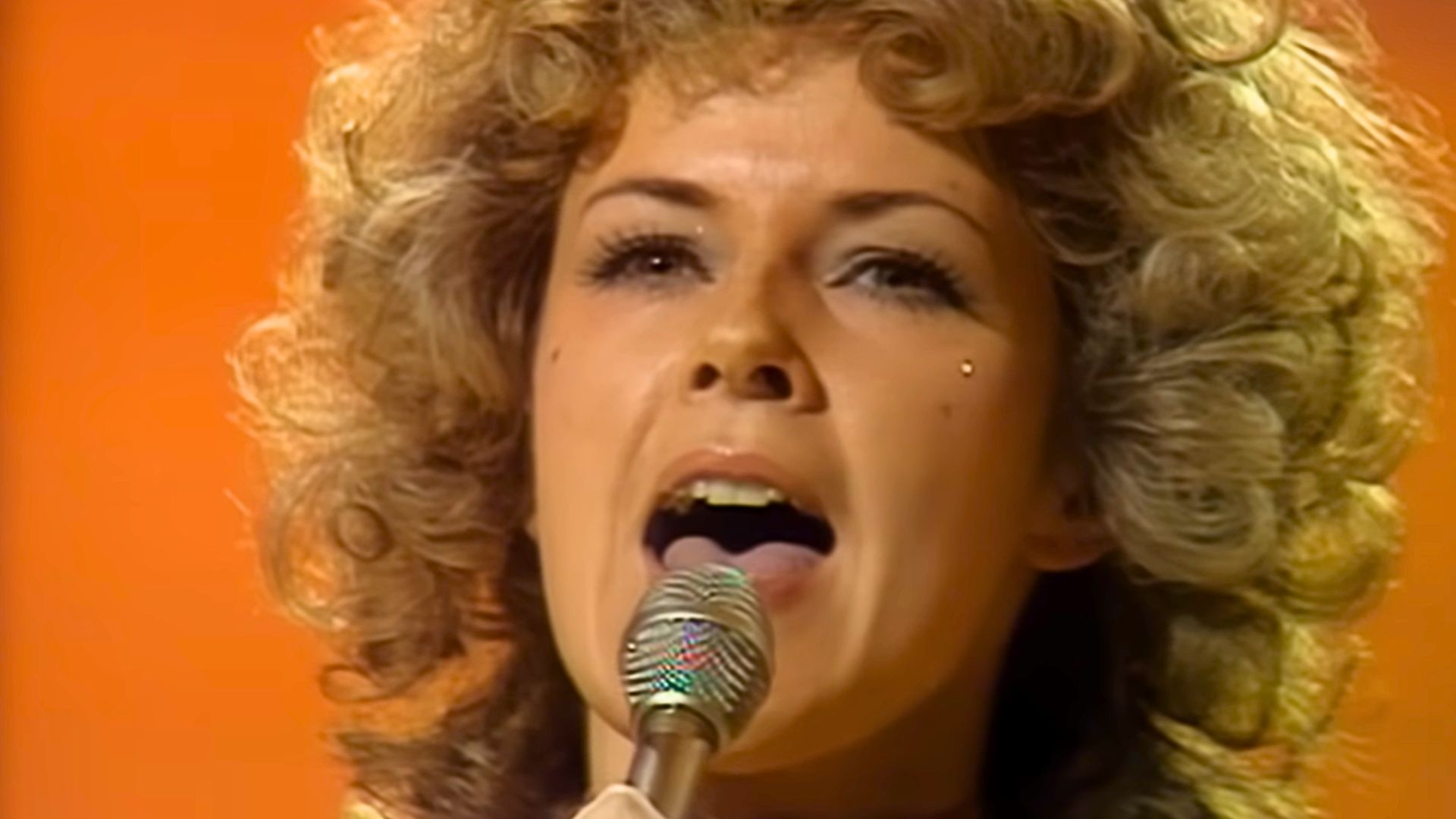
- Carol Speed (Abby Williams): Speed delivered a dynamic physical performance, transitioning from a soft-spoken counselor to a demonically controlled woman. Speed also sang the film's title theme, "Is It Love?", which played during the opening credits.
- William Marshall (Dr. Garret Williams): A classically trained actor famous for his title role in Blacula (1972) and his stage portrayals of Othello, Marshall brought gravitas to the role of the scholar-clergyman. His presence gave the film's theological debates weight.
- Terry Carter (Rev. Emmett Williams): Known for his work in McCloud and later Battlestar Galactica, Carter played Abby’s desperate husband, torn between medical explanations and religious intervention.
- Austin Stoker (Cass Potter): Stoker played a detective investigating the strange incidents surrounding Abby, adding a procedural element to the supernatural horror.
- William Girdler (Director/Co-writer): A prolific independent filmmaker based in Louisville, Kentucky, Girdler directed several genre movies in the 1970s, including Grizzly (1976), Day of the Animals (1977), and The Manitou (1978), before his death in 1978.
The Warner Bros. Lawsuit and Distribution Injunction
The defining chapter in the history of Abby occurred off-screen. Released by American International Pictures (AIP) in December 1974, Abby was a commercial success, grossing over $4 million in its first month of release against a modest budget estimated under $100,000.
However, Warner Bros. quickly initiated legal action against AIP, alleging that Abby infringed on the copyright and trademark of their 1973 blockbuster The Exorcist. Warner Bros. claimed that the character dynamics, plot beats, vocal effects, levitation scenes, and structural climax copied key elements of William Peter Blatty’s adapted work.
- Dec 1974: Theatrical Release
- Jan 1975: $4M Box Office
- WB Lawsuit Filed
- Injunction Issued & Pulled
A federal judge issued a temporary injunction that halted AIP from distributing and displaying the film. AIP eventually settled the matter out of court, but the legal intervention effectively removed Abby from theatrical circulation. The film's master materials remained entangled in legal disputes for decades, preventing official network television broadcasts and standard theatrical re-releases.
Structural Comparison: Abby vs. The Exorcist
While Abby drew undeniable structural inspiration from The Exorcist, it incorporated distinct cultural, thematic, and narrative differences.
| Narrative Element | The Exorcist (1973) | Abby (1974) |
|---|---|---|
| Antagonist Entity | Pazuzu (Assyrian/Babylonian demon) | Eshu (Yoruba Orisha/Deity) |
| Primary Victim | Regan MacNeil (12-year-old child) | Abby Williams (Adult marriage counselor) |
| Exorcist Figure | Father Lankester Merrin / Father Karras | Dr. Garret Williams (Scholar/Bishop) |
| Primary Setting | Georgetown, Washington, D.C. | Louisville, Kentucky |
| Cultural Perspective | Roman Catholic theology | African diaspora folklore & Protestantism |
| Production Budget | ~$12 million | ~$100,000 |
| Distributor | Warner Bros. | American International Pictures (AIP) |
The comparison shows that while Abby duplicated the core structure of a possession film—an ancient artifact uncovered by an archaeologist unleashing a spirit that possesses an innocent victim—it shifted the context to an adult woman within a Black community, grounding the spiritual battle in African traditional religion rather than strictly Catholic ritual.
Cultural Context: Blaxploitation Meets Supernatural Horror
The early 1970s saw the rise of the Blaxploitation era, a period in American cinema characterized by Black-led casts, urban settings, and soundtracks featuring funk and soul music. While many films in this movement focused on crime, action, and detective narratives, a subgenre emerged that fused Blaxploitation tropes with classic horror archetypes.
Blacula (1972) demonstrated that classic horror monsters could be reinterpreted through an African-American lens. Abby followed this trend by applying the formula to the newly popularized subgenre of demonic possession movies.
- 1971: Shaft (Action)
- 1972: Blacula (Vampire Horror)
- 1973: The Exorcist (Mainstream Possession)
- 1974: Abby (Blaxploitation Horror)
Rather than framing the possessed woman as a passive victim, the script positioned Abby as an educated professional whose affliction disrupts her family life, social circle, and religious community. The film's musical score, composed by Robert O. Ragland, blended traditional horror orchestration with contemporary 1970s soul and jazz elements, reinforcing its cultural identity.
Technical Production and Special Effects Breakdown
Operating on an independent budget in Louisville, Kentucky, William Girdler and his technical crew relied on practical special effects to simulate supernatural occurrences.
- Vocal Distortion: To create the voice of the possessive entity Eshu, sound engineers layered Carol Speed’s voice with deep, pitch-shifted vocal tracks recorded by actor Carol Speed and additional voice performers, creating a guttural, polyphonic effect similar to the sound design used in The Exorcist.
- Environmental and Mechanical Effects: The production utilized mechanical rigging, hidden wires, and air blowers to simulate levitation, flying household objects, and sudden localized windstorms inside the Williams home and a night-club setting.
- Makeup and Prothetics: Makeup artist Bo Tipton created the physical transformation of Abby. As the possession progressed, the makeup evolved from subtle skin discoloration to prominent facial lesions, glowing eyes, and alter-colored contact lenses.
While these practical effects were limited compared to studio budget films, they allowed Girdler to complete principal photography on schedule before the legal challenges halted distribution.
Rediscovery and Current Availability Status
Due to the legal injunction following its initial theatrical run, Abby became a lost film for broad audiences. For decades, horror fans and film historians could only view the movie through low-quality bootleg VHS tapes copied from original theatrical prints or rare international television broadcasts.
In the late 2000s and 2010s, original 35mm prints were recovered, leading to specialized screenings at film festivals and retrospective exhibitions celebrating 1970s Black cinema. Independent home video labels eventually secured rights to scan and remaster surviving film elements, making Abby available on DVD and high-definition physical formats.
Film scholars now examine Abby not merely as a exploitation movie, but as a notable historical artifact that illustrates the intersection of copyright law, genre trends, and Black representation in American cinema during the 1970s.
Frequently Asked Questions
Why was Abby removed from theaters shortly after its release?
Warner Bros. filed a copyright infringement lawsuit against distributor American International Pictures (AIP), claiming that Abby copied key elements, characters, and plot points from The Exorcist (1973). A court injunction led to the film's removal from theaters.
Who directed Abby (1974)?
The film was directed by William Girdler, an independent filmmaker known for 1970s genre movies such as Grizzly, Day of the Animals, and The Manitou.
Is Abby based on Christian demonology?
While the main characters are Christian, the possessive force in Abby is based on Eshu, a deity from West African Yoruba mythology associated with trickery and sexuality.
What role did William Marshall play in the film?
William Marshall played Dr. Garret Williams, an archaeologist and bishop who unearths the spirit of Eshu in Nigeria and later performs the exorcism on his daughter-in-law.
How does Abby fit into the Blaxploitation film movement?
Abby combined horror elements with the stylistic conventions of 1970s Blaxploitation cinema, featuring a Black cast, an urban-suburban middle-class setting, and a score with soul and funk influences.
Accessing and Researching Abby Today
For film researchers, historians, and genre collectors seeking to study Abby, the following steps provide a path to viewing and analyzing the film:
- Physical Media Releases: Seek out restored DVD or Blu-ray editions released by specialized boutique distribution labels that catalog vintage genre cinema. Ensure the release specifies a transfer sourced from surviving 35mm elements.
- Archival Screening Prints: Check screenings hosted by film archives, university media departments, and genre festivals that feature 1970s American cinema retro-perspectives.
- Academic Resources: Consult film studies literature focusing on 1970s independent cinema, Blaxploitation history, and copyright disputes in Hollywood, such as legal analyses of the Warner Bros. v. AIP distribution injunction.