The Beatles’ 1969 album Abbey Road transformed a quiet residential street in North London into one of the most recognizable cultural landmarks in modern history. Visiting Abbey Road requires understanding both its rich musical legacy and practical visitor tips: the famous zebra crossing and recording studios are located in St John's Wood, accessible via the London Underground, where active traffic safety rules and local visitor etiquette apply.
The History and Production of Abbey Road
Although Let It Be was the final album released by The Beatles in May 1970, Abbey Road was the last album the group recorded together. Recording sessions began in earnest during the spring and summer of 1969 at EMI Studios, located at 3 Abbey Road in St John's Wood, London. Following the tense and disjointed sessions for the Get Back project (which later became Let It Be), the band reunited with producer George Martin and engineer Geoff Emerick with a shared commitment to produce a disciplined, polished record.
The production of Abbey Road marked a significant technological turning point for both the band and EMI Studios. It was the first Beatles album recorded using a solid-state transistor mixing console—the REDD.51's successor, the TG12345—rather than the older vacuum-tube desks used on earlier records. The TG console offered a smoother, warmer, and more refined sound, which defined tracks like "Something," "Here Comes the Sun," and "Come Together."
- TG12345 Console
- Solid-State Transistor Circuitry
- Smoother, Warmer Production Sound
The album was also notable for its pioneering adoption of the Moog synthesizer, purchased by George Harrison. The synthesizer added distinct textures to songs such as "Maxwell's Silver Hammer," "I Want You (She's So Heavy)," and "Because."
Side Two of the LP features the famous 16-minute continuous climax, often referred to as the "Abbey Road Medley." Conceived largely by Paul McCartney and George Martin, the medley stitched together finished songs and unfinished fragments from McCartney, John Lennon, and Harrison into a seamless suite. The sequence culminated in "The End," featuring the band's only recorded drum solo by Ringo Starr, followed by three-way traded guitar solos between McCartney, Harrison, and Lennon.
Anatomy of the August 8, 1969 Photo Shoot
The cover art of Abbey Road is one of the most famous and imitated photographs in popular culture. Originally tentatively titled Everest—after the brand of cigarettes smoked by engineer Geoff Emerick—the album's title was changed to Abbey Road when the band decided against traveling to the Himalayas for a cover shot, opting instead to shoot outside their working studio.
- Initial Concept: "Everest" (Himalayas Shoot)
- Final Concept: "Abbey Road" (10-Minute Local Shoot)
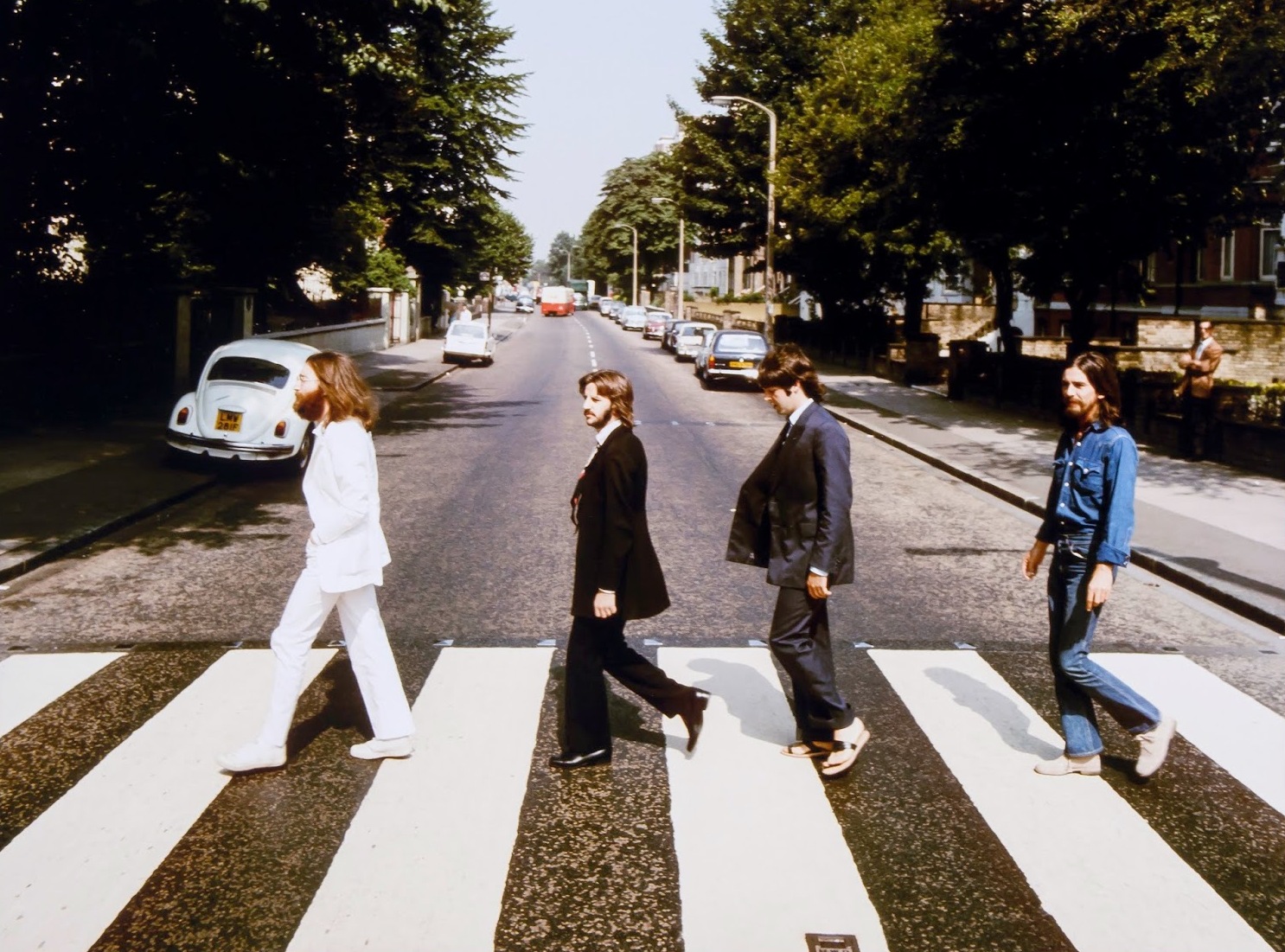
On Friday, August 8, 1969, at approximately 11:30 AM, Scottish photographer Iain Macmillan was given roughly ten minutes to capture the cover image. A local police officer temporarily held up traffic while Macmillan stood on a stepladder in the middle of the street. Macmillan took six frames in total:
Frame 1: Lennon leads the group left to right, followed by Ringo Starr, McCartney, and Harrison. McCartney is wearing sandals.
Frames 2 & 3: The group walks right to left across the zebra crossing.
Frame 4: The group walks left to right again, but traffic builds up in the background.
Frame 5 (Selected Cover): The band walks left to right in synchronized steps. McCartney walks barefoot, holding a cigarette in his right hand (despite being left-handed).
Frame 6: The group walks right to left, out of alignment.
Frame 1 (Left to Right)
Frame 2 & 3 (Right to Left)
Frame 4 (Left to Right, Traffic)
Frame 5 (SELECTED COVER)
Frame 6 (Right to Left)
Art director Kosh designed the album sleeve without the band's name or album title on the front cover, believing the image alone was sufficient to identify the world's biggest rock group. The image also unintentionally fueled the famous "Paul is Dead" urban legend, as theorists analyzed minor details on the cover, including:
- McCartney's barefoot walking and off-step stride, interpreted as a symbol of a funeral procession.
- The white Volkswagen Beetle parked on the left side of the street, carrying the number plate "LMW 281F," misconstrued as an anagram or cryptogram.
- The black police van parked opposite, seen by theorists as symbolizing official silence.
Heritage Status of Abbey Road Studios and the Crossing
In recognition of their national and global cultural significance, both the recording studio building and the pedestrian crossing received official protection from the UK government.
In February 2010, the studio complex at 3 Abbey Road was awarded Grade II listed status by the Department for Culture, Media and Sport following advice from Historic England. The listing protects the 1830s Georgian townhouse facade and historical studio spaces from unauthorized alterations or demolition. EMI Studios was officially renamed Abbey Road Studios in 1970 following the massive success of the album. Beyond The Beatles, the studio has hosted landmark sessions for Pink Floyd (The Dark Side of the Moon), Edward Elgar, Radiohead, and scores of film soundtracks, including Star Wars and The Lord of the Rings.
In December 2010, the zebra crossing itself was granted Grade II listed status on the National Heritage List for England. It marked the first time a site was listed solely for its cultural and historical significance rather than architectural features. According to historic records published by Historic England, the original zebra crossing painted in 1969 was slightly relocated by local authorities during minor road redesigns in the 1970s. However, the current crossing—located just meters from the original spot directly outside the studio—remains the legal protected heritage site visited by millions of fans.
Practical Visitor Guide: Directions, Transport, and Mistakes
Visiting Abbey Road requires careful planning to ensure safety and avoid common navigational errors.
Location and Transit Options
Abbey Road is situated in the residential neighborhood of St John's Wood in North London (Postcode: NW8 9AY).
- Nearest Tube Station: St John's Wood Station (Jubilee Line). Upon exiting the station, walk west down Grove End Road for approximately 5 minutes until it intersects with Abbey Road. The studio and crossing are immediately visible at the corner of Grove End Road and Abbey Road.
- Bus Routes: Routes 139 and 189 stop directly near the crossing on Abbey Road.
- St John's Wood Underground (Jubilee Line)
- Walk 5 Minutes West on Grove End Road
- Intersection of Grove End Road & Abbey Road (Crossing & Studio)
Critical Tourist Trap: The Abbey Road DLR Warning
A widespread mistake made by visitors to London is confusing Abbey Road Studios in St John's Wood with Abbey Road DLR Station in West Ham, East London.
- St John's Wood (NW8): The actual location of the Beatles landmark, studio, shop, and historic crossing.
- Abbey Road DLR (E15): An industrial Docklands Light Railway station located roughly 9 miles (14 km) away in East London, with no historical connection to The Beatles or EMI Studios.
TfL (Transport for London) maintains warning signage at the East London DLR station directing confused tourists back toward the Jubilee Line for St John's Wood.
Key Landmarks Comparison & Visiting Details
The following reference table outlines the key spots associated with a visit to Abbey Road, their accessibility, and practical tips:
| Location / Landmark | Access Status | Opening / Operating Details | Primary Visitor Recommendation |
|---|---|---|---|
| Abbey Road Zebra Crossing | Open Public Highway | Accessible 24/7 (Free) | Visit early morning (before 8:30 AM) to avoid heavy commuter traffic and large tour crowds. |
| Abbey Road Studios (Main Building) | Working Commercial Studio | Closed to the general public (Private access only) | Photograph the exterior wall, gateposts, and iconic building facade from the public sidewalk. |
| Abbey Road Shop | Open to Public | Typically open daily (Check live times; usually 9:30 AM–5:30 PM) | Located next door to the main entrance; stocks official merchandise, vinyl, and souvenirs. |
| Abbey Road Live Webcam | Virtual Access online | Broadcasts 24/7 online via the official studio site | Alert friends back home to watch your crossing recreation live via the webcast feed. |
| Graffiti Wall (Studio Boundary) | Open Public Site | Accessible 24/7 | Fans leave signed messages on the white perimeter walls, which are periodically repainted by the studio. |
Visitor Etiquette and Road Safety Guidelines
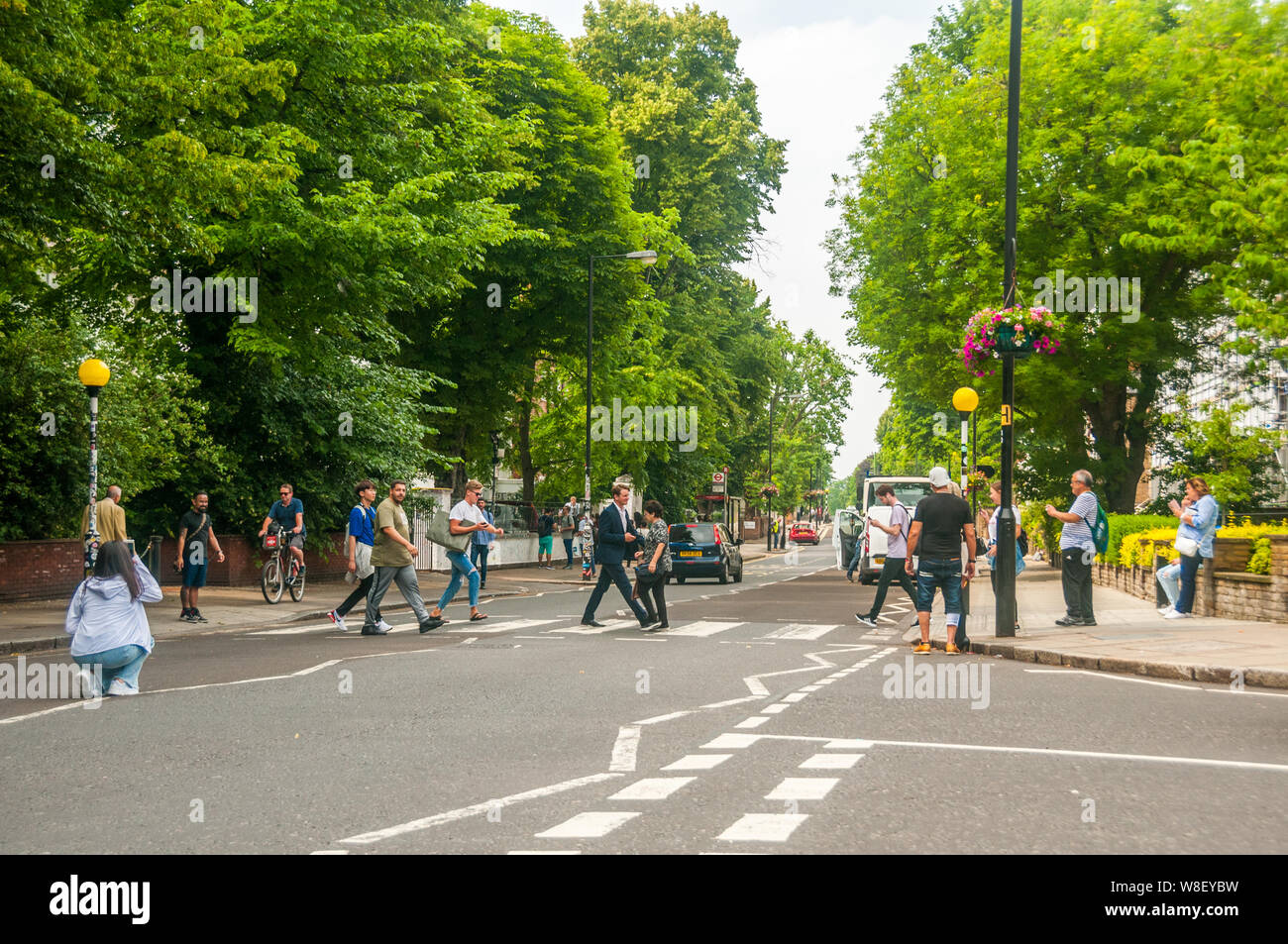
Because Abbey Road is a busy, active vehicular thoroughfare in London, visitors must prioritize personal safety and respect local residents.
Road Safety Precautions
Do Not Block Traffic: Abbey Road carries regular bus routes, delivery trucks, and residential traffic. Drivers are legally obligated to stop at zebra crossings when pedestrians enter, but sudden surges of tourists stepping into the street create hazardous conditions.
Avoid Protracted Photo Shoots: Recreating the album cover should be done swiftly. Do not linger in the middle of the road or sit down on the road surface.
Be Aware of Blind Spots: Vehicles turning onto Abbey Road from Grove End Road have limited visibility. Always look left and right before stepping onto the stripes.
Step onto Crossing Swiftly
Take Photograph
Exit Road Surface
Do Not Linger in Traffic
Exterior Studio Etiquette
- Graffiti Policy: Abbey Road Studios allows fans to write message notes on the white concrete boundary walls surrounding the property. However, do not deface the main entrance doors, listed building brickwork, or neighboring private residential properties.
- Noise Levels: The studio is located in a quiet residential area. Visitors should keep noise down, particularly early in the morning or late at night.
Frequently Asked Questions
Can you tour the inside of Abbey Road Studios?
No, Abbey Road Studios is a private, working recording studio complex and does not offer daily public tours. However, the studio occasionally hosts public lectures (such as the "Sound of Abbey Road" series) or special events during limited off-peak weekends. The adjacent Abbey Road Shop is fully accessible to the public without a ticket.
Is the zebra crossing in its original 1969 position?
The zebra crossing is in almost the exact location as it was during the 1969 photo shoot. Road alignment adjustments conducted by Westminster City Council in the 1970s moved the crossing by a few meters for traffic management, but the site remains protected under its official Grade II listed status as the historical location.
What is the best time of day to photograph the crossing?
Early mornings on weekdays—specifically between 6:30 AM and 8:00 AM—offer the best lighting and minimal traffic congestion. By mid-morning and throughout the afternoon, tourist queues form along the sidewalk, and heavy residential and commercial traffic makes photo opportunities difficult.
Why is Paul McCartney barefoot on the album cover?
McCartney arrived at the photo shoot wearing sandals. Because August 8, 1969, was a warm day in London, he stepped out of his shoes for several frames of the shoot to walk comfortably across the pavement. This spontaneous choice later became a central point of the "Paul is Dead" urban legend.
Where is the white Volkswagen Beetle from the cover today?
The white 1968 Volkswagen Beetle (registration LMW 281F) pictured on the left side of the street belonged to a resident living near the studio. After the album was released, the car's license plate was repeatedly stolen by fans. In 1986, the vehicle was sold at auction to the Volkswagen Museum in Wolfsburg, Germany, where it remains on display.
Next Actions for Planning Your Beatles London Tour
To get the most out of your visit to Abbey Road and connected Beatles history in London, follow these steps:
- Verify Transit Connections: Take the Underground Jubilee Line straight to St John's Wood Station. Avoid booking routes to Abbey Road DLR station.
- Combine Nearby Beatles Sites: Combine your trip to Abbey Road with other Beatles landmarks within walking distance. Paul McCartney’s London residence is located a short 5-minute walk away at 7 Cavendish Avenue, and the former Apple Corps building (site of the 1969 rooftop concert) is located nearby at 3 Savile Row in Mayfair.
- Check Shop Hours in Advance: If purchasing official memorabilia, confirm operating hours on the official Abbey Road Studios website prior to arrival.
- Prepare Photo Equipment: If attempting a cover recreation, use a lens with standard focal length (around 35mm to 50mm) to match the perspective taken by photographer Iain Macmillan in 1969, and assign one person in your group to act as lookout for oncoming vehicles.
EDITORIAL CATEGORY METADATA: