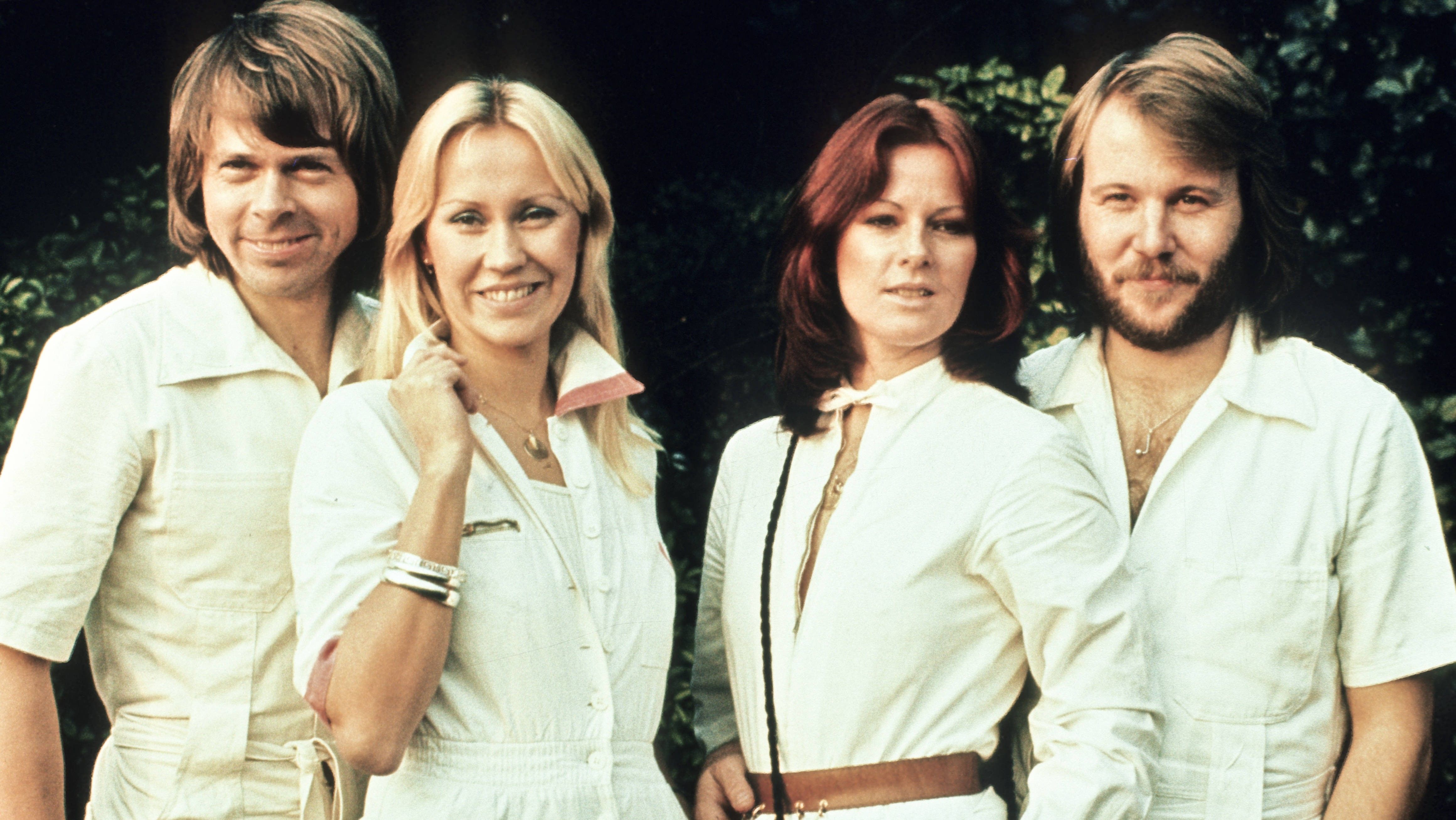
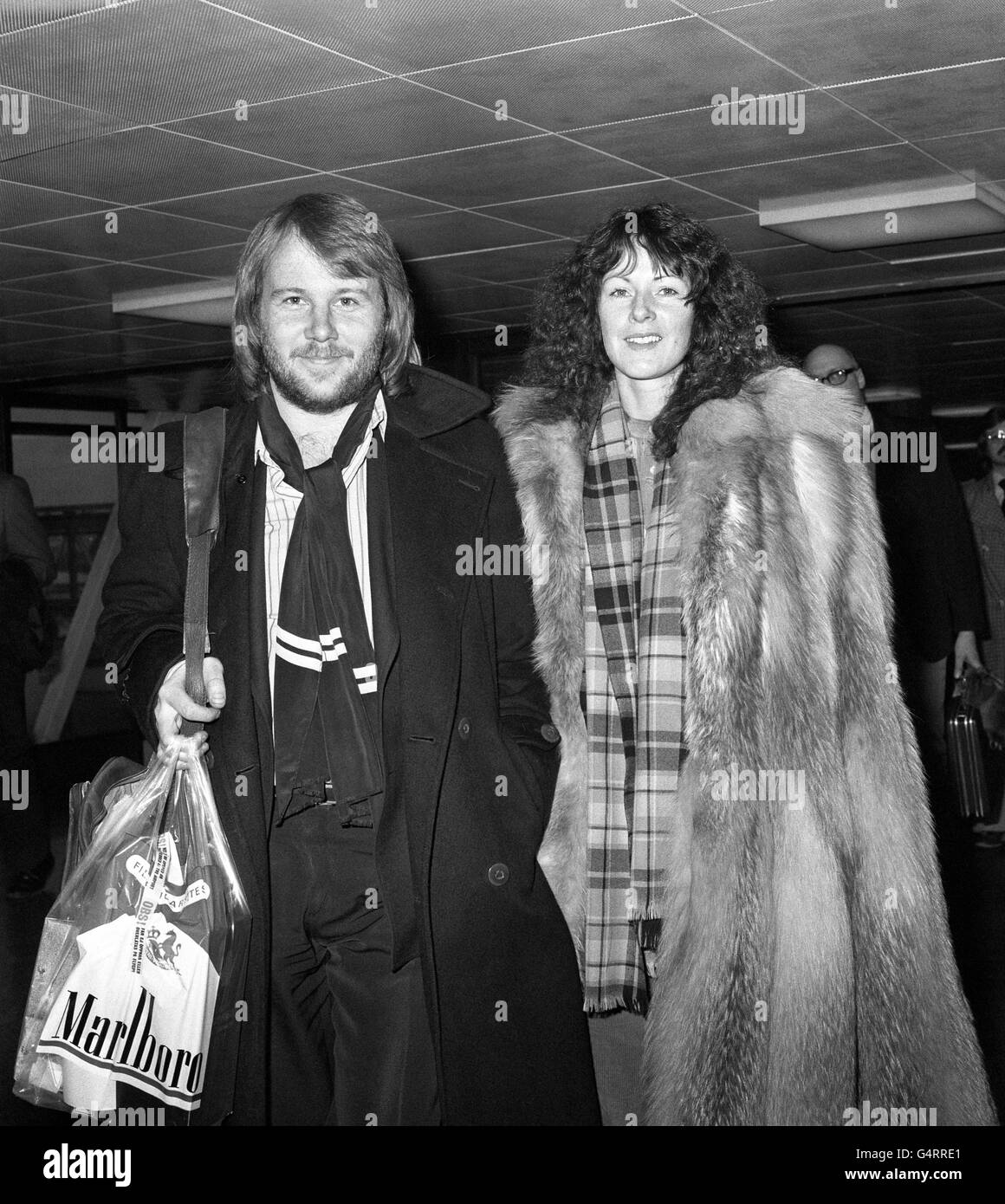
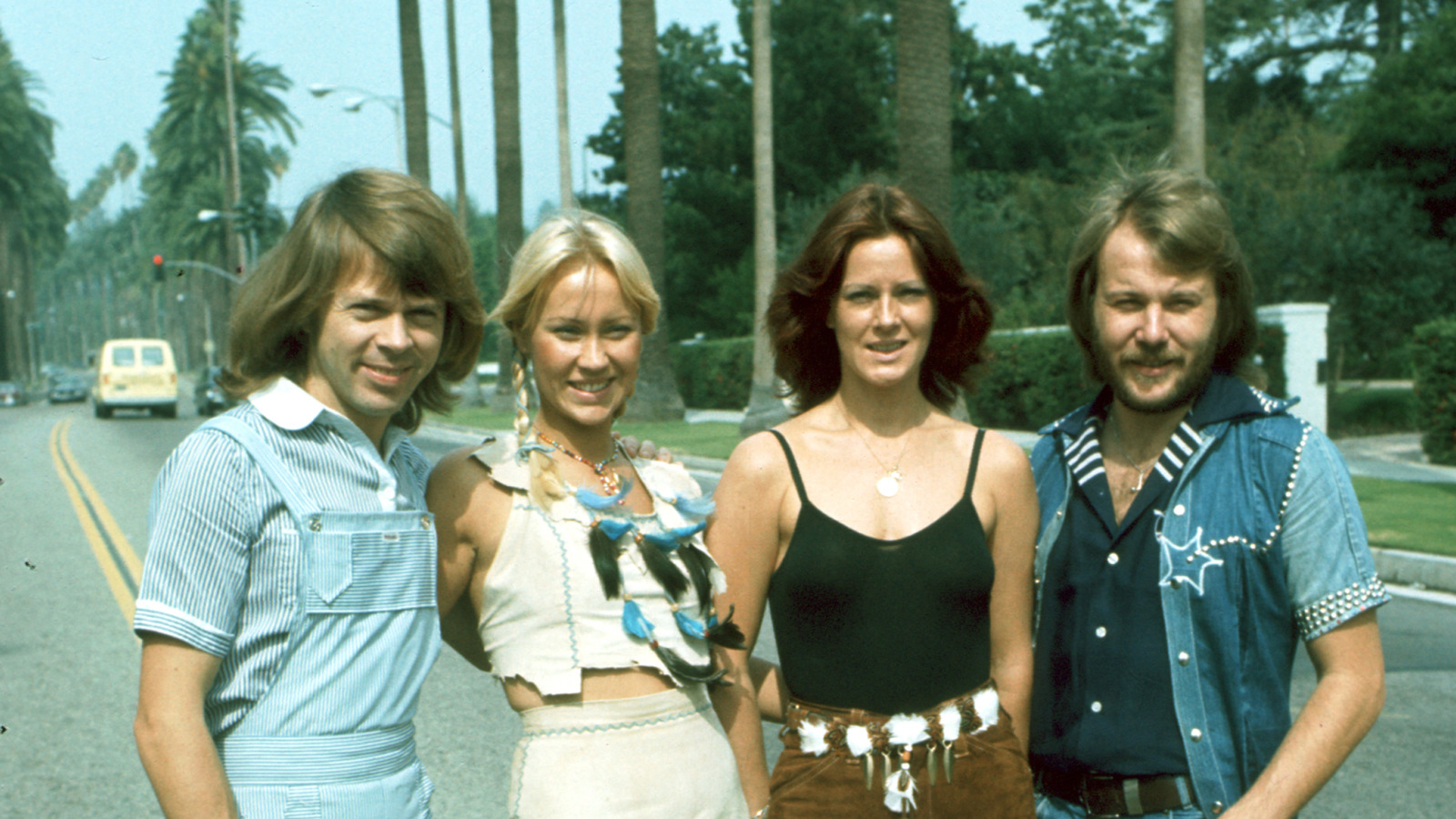
Before they became global icons, the four members of ABBA—Agnetha Fältskog, Björn Ulvaeus, Benny Andersson, and Anni-Frid Lyngstad—spent their formative years immersed in the distinct musical landscapes of post-war Scandinavia. Their childhoods were characterized by early exposure to traditional Swedish folk, jazz, and the burgeoning 1960s pop scene, providing the technical versatility required to create their legendary harmonic sound.
Agnetha Fältskog: The Prodigy of Jönköping
Born on April 5, 1950, in Jönköping, Sweden, Agnetha Åse Fältskog was the eldest of two daughters. Her father, Ingvar Fältskog, worked in a department store but possessed a deep passion for the local amateur theater scene. This exposure to performance proved pivotal; Agnetha was often brought along to rehearsals, where she became fascinated by the mechanics of entertainment and melody. By the age of five, she had already composed her first song, "Två små troll" (Two Little Trolls), signaling an innate melodic sensibility that would later define ABBA’s biggest hits.
Agnetha’s childhood was deeply rooted in music education. At age eight, she began taking piano lessons, and she eventually joined a local church choir, which helped develop her distinctive high-soprano range and crystalline clarity. However, her interests were not confined to classical or religious music. Like many teenagers in the early 1960s, she was captivated by American and British pop stars, particularly Connie Francis, Aretha Franklin, and Lesley Gore. These influences encouraged her to focus on "schlager" music—a style of catchy, sentimental pop prevalent in Northern and Central Europe.
At just 15 years old, Agnetha left school to pursue a career in music while working as a telephonist for an automobile firm. Her breakthrough came when she joined the Bernt Enghardt Orchestra, a popular dance band. Her talent was so undeniable that a demo tape sent to Cupol Records resulted in her first solo hit, "Jag var så kär" (I Was So In Love), which she wrote herself at age 17. This early success established her not just as a singer, but as a formidable songwriter, a trait that gave her a unique perspective when she eventually joined forces with Björn and Benny.
Anni-Frid Lyngstad: Strength Through Adversity in Torshälla
Anni-Frid "Frida" Lyngstad’s childhood was markedly different and significantly more complex than her future bandmates. Born on November 15, 1945, in Ballangen, Norway, she was the daughter of a Norwegian mother, Synni Lyngstad, and a German sergeant, Alfred Haase. Following the end of World War II and the subsequent social stigma surrounding children of German soldiers, Frida’s grandmother, Arntine, took the infant Frida to Sweden to escape persecution. Tragically, Frida’s mother died of kidney failure shortly after the move, leaving Frida to be raised by her grandmother in Torshälla.
Music became Frida’s sanctuary and a way to navigate a childhood marked by loss and the feeling of being an outsider. Her grandmother encouraged her singing, and by the age of 11, Frida made her stage debut at a Red Cross charity event. Unlike Agnetha’s focus on schlager, Frida was drawn to the sophisticated phrasing of jazz. During her early teens, she began performing with various "dansband" groups, often lying about her age to secure gigs. She studied the vocal techniques of Peggy Lee and Ella Fitzgerald, which contributed to the rich, mezzo-soprano warmth that would later provide the "low" end of the ABBA vocal blend.
In 1967, Frida’s life changed when she won a national talent contest called "New Faces." The prize included a performance on a popular television show, Hylands hörna, which happened to air on the same night Sweden switched from driving on the left to the right side of the road—a night when virtually the entire country was glued to their television sets. This exposure catapulted her into the Swedish limelight, though it would still be several years of solo recording and cabaret work before she fully integrated into the group that would become ABBA.
Björn Ulvaeus: From Västervik to Folk-Rock Stardom
Björn Kristian Ulvaeus was born on April 25, 1945, in Gothenburg, but his childhood was primarily spent in the smaller coastal town of Västervik. His family was supportive of his creative interests, and for his eleventh birthday, he received an acoustic guitar. This gift sparked a lifelong obsession with stringed instruments and arrangement. Björn’s early musical environment was a mixture of traditional Swedish tunes and the skiffle craze that was sweeping across Europe from the UK.
As a teenager, Björn formed a folk-pop group called the West Bay Singers with several school friends. The group eventually caught the attention of Stig Anderson—the man who would later become ABBA's manager—and his business partner Bengt Bernhag. They renamed the group the Hootenanny Singers. Throughout the mid-1960s, while Björn was nominally studying business and law at the University of Stockholm, the Hootenanny Singers became one of Sweden’s most popular acts.
Björn’s childhood and early career taught him the importance of the "hook" and the logistical side of the music business. The Hootenanny Singers toured extensively in a Volkswagen bus, performing in "folkparks" (community amusement parks) across Sweden. This grueling schedule provided him with a masterclass in audience engagement and the rigors of the touring life. It was during one of these tours in 1966 that he crossed paths with Benny Andersson, a meeting that would result in one of the most successful songwriting partnerships in music history.
Benny Andersson: The Accordion and the Stockholm Beat
Göran Bror Benny Andersson was born on December 16, 1946, in the Vasastan district of Stockholm. He grew up in a household where music was a lived experience rather than just a hobby. Both his father, Gösta, and his grandfather, Efraim, were avid accordion players. From a very young age, Benny was immersed in the world of Swedish folk music, learning to play the accordion by ear. This foundation in folk music—with its specific rhythmic structures and minor-key melodies—is often cited by musicologists as the secret ingredient in ABBA’s "Scandinavian melancholy."
At the age of ten, Benny received his own accordion, and by his early teens, he had transitioned to the piano, influenced by the rock 'n' roll explosion of the late 1950s. His childhood was not spent in formal conservatories but in the vibrant, DIY music scene of Stockholm. In 1964, he joined the Hep Stars, a band that would become known as the "Swedish Beatles." As the keyboardist for the Hep Stars, Benny became a teenage idol, known for his energetic performances and his burgeoning ability to write original hits like "Sunny Girl" and "Wedding."
Benny’s early years were characterized by a rapid transition from traditional folk to high-energy rock. This versatility allowed him to bridge the gap between old-world European musicality and modern pop production. His experience with the Hep Stars also taught him the technical aspects of studio recording and the importance of keyboard textures—skills that would later manifest in the lush, multi-layered synthesizers and piano tracks that defined the ABBA sound in the 1970s and early 1980s.
Comparative Childhood Milestones
The following table highlights the diverse backgrounds and early musical foundations of the four members, illustrating how their different paths converged.
| Member | Born | Hometown | Primary Early Instrument | Early Musical Influence | First Notable Group/Success |
|---|---|---|---|---|---|
| Agnetha Fältskog | 1950 | Jönköping, SE | Piano | Schlager, Connie Francis | Bernt Enghardt’s Orchestra |
| Anni-Frid Lyngstad | 1945 | Ballangen, NO | Vocals | Jazz, Peggy Lee | The Anni-Frid Four |
| Björn Ulvaeus | 1945 | Västervik, SE | Guitar | Folk, Skiffle | The Hootenanny Singers |
| Benny Andersson | 1946 | Stockholm, SE | Accordion / Piano | Swedish Folk, Rock 'n' Roll | The Hep Stars |
How Early Influences Shaped the ABBA Sound
The "ABBA sound" was not a fluke of production but a calculated synthesis of these four distinct childhood backgrounds. The group’s ability to appeal to diverse global markets stemmed from the fact that their musical DNA contained elements of almost every major 20th-century genre.
- The Folk Connection: Benny’s childhood with the accordion and Björn’s folk-pop roots gave the group a rhythmic "bounce" that felt familiar to European audiences. Songs like "Fernando" and "Chiquitita" utilize folk structures that are far older than modern pop.
- The Jazz Precision: Anni-Frid’s years singing jazz provided the group with technical vocal discipline. Her ability to execute complex harmonies with surgical precision allowed the group to record the intricate "wall of sound" vocals for which they are famous.
- The Schlager Hook: Agnetha’s background in Swedish schlager provided the template for their melodic hooks. Schlager emphasizes direct emotionality and "earworm" choruses, a philosophy that is evident in hits like "Waterloo" and "Mamma Mia."
- The Performance Pedigree: All four members spent their youth performing in "folkparks" and local clubs. By the time they formed ABBA, they had thousands of hours of live experience, giving them a professional edge and a deep understanding of what made an audience react.
By the mid-1970s, these separate childhood journeys had merged into a singular creative force. While their individual paths started in different corners of Scandinavia—from the tragic wartime beginnings of Frida to the cozy, musical household of Benny—each member brought a piece of the puzzle that was necessary to complete the ABBA phenomenon.
FAQ
What were the members of ABBA doing before the band formed?
Before ABBA, all four members were already successful in the Swedish music industry. Björn was a member of the folk group The Hootenanny Singers, Benny was the keyboardist for the rock band The Hep Stars, and both Agnetha and Frida were established solo artists with multiple hits and television appearances to their names.
Did any of the ABBA members have formal musical training as children?
Most of their training was practical rather than academic. Agnetha took piano lessons and sang in a church choir, while Benny learned the accordion by ear from his father and grandfather. Frida was largely self-taught through her work with dance bands, and Björn learned guitar through his interest in the folk and skiffle movements.
How did Agnetha Fältskog's childhood influence her songwriting?
Agnetha’s father was involved in amateur theater, which exposed her to the "storytelling" aspect of music early on. Her background in schlager music, which focuses on relatable themes of love and heartbreak, influenced her ability to write emotive lyrics and melodies that resonated with a wide audience.
Why is Anni-Frid Lyngstad’s childhood described as difficult?
Frida was a "Tyskerbarn" (child of a German soldier) born in Norway during the end of WWII. Due to the intense social stigma against these children and their mothers, she and her grandmother fled to Sweden. Her mother died shortly after, leaving her to grow up without her parents in a foreign country, which she has stated made music her primary source of comfort.
When did the ABBA members first meet each other?
Björn and Benny first met on the road in June 1966 and began writing songs together shortly after. Björn met Agnetha in 1969 during the filming of a television special, and Benny met Frida later that same year at a radio show. The four first performed together as a group in 1970 under the name "Festfolket."
Recommended Next Steps for Fans
To truly understand the evolution of the ABBA members, listeners should explore their pre-1972 catalogs. Listening to Agnetha’s solo albums like Agnetha Fältskog Vol. 1 or the Hep Stars’ hit "Sunny Girl" provides a clear window into the technical skills they mastered long before "Waterloo" brought them to the international stage. Many of these early recordings are available on major streaming platforms and offer a fascinating glimpse into the development of the "Swedish sound" that would eventually dominate the 1970s global charts.