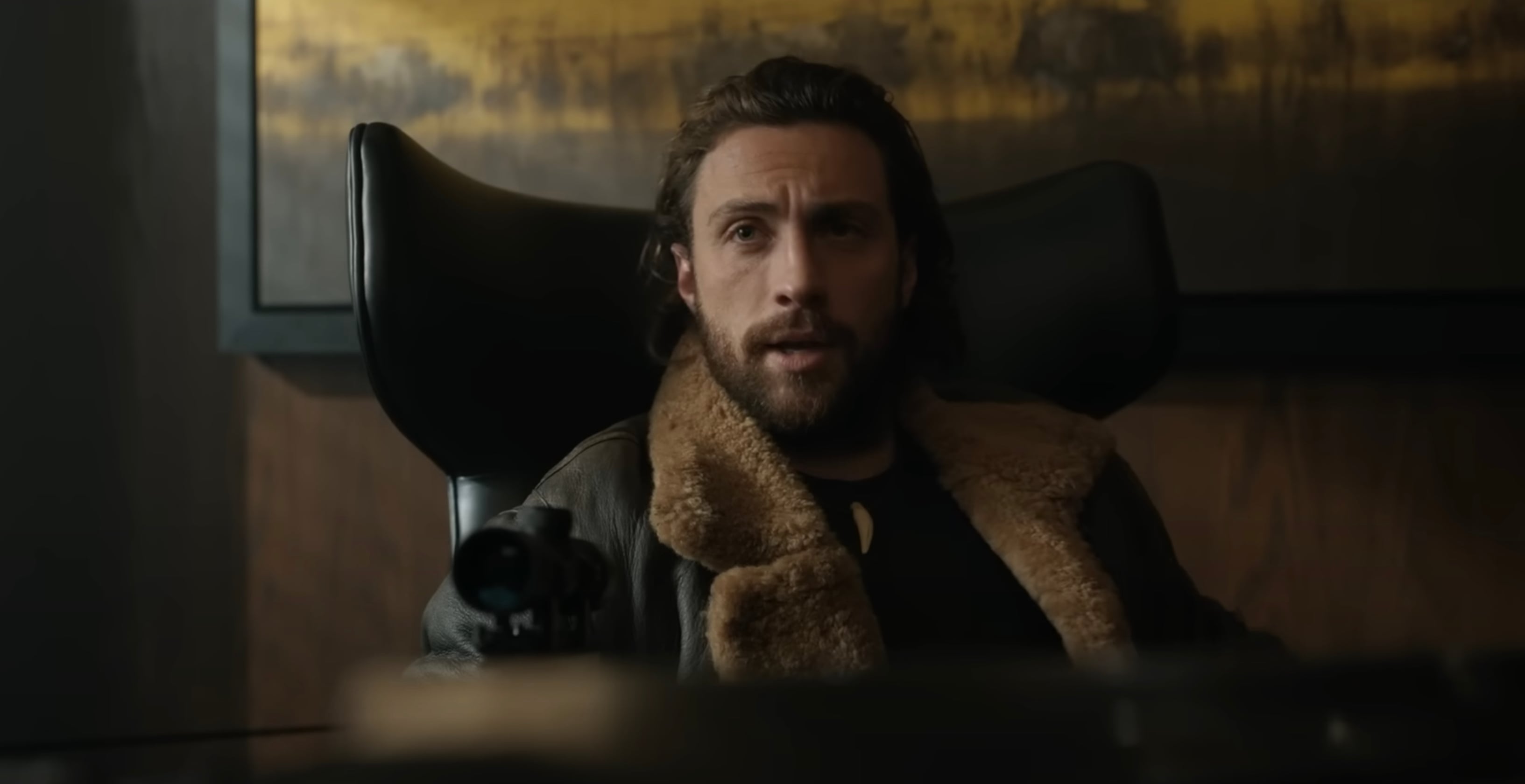
Aaron Taylor-Johnson bulked up to approximately 200 pounds (90 kilograms) to play Marvel’s apex predator in Kraven the Hunter. This transformation added roughly 15 to 25 pounds of dense muscle mass compared to his typical lean walking weight of 170 to 175 pounds seen in prior action roles like Bullet Train.
Aaron Taylor-Johnson’s Kraven Weight and Body Composition
To portray Sergei Kravinoff realistically on screen, Aaron Taylor-Johnson undertook one of the most intense physical preparations of his career. Comic book illustrations traditionally depict Kraven the Hunter as a towering, hyper-muscular figure whose physical presence commands instant intimidation. To match that iconic silhouette, Taylor-Johnson increased his body weight to peak at right around 200 pounds (90 kg).
Unlike standard cinematic mass-building programs that prioritize pure cosmetic volume (hypertrophy), Taylor-Johnson’s target weight was designed for high mobility and functional speed. Standing 5 feet 11 inches tall (180 cm), reaching a lean 200 pounds required a rigorous muscle-building phase that brought his body fat down to single digits while significantly increasing shoulder, torso, and thigh girth.
| Metric / Feature | Standard Baseline | Kraven the Hunter Peak |
|---|---|---|
| Body Weight | ~170–175 lbs | ~200 lbs (90 kg) |
| Primary Focus | Lean agility | Functional mass & power |
| Training Style | High-volume cardio | Heavy lifting & locomotion |
| Body Fat (Est.) | 10–12% | 7–9% |
Prior to taking on the role of Kraven, Taylor-Johnson maintained a noticeably leaner frame for projects such as Bullet Train (where he played the sharp-suited assassin Tangerine) and Avengers: Age of Ultron (where he played Pietro Maximoff / Quicksilver). In those roles, his conditioning prioritized rapid sprinting mechanics, sharp aesthetics, and lower overall body mass. Transitioning into Kraven required shifting his metabolic focus toward progressive overload, heavy compound lifting, and substantial calorie surpluses.
Training Methodology: Building Functional Predator Mass
Building 200 pounds of athletic muscle for an action-heavy role requires more than traditional bodybuilding. Taylor-Johnson worked alongside elite strength coaches, stunt coordinators, and movement specialists to construct a body capable of executing complex physical choreography without suffering joint breakdown or speed loss.
Progressive Resistance and Compound Heavy Lifting
The core foundation of Taylor-Johnson’s muscle gain was heavy compound weightlifting. The regimen focused on multi-joint movements that build structural thickness throughout the back, shoulders, traps, and legs:
- Deadlifts and Trap-Bar Carries: Essential for developing dense spinal erectors, upper back width, and thick grip strength suited for hand-to-hand combat scenes.
- Weighted Pull-Ups and Rows: Critical for building the wide "V-taper" torso characteristic of comic illustrations.
- Front Squats and Lunges: Designed to develop explosive quad drive and lower-body mass while protecting low-back integrity during high-impact landings.
Locomotion and Quadrupedal Movement Training
A unique challenge of playing Kraven was reflecting animalistic movement patterns. Taylor-Johnson spent extensive time training in quadrupedal locomotion—moving on all fours, crawling, sprinting from ground-level positions, and imitating predatory mammals.
- Joint Mobilization: Dynamic wrist, ankle, and hip mobility sessions to tolerate the load of moving on all fours at high speeds.
- Core Locomotion Exercises: Bear crawls, lizard crawls, and low-center-of-gravity lateral shifts to strengthen the core stabilizers.
- Agility and Sprint Mechanics: Short, explosive directional changes to maintain peak velocity even with 200 pounds of mass.
This functional conditioning ensured that his weight gain enhanced rather than restricted his fluidity during open-terrain chase sequences and barefoot stunt work.
Nutritional Strategy: Fuelling the 200-Pound Physique
Gaining 20 to 25 pounds of clean tissue requires a meticulously controlled nutritional program. Taylor-Johnson adhered to a hyper-caloric diet structured around high protein, clean complex carbohydrates, and essential fatty acids.
Daily Caloric Surplus and Macronutrient Breakdown
To support heavy strength sessions and multi-hour stunt rehearsals, Taylor-Johnson’s daily food intake approached 4,000 calories during the primary hypertrophy phase. Maintaining high energy levels while keeping body fat low required clean fuel sources:
- Protein: Up to 1.2 to 1.5 grams of protein per pound of target body weight daily, emphasizing lean chicken breast, wild bison, fish, egg whites, and clean whey isolate.
- Carbohydrates: Complex carbohydrates like sweet potatoes, brown rice, oats, and quinoa strategically timed around workout windows to replenish glycogen stores.
- Fats: Healthy fats from avocados, extra virgin olive oil, nuts, and salmon to optimize hormone production and sustain joint health during heavy loading.
Hydration and On-Set Maintenance
During filming, maintaining peak muscular fullness while shooting taxing action sequences requires precise electrolyte and water balancing. The production schedule required long days of physical exertion in varied terrain, making hydration protocols essential to prevent cramping and muscle wasting during long multi-take setups.
Career Physical Trajectory: How Kraven Compares to Past Roles
Taylor-Johnson has earned a reputation for transforming his body to fit diverse character requirements. Examining his physical changes across key roles highlights how distinct the Kraven the Hunter transformation truly was.
| Film / Role | Estimated Weight | Body Composition Target | Primary Physical Focus |
|---|---|---|---|
| Kick-Ass (2010) | ~155–160 lbs (70–72 kg) | Lean, unconditioned teenager | Slender, everyday high school physique |
| Avengers: Age of Ultron (2015) | ~165–170 lbs (75–77 kg) | Lean, athletic, low mass | Track-style sprinter speed & agility |
| Nocturnal Animals (2016) | ~160–165 lbs (72–75 kg) | Wiry, thin frame | Gritty, realistic character weight |
| Bullet Train (2022) | ~170–175 lbs (77–79 kg) | Sharp, tapered aesthetic | Athletic suit-fit with visible lean conditioning |
| Kraven the Hunter (2024/2026) | ~200 lbs (90 kg) | Peak hyper-muscular mass | Heavy compound power, raw strength, quadruped agility |
The jump to 200 pounds for Kraven represents the heaviest body mass Taylor-Johnson has ever brought to the screen. Unlike the lean sprinter physique he displayed as Quicksilver, Kraven required a dominant, heavyweight presence capable of overpowering enemies on screen without relying heavily on digital body augmentation.
Comic Accuracy vs. Cinematic Adaptation
In Marvel Comics, Sergei Kravinoff is portrayed as a massive Russian aristocrat and hunter who enhances his natural abilities with mystical herbal potions, often standing over 6 feet tall and weighing around 235 pounds.
For the live-action adaptation, director J.C. Chandor and the production team aimed for a grounded, visceral style of movement. Rather than inflating the character with exaggerated CGI or digital suits, they relied on Taylor-Johnson’s physical training to sell the character's superhuman attributes.
Achieving a natural 200-pound frame gave Taylor-Johnson the physical breadth to fill out Kraven’s iconic costume elements—including shoulder-mounted animal vests and low-profile tactical gear—while retaining the real-world flexibility needed for practical stunt performance.
Key Takeaways for Functional Mass Building
Aaron Taylor-Johnson’s transformation offers clear lessons for building a heavy, athletic body:
- Prioritize Functional Strength: Pair heavy compound movements (squats, deadlifts, presses) with movement work to prevent added body weight from causing stiffness.
- Fuel Progressive Gain Cleanly: A mass-gaining phase demands a disciplined calorie surplus built on high-quality proteins and complex carbs, not random caloric overload.
- Tailor Conditioning to the Objective: Moving naturally at a higher weight requires specific joint mobility and dynamic core stability work.
Frequently Asked Questions
What was Aaron Taylor-Johnson’s exact weight for Kraven the Hunter?
Aaron Taylor-Johnson hit approximately 200 pounds (90 kg) at his peak conditioning for Kraven the Hunter, representing a gain of roughly 15 to 25 pounds of lean muscle over his standard walking weight.
Did Aaron Taylor-Johnson use CGI or muscle suits for Kraven?
No muscle suits or digital body enhancements were used for his physique; Taylor-Johnson built the mass through intensive weightlifting, functional locomotion coaching, and a structured high-calorie nutrition plan.
How does his weight in Kraven compare to his weight in Bullet Train?
In Bullet Train, Taylor-Johnson weighed around 170 to 175 pounds with an emphasis on a sharp, lean aesthetic. For Kraven, he gained roughly 25 pounds to reach a heavier, more muscular 200-pound frame.
What kind of training did he do to move like Kraven?
In addition to heavy resistance training (deadlifts, squats, pull-ups), Taylor-Johnson completed extensive quadrupedal locomotion training, sprint mechanics, dynamic flexibility work, and stunt choreography to move effortlessly on all fours.
How long did it take Aaron Taylor-Johnson to bulk up for the role?
The physical transformation took several months of dedicated preparation, combining an intensive muscle-building hypertrophy cycle with specialized stunt and movement coaching ahead of principal photography.
Next Steps for Action-Oriented Fitness Programming
If you are looking to build functional mass and athletic power similar to cinematic actor transformations:
- Assess Your Baseline: Determine whether your immediate goal requires a caloric surplus for mass gain (hypertrophy) or a controlled deficit for lean definition.
- Focus on Multi-Joint Compounds: Base your training split around deadlifts, squats, overhead presses, and pull-ups three to four days per week.
- Integrate Functional Mobility: Allocate 10–15 minutes before every session to hip, ankle, and wrist mobility, along with quadrupedal core exercises, to ensure high movement quality as body mass increases.
EDITORIAL CATEGORY METADATA: