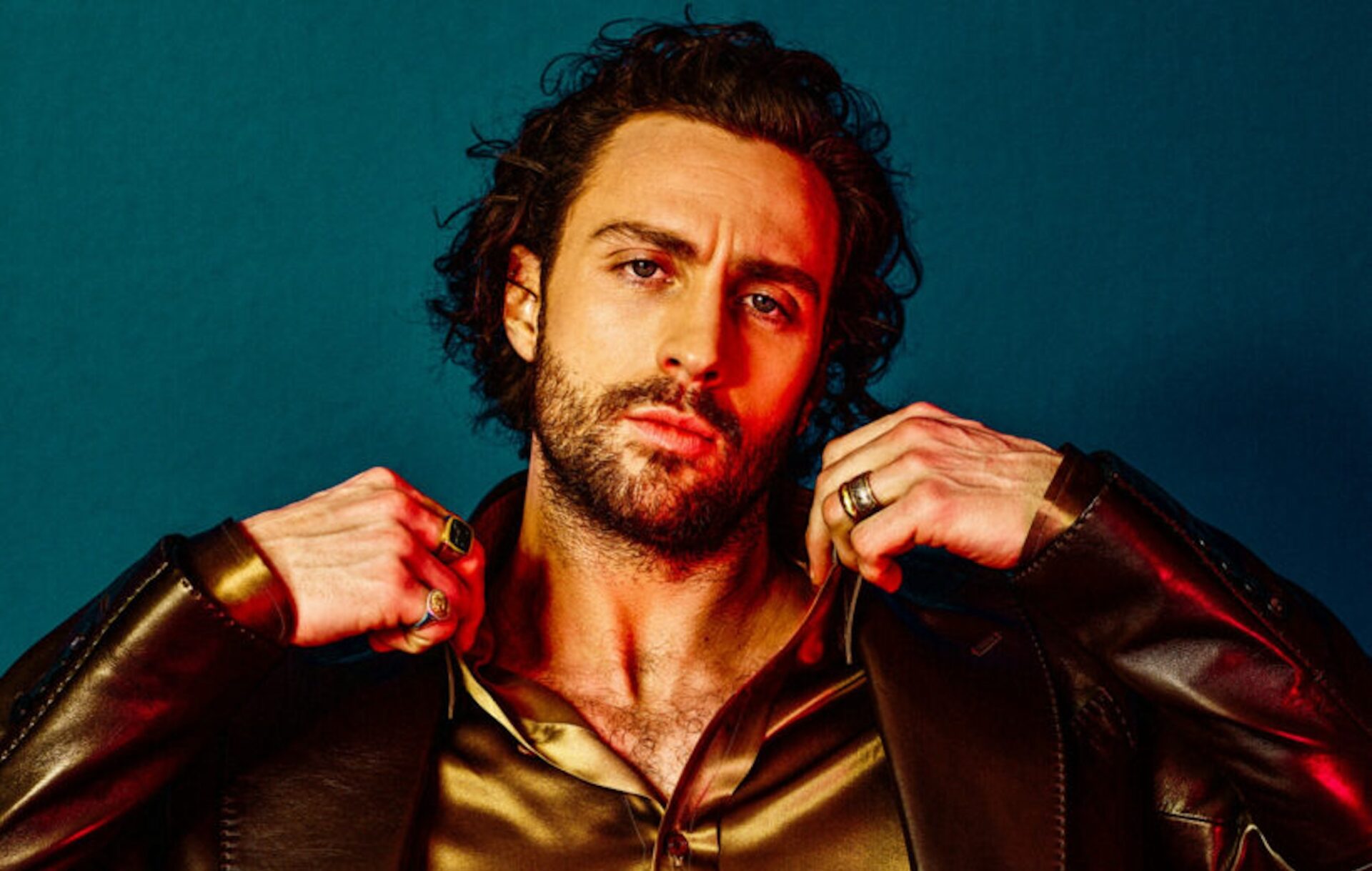
Aaron Taylor-Johnson’s performance in 28 Years Later represents a pivotal landmark in his career, merging high-velocity physical acting with grounded emotional gravity. Directed by Danny Boyle and written by Alex Garland, the film places Taylor-Johnson in the center of a transformed horror landscape, showcasing his ability to elevate genre storytelling within a major cinematic franchise.
The Cultural and Cinematic Context of 28 Years Later
The release of 28 Years Later marks the long-awaited continuation of a groundbreaking horror franchise that redefined the zombie subgenre in the early 2000s. When Danny Boyle and Alex Garland unleashed 28 Days Later in 2002, they introduced mainstream audiences to the "Rage Virus"—a fast-moving, hyper-aggressive infection that abandoned the slow, deliberate pacing of traditional cinematic undead. Followed by 28 Weeks Later in 2007, the universe established a distinct cinematic language characterized by kinetic editing, societal collapse, and stark British landscapes.
Returning to this universe over two decades later, Boyle and Garland constructed 28 Years Later to explore the long-term ecological, psychological, and structural consequences of a permanent quarantine. Set decades after the initial outbreak, Great Britain has evolved into a patchwork of isolated human enclaves, feral zones, and makeshift societies. Within this context, the narrative shifts from immediate panic to systemic survival, requiring actors who can convey both the lingering historical trauma of the collapse and the practical hardness required to live in its wake.
Aaron Taylor-Johnson’s casting signaled a specific aesthetic direction for the project. Known for balancing muscular blockbuster presence with intense, auteur-driven character studies, Taylor-Johnson fits the harsh, stripped-down visual world crafted by Boyle and cinematographer Anthony Dod Mantle. The production's return to unconventional camera technology—utilizing heavily modified smartphone rigs alongside high-end optics—created a raw, immediate photographic texture that directly influenced how actors moved within the frame.
Deconstructing Aaron Taylor-Johnson's Performance and Character Mechanics
In 28 Years Later, Aaron Taylor-Johnson delivers a performance built on physical precision, controlled volatility, and emotional restraint. Rather than leaning into conventional action-hero tropes, Taylor-Johnson grounds his character in the practical realities of long-term survival within an infected territory. His portrayal reflects a character shaped entirely by a world where danger is instantaneous and relentless.
Physicality and Kinetic Energy
A defining aspect of Taylor-Johnson’s work in the film is his use of movement. Drawing on his extensive background in action cinema and stunt choreography, he executes long, unbroken physical sequences that emphasize stamina and spatial awareness. Under Danny Boyle’s dynamic direction, the camera frequently moves alongside the actors in tight, high-speed tracking shots. Taylor-Johnson adapts to this visual style by maintaining an understated, economical posture during moments of silence, contrasting sharply with explosive, desperate bursts of energy when evasive action or combat becomes necessary.
Emotional Resonance and Psychological Depth
Beyond the physical demands, Taylor-Johnson anchors the film’s central narrative arc by exploring the psychological burden of second-generation survivors—those who either barely remember the pre-outbreak world or were born directly into its aftermath. His vocal delivery is clipped, practical, and devoid of sentimentalism, yet his character exhibits profound non-verbal expressiveness. Small visual cues, such as hyper-vigilant eye movements and tense body language during quiet moments, communicate chronic hyper-arousal and collective grief without relying on heavy expository dialogue.
Ensemble Dynamics
Taylor-Johnson operates within a distinguished ensemble that includes Jodie Comer, Ralph Fiennes, and Jack O'Connell, alongside the overarching legacy of Cillian Murphy’s foundational character from the original 2002 film. His chemistry with Comer, in particular, provides the film with its moral core. Where Comer’s character brings strategic calculation and empathy, Taylor-Johnson provides immediate tactical force and protective instinct, establishing a compelling dual-lead dynamic that drives the story through hostile environments.
Aaron Taylor-Johnson’s Career Evolution: From Cult Breakouts to Genre Heavyweight
To fully appreciate Taylor-Johnson’s work in 28 Years Later, it is necessary to examine how his filmography prepared him for such a demanding role. Over two decades, Taylor-Johnson has navigated a unique career trajectory, moving seamlessly between indie visual art pieces, studio comic book adaptations, and prestige psychological thrillers.
Career Trajectory Overview:
- 2009-2010: Breakout Phase
- Nowhere Boy / Kick-Ass
- 2014-2015: Studio Franchises
- Godzilla / Avengers
- 2016-2022: Character & Action Mastery
- Nocturnal Animals / Bullet Train
- 2024-2026: Mature Auteur & Lead Roles
- Nosferatu / 28 Years Later
Early Breakouts and Comic Book Stardom
Taylor-Johnson first gained international prominence with his portrayal of John Lennon in Sam Taylor-Johnson’s Nowhere Boy (2009), demonstrating an early aptitude for biographical interiority. Immediately following, his breakout role as Dave Lizewski in Matthew Vaughn’s Kick-Ass (2010) established his ability to lead an action-comedy franchise, blending physical vulnerability with relatable charm.
Strategic Transition to High-Intensity Roles
Rather than locking himself into standard leading-man roles, Taylor-Johnson deliberately sought out dark, transformative character work. His performance as the menacing Ray Marcus in Tom Ford’s Nocturnal Animals (2016) earned him the Golden Globe Award for Best Supporting Actor and a nomination for the BAFTA Award. This performance demonstrated his ability to embody terrifying, unhinged characters with absolute commitment—a skill set directly relevant to the terrifying atmosphere of the 28 Days Later universe.
Subsequent roles in Christopher Nolan’s Tenet (2020) as Commander Ives and David Leitch’s Bullet Train (2022) as Tangerine reinforced his credentials as a premier physical performer capable of executing complex choreography while maintaining distinct character voice and comedic rhythm. His work in Robert Eggers' Nosferatu (2024) and Sony's Kraven the Hunter (2024) further solidified his position as one of Hollywood's most versatile leads operating across high-concept horror and large-scale action.
Comparative Analysis: Taylor-Johnson Across Key Roles
The following table contextualizes Taylor-Johnson’s performance in 28 Years Later against other key milestones in his career, highlighting the shifts in performance style, physical requirements, and dramatic focus.
| Film Title | Year | Genre / Category | Core Performance Traits | Dramatic & Career Impact |
|---|---|---|---|---|
| Kick-Ass | 2010 | Action / Satire | Earnest, physically vulnerable, comedic timing | Established international profile and leading-man viability |
| Godzilla | 2014 | Creature Feature / Action | Stoic, disciplined, military-grounded | Proved ability to anchor giant-budget studio blockbusters |
| Nocturnal Animals | 2016 | Psychological Thriller | Unpredictable, menacing, high intensity | Earned Golden Globe win; validated dramatic character credentials |
| Tenet | 2020 | Sci-Fi / Action | Authoritative, tactical, precise execution | Demonstrated comfort within complex, auteur-driven action concepts |
| Bullet Train | 2022 | Action / Comedy | Stylized choreography, charismatic vocal work | Highlighted comedic chemistry and physical stunt execution |
| Nosferatu | 2024 | Gothic Horror | Period precision, atmospheric vulnerability | Expanded prestige horror work under top-tier auteur direction |
| 28 Years Later | 2025 | Post-Apocalyptic Horror | Raw physicality, interior trauma, tactical realism | Solidified standing as a mature genre lead in a flagship franchise |
Production Innovations and On-Set Demands
The production of 28 Years Later introduced distinct technical challenges that heavily impacted the actors' physical methodologies. Danny Boyle and cinematographer Anthony Dod Mantle chose to shoot primary sequences using customized, professional-grade smartphone camera setups equipped with specialized optical adapters and cinema-grade gear.
Uninhibited Movement and Close Proximity
This lightweight visual setup allowed the camera operators to move fluidly alongside the actors through difficult terrain across the United Kingdom, including remote areas of Northumberland and North Yorkshire. For Taylor-Johnson, this technical freedom meant:
- Continuous Camera Tracking: Scenes could be filmed without the constant intrusion of massive camera rigs, enabling longer, uninterrupted takes that required sustained emotional and physical energy.
- Immersive Proximity: The camera could be positioned inches from the actor's face during high-stress sprint sequences, demanding absolute authenticity in facial expressions and breathing control.
- Environmental Interaction: Actors were required to interact directly with natural elements—mud, deep water, dense foliage—without breaking narrative momentum to accommodate traditional lighting setups.
Rigorous Physical Conditioning
To meet these demands, Taylor-Johnson underwent intensive conditioning focused on operational movement, functional strength, and terrain endurance. Rather than building bodybuilder-style aesthetics, the conditioning emphasized the wiry, practical athleticism of a survivor accustomed to long treks, rapid escapes, and hand-to-hand engagements in tight spaces.
Industry Impact and Future Trajectory
Taylor-Johnson’s leading contribution to 28 Years Later reinforces his trajectory as one of the most reliable male leads of his generation. Coming off years of continuous media speculation surrounding classic franchise roles—most notably the ongoing discussion regarding James Bond—his choice to collaborate with directors like Danny Boyle, Robert Eggers, and Alex Garland demonstrates a commitment to creator-led cinema over standard studio formulas.
Furthermore, 28 Years Later serves as the launching pad for an expanded story arc, with a subsequent installment, 28 Years Later Part II: The Bone Temple (directed by Nia DaCosta), expanding the narrative framework. Taylor-Johnson’s foundational work in the first chapter positions his character as a central reference point for the ongoing evolution of the franchise.
From an industry standpoint, his performance proves that modern post-apocalyptic films can succeed by prioritizing character-driven psychological realism alongside high-concept horror mechanics. His work bridges the gap between mid-budget auteur thrillers and global franchise cinema.
Viewing Guidance: Contextualizing His Performance Arc
For film analysts, casting directors, and horror enthusiasts seeking to evaluate Aaron Taylor-Johnson’s performance in 28 Years Later, the following viewing progression offers the best framework for understanding his technical development:
- Step 1: Study Nocturnal Animals (2016) to evaluate his ability to generate threat, tension, and raw psychological menace.
- Step 2: Watch Tenet (2020) to observe his execution of tactical military presence, spatial discipline, and precise dialogue delivery under strict narrative pacing.
- Step 3: Examine Bullet Train (2022) to analyze his high-speed physical coordination and kinetic timing in chaotic action setups.
- Step 4: View Nosferatu (2024) to assess his integration into atmospheric, director-driven period horror environments.
- Step 5: Synthesize with 28 Years Later to see how these separate skill sets—menace, tactical movement, athletic precision, and horror immersion—converge into a single unified performance.
Frequently Asked Questions
What is Aaron Taylor-Johnson’s role in 28 Years Later?
Aaron Taylor-Johnson plays one of the central survivor protagonists in 28 Years Later. His character is a hardened individual navigating the desolate, highly dangerous terrain of post-outbreak Great Britain decades after the initial Rage Virus infection.
Who directed and wrote 28 Years Later?
The film was directed by Danny Boyle and written by Alex Garland, reuniting the creative team behind the original 2002 film 28 Days Later.
How does 28 Years Later connect to the previous films in the franchise?
28 Years Later serves as a direct continuation of the world established in 28 Days Later (2002) and 28 Weeks Later (2007). Set nearly three decades after the initial outbreak, it explores how human society, infected populations, and environments have evolved over long-term quarantine.
Was 28 Years Later filmed using smartphone camera technology?
Yes, production utilized heavily customized smartphone cameras (specifically adapted iPhone setups with high-end cinema lenses and custom rigs) under the direction of cinematographer Anthony Dod Mantle. This choice recreated and modernized the low-fi, kinetic digital aesthetic of the original 2002 film.
What awards or acclaim has Aaron Taylor-Johnson received prior to this role?
Taylor-Johnson won the Golden Globe Award for Best Supporting Actor for his role in Nocturnal Animals (2016), which also earned him a nomination for the BAFTA Award for Best Actor in a Supporting Role.
How to Analyze Taylor-Johnson’s Career Trajectory
To track Aaron Taylor-Johnson's ongoing career evolution following 28 Years Later, focus on his choices between high-concept studio franchises and director-driven auteur projects. Rather than measuring his success solely by box-office metrics, evaluate his filmography by the physical diversity of his roles, his selection of collaborators (such as Danny Boyle, Robert Eggers, and Christopher Nolan), and his ability to maintain psychological depth in high-intensity genre storytelling. His work in 28 Years Later stands as a masterclass in combining athletic performance mechanics with grounded character work.