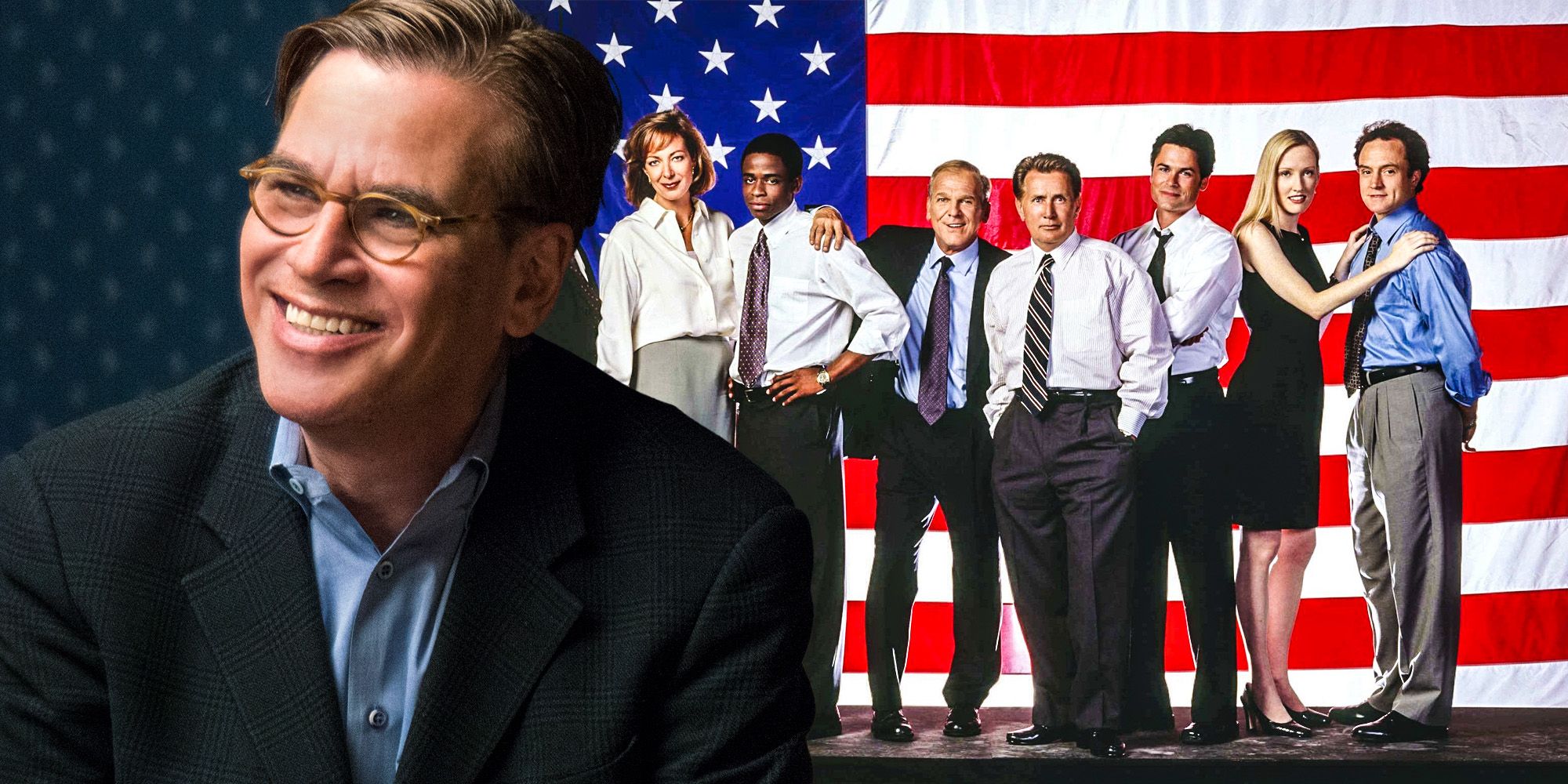
Aaron Sorkin has two older siblings who significantly influenced his career: his brother, Randy Sorkin, and his sister, Deborah Sorkin. Both pursued high-level careers in law, with Deborah serving as the direct inspiration for A Few Good Men. Their intellectual rigor and legal expertise provided the foundation for Aaron’s signature "Bard-like" dialogue and his lifelong fascination with justice, ethics, and the American institutional framework.
The Sorkin Family Dynamic: Roots of a Literary Legacy
To understand the work of Aaron Sorkin—often hailed as the "Bard of the Screen" for his rhythmic, near-iambic dialogue—one must look at the dinner table in Scarsdale, New York, during the 1960s and 70s. Aaron was the youngest of three children born to a schoolteacher mother and a copyright lawyer father. However, it was the intellectual shadow cast by his older siblings, Randy and Deborah, that arguably forged his creative identity.
In the Sorkin household, intelligence was the primary currency. Aaron has frequently recounted in interviews that he often felt like the "underachiever" of the family. While his brother and sister were excelling in academic pursuits that led them toward prestigious legal careers, Aaron was drawn to the theater. This perceived gap in traditional "intellectual" status created a drive in Aaron to master a different kind of language—one that sounded as authoritative, sharp, and rapid-fire as the legal debates he witnessed at home.
By the current vantage point of 2026, critics view Sorkin’s entire filmography not just as entertainment, but as an ongoing conversation with the high standards of his siblings. His characters often represent the idealized versions of the professionals he grew up with: people who are the smartest in the room, who speak in perfectly formed paragraphs, and who care deeply about the moral "right" over the easy "win."
Randy Sorkin: The Older Brother and Legal Influence
Randy Sorkin, Aaron’s older brother, followed in their father’s footsteps by entering the legal profession. As a litigator, Randy represented the pinnacle of the Sorkin family’s dedication to the adversarial system—a system where truth is found through the collision of two opposing, highly articulate arguments.
Aaron’s fascination with the "great man" (and later, "great woman") trope often mirrors the respect he held for his brother’s professional competence. In Sorkin’s writing, characters like Jed Bartlet or Will McAvoy aren't just experts; they are warriors of words. This is a direct reflection of the courtroom environment where Randy operated. The technical precision found in The Trial of the Chicago 7 (2020) and Molly’s Game (2017) owes a massive debt to the fraternal proximity Aaron had to the legal world.
In many ways, Randy served as a primary consultant—often informally—on the realities of legal procedure. When Aaron writes a deposition scene or a cross-examination, he isn't just mimicking what he sees on television; he is drawing from a life spent around people like Randy, for whom the nuances of a statute or the timing of an objection are matters of life and death.
Deborah Sorkin: A Sister’s Impact on Narrative Authenticity
While Randy provided the general atmosphere of the legal world, it was Aaron’s sister, Deborah Sorkin, who provided the spark for his first major success. In the late 1980s, Deborah was a lawyer serving in the Navy Judge Advocate General's (JAG) Corps. She was involved in a case at Guantanamo Bay where a group of Marines had hazed a fellow soldier under orders from a superior officer.
Deborah recounted the details of this case to Aaron during a phone call while he was working as a bartender at the Palace Theatre in New York. Aaron famously began jotting down the dialogue for what would become A Few Good Men on cocktail napkins. The character of JoAnne Galloway, played by Demi Moore in the film adaptation, was loosely inspired by the barrier-breaking role Deborah held in the military legal system.
Beyond A Few Good Men, Deborah’s career trajectory—which later included becoming a respected professor of law—informed Aaron’s portrayal of professional women. His female leads are almost always characterized by their immense competence and their refusal to back down in male-dominated spaces, a trait that mirrors Deborah’s own journey through the JAG Corps and academia.
How the "Sorkin Siblings" Shaped the "Sorkin Style"
The term "The Bard" is usually reserved for William Shakespeare, but in the context of modern screenwriting, Aaron Sorkin is the only writer whose name is used as an adjective ("Sorkinesque"). This style—characterized by the "walk and talk," rapid-fire repartee, and the use of repetition for emphasis—is a direct descendant of the Sorkin sibling dynamic.
The Musicality of Argument
Growing up with a brother and sister who were destined for the bar meant that Aaron was surrounded by the music of an argument. To a young Aaron, the content of the debate was sometimes less important than the rhythm of the exchange. This is why, in a Sorkin script, the sound of the dialogue often takes precedence over realism. His characters don't stutter or use filler words like "um" or "uh" because his siblings, in his eyes, never did.
The "Sorkin Decree" on Intelligence
There is an unwritten rule in Sorkin’s work: no one is allowed to be stupid. Even his antagonists are usually brilliant. This stems from a childhood where being the youngest meant he had to "run to keep up" with Randy and Deborah. By populating his fictional worlds with hyper-intelligent siblings-substitutes, he recreates the high-pressure, high-reward environment of his youth.
Institutional Reverence
Unlike many writers who lean toward cynicism, Sorkin’s work is deeply earnest about institutions—the law, the presidency, the newsroom. This reverence is a hallmark of a family that saw the law not as a set of cold rules, but as a noble calling. Randy and Deborah didn't just practice law; they embodied the idea that the system, when populated by good people, can work.
Career Comparisons: The Sorkin Family Tree
The following table illustrates the divergence and intersection of the Sorkin siblings' professional paths and how they informed Aaron's most famous works.
| Sibling | Primary Profession | Key Areas of Expertise | Direct Influence on Aaron's Work |
|---|---|---|---|
| Randy Sorkin | Attorney / Litigator | Litigation, Corporate Law, Procedure | The "Adversarial" dialogue style; intellectual sparring in The West Wing. |
| Deborah Sorkin | JAG Corps / Law Professor | Military Law, Ethics, Academic Research | The plot and character dynamics of A Few Good Men; expert-level competence. |
| Aaron Sorkin | Playwright / Screenwriter | Narrative Structure, Dialogue, Dramaturgy | Synthesized the legal brilliance of his siblings into the "Modern Bard" persona. |
The Sorkin Siblings in 2026: Legacy and Current Status
As of 2026, Aaron Sorkin remains a dominant force in American letters, recently completing a highly anticipated series for a major streaming platform that explores the intersection of artificial intelligence and constitutional law. In interviews surrounding this latest project, Sorkin continues to credit his siblings for his "research" phase.
While Randy and Deborah have largely remained out of the public eye to maintain their professional privacy, their influence is more visible than ever. The "Sorkin style" has influenced a whole generation of writers who prioritize intellectualism over action. In 2026, as we look back at the 30+ year career of the "Modern Bard," it is clear that he was never writing in a vacuum. He was writing to impress the two people who sat across from him at the dinner table in Scarsdale.
The legacy of the Sorkin siblings is not just found in their own legal briefs or classroom lectures, but in the way millions of people now perceive the legal and political worlds through the lens of Aaron’s scripts. They provided the "what" (the legal intricacies), and Aaron provided the "how" (the rhythmic delivery), creating a cultural phenomenon that redefined the "smart" drama.
FAQ
Is Aaron Sorkin's brother a lawyer?
Yes, Aaron Sorkin's brother, Randy Sorkin, is a highly successful attorney. His career in litigation and his mastery of legal argument served as a template for the hyper-articulate characters found in many of Aaron's screenplays and stage plays.
Which Sibling inspired "A Few Good Men"?
Deborah Sorkin, Aaron’s sister, was the primary inspiration. While serving as a lawyer in the Navy JAG Corps, she told Aaron about a case involving hazing at Guantanamo Bay. This conversation became the basis for the play and the subsequent Academy Award-nominated film.
Does Aaron Sorkin have other siblings?
No, Aaron Sorkin has only two siblings: his older brother Randy and his older sister Deborah. He is the youngest of the three children.
Why is Aaron Sorkin called "The Bard"?
The nickname "The Bard" or "The Bard of the Screen" refers to Sorkin's unique, rhythmic writing style that many critics compare to theatrical blank verse. His dialogue follows a specific cadence and musicality that distinguishes it from the naturalistic speech found in most contemporary films.
Are Aaron Sorkin's siblings still practicing law?
By 2026, both siblings have moved into the senior stages of their respective careers. While Deborah Sorkin transitioned into the academic side of law as a professor, Randy Sorkin maintained a long career in private practice. Their professional ethics continue to influence Aaron's thematic focus on integrity and institutional duty.
Exploring the Sorkin Method: A Recommendation for Writers
For those looking to capture the "Bard-like" quality of Aaron Sorkin’s work, the best starting point is not a screenwriting manual, but a study of the legal world that his siblings inhabit. Sorkin’s greatest strength is his ability to make "dry" subjects—like the census, parliamentary procedure, or military law—feel like high-stakes action.
Actionable Step: To emulate this style, writers should focus on the "intention and obstacle" for every character in a scene. Just as a lawyer in a courtroom (like Randy or Deborah) has a specific goal with every question asked during cross-examination, a Sorkin character never speaks simply to share information. They speak to win. Study the transcripts of famous trials or read the "JAG" manuals that Deborah would have mastered. Understanding the rules of an environment is the first step to writing characters who know how to break them—or defend them—with style.