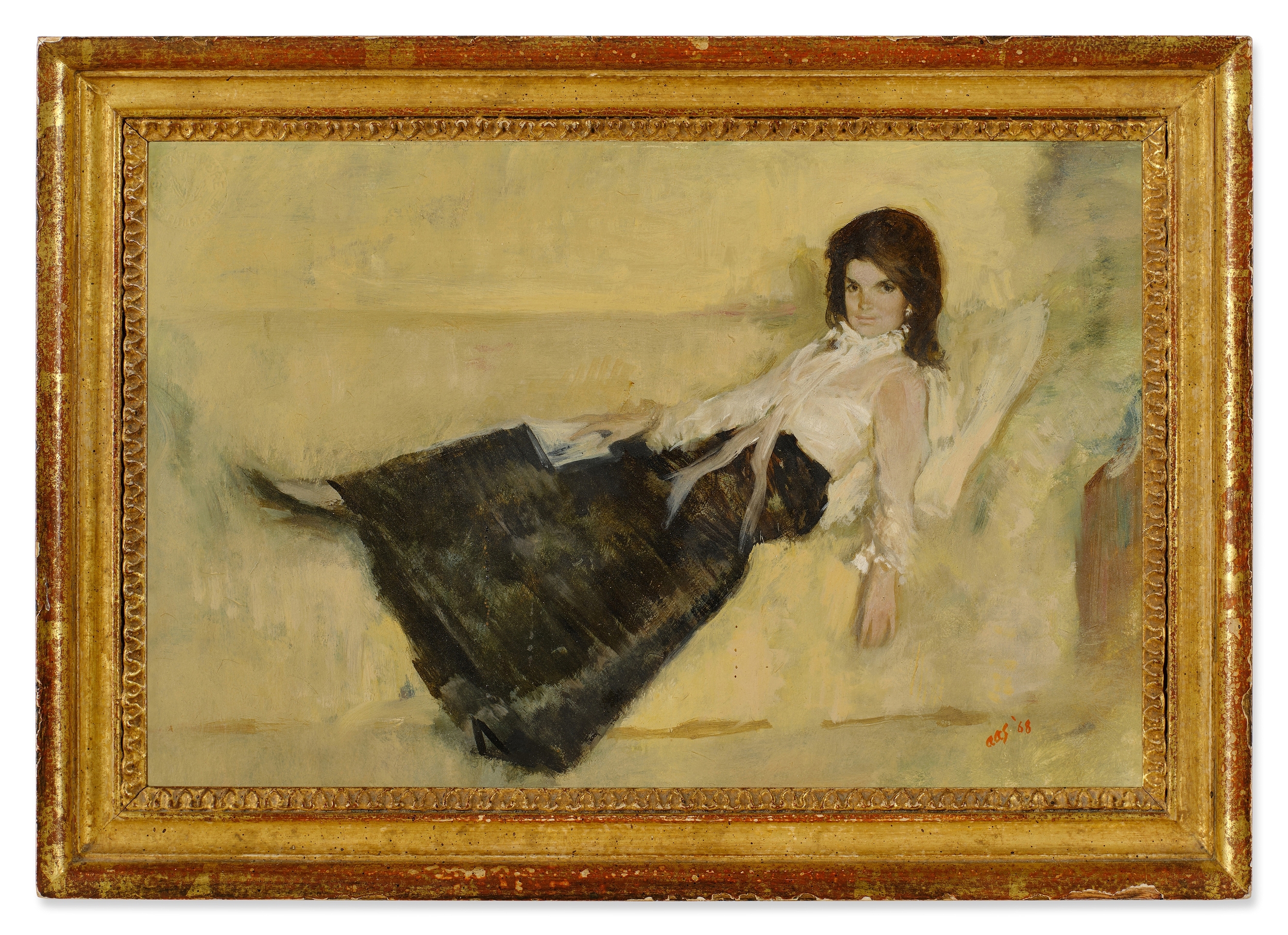
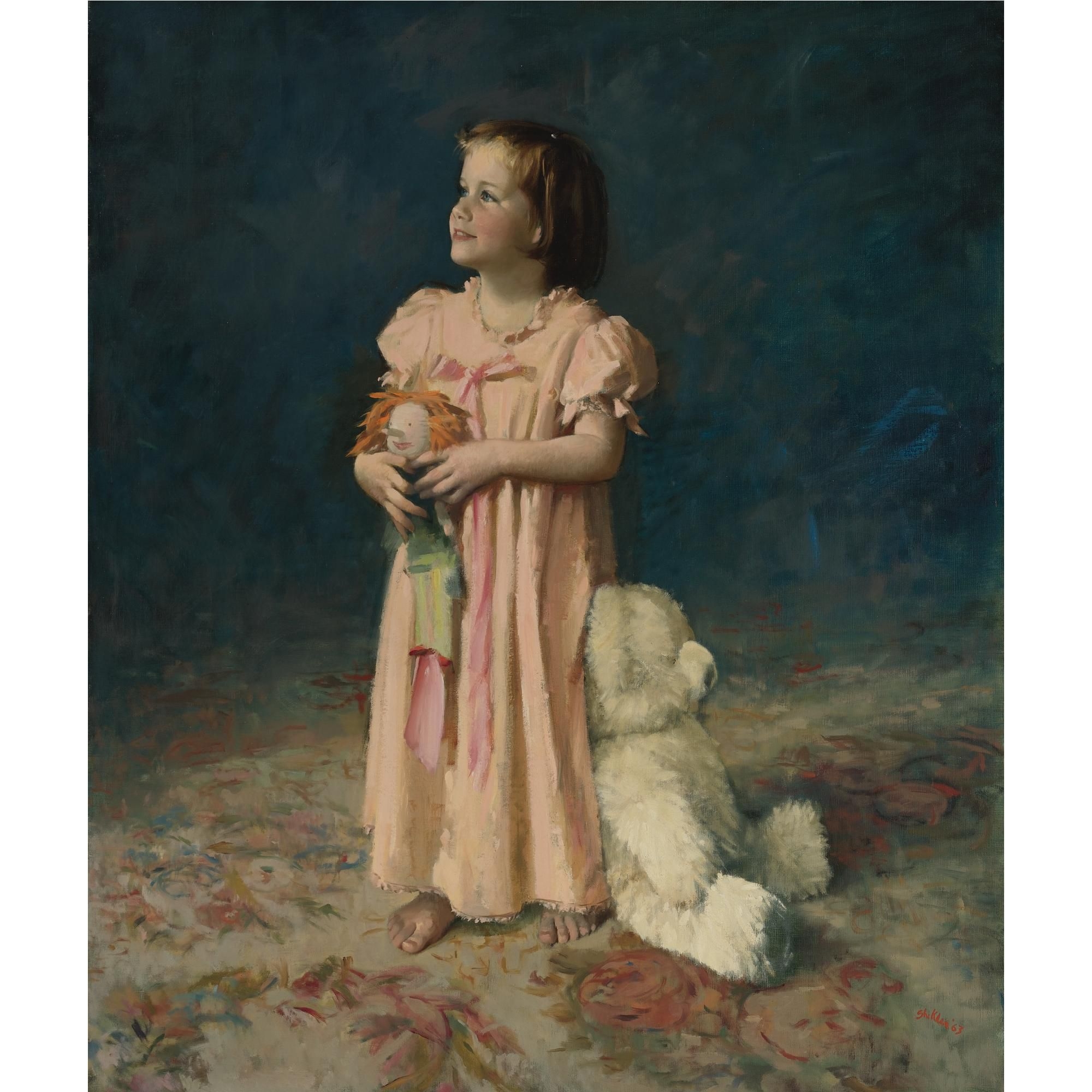
Aaron Shikler (1922–2015) was a acclaimed American portrait artist and figurative painter celebrated for his contemplative, soft-lit portraiture. Most famous for painting the official posthumous White House portrait of President John F. Kennedy, Shikler defined late-20th-century American portrait art through psychological depth, traditional craft, and quiet intimacy across private and official commissions.
Early Life, Academic Training, and Artistic Influences
Aaron Shikler was born in Brooklyn, New York, on March 18, 1922, to Eastern European immigrant parents. Growing up during the Great Depression, he demonstrated an early aptitude for drawing, which led him to study at the High School of Music & Art in New York City. His formal academic training began at the Tyler School of Art at Temple University in Philadelphia, where he earned both his Bachelor of Arts and Master of Fine Arts degrees.
Following his studies at Tyler, Shikler broadened his artistic perspectives by studying under Hans Hofmann in New York City between 1949 and 1951. While Hofmann was a central figure in Abstract Expressionism, Shikler chose not to adopt abstract painterly modes. Instead, Hofmann’s teachings on spatial tension, color relationships, and form deeply enriched Shikler’s understanding of structure, even as he remained steadfastly dedicated to classical figurative realism.
Shikler spent critical time studying masterpieces at the Barnes Foundation in Merion, Pennsylvania. There, he absorbed the techniques of European masters, developing a lifelong appreciation for the quiet interiority of Édouard Vuillard, the light-filled compositions of Pierre Bonnard, and the draftsmanly precision of Edgar Degas and Thomas Eakins. This combination of rigorous academic anatomy, modernist structural understanding, and Old Master tonalism formed the foundation of his distinct painterly style.
The Painting Group and the Defense of Figurative Realism
During the 1950s, the American art world experienced a massive shift toward Abstract Expressionism, Pop Art, and conceptual movement. Traditional portraiture and figurative representation were frequently dismissed by mainstream critics as anachronistic. In response, Shikler actively worked to sustain and advance the figurative tradition.
In 1958, Shikler and his close friend, the caricaturist and painter David Levine, co-founded The Painting Group. This collective of artists met weekly in a shared New York studio for over five decades to paint from live models, engage in constructive critique, and preserve classical techniques. The group served as a vital sanctuary for representational painters during a period dominated by non-representational aesthetics.
Key Milestones in Aaron Shikler’s Career:
- 1948–1951: Studies under Hans Hofmann; deepens research at the Barnes Foundation
- 1958: Co-founds The Painting Group with David Levine in New York City
- 1965: Elected to the National Academy of Design (Full Academician in 1968)
- 1970: Unveils official White House portraits of President John F. Kennedy and Jacqueline Kennedy
- 1987: Paints official White House portrait of First Lady Nancy Reagan
Shikler’s commitment to academic standards earned him elected membership to the National Academy of Design in 1965, where he later became a full Academician in 1968. Throughout his career, he advocated for the role of observational drawing, precise brushwork, and atmospheric nuance in portraiture.
The Iconic JFK Portrait and White House Commissions
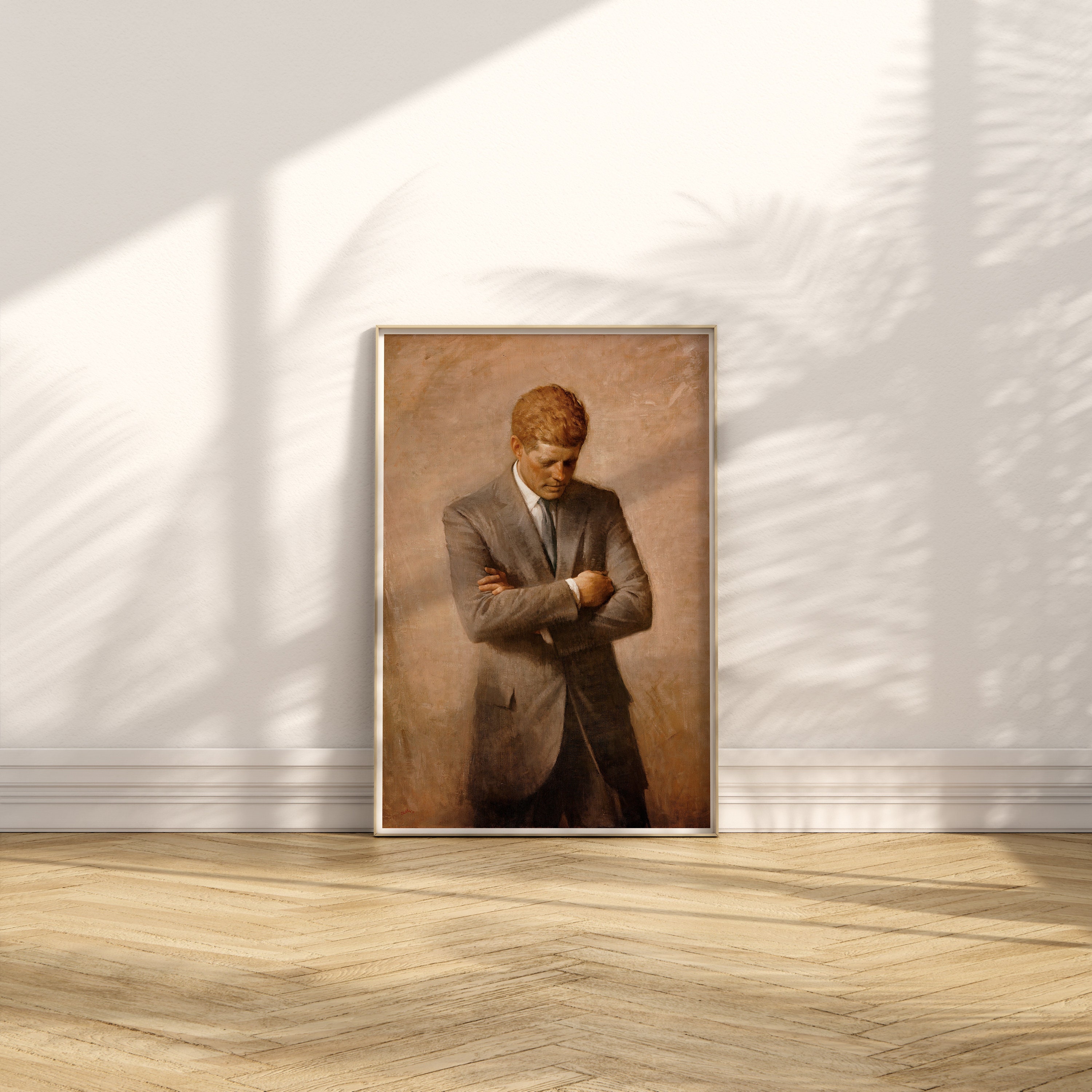
Shikler achieved global prominence through his official portrait of President John F. Kennedy, commissioned by Jacqueline Kennedy in 1970, seven years after the president's assassination. Conventional presidential portraits typically depict chief executives standing erect, looking directly at the viewer with an posture of authority and triumph. Shikler departed radically from this tradition.
Drawing inspiration from sketches he had made of Edward "Ted" Kennedy standing with folded arms and a bowed head during a moment of private grief, Shikler portrayed JFK lost in deep thought. The president is shown leaning forward, arms crossed, eyes cast downward, rendered in soft, subdued earth tones. The image captures a profound mood of vulnerability, introspection, and tragedy, reflecting both the individual leader and the grieving nation.
"I painted him the way I thought he looked best—not as a hero standing tall, but as a man thinking, carrying the weight of the world." — Aaron Shikler on the JFK Portrait
Jacqueline Kennedy was deeply moved by the portrait, selecting it as the official White House representation of JFK. Following this masterpiece, Shikler became the painter of choice for the Kennedy family and subsequent White House administrations:
- Jacqueline Kennedy (1970): Shikler painted the official White House portrait of Jacqueline Kennedy, depicting her in a long pink gown in a sunlit interior, emphasizing grace and subtle solitude.
- The Kennedy Children: He executed intimate portraits of Caroline Kennedy and John F. Kennedy Jr. during their youth.
- First Lady Lady Bird Johnson: Captured with warm, naturalistic realism.
- First Lady Nancy Reagan (1987): Depicted in a vibrant red dress against a neutral, softly illuminated background, balancing formal dignity with personal warmth.
Artistic Technique, Mediums, and Commercial Work
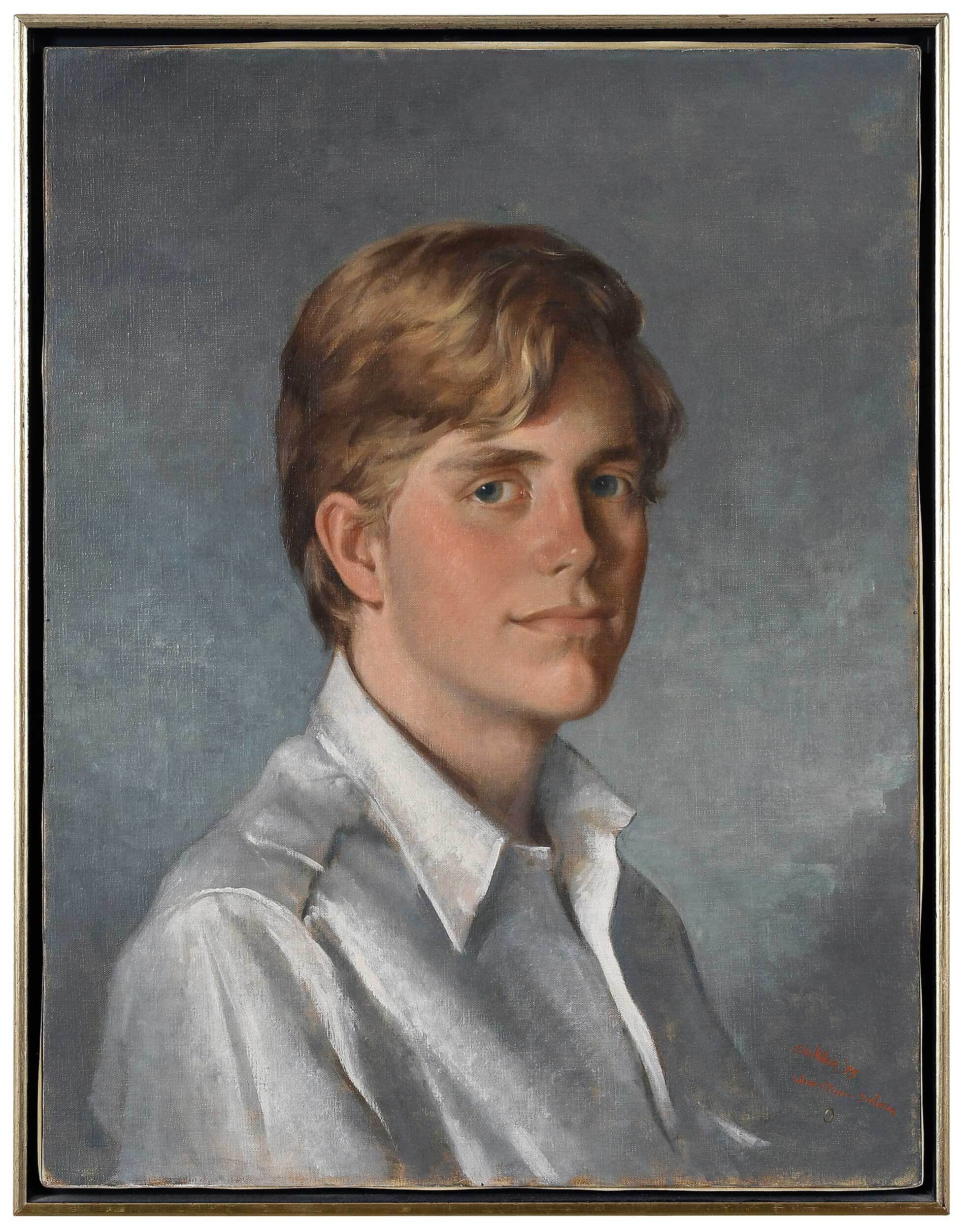
Aaron Shikler’s technical execution relied on a mastery of light, subtle value transitions, and compositional harmony. Rather than aiming for photo-like hyperrealism, he practiced psychological realism, striving to reveal the inner life and temperamental nuance of his sitters.
Mastery of Mediums
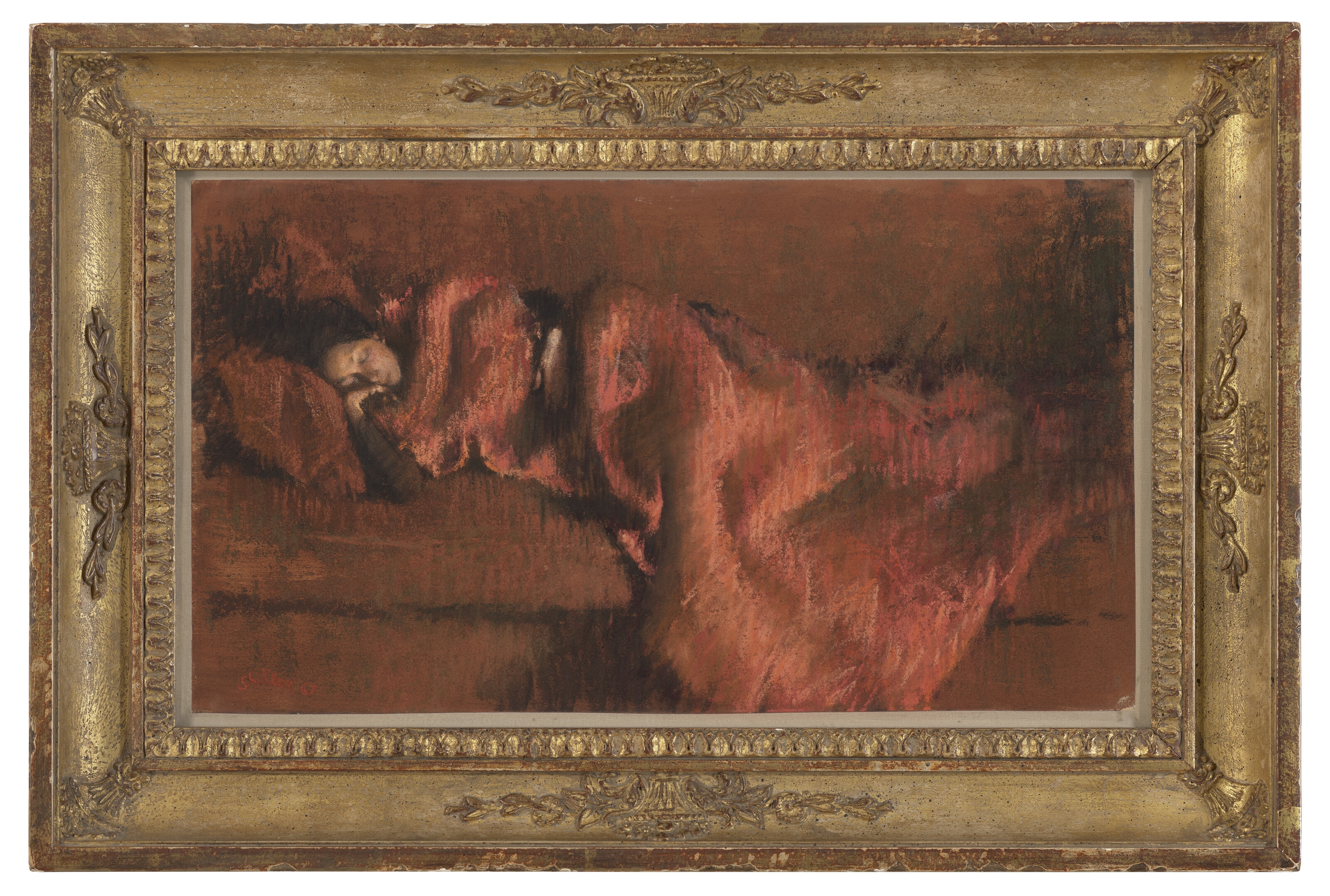
- Oil on Canvas and Panel: Shikler built up his oil paintings using thin glazes over established tonal underpaintings. He utilized a limited palette dominated by ochres, umbers, sienna, muted reds, and cool grays to achieve a warm, golden atmosphere reminiscent of 19th-century French Intimism.
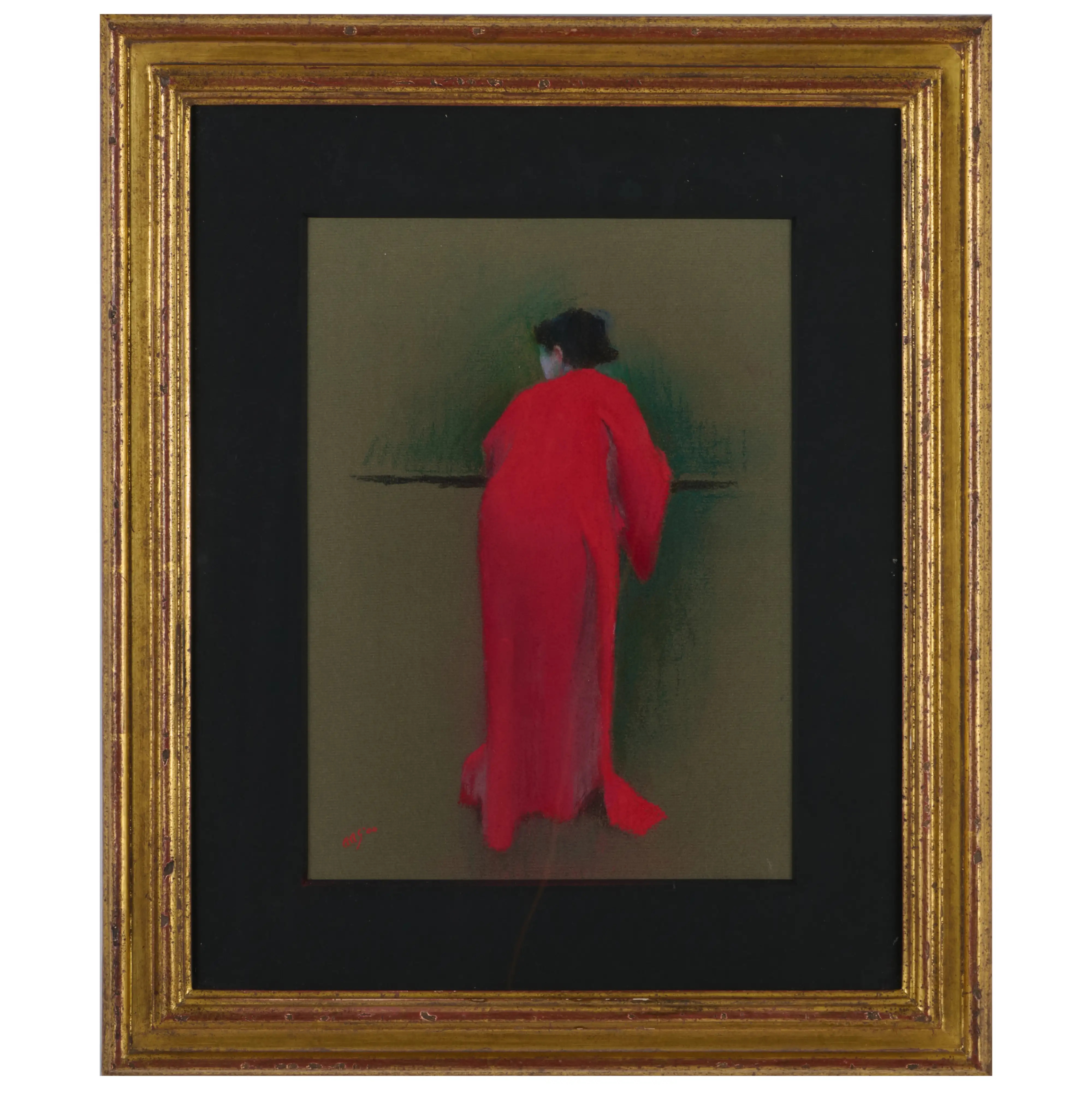
- Pastels and Charcoal: He was a master of pastel, using the medium’s velvety texture to render skin tones, fabrics, and ambient light with exceptional delicacy. His charcoal sketches served both as preliminary studies and as finished works of art.
- Lighting and Edges: Shikler avoided harsh outlines, employing lost-and-found edges and sfumato transitions to integrate the subject naturally into their surrounding environment.
Commercial Illustrations and Cover Art
In addition to private fine-art commissions, Shikler made significant contributions to popular media. He painted dozens of magazine covers for Time, including high-profile "Man of the Year" covers featuring political figures such as Jimmy Carter and Ronald Reagan. He also produced illustrations for The Saturday Evening Post, McCall's, and Ladies' Home Journal, bringing high-art representational quality to mass media publications.
Catalog of Significant Works
The following table summarizes notable works by Aaron Shikler, highlighting their subject matter, medium, and current institutional location.
| Work Title | Year | Subject / Description | Primary Medium | Current Location / Collection |
|---|---|---|---|---|
| Official Portrait of John F. Kennedy | 1970 | Posthumous White House portrait depicting JFK bowed in thought | Oil on canvas | White House Collection, Washington, D.C. |
| Official Portrait of Jacqueline Kennedy | 1970 | Official portrait of the former First Lady in a pink gown | Oil on canvas | White House Collection, Washington, D.C. |
| Portrait of Caroline and John F. Kennedy Jr. | 1968 | Intimate study of the Kennedy children in youth | Pastel on paper | Private Collection / Kennedy Family |
| Official Portrait of Nancy Reagan | 1987 | Official White House portrait depicting the First Lady in red | Oil on canvas | White House Collection, Washington, D.C. |
| Time Cover: Ronald Reagan | 1980 | "Man of the Year" cover portrait | Pastel and oil on board | National Portrait Gallery, Smithsonian Institution |
| The Model in the Studio | c. 1975 | Figurative studio scene showing interior lighting dynamics | Oil on panel | Brooklyn Museum, New York |
| Self-Portrait | Various | Periodic self-examinations of technique and aging | Oil on panel | National Academy Museum, New York |
Legacy, Institutional Holdings, and Critical Impact
Aaron Shikler passed away on November 12, 2015, at his home in Manhattan at the age of 93. Throughout his six-decade career, he proved that figurative realism could maintain profound cultural relevance during an era dominated by rapid artistic experimentation.
His portrait of John F. Kennedy remains one of the most widely recognized and emotionally resonant presidential images in American history. By breaking away from rigid civic portraiture standards, Shikler redefined how public figures could be remembered—privileging humanity, reflection, and quiet character over grand state imagery.
His works are preserved in major public and institutional art collections across the United States, including:
- The White House Collection (Washington, D.C.)
- The National Portrait Gallery, Smithsonian Institution (Washington, D.C.)
- The Metropolitan Museum of Art (New York City)
- The Brooklyn Museum (New York City)
- The National Academy of Design (New York City)
- The Hirshhorn Museum and Sculpture Garden (Washington, D.C.)
Viewing and Studying Aaron Shikler’s Work Today
For scholars, art students, and collectors looking to study Aaron Shikler’s artistic methods and historical output, several avenues offer direct access:
- Examine Official Presidential Collections: The White House Historical Association maintains public records, high-resolution imagery, and cataloging of Shikler’s presidential portraits. The National Portrait Gallery in Washington, D.C., frequently exhibits his commercial covers and political sketches.
- Study Pastel and Tonal Techniques: Art practitioners frequently study Shikler's portraiture for his technique in rendering ambient light and soft edges. His work demonstrates how limiting saturated color in favor of subtle value relationships creates timeless atmospheric mood.
- Consult Archival Resources: The Archives of American Art at the Smithsonian Institution holds oral history interviews, photographs, and personal papers related to Aaron Shikler and The Painting Group, providing primary source insight into mid-century American realist painting.
Frequently Asked Questions About Aaron Shikler
Why is Aaron Shikler’s portrait of John F. Kennedy unique among presidential portraits?
Shikler’s portrait of JFK is unique because it depicts the president with his head bowed, eyes looking down, and arms folded in quiet contemplation, rather than posing heroically and staring at the viewer. Commissioned posthumously by Jacqueline Kennedy, the painting captured national mourning and personal introspection, breaking standard White House portrait conventions.
Which U.S. Presidents and First Ladies did Aaron Shikler paint?
Aaron Shikler painted official White House portraits for President John F. Kennedy, First Lady Jacqueline Kennedy, and First Lady Nancy Reagan. He also painted portraits of First Lady Lady Bird Johnson and produced cover portraits of Presidents Jimmy Carter and Ronald Reagan for Time magazine.
What artistic style is Aaron Shikler associated with?
Shikler is associated with American figurative realism and 20th-century representational portraiture. His work reflects strong influences from French Intimism (Édouard Vuillard), Edgar Degas, and 19th-century American realism, prioritizing soft ambient lighting, warm muted tones, and psychological depth.
What mediums did Aaron Shikler prefer for his art?
Shikler primarily worked in oils (on canvas and wood panel), pastels, charcoal, and conte crayon. He was especially celebrated for his mastery of pastel, using it to create soft textures, subtle skin tones, and rich ambient light.
Where can the public view Aaron Shikler's original paintings?
Major works by Aaron Shikler are held in permanent collections at the White House, the Smithsonian's National Portrait Gallery in Washington, D.C., the Metropolitan Museum of Art, and the Brooklyn Museum in New York City.
Studying the Craft of Aaron Shikler
Aaron Shikler's legacy offers enduring lessons for art historians, portrait artists, and students of American culture. His work proves that technical mastery of line, light, and tone can convey profound human emotional truths across both intimate family sketches and historic state portraits. To gain a deeper appreciation of his technique, visit public museum collections hosting his work or explore the digital archives of the National Portrait Gallery and the White House Historical Association.