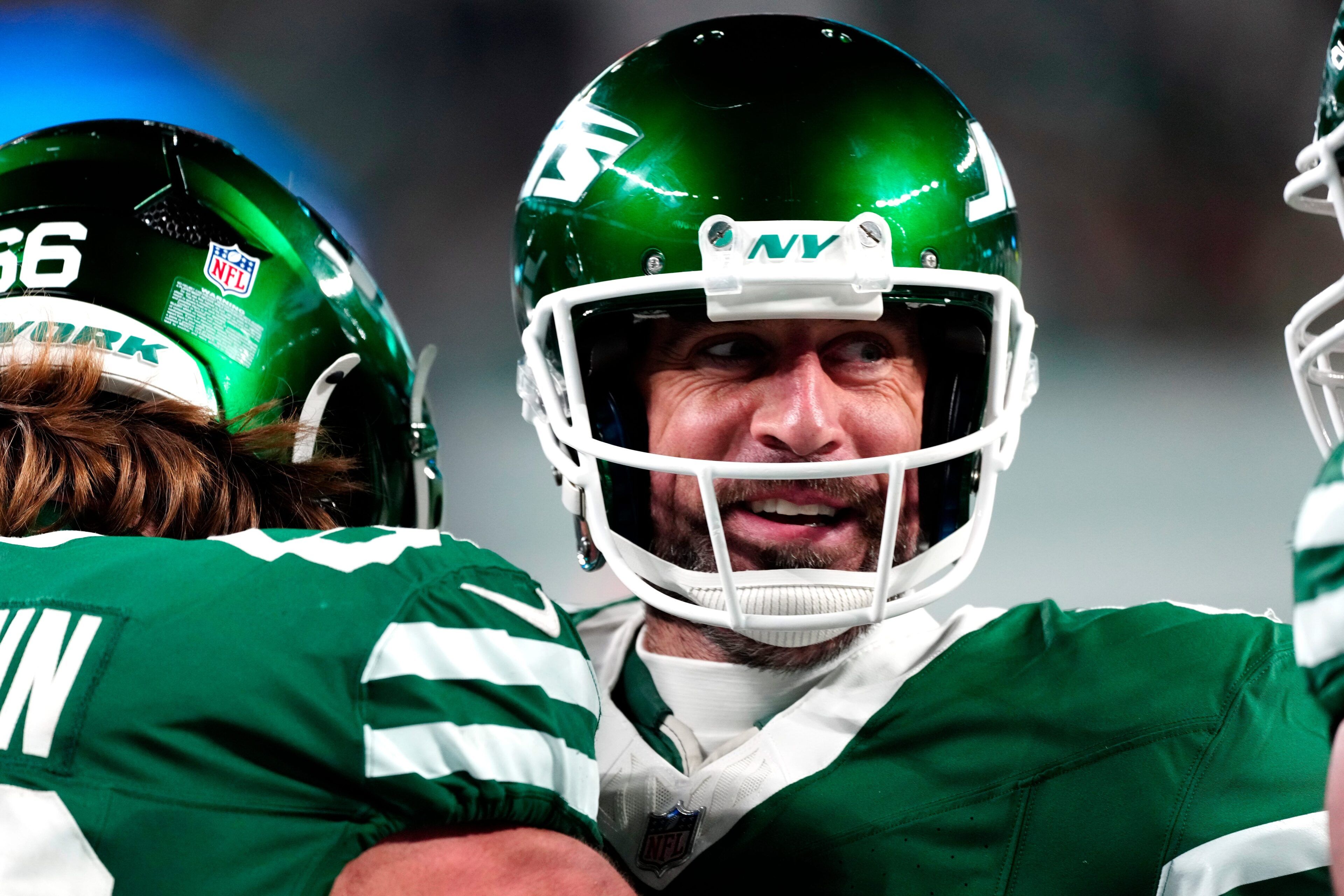
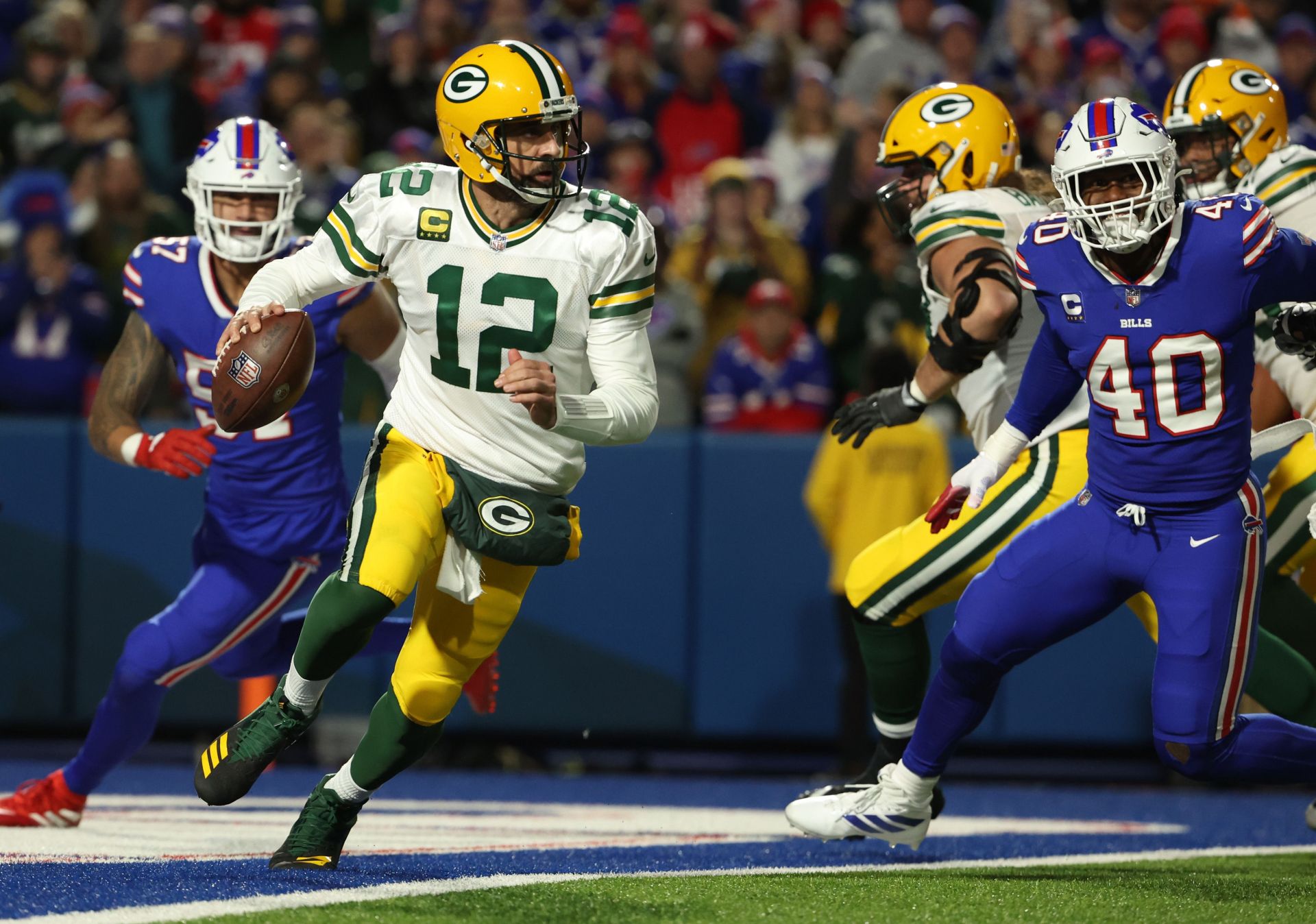
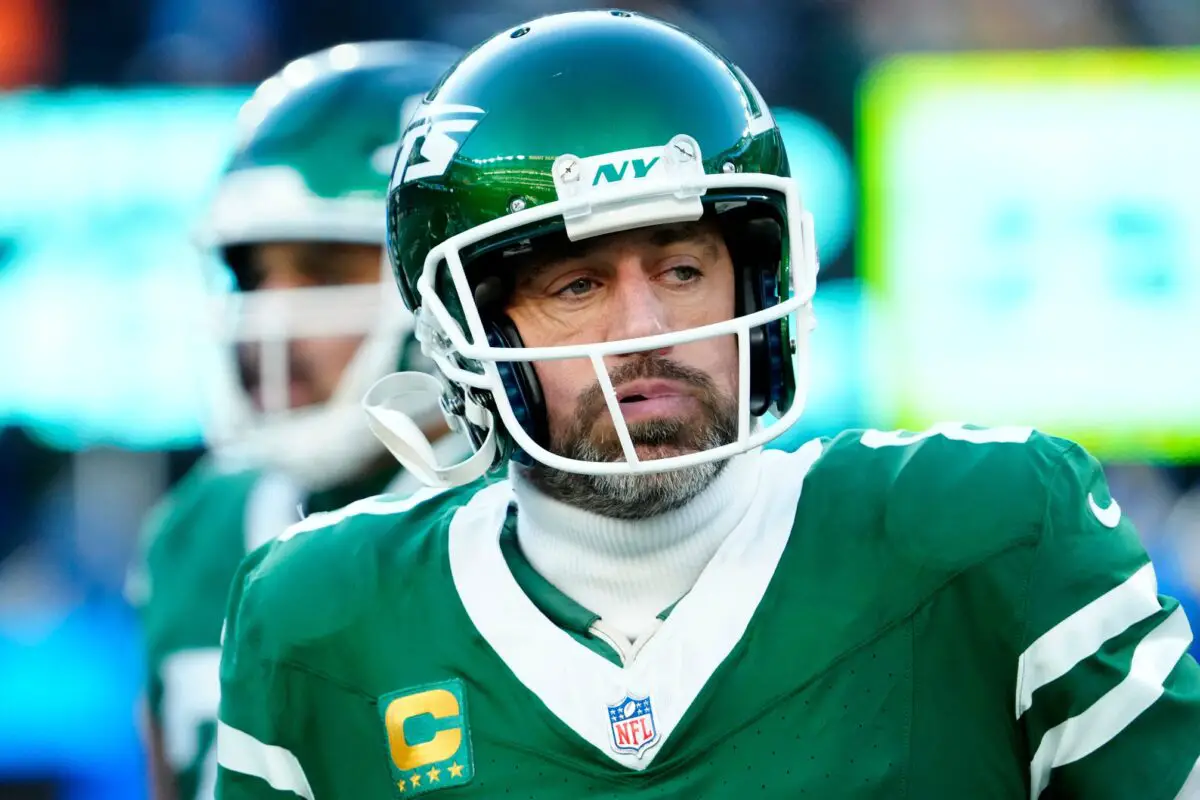
In 2025, Aaron Rodgers earned a total of $37.5 million in cash compensation from the New York Jets. This payout consisted of a $2.5 million base salary and a substantial $35 million option bonus. While his salary cap hit was structured lower to provide the team flexibility, his actual take-home pay remained among the top tier for veteran NFL quarterbacks.
Understanding the specifics of Aaron Rodgers’ 2025 compensation requires a deep dive into one of the most unique contract restructures in NFL history. When Rodgers was traded from the Green Bay Packers to the New York Jets, he didn't just change jerseys; he fundamentally altered his financial trajectory to facilitate a "win-now" window for the organization. By 2025, the mechanics of that deal—specifically the massive option bonuses—became the primary driver of his earnings.
The Financial Structure of Rodgers’ 2025 Season
The 2025 NFL season represented a pivotal financial milestone for Aaron Rodgers. Unlike traditional contracts where the base salary accounts for the bulk of a player’s earnings, Rodgers' deal was back-loaded with "option bonuses." In 2025, his base salary was a league-minimum-adjacent $2.5 million. However, the $35 million option bonus served as the real engine of his compensation.
An option bonus functions similarly to a signing bonus but is triggered at a specific date during the league year. For the Jets, this structure allowed them to pay Rodgers the cash he was owed while spreading the "cap hit" over multiple years, including "void years" extending beyond his actual playing days. This "credit card" approach to the salary cap is common for championship contenders, but it makes the distinction between "cash spent" and "cap space used" vital for fans to understand.
From a liquidity standpoint, Rodgers received the $35 million as a lump sum or in scheduled installments shortly after the option was exercised. This brought his total 2025 cash flow to exactly $37.5 million, regardless of his on-field statistics or the number of snaps played, as the majority of this sum was fully guaranteed upon the contract's execution in late 2023.
Understanding the Restructured 2023 Deal
To appreciate the 2025 figures, one must look back at the unprecedented pay cut Rodgers took in July 2023. Rodgers signed a two-year, $75 million nearly fully guaranteed contract, which was essentially a $35 million reduction from the original deal he carried over from Green Bay. This sacrifice was designed to allow the Jets to aggressively pursue free agents and bolster the offensive line and receiving corps.
The 2025 salary was the direct byproduct of this restructuring. The contract was technically a five-year deal, but the final three years (2025, 2026, and 2027) were initially designed as "dummy years" or "void years" to facilitate the proration of his $75 million guarantee. By the time 2025 arrived, the Jets had to decide whether to let the contract void or continue with Rodgers under the heavy $37.5 million cash obligation. Because the money was guaranteed, the 2025 payout was inevitable as long as Rodgers remained on the roster or didn't retire before the bonus trigger.
Salary Cap Hit vs. Actual Take-Home Pay
In the NFL, the "salary cap hit" is often the number reported in headlines, but it rarely reflects what hits the player's bank account. For Aaron Rodgers in 2025, the discrepancy was significant. While he took home $37.5 million in cash, his salary cap hit for the New York Jets was significantly lower—approximately $23.5 million.
This was achieved through the "Prorated Bonus" rule. Under the NFL Collective Bargaining Agreement (CBA), a team can divide a signing or option bonus across the length of the contract (up to five years). By spreading the $35 million 2025 option bonus across 2025 and the subsequent void years, the Jets effectively lowered his immediate impact on their 2025 spending limit.
| Compensation Component | 2025 Cash Amount | 2025 Salary Cap Impact |
|---|---|---|
| Base Salary | $2,500,000 | $2,500,000 |
| Option Bonus | $35,000,000 | $7,000,000 (Current Year Proration) |
| Previous Prorated Bonuses | $0 | $14,000,000 (Carryover from 2023/24) |
| Total | $37,500,000 | ~$23,500,000 |
This accounting strategy allowed the Jets to keep Rodgers under center while still having the room to pay star defenders and offensive weapons. However, the "bill" for this strategy eventually comes due in the form of "dead money" once Rodgers eventually retires or leaves the team.
Comparing Rodgers to the 2025 Quarterback Market
By 2025, the quarterback market had shifted dramatically since Rodgers signed his extension. Younger stars like Joe Burrow, Justin Herbert, and Lamar Jackson had set new benchmarks with annual averages exceeding $50 million and $55 million. In this context, Rodgers' $37.5 million cash earnings for 2025 made him a relative "bargain" for a first-ballot Hall of Famer, even at an advanced age.
Rodgers' 2025 earnings placed him in the second tier of quarterback compensation. While he wasn't matching the $50M+ annual salaries of the league's youth movement, he remained significantly higher paid than veteran bridge quarterbacks or those on rookie scales. The "discount" he provided the Jets was less about the $37.5 million he received and more about the $35 million he walked away from in 2023, which would have pushed his 2025 earnings into the stratosphere.
For the Jets' front office, the 2025 salary was a calculated risk. They were paying for elite-level processing and leadership, hoping that the surrounding roster—built with the savings from Rodgers' earlier pay cut—would be enough to overcome the physical limitations of a quarterback in his 40s.
The Impact of Performance Incentives and Clauses
While the $37.5 million base and bonus structure formed the core of his 2025 earnings, NFL contracts frequently include "hidden" incentives. For a veteran like Rodgers, these are typically classified as "Not Likely To Be Earned" (NLTBE) or "Likely To Be Earned" (LTBE) for cap purposes.
Common incentives in Rodgers' era included:
- Pro Bowl Selection: Small six-figure bonuses for being named to the initial roster.
- Playoff Victories: Escalating bonuses for winning the Wild Card, Divisional, or AFC Championship rounds.
- MVP Honors: Significant bonuses if he were to win his fifth league MVP award.
- Playing Time Requirements: Payouts triggered if he participated in 70% or more of the offensive snaps.
In 2025, these incentives were largely secondary to the guaranteed $35 million option. For Rodgers, the financial motivation had long been replaced by the desire for a second Super Bowl ring, but the contract remained structured to reward deep postseason runs.
Retirement and the "Dead Money" Dilemma
As we look at the 2025 salary from the perspective of 2026, the question of retirement looms large. If Rodgers had decided to retire prior to the 2025 season, the Jets would have faced a massive "dead cap" hit. Because so much of his compensation was tied up in prorated bonuses, his retirement would have accelerated all future cap hits into the current year.
By playing through 2025 and collecting his $37.5 million, Rodgers fulfilled the "cash" side of the obligation. For the team, this meant they received the services they paid for, but it also meant they had to continue navigating the complex cap ramifications of his 2023 restructure. The $35 million option bonus paid in 2025 didn't just affect that year; it left a footprint on the Jets' books that would last into 2026 and 2027 via those "void years."
FAQs about Aaron Rodgers’ 2025 Salary
Did Aaron Rodgers receive all $37.5 million in a single check?
No, NFL salaries are typically paid out weekly during the 18-week regular season. However, the $35 million option bonus was likely paid in a lump sum or several large installments shortly after the option was exercised by the Jets in the spring of 2025. This provides the player with significant upfront liquidity compared to the $2.5 million base salary distributed over the season.
How did Rodgers’ 2025 salary affect the Jets' ability to sign other players?
Because the Jets used "void years" to spread out the cap hit of his $35 million bonus, they only had to account for a fraction of that money against the 2025 cap. This allowed them to remain aggressive in free agency. However, it also meant they were using "future" money, which limits their financial flexibility in 2026 and 2027 when those prorated amounts finally hit the books as dead money.
Was any of Aaron Rodgers’ 2025 salary "unprotected"?
The vast majority of Rodgers' 2025 compensation was protected through the 2023 restructure. His $35 million option bonus was part of the $75 million in guarantees he secured when joining the Jets. This meant that even if he suffered an injury or his performance dipped, the Jets were legally and contractually obligated to pay out that sum as long as he remained on the active roster at the time the option was triggered.
Is Aaron Rodgers the highest-paid player in Jets history?
In terms of annual cash flow and total guaranteed money, Aaron Rodgers is the highest-paid player in the history of the New York Jets franchise. His 2025 earnings of $37.5 million alone exceeded the career earnings of many former Jets starters, reflecting both the rising NFL salary cap and the premium placed on elite quarterback play.
What happens to the 2025 salary if he is traded?
If Rodgers had been traded before the 2025 option bonus was paid, the new team would have inherited the obligation to pay that $35 million. However, any "signing bonus" money already paid by the Jets would stay on the Jets' salary cap as dead money. Trade scenarios for veteran quarterbacks with these specific bonus structures are incredibly complex and usually require a second restructure by the acquiring team.
Managing the Legacy of the 2025 Contract
As the league moves further into 2026, the 2025 salary of Aaron Rodgers stands as a case study in "modern NFL finance." It demonstrates how a team can manage a high-priced veteran by utilizing option bonuses and void years to delay the "cap pain" while still providing the player with massive cash incentives.
For Rodgers, the 2025 earnings were a fair market reflection of his status as a legendary signal-caller. For the New York Jets, it was the price of admission for relevancy in a hyper-competitive AFC East. Whether the investment resulted in a Lombardi Trophy or not, the $37.5 million payout was the definitive marker of Rodgers’ late-career value and the Jets' commitment to a championship-or-bust philosophy.