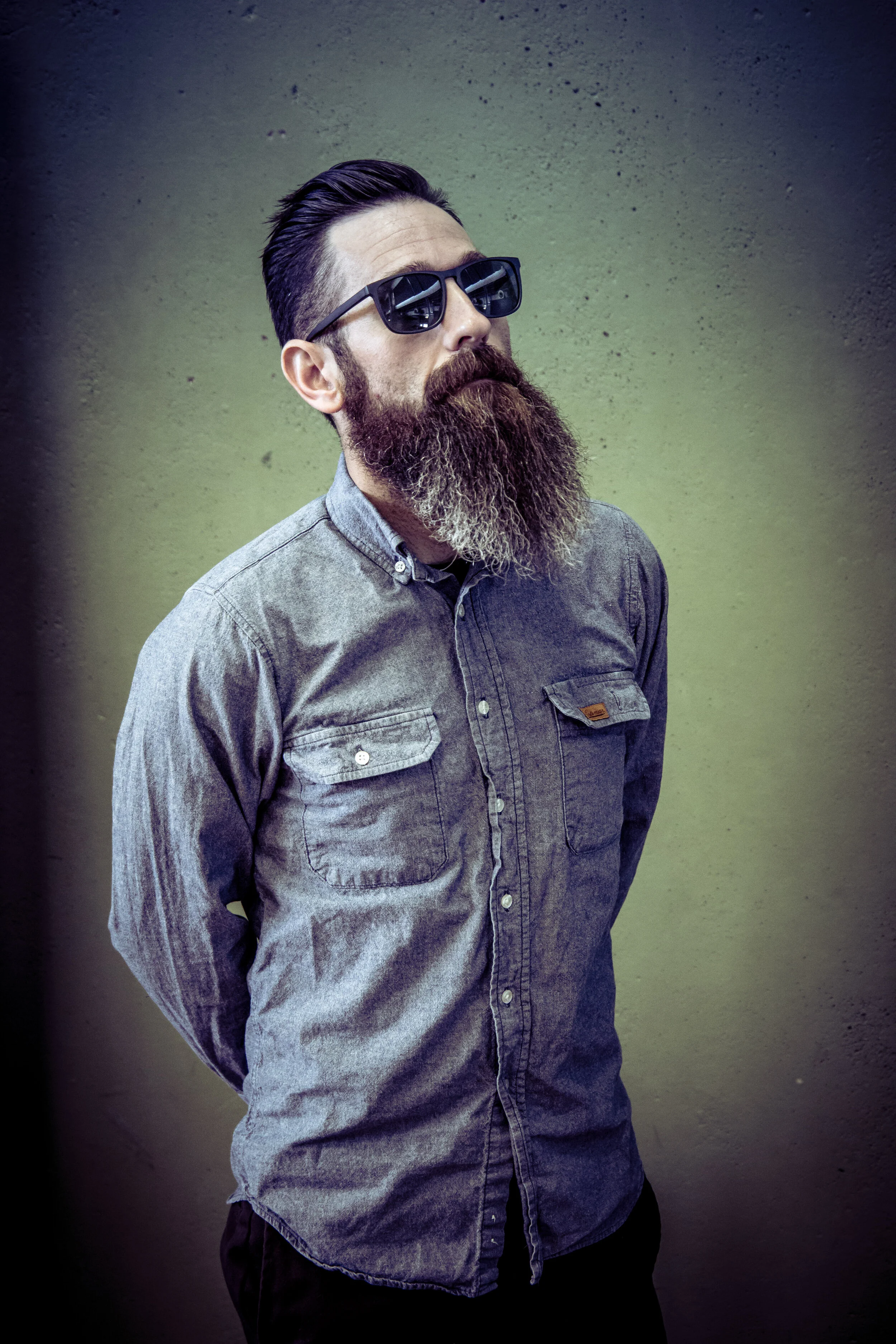
Aaron Kaufman is an American master fabricator, mechanic, and television personality best known as the lead mechanic for Gas Monkey Garage on the hit series Fast N' Loud. Since departing the show in 2017, he has founded Arclight Fabrication and starred in solo ventures like Shifting Gears, cementing his reputation as a precision-oriented craftsman in the automotive industry.
The Foundation of a Fabrication Career
Aaron Kaufman’s journey into the automotive world began long before he became a household name on the Discovery Channel. Growing up in Texas, Kaufman exhibited an early aptitude for mechanical systems and metalwork. Unlike many who enter the field through traditional automotive repair, Kaufman’s approach was rooted in fabrication—the art of creating components from raw materials rather than simply replacing parts.
In the early 2000s, Kaufman worked at various local garages in Texas, where his meticulous attention to detail began to attract attention. It was during this period that he met Richard Rawlings. While Rawlings possessed the business acumen and marketing flair, Kaufman provided the technical backbone necessary to transform aging shells of vehicles into high-performance machines. This partnership led to the founding of Gas Monkey Garage and the subsequent launch of Fast N' Loud in 2012.
Kaufman’s role as the "Bearded Wonder" was defined by his ability to solve complex engineering problems under tight deadlines. His work during this era focused on a wide range of vehicles, from 1930s hot rods to 1970s muscle cars. However, his true passion lay in the integrity of the build rather than the speed of the flip—a philosophical difference that would eventually lead to a significant shift in his career.
The Gas Monkey Era and the Reality TV Catalyst
From 2012 to 2017, Aaron Kaufman was the primary technical draw for Fast N' Loud. His presence provided the show with mechanical credibility, balancing the high-energy salesmanship of Richard Rawlings. During this time, Kaufman became synonymous with high-quality fabrication, often working through the night to ensure that the suspension geometry, engine mounts, and bodywork met his personal standards.
The success of Gas Monkey Garage was meteoric, but the pressures of reality television production began to clash with Kaufman's professional values. The "build it fast, sell it high" model necessitated by the show's format often left little room for the deep, experimental fabrication that Kaufman preferred. By late 2016, Kaufman announced his departure from the shop, a move that stunned fans but signaled a new chapter focused on technical excellence over commercial volume.
His departure was not merely a career move but a statement on the state of the automotive industry. Kaufman sought to distance himself from the "drama-first" approach of early 2010s car shows, aiming instead to produce content and vehicles that prioritized the process of building over the spectacle of the sale.
Arclight Fabrication: A Focus on the Ford F-100
Following his exit from Gas Monkey Garage, Kaufman founded Arclight Fabrication in Dallas, Texas. This venture allowed him to specialize in his favorite automotive platform: the Ford F-100. Kaufman’s affinity for the 1948–1979 Ford F-Series trucks stems from their robust design and the relative scarcity of high-quality aftermarket performance parts compared to the ubiquitous Chevy C10.
Arclight Fabrication was established as more than just a custom shop; it was designed as a hub for enthusiasts of the F-100 platform. Kaufman focused on several key areas:
- Chassis Development: Engineering complete chassis systems that allow vintage trucks to handle like modern performance vehicles.
- Component Manufacturing: Producing specialized parts such as suspension brackets, cooling systems, and interior modifications specifically for the F-100.
- Educational Outreach: Kaufman used the Arclight platform to share fabrication techniques, emphasizing the "why" behind specific engineering choices.
By narrowing his focus, Kaufman became the preeminent authority on F-100 restoration and modification. As of 2026, Arclight remains a boutique operation that prioritizes quality over quantity, serving a dedicated clientele who value Kaufman's signature "over-engineered" approach.
Media Transition: Shifting Gears and Aaron Needs a Job
Kaufman did not stay away from the screen for long, but his return to television was on his own terms. In 2018, Discovery premiered Shifting Gears with Aaron Kaufman. The show was a departure from the Fast N' Loud formula, focusing on a single, complex build over several episodes rather than a new car every week.
In Shifting Gears, Kaufman and his hand-picked team at Arclight took on ambitious projects, such as preparing a 1971 International Scout for the "King of the Hammers" off-road race and building a 1945 Ford truck for the Pikes Peak International Hill Climb. These projects highlighted his interest in functional performance—vehicles built to be driven hard, not just displayed at auctions.
His subsequent series, Aaron Needs a Job, further demonstrated his curiosity about the broader world of engineering. In this program, Kaufman traveled across the United States to embed himself with different industries, from naval shipyards to coal mines. This series solidified his reputation as an "engineer's mechanic," someone who appreciates the scale and complexity of industrial machinery beyond the automotive sector.
Comparison of Major Aaron Kaufman Projects
The following table compares key vehicle builds that defined Kaufman’s career and technical evolution.
| Project Vehicle | Era / Show | Primary Focus | Technical Highlight |
|---|---|---|---|
| 1967 Ford Galaxie | Fast N' Loud | Performance / Racing | Lightweighting and suspension for track use. |
| 1971 International Scout | Shifting Gears | Off-Road Endurance | Custom four-link suspension for King of the Hammers. |
| 1945 Ford "The Beast" | Shifting Gears | Hill Climb | Twin-turbo diesel conversion for Pikes Peak. |
| "Main Street" F-100s | Arclight Fabrication | Daily Drivability | Integration of modern Coyote engines and independent front suspension. |
| 1932 Ford 5-Window | Gas Monkey Garage | Traditional Hot Rod | Traditional metalwork and period-correct aesthetics. |
Technical Philosophy and Influence on Car Culture
Aaron Kaufman’s influence on modern car culture is characterized by his advocacy for "functional fabrication." While many customizers focus on aesthetics (paint, chrome, and stance), Kaufman prioritizes the mechanical integrity of the vehicle. His builds often feature:
- Structural Rigidity: Kaufman is known for reinforcing frames and chassis to handle modern horsepower, often using boxed tubing and precision TIG welding.
- Serviceability: Unlike many custom builders who hide components for a "clean" look, Kaufman emphasizes making the vehicle easy to work on, ensuring that fluid reservoirs and wiring harnesses are accessible.
- Cross-Disciplinary Engineering: He frequently adapts technology from other industries, such as using aerospace-grade fasteners or industrial cooling solutions in his automotive projects.
His approach has inspired a new generation of fabricators to move away from "bolt-on" culture and toward genuine metalwork. By showing the frustrations and failures of the building process on his later shows, he demystified the craft, encouraging hobbyists to learn welding and CAD design.
Facing the Challenges of Independent Fabrication
Transitioning from a well-funded television production to an independent shop owner presented significant challenges. At Arclight, Kaufman had to balance the roles of lead designer, business manager, and media personality. Unlike the Gas Monkey model, which relied on high-volume flipping, Arclight's model is based on long-term project cycles and high-end parts manufacturing.
One of the primary difficulties Kaufman has discussed is the rising cost of vintage steel and the scarcity of donor vehicles. As the 1948–1979 F-100s have surged in popularity—partly due to his own influence—the entry price for these projects has increased. Kaufman has navigated this by focusing on the development of parts that allow owners of "less desirable" later-model trucks to achieve the same performance standards as the classic early models.
Furthermore, Kaufman has remained vocal about the importance of trade schools and vocational training. In a 2026 perspective, his advocacy for the "blue-collar arts" has become a central part of his public persona, as he frequently speaks at industry events about the need for skilled labor in an increasingly automated world.
FAQs About Aaron Kaufman
Why did Aaron Kaufman leave Gas Monkey Garage?
Kaufman left Gas Monkey Garage primarily due to professional differences regarding the quality and pace of builds. He wanted to focus on high-level fabrication and complete projects that met his engineering standards, whereas the Fast N' Loud production schedule required a faster turnaround that he felt compromised the integrity of the work.
Is Aaron Kaufman still building cars?
Yes, as of 2026, Aaron Kaufman continues to build high-end custom vehicles through his shop, Arclight Fabrication. While his presence on television has become more selective, his focus remains on specialized Ford F-100 parts and full-scale custom builds for private clients.
Does Aaron Kaufman have a degree in engineering?
Aaron Kaufman does not hold a formal university degree in mechanical engineering. He is a self-taught fabricator and mechanic who developed his skills through hands-on experience, mentorship, and independent study of physics and metallurgy.
What happened to the show Shifting Gears?
Shifting Gears ran for two seasons on Discovery. It was designed to be a more technical and process-oriented show than Kaufman's previous work. While it was well-received by core automotive enthusiasts, Kaufman eventually moved toward more diverse projects, including Aaron Needs a Job and digital content creation.
What is Aaron Kaufman's favorite truck?
Kaufman is most famously associated with the Ford F-100, specifically models from the late 1960s and early 1970s. He prefers the F-100 platform for its styling and the engineering challenges it presents compared to the more commonly modified Chevrolet trucks.
Engaging with the Kaufman Fabrication Legacy
For those looking to follow in Kaufman’s footsteps or simply improve their own automotive projects, the best next step is to prioritize the fundamentals of fabrication. Kaufman’s career demonstrates that success in the custom automotive world is built on a foundation of precision, patience, and a willingness to understand the "why" behind the "how."
Enthusiasts should look toward specializing in a specific platform—much as Kaufman did with the F-100—to build deep expertise. Additionally, supporting local trade schools and investing in quality tools (like a reliable TIG welder or a manual lathe) can help bridge the gap between being a parts-replacer and a true fabricator. Whether through watching his archived series or utilizing Arclight components, the Kaufman legacy remains a roadmap for those who value mechanical honesty and technical mastery.