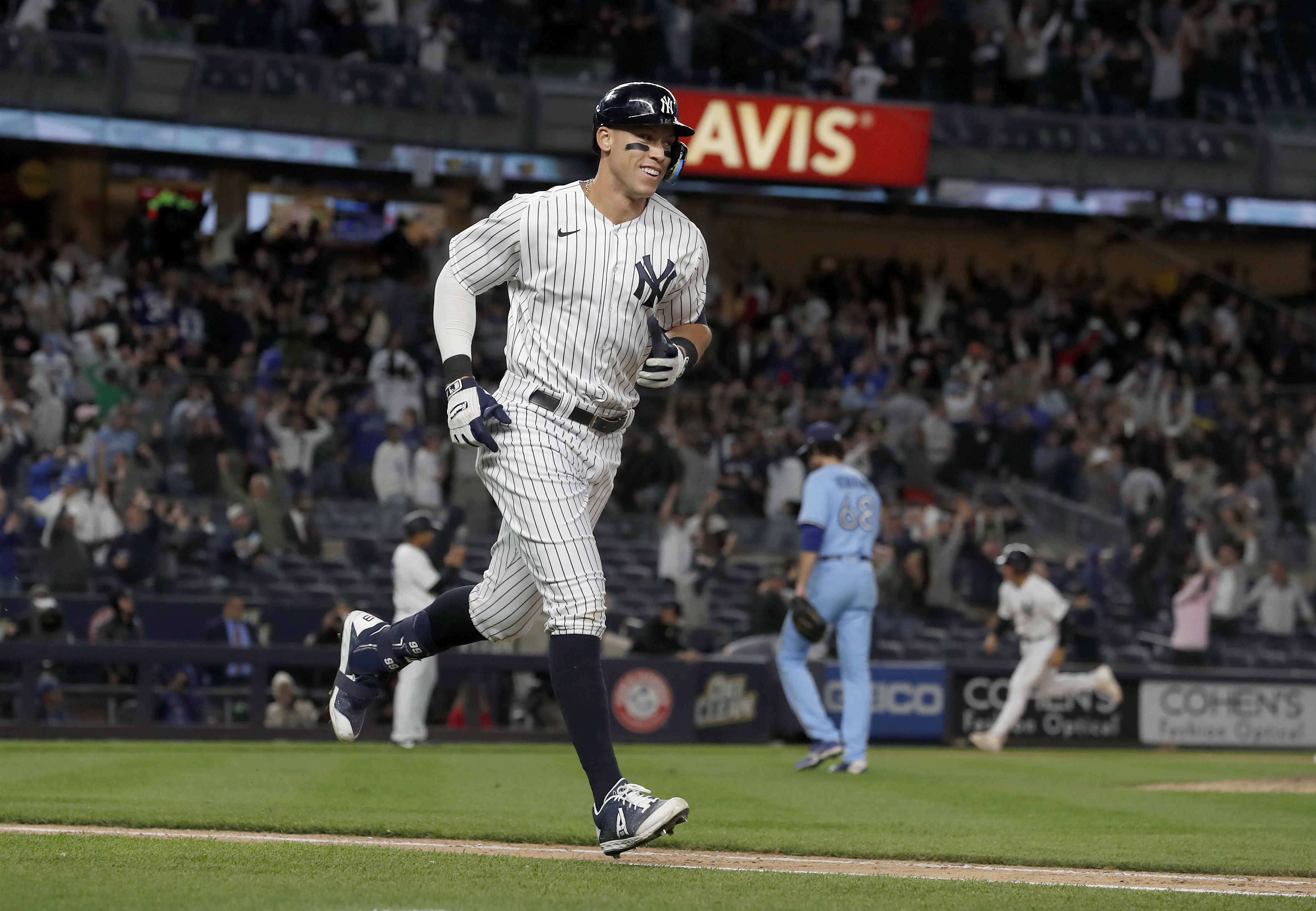
As of 2026, Aaron Judge remains the cornerstone of the New York Yankees under a landmark nine-year, $360 million contract signed in December 2022. The deal, which carries an average annual value (AAV) of $40 million, secures the Yankees captain through the 2031 season, ensuring he likely remains a "Yankee for Life."
The contract signed by Aaron Judge represents one of the most significant financial commitments in the history of Major League Baseball (MLB). When Judge put pen to paper following his historic 62-home run season in 2022, he did more than just secure his financial future; he redefined the market for veteran power hitters and cemented his legacy in pinstripes. Now that we are well into the duration of this agreement, understanding the nuances of the deal—ranging from its luxury tax implications to its specific legal clauses—is essential for any fan or analyst tracking the Yankees' roster construction.
The Financial Architecture of the Nine-Year Agreement
The total valuation of Aaron Judge’s contract is $360 million, distributed evenly over a nine-year term. Unlike many modern mega-contracts that utilize heavy deferrals to mitigate immediate payroll hits, Judge’s deal is structured with straightforward annual salaries. Each year, from the start of the deal in 2023 through its conclusion in 2031, Judge earns a base salary of $40 million.
This $40 million figure is also the number used for Competitive Balance Tax (CBT) purposes. In MLB, the "luxury tax" is calculated based on the average annual value of a contract rather than the cash paid in a specific year. Because Judge’s contract does not feature an escalating salary or signing bonus spread unevenly, the Yankees have a consistent $40 million "cap hit" associated with their captain for nearly a decade. This consistency allows the front office to plan long-term around other high-profile salaries, such as those for Gerrit Cole or newer acquisitions made leading up to 2026.
The decision to avoid deferrals was a specific point of negotiation. While players like Shohei Ohtani later utilized massive deferrals to lower their present-day AAV for tax purposes, Judge and his representation at PSI Sports Management opted for immediate cash flow and a higher present-day value. For the Yankees, this meant accepting a higher immediate tax burden in exchange for avoiding long-term debt that would linger long after Judge’s playing days are over.
Contract Length and Milestone Dates
The timeline of Aaron Judge’s contract is designed to cover the remainder of his prime years and the inevitable transition into the veteran stage of his career. Having signed the deal ahead of his age-31 season, the contract extends until he is 39 years old.
- Contract Start Date: January 1, 2023
- Contract End Date: Following the 2031 World Series
- Current Status (2026): Judge is currently in the fourth year of the agreement.
- Remaining Years: After the 2026 season, five years remain on the contract.
The length of the deal was a primary sticking point during the 2022 free-agency period. The Yankees originally offered a seven-year extension worth $213.5 million prior to the 2022 season, which Judge famously turned down. By betting on himself and producing an MVP season, he forced the Yankees to add two additional years and nearly $150 million in total value. The nine-year length was eventually reached to match the offers reportedly on the table from the San Francisco Giants and San Diego Padres, ensuring that Judge would not have to leave New York to find the long-term security he desired.
Major Clauses: The No-Trade and Captaincy Provisions
Beyond the raw numbers, Aaron Judge’s contract includes several critical "soft" and "hard" clauses that grant him immense control over his professional future. The most significant of these is the full No-Trade Clause. This provision means that Judge cannot be traded to any other MLB team without his express written consent. In the world of high-stakes sports business, this is the ultimate form of leverage, effectively granting the player a permanent veto over any roster moves involving him.
Additionally, while not a financial clause in the legal sense, the contract was inextricably linked to Judge being named the 16th captain in New York Yankees history. This designation, the first since Derek Jeter retired, carries immense weight within the organization. It signals that the contract is not merely for on-field production but also for leadership and brand representation.
The contract also includes standard performance-based bonuses and award incentives. Judge earns additional compensation for achievements such as:
- Winning the American League MVP award.
- Being named to the All-Star team.
- Winning a Silver Slugger or Gold Glove award.
- Winning the World Series MVP or League Championship Series MVP.
These incentives are common in elite-level contracts, but for Judge, they serve as "cherry-on-top" payments for a deal that already ranks among the highest in AAV for any position player.
Comparative Market Analysis
To understand why Judge’s contract is structured the way it is, one must look at the landscape of MLB salaries. At the time of signing, the $40 million AAV set a record for a position player, surpassing the previous mark held by Mike Trout. While subsequent deals for players like Shohei Ohtani (whose unique two-way status and deferral structure make for a complex comparison) have shifted the top of the market, Judge remains in the uppermost echelon of earners.
| Player | Team | Total Value | AAV (Tax Value) | Length |
|---|---|---|---|---|
| Aaron Judge | NY Yankees | $360,000,000 | $40,000,000 | 9 Years |
| Mike Trout | LA Angels | $426,500,000 | $35,541,667 | 12 Years |
| Mookie Betts | LA Dodgers | $365,000,000 | $30,416,667 | 12 Years |
| Gerrit Cole | NY Yankees | $324,000,000 | $36,000,000 | 9 Years |
| Rafael Devers | Boston Red Sox | $313,500,000 | $31,350,000 | 10 Years |
As the table illustrates, Judge’s deal is shorter than those of Trout or Betts but significantly more lucrative on a year-to-year basis. This reflects the Yankees' strategy: they were willing to pay a premium for Judge's immediate impact, even if it meant a high price tag as he enters his late 30s. By 2026, the market has seen further inflation, making Judge's $40 million AAV look like a standard "market rate" for a generational superstar rather than the outlier it appeared to be in 2022.
Managing the "Back Half" of the Contract
A common concern with nine-year deals for players in their 30s is the potential for declining performance in the final years. As of 2026, Judge has maintained a high level of play, but the Yankees' medical and training staff are increasingly focused on longevity. The contract is essentially a "front-loaded" value proposition for the team; they expect the surplus value generated in the first five years to outweigh any potential decline in the final four years.
From a technical standpoint, the contract does not contain any "opt-out" clauses for the player or the team. Once Judge signed, both parties were locked in for the full duration. This provides the Yankees with cost certainty—they know exactly what Judge will cost them through 2031. However, it also means the team must be diligent in managing Judge's workload, often utilizing the Designated Hitter (DH) spot to preserve his health while keeping his elite bat in the lineup.
The financial risk is also mitigated by the rising revenues of the YES Network and the Yankees' global brand. By the time 2030 and 2031 arrive, $40 million may represent a smaller percentage of the overall team payroll than it did in 2023, assuming the MLB salary cap and league revenues continue their historical upward trend.
Common Misconceptions About the Deal
Several myths often circulate regarding Judge’s contract, particularly concerning "opt-outs" and "deferred money." It is important to clarify that:
- There are no player opt-outs: Unlike teammate Gerrit Cole, who had a specific opt-out provision, Judge’s deal is a straight nine-year commitment. He cannot test free agency again until after the 2031 season.
- There is no deferred money: Every dollar of the $360 million is paid out during the years Judge is actually under contract. This is a "clean" deal that doesn't leave the Yankees with "dead money" in the 2040s.
- The No-Trade is absolute: Some no-trade clauses allow players to list 10 teams they can be traded to. Judge’s clause is "Full," meaning he has the right to block a trade to any of the other 29 teams in the league.
Frequently Asked Questions
When will Aaron Judge become a free agent again?
Aaron Judge is scheduled to become a free agent following the conclusion of the 2031 MLB season. At that point, he will be 39 years old. Given his status as the team captain and his expressed desire to finish his career in New York, it is widely expected that he will either retire at the end of this contract or sign a series of shorter, one-year legacy deals if he chooses to continue playing.
Does Aaron Judge have an opt-out clause in his contract?
No, Aaron Judge does not have any opt-out clauses in his nine-year, $360 million agreement. This means he cannot unilaterally choose to end the contract early to seek a higher salary elsewhere, nor can the Yankees terminate the contract early without paying the remaining balance. Both the player and the team are committed for the full nine-year term.
How much does Aaron Judge make per game?
In a standard 162-game MLB season, Judge earns approximately $246,913 per game based on his $40 million annual salary. If you break this down further into plate appearances, assuming he averages about 600 plate appearances a year, he earns roughly $66,666 every time he steps into the batter's box. This high per-game value underscores the Yankees' investment in his daily availability and health.
Is Aaron Judge the highest-paid player in Yankees history?
In terms of total contract value and average annual value for a position player, yes. His $360 million total surpassed the previous record held by Giancarlo Stanton (whose $325 million deal was mostly signed with the Marlins before being traded to New York). While Gerrit Cole's $324 million contract was the previous high for a free agent signing by the Yankees, Judge’s deal set new benchmarks for the franchise across the board.
What happens to the contract if Judge gets injured?
MLB contracts are fully guaranteed. If Judge suffers an injury that prevents him from playing, the Yankees are still required to pay the full remaining balance of his $360 million contract. Teams typically carry insurance policies on their largest contracts to recoup some of the costs if a player suffers a career-ending or long-term injury, but the player's compensation remains protected.
Monitoring Future Status and Performance
For those tracking the impact of Judge's contract, the key metrics to watch over the next few years involve the "Cost Per Win" or WAR (Wins Above Replacement) value. In the current 2026 market, a single point of WAR is generally valued at approximately $8M–$10M on the open market. For Judge to "earn" his $40 million salary, he typically needs to produce at a level of 4.0 to 5.0 WAR.
As we progress through the late 2020s, the focus for the Yankees will be on the balance between Judge's offensive production and his defensive utility. With the contract running through 2031, fans should expect a gradual shift toward Judge seeing more time as a Designated Hitter to preserve his legs and ensure that his power remains a threat deep into his 30s. Keeping an eye on the Yankees' annual "Luxury Tax" status will also provide insight into how Judge’s $40M hit is affecting their ability to sign other free agents in the 2027-2030 cycles.