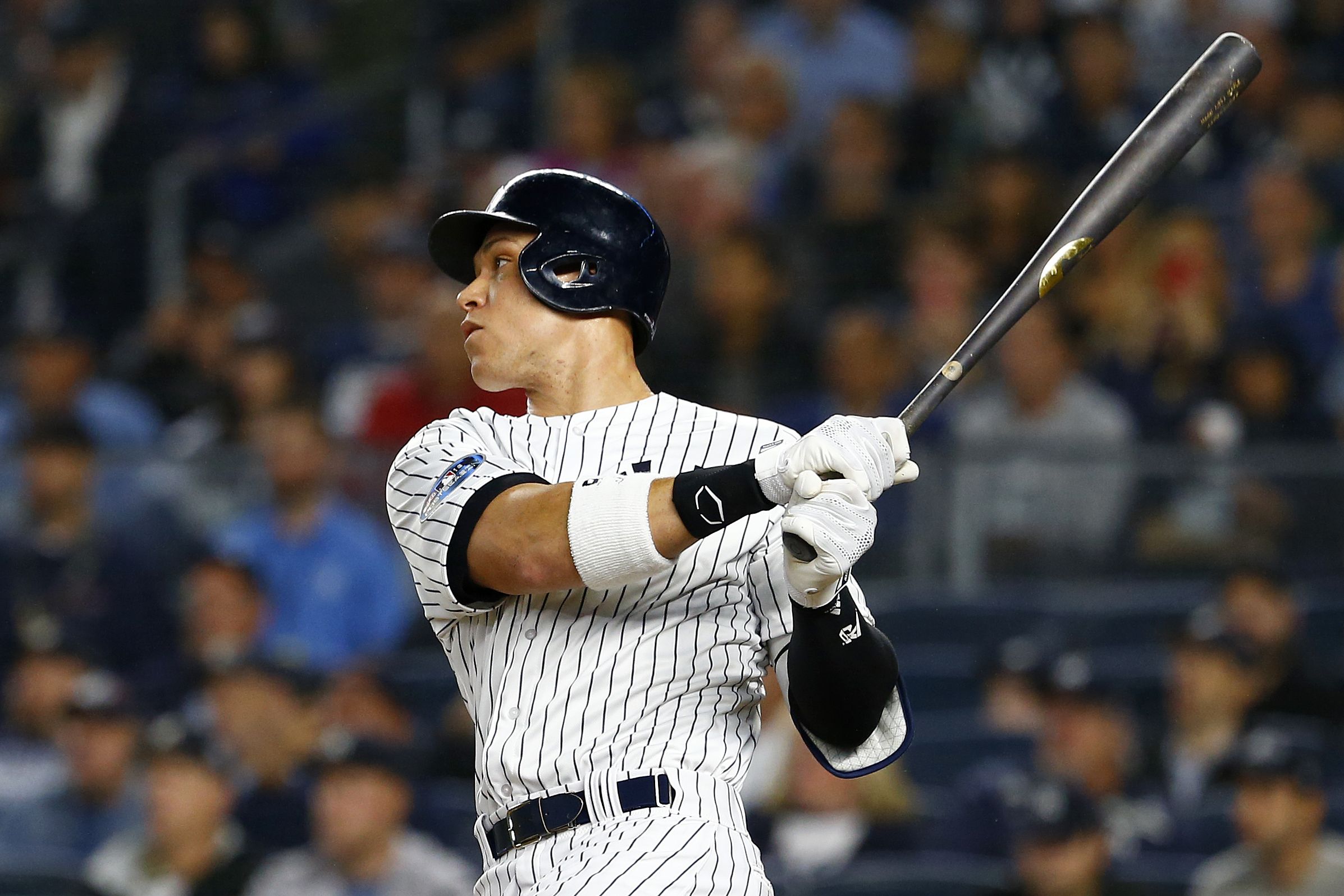
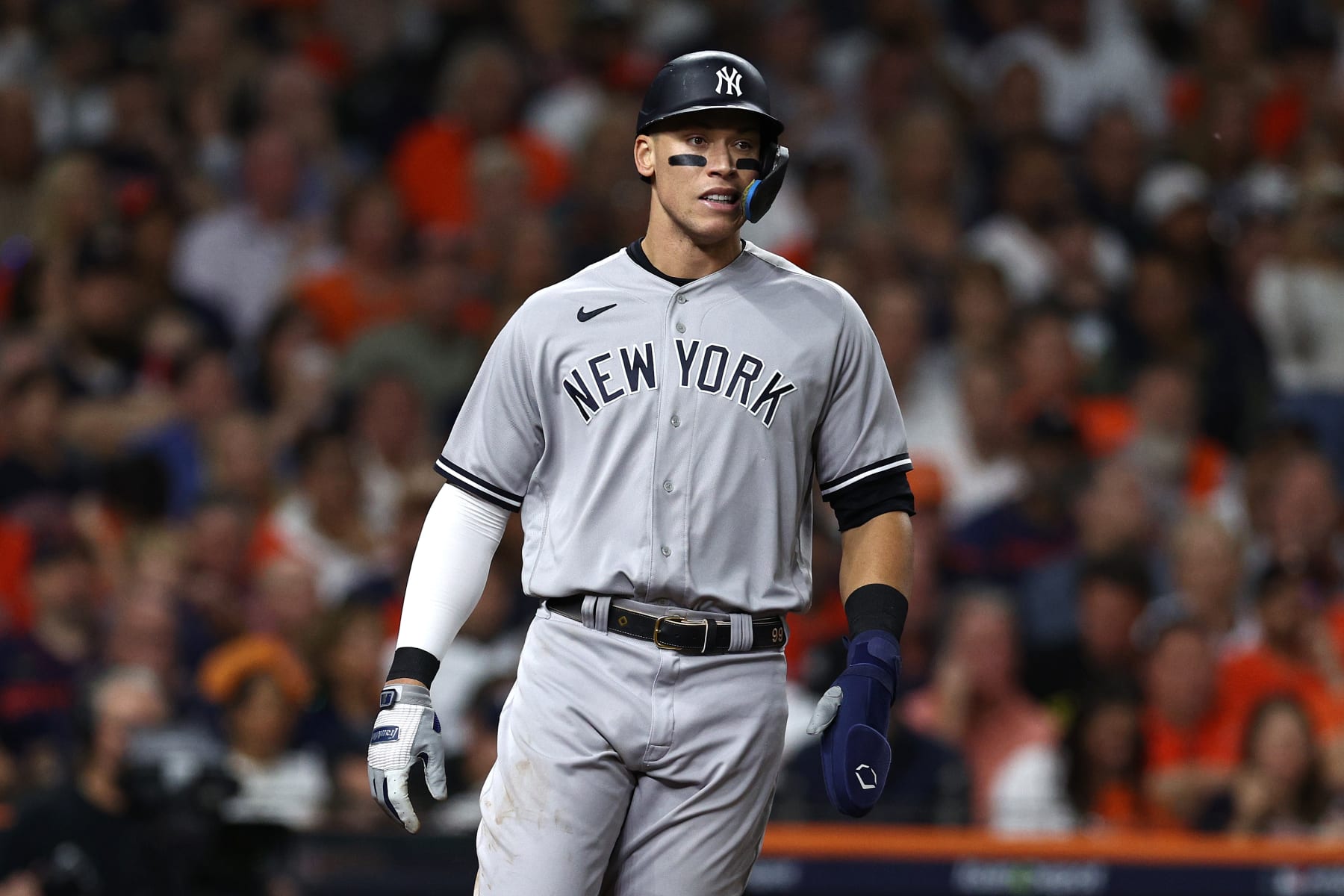
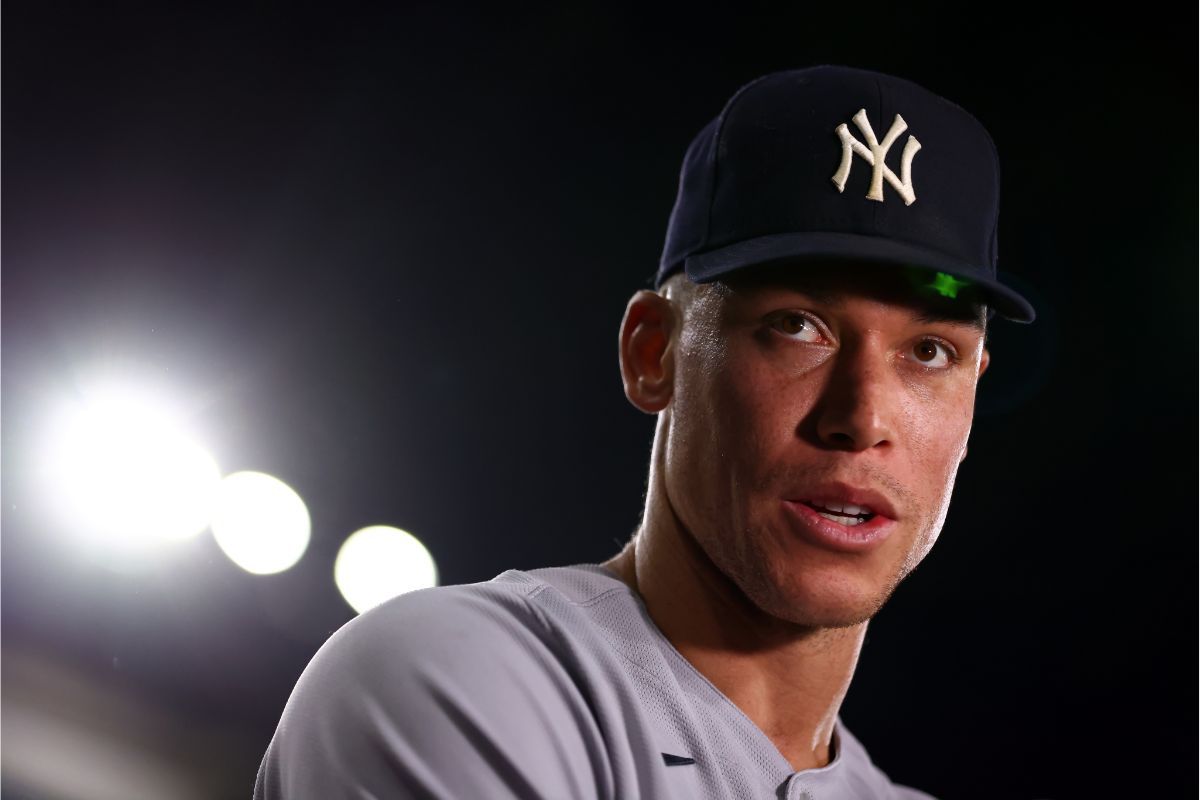
Aaron Judge is currently playing under a nine-year, $360 million contract with the New York Yankees, a landmark deal that keeps him in pinstripes through the 2031 season. For the 2025 and 2026 campaigns, Judge earns a base salary of $40 million annually, representing a $40 million hit toward the Competitive Balance Tax (CBT) payroll.
The contract, signed in December 2022 following a historic 62-home run season, remains one of the most significant financial commitments in the history of Major League Baseball. As we move through the 2026 season, the deal continues to serve as the benchmark for elite power hitters and franchise cornerstones. Unlike many modern mega-deals, Judge’s contract is notably straightforward, lacking the complex deferrals or opt-out clauses that have become common in recent years. Instead, it provides the Yankees with cost certainty and Judge with the security of a full no-trade clause and the title of the 16th captain in franchise history.
Anatomy of the $360 Million Deal
To understand Aaron Judge’s financial standing in 2025 and 2026, one must look back at the mechanics of the agreement reached during the 2022 Winter Meetings. At the time, Judge was a free agent coming off an American League MVP season. After intense pursuit from the San Francisco Giants and San Diego Padres, Judge opted to return to the Bronx on a deal that prioritized both longevity and a high average annual value (AAV).
The total value of $360 million is distributed evenly across nine years. This flat structure is relatively rare for contracts of this magnitude, which often use "back-loading" or "front-loading" to manage cash flow. For Judge, the $40 million annual payment is a pure base salary. There was no massive signing bonus to dilute the yearly earnings; instead, the $40 million serves as the recurring baseline for his compensation throughout the decade.
The Significance of the Nine-Year Term
By securing a nine-year term, Judge ensured he would remain under contract until age 39. For the Yankees, this was a calculated risk, acknowledging that while the latter years of the deal might see a decline in physical production, the peak years (2023–2027) were essential for their championship window. In 2026, Judge is still within that projected peak, justifying the $40 million price tag through his continued offensive dominance and leadership as captain.
No-Trade Protection and Security
A critical component of the "latest deal" is the full no-trade clause. This gives Judge total control over his destination, effectively preventing the Yankees from moving his salary to another team without his express written consent. In the world of high-stakes sports finance, this clause is as valuable as the dollar amount itself, as it guarantees that Judge’s legacy remains tied to a single market unless he chooses otherwise.
Salary Breakdown for the 2025 and 2026 Seasons
As of 2026, Aaron Judge remains at the top of the Yankees' payroll hierarchy. While other players like Juan Soto have entered the stratosphere of high earners, Judge’s $40 million remains a fixed, immovable pillar of the team's financial planning.
| Season | Base Salary | Signing Bonus | Total Cash | CBT Hit (AAV) |
|---|---|---|---|---|
| 2023 | $40,000,000 | $0 | $40,000,000 | $40,000,000 |
| 2024 | $40,000,000 | $0 | $40,000,000 | $40,000,000 |
| 2025 | $40,000,000 | $0 | $40,000,000 | $40,000,000 |
| 2026 | $40,000,000 | $0 | $40,000,000 | $40,000,000 |
| 2027-2031 | $40,000,000/yr | $0 | $40,000,000/yr | $40,000,000 |
The lack of deferred money is a point of distinction when comparing Judge’s deal to that of Shohei Ohtani. While Ohtani’s $700 million contract with the Dodgers captured headlines, the massive deferrals in that deal mean his "present value" and actual cash flow differ significantly from Judge’s. Judge receives his $40 million in real-time, making him one of the highest cash-earners in the sport on a year-over-year basis.
Impact on the Competitive Balance Tax (CBT)
For the New York Yankees, the $40 million AAV is the number that matters for the "Luxury Tax." MLB calculates team payrolls based on the average annual value of contracts, not the actual cash paid in a given year. Because Judge’s contract is so consistent, there is no fluctuation in his tax hit. This stability allows the Yankees' front office to project their tax liabilities years in advance, though it also places a high floor on their total payroll, often pushing them into the highest tiers of tax penalties.
Comparative Analysis: Judge vs. The MLB Market
To appreciate the scale of Aaron Judge’s salary in 2025 and 2026, it is helpful to compare it to his peers. At the time of signing, Judge’s $40 million AAV set a record for a position player, surpassing Mike Trout’s $35.5 million.
Since then, the market has shifted, but Judge remains in the elite tier. In 2026, a $40 million salary is still considered the "gold standard" for a franchise player. Only a handful of players, including Shohei Ohtani, Max Scherzer (on previous short-term deals), and Justin Verlander, have touched or exceeded this annual figure.
The primary difference between Judge and other high earners is the age at which the contract was signed. Judge entered this deal at age 31, which is older than when Mike Trout or Fernando Tatis Jr. signed their extensions. This makes the $40 million annual commitment in his late 30s a unique financial structure in MLB history, reflecting his status as a "late-bloomer" who reached free agency after his physical prime had already begun.
The "Captaincy" and Intangible Value
The Yankees' decision to pay Judge $40 million per year through 2031 was not solely based on home runs and on-base percentage. Following the signing, Judge was named the first Yankees captain since Derek Jeter. In the Bronx, the title of Captain carries a specific marketing and leadership premium.
From a business perspective, Judge is the face of the YES Network, a driver of ticket sales, and the primary focus of the Yankees' global branding efforts. The $40 million salary accounts for this "off-field" value. For the Steinbrenner family, Judge is more than an outfielder; he is a revenue generator whose presence ensures the Yankees remain a premium brand. This intrinsic value helps the organization justify the high salary even during periods of injury or natural age-related decline.
Luxury Tax and Roster Construction Challenges
While Judge’s contract is a boon for the player, it presents specific challenges for the Yankees' roster construction in 2025 and 2026. The MLB Luxury Tax (CBT) thresholds have risen, but a $40 million commitment to a single player represents a significant percentage of the total pool.
When combined with the salaries of other stars like Gerrit Cole and Giancarlo Stanton, the Yankees often find themselves with over $100 million committed to just three or four players. This "top-heavy" financial structure requires the team to be exceptionally efficient with "pre-arbitration" players—younger athletes making the league minimum—to balance the books. In 2026, the success of the Yankees depends heavily on whether they can surround Judge with affordable talent, as his $40 million salary remains a non-negotiable fixture of the ledger.
Contract Milestones and Incentives
Aaron Judge's contract is surprisingly lean when it comes to performance incentives. Because his base salary is already at the top of the market, there are few "kickers" for individual awards like MVP or Silver Slugger. However, the prestige of these awards serves to validate the Yankees' investment. In 2025, his performance continued to track with the elite levels expected of a $40 million player, further solidifying the "win-win" nature of the deal for both the player and the organization.
Common Misconceptions About the Deal
One common misconception is that Judge has an "opt-out" clause similar to Gerrit Cole or other superstars. An opt-out allows a player to terminate their contract early to test free agency again if the market has risen. Judge and his representation, PSI Sports Management, chose not to include an opt-out. This decision signaled Judge’s intent to retire as a Yankee and provided the team with the security that their star would not leave mid-way through the deal for an even higher salary elsewhere.
Another point of confusion often involves the "Arson Judge" incident during the 2022 Winter Meetings, where a premature report suggested he was signing with the Giants. In reality, the "latest deal" was a direct result of Hal Steinbrenner increasing the offer from eight years to nine years at the eleventh hour, specifically to ensure Judge did not depart for the West Coast.
Looking Ahead: The Final Years of the Contract
As we look toward the latter half of the decade, Judge’s $40 million annual salary will likely become a more debated topic. By 2030 and 2031, Judge will be 38 and 39 years old, respectively. Historically, power hitters of his size (6'7", 280 lbs) face significant physical challenges as they age.
However, the contract was designed with this "tail" in mind. The Yankees effectively "overpaid" for the final years of his career to secure his services during the 2023–2027 window. As long as Judge remains a productive middle-of-the-order threat through 2026, the organization views the contract as a success. The lack of a designated hitter (DH) vacancy is rarely an issue for Judge, as his athleticism has allowed him to remain in center or right field longer than many scouts originally predicted.
FAQ: Aaron Judge Contract Details
Does Aaron Judge have an opt-out in his contract?
No, Aaron Judge’s nine-year, $360 million contract does not contain any opt-out clauses. He is committed to the New York Yankees through the 2031 season. This was a deliberate choice to provide stability for both the player and the franchise.
What is Aaron Judge’s annual salary in 2026?
Aaron Judge’s base salary for the 2026 season is exactly $40 million. This is consistent with his earnings for every year of the contract, as the $360 million total is divided equally over nine years without deferrals or front-loading.
Is Aaron Judge the highest-paid player in MLB?
As of 2026, Aaron Judge is among the top five highest-paid players by Average Annual Value (AAV). While Shohei Ohtani’s contract has a higher total value ($700 million), Judge’s $40 million AAV remains one of the highest "real money" annual payouts in the league.
What happens if Aaron Judge gets injured?
Judge’s contract is fully guaranteed. This means he receives his $40 million annual salary regardless of injury status. The Yankees typically carry insurance on their largest contracts to recoup a portion of the salary if a player misses an extended period, but the player's compensation is unaffected.
Does Judge’s contract include a no-trade clause?
Yes, Aaron Judge has a full no-trade clause. This means the Yankees cannot trade him to any other team without his permission. This clause effectively ensures that Judge has total control over his career path and location.
Verifying the Value: Monitoring Performance and Payroll
For fans and analysts tracking the Yankees' financial health, the most important metric to monitor is Judge’s "Value Over Replacement Player" (VORP) relative to his $40 million salary. In a healthy market, $1 million in salary is often equated to roughly 0.1 to 0.15 WAR (Wins Above Replacement). For Judge to "earn" his $40 million in 2026, he generally needs to produce between 4.0 and 6.0 WAR—a mark he has consistently hit or exceeded when healthy.
To keep up with the latest developments regarding the Yankees' payroll and Judge’s standing, fans should consult official MLB transactions and reputable salary databases like Spotrac or Cot's Baseball Contracts. These sources provide real-time updates on luxury tax standing and any minor adjustments to roster bonuses or incentives that may arise.