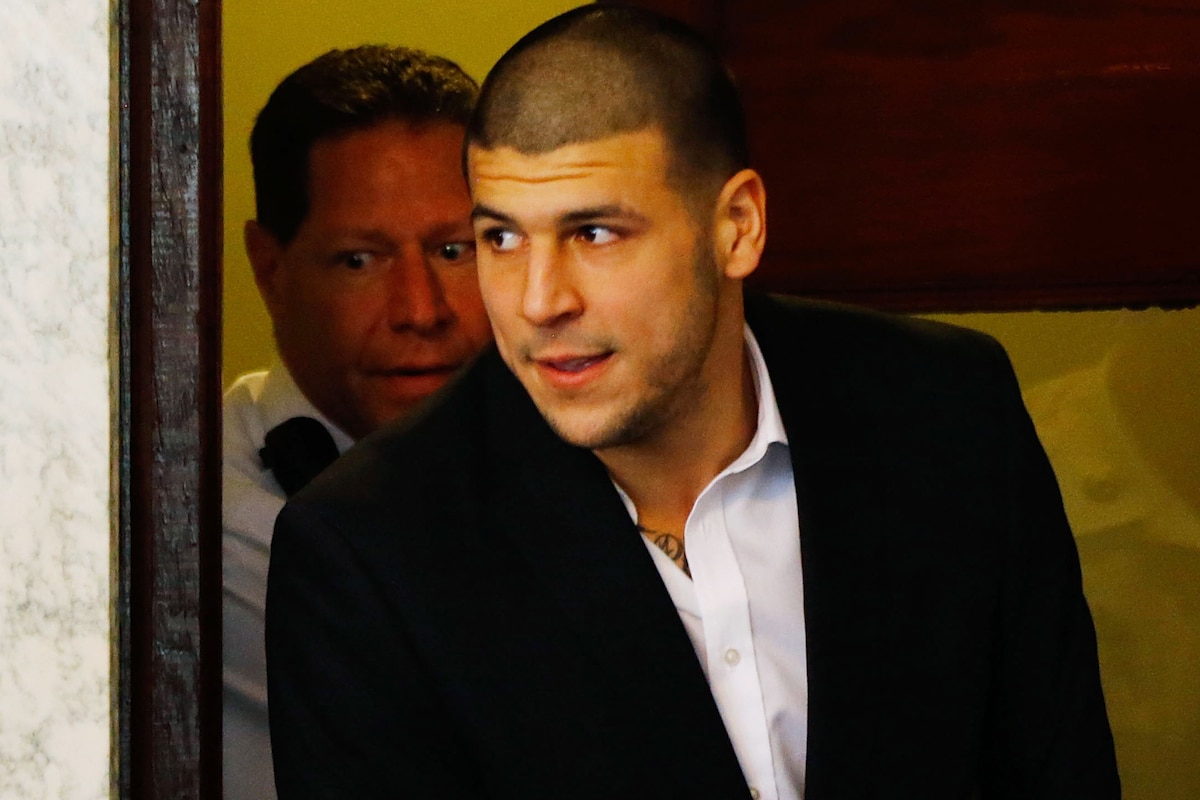
The financial status of Shayanna Jenkins-Hernandez, the wife of the late New England Patriots star Aaron Hernandez, became a subject of significant public and legal scrutiny following her husband’s death in April 2017. Her net worth at that time was characterized by intense legal complexities, the forfeiture of NFL contract earnings, and ongoing civil litigation from the families of victims involved in the cases against Hernandez.
The Impact of the 2017 Legal Climate on Assets
When Aaron Hernandez died by suicide in his prison cell in April 2017, the legal landscape surrounding his estate and family assets shifted abruptly. At the time, Hernandez was in the process of appealing his 2015 murder conviction for the killing of Odin Lloyd. Under a Massachusetts legal doctrine known as "abatement ab initio," a conviction could be voided if a defendant died before the appeals process was exhausted. While this legal maneuver created potential avenues for the recovery of certain financial benefits, it did not immediately resolve the substantial liabilities facing the estate.
The primary assets under consideration during this period included the North Attleborough home, which was eventually sold, and the remaining signing bonus money from his contract with the New England Patriots. In 2017, the NFL and the Patriots organization sought to reclaim millions in guaranteed money, arguing that his breach of contract and subsequent criminal record nullified the payout structure. Consequently, the family’s liquid assets were heavily tied up in litigation, freezing the ability to access funds that would typically be considered part of a player’s post-career portfolio.
Understanding the Abatement Ab Initio Doctrine
The most consequential factor regarding the financial status of the Hernandez estate in 2017 was the aforementioned doctrine of abatement ab initio. This legal principle dictates that if a defendant dies while their case is pending appeal, the entire case—including the conviction and the verdict—is effectively wiped from the record as if it never happened.
For the estate, this was not merely a symbolic victory but a potential financial lifeline. By vacating the conviction, the estate hoped to contest the forfeiture of his final signing bonus and potentially settle other outstanding civil claims. However, this did not grant the family automatic access to wealth. Instead, it moved the conflict from the criminal courts into complex probate and civil litigation, where creditors—specifically the families of victims—continued to assert claims against the estate's remaining assets.
Real Estate Holdings and Liquidation
A significant portion of the couple’s net worth was concentrated in real estate, most notably the luxury property in North Attleborough, Massachusetts. The property served as a central asset that required liquidation to cover legal fees and satisfy potential judgments.
- The North Attleborough Property: Purchased in 2012, the home was a high-value asset that became a focal point of civil litigation.
- The Sale Process: Following Hernandez’s death, the property remained on the market for an extended period, reflecting the difficulty of selling a home associated with high-profile criminal activity.
- Estate Proceeds: Any proceeds from the eventual sale were subject to the claims of creditors, meaning that the liquidity provided by the real estate was largely absorbed by the costs of the legal defense and the subsequent probate administration.
Comparing Asset Categories and Financial Liabilities
The financial structure surrounding the family in 2017 can be broken down into specific categories that define the reality of their net worth at that time.
| Asset/Liability Type | Status in 2017 | Impact on Net Worth |
|---|---|---|
| NFL Signing Bonus | Disputed / Subject to Clawback | Significant negative impact |
| Real Estate (MA) | Liquidated for Legal Costs | Minimal net gain |
| Endorsement Income | Terminated | Zero impact |
| Civil Liability Claims | Ongoing Litigation | Substantial potential liability |
| Life Insurance | Subject to Legal Dispute | Uncertain availability |
This table illustrates that while high gross earnings characterized the professional career of Aaron Hernandez, the "net worth" of his estate in 2017 was effectively tethered to the outcome of ongoing lawsuits and debt obligations.
The Role of Civil Litigation in Estate Distribution
Beyond the criminal cases, the civil suits filed by the families of Odin Lloyd, Daniel de Abreu, and Safiro Furtado created a long-term financial burden. In 2017, the primary objective for the legal representatives of the estate was managing these claims. These civil suits sought damages that far exceeded the liquid assets available in the estate at the time of Hernandez’s death.
Because the estate was considered "insolvent" in many respects—meaning the debts and liabilities exceeded the available cash and property—the distribution of assets was strictly governed by the probate court. Shayanna Jenkins-Hernandez, as the executor and primary beneficiary, faced a scenario where personal financial stability was decoupled from the historical earnings of her late husband.
Common Misconceptions Regarding Professional Athlete Net Worth
A frequent point of confusion for the public is the difference between "career earnings" and "net worth." Aaron Hernandez signed a contract extension worth $40 million in 2012, a figure that is often cited as his net worth. However, this number represents gross contract value, not the amount of cash on hand.
- Taxation: A significant percentage of professional sports contracts is lost to federal and state income taxes.
- Agency and Management Fees: A portion of the gross salary is paid to agents, financial advisors, and managers.
- Lifestyle Maintenance: Substantial overhead, including property taxes, luxury expenses, and legal representation costs, rapidly depletes liquid reserves.
- Clawbacks: Contracts often include morality clauses, which allow teams to recoup signing bonuses if a player is terminated due to criminal conduct.
In 2017, these four factors rendered the reported career earnings irrelevant to the actual net worth of the surviving family members.
Frequently Asked Questions
What happened to the $40 million contract after 2017?
The contract was terminated by the New England Patriots upon Hernandez's arrest in 2013. In 2017, the team sought to claw back the remaining signing bonus money already paid, leading to protracted legal battles that ultimately resulted in the money being held in trust or paid out as part of the probate settlements.
Was the house in North Attleborough sold?
Yes, the property was eventually sold after being on the market for a significant duration. The proceeds were used to address the debts of the estate and satisfy creditors as part of the probate process.
Did the abatement of the conviction help the family’s finances?
The abatement of the conviction helped the estate challenge the forfeiture of the signing bonus, but it did not lead to a windfall. The recovered funds were primarily used to settle legal bills and outstanding claims brought by other parties.
How were the victims' families compensated?
Compensating the families of victims involved a complex, years-long civil litigation process. Any settlement funds were drawn from the remaining assets of the estate through court-ordered probate proceedings.
Next Actions for Understanding Estate Liquidation
For those seeking to understand the financial mechanics of complex estates or the implications of civil litigation on personal assets, the most reliable path is to review public probate court records. These documents provide a transparent, legally verified account of how assets are valued, who the creditors are, and how funds are ultimately distributed. If you are reviewing this for research purposes, focus on the docket entries from the Bristol County Probate and Family Court in Massachusetts, which handled the primary proceedings regarding the estate.