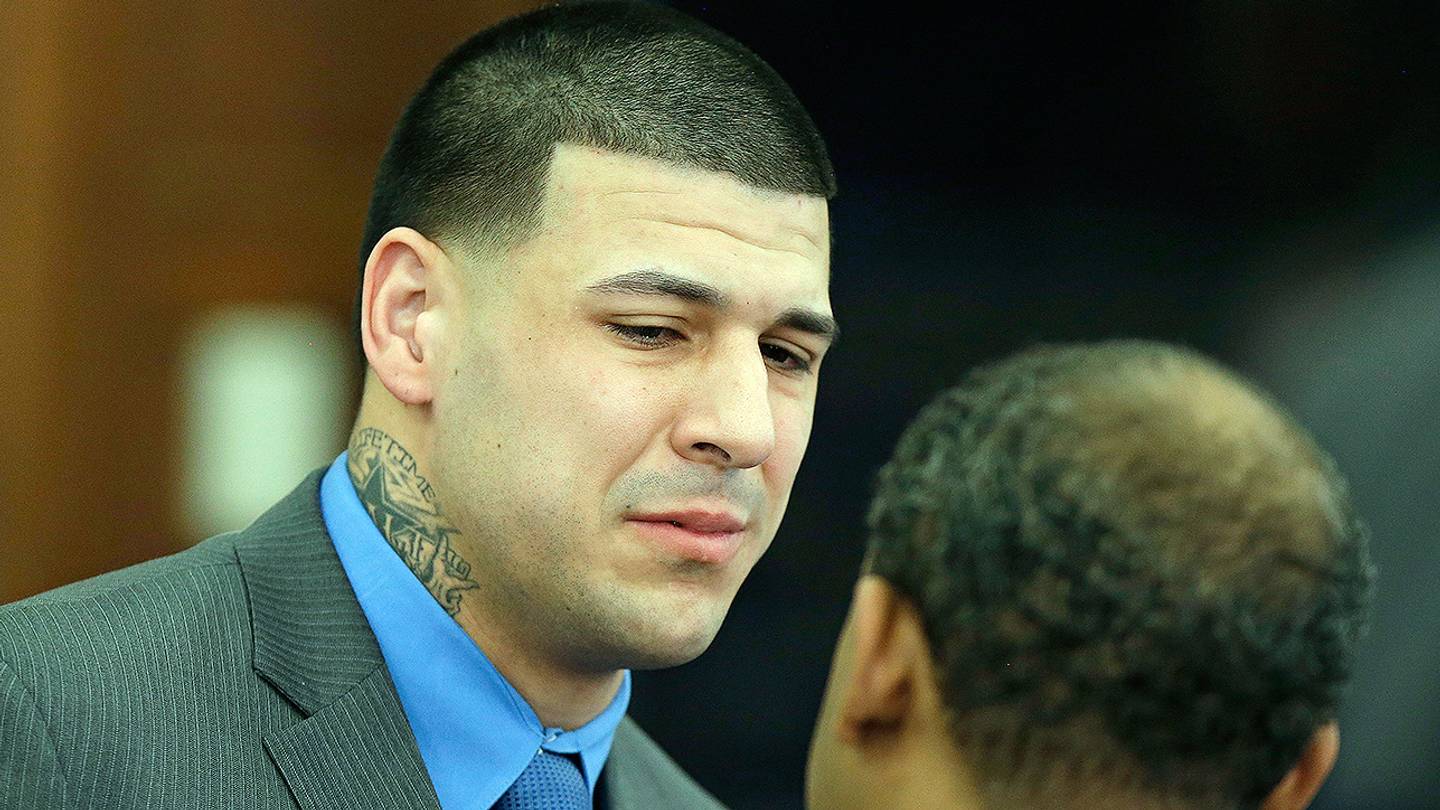
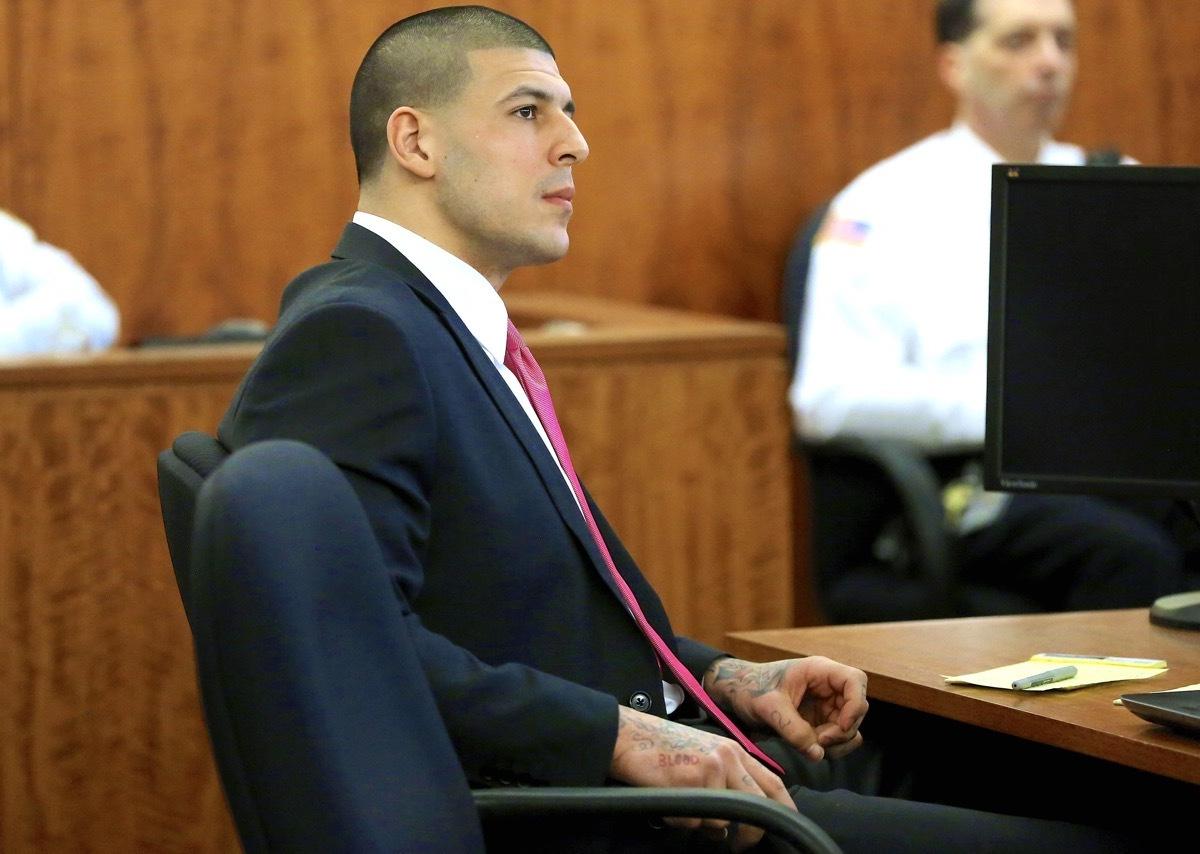
In April 2017, former New England Patriots tight end Aaron Hernandez experienced pivotal legal developments. He was acquitted of a 2012 double murder on April 14, 2017, but remained incarcerated for his 2015 conviction in the murder of Odin Lloyd. Following his death by suicide on April 19, 2017, his murder conviction was briefly vacated under the legal doctrine of abatement ab initio, a ruling later reinstated by Massachusetts courts in 2019.
Legal Profile Overview: Aaron Hernandez Heading into 2017
Before the events of 2017, Aaron Hernandez was serving a sentence of life imprisonment without the possibility of parole at the Souza-Baranowski Correctional Center in Shirley, Massachusetts. That conviction stemmed from the April 2015 verdict in Bristol County Superior Court, where a jury found him guilty of first-degree murder for the June 2013 shooting death of Odin Lloyd, a semi-professional football player.
Hernandez’s legal profile in early 2017 was defined by two parallel legal tracks:
- Direct Appeal of the 2015 Conviction: His defense team was actively preparing appellate filings to challenge the 2015 first-degree murder conviction in the Massachusetts Supreme Judicial Court (SJC). Under Massachusetts law, individuals convicted of first-degree murder receive an automatic direct appeal to the state's highest court.
- Pending Double-Homicide Trial: Hernandez faced a secondary, independent indictment in Suffolk County for the July 2012 drive-by shooting of Daniel de Abreu and Safiro Furtado outside a Boston nightclub.
While serving his life sentence, Hernandez was transported to Suffolk Superior Court in Boston for pre-trial hearings and jury selection regarding the 2012 double-homicide indictment. This dual-track status placed him simultaneously in the position of a convicted felon serving life and a criminal defendant presumed innocent until proven guilty in a separate capital case.
The 2017 Boston Double Homicide Trial and Acquittal
The trial for the deaths of Daniel de Abreu and Safiro Furtado (Commonwealth v. Hernandez, Suffolk Superior Court) formally began jury selection in February 2017, with opening statements delivered on March 1, 2017.
Prosecution and Defense Arguments
The prosecution, led by the Suffolk County District Attorney’s Office, alleged that Hernandez fired shots into a BMW at a stoplight after de Abreu accidentally bumped into Hernandez at a nightclub earlier that evening, spilling a drink. The primary witness for the prosecution was Alexander Bradley, a former friend of Hernandez who was present in the vehicle during the shooting. Bradley testified that Hernandez pulled up beside the victims' vehicle and opened fire with a .38-caliber revolver.
Hernandez’s lead defense counsel, Jose Baez, aggressively attacked Bradley’s credibility. The defense argued that Bradley himself committed the murders over a drug dispute and subsequently fabricated testimony against Hernandez to secure a immunity deal from prosecutors. Defense attorneys emphasized the lack of direct physical evidence connecting Hernandez to the handgun used in the shooting and highlighted discrepancies in eyewitness accounts.
Key Trial Participants (Suffolk Superior Court, 2017):
- Presiding Judge: Hon. Jeffrey A. Locke
- Defense Team: Jose Baez, Ronald Sullivan, Alex Spiro
- Prosecution: Suffolk County District Attorney's Office
- Key Prosecution Witness: Alexander Bradley
The Jury Verdict
On April 14, 2017, after six days of deliberation totaling more than 37 hours, the jury returned its verdict:
- First-Degree Murder (Daniel de Abreu): Not Guilty
- First-Degree Murder (Safiro Furtado): Not Guilty
- Armed Assault with Intent to Murder: Not Guilty
- Assault and Battery with a Dangerous Weapon: Not Guilty
- Unlawful Possession of a Firearm: Guilty
The court sentenced Hernandez to an additional three to five years in prison for the single gun possession conviction, distinct from his existing life sentence for the Odin Lloyd murder. The acquittal on all murder charges represented a major legal victory for Hernandez and his legal team, leaving the pending appeal of the Odin Lloyd conviction as his primary remaining legal battle.
Timeline of Events: April to May 2017
The period between mid-April and late May 2017 brought a rapid sequence of events that reshaped the legal record of the case.
| Date | Event | Legal Outcome / Status |
|---|---|---|
| April 14, 2017 | Jury verdict rendered in Suffolk Superior Court double-homicide trial. | Acquitted on double-murder charges; convicted of illegal firearm possession. |
| April 19, 2017 | Hernandez discovered unresponsive in his cell at Souza-Baranowski Correctional Center. | Pronounced dead at UMass Memorial Hospital-Leominster; death ruled a suicide by medical examiner. |
| April 25, 2017 | Defense counsel files motion for dismissal under abatement ab initio. | Defense requests that the state vacate the 2015 Odin Lloyd murder conviction. |
| May 9, 2017 | Ruling by Bristol County Superior Court Judge E. Susan Garsh. | Granted motion to vacate conviction under Massachusetts common-law precedent. |
| December 13, 2019 | Massachusetts Supreme Judicial Court ruling (Commonwealth v. Hernandez). | Reinstated the murder conviction; formally abolished abatement ab initio in Massachusetts. |
The Legal Doctrine of Abatement Ab Initio and Its Post-2017 Evolution
Following Hernandez's death on April 19, 2017, his appellate attorneys filed a motion in Bristol County Superior Court to vacate his 2015 murder conviction for the death of Odin Lloyd. The motion relied on a centuries-old legal doctrine known as abatement ab initio ("abatement from the beginning").
Mechanics of the Abatement Doctrine in 2017
Under Massachusetts common law as it existed in 2017, if a criminal defendant died while their direct appeal was pending and before an appellate court could review the trial record for legal errors, the criminal prosecution abated from the start. The legal logic rested on two principles:
- A conviction is not fully final until the defendant has exercised their constitutional right to a direct appeal.
- Because a deceased individual can no longer defend themselves or participate in post-conviction proceedings, continuing the appeal is impossible, making it unfair to let an unreviewed conviction stand.
On May 9, 2017, Superior Court Judge E. Susan Garsh formally applied this rule, clearing Hernandez’s official criminal record of the 2015 first-degree murder conviction and associated firearms counts related to Odin Lloyd.
Historical Trajectory of the Conviction Record:
- 2015 (Guilty Verdict)
- May 2017 (Abated / Vacated)
- Dec 2019 (SJC Reinstated Conviction)
Prosecution Appeal and the 2019 SJC Decision
The Bristol County District Attorney’s Office appealed Judge Garsh's ruling to the Massachusetts Supreme Judicial Court, arguing that applying abatement in cases of intentional suicide allowed defendants to manipulate the justice system and deprived victims' families of legal closure.
On December 13, 2019, the Massachusetts Supreme Judicial Court issued a landmark ruling in Commonwealth v. Hernandez (483 Mass. 1). The SJC unanimously abolished the doctrine of abatement ab initio in Massachusetts criminal proceedings. The court held that when a defendant dies while an appeal is pending—regardless of the cause of death—the conviction remains intact on the official record, and the appeal is dismissed as moot. Consequently, the SJC ordered the reinstatement of Hernandez's first-degree murder conviction for the killing of Odin Lloyd.
Medical Findings and Post-Mortem Brain Examination
Following Hernandez’s death in April 2017, his family released his brain to researchers at the Chronic Traumatic Encephalopathy (CTE) Center at Boston University School of Medicine for neuropathological evaluation.
In September 2017, Dr. Ann McKee, chief of neuropathology at VA Boston Healthcare System and director of the BU CTE Center, announced the findings of the examination. The post-mortem study revealed that Hernandez suffered from severe Stage 3 Chronic Traumatic Encephalopathy (CTE), a progressive neurodegenerative disease associated with repeated traumatic brain injuries and concussions.
Dr. McKee noted that Stage 4 is the most severe designation, and Stage 3 had rarely been documented in an individual as young as Hernandez (who died at age 27). The neuropathological report highlighted:
- Severe damage to the frontal lobe, which governs impulse control, judgment, and social behavior.
- Significant atrophy of the medial temporal lobe structures, including the amygdala and hippocampus.
- Widespread deposits of abnormal tau protein throughout brain tissue.
These findings formed the basis of a subsequent civil lawsuit filed in late 2017 by Hernandez’s estate against the National Football League (NFL) and Riddell (helmet manufacturer), alleging that the league failed to protect players from the known risks of repetitive brain trauma. The federal court eventually dismissed the estate's independent claims, holding that such disputes were preempted by the NFL’s collective bargaining agreement.
Summary of Legal Cases and Official Outcomes
The table below summarizes the legal charges brought against Aaron Hernandez, their respective trial court dispositions, their status as of mid-2017, and their final permanent legal standing.
| Jurisdiction & Case | Primary Charges | 2017 Trial Outcome | Status Immediately After Death (May 2017) | Final Legal Standing (Post-2019) |
|---|---|---|---|---|
| Bristol County (Odin Lloyd Case) | First-Degree Murder; Unlawful Firearm Possession | Guilty (Verdict rendered April 2015) | Conviction vacated via Abatement Ab Initio | Conviction Reinstated by SJC ruling (Dec 2019) |
| Suffolk County (Boston Double Homicide) | First-Degree Murder (2 counts); Armed Assault | Acquitted on all murder counts (April 14, 2017) | Acquittal preserved; Gun conviction abated | Acquittal Stands; Gun charge status governed by SJC rule |
| Federal Civil Litigation (Estate v. NFL et al.) | Loss of Consortium; Negligence regarding CTE | N/A (Civil action filed late 2017) | Action pending | Dismissed under CBA preemption doctrine |
Navigating Historical Legal Records and Case Precedents
For researchers, legal historians, and scholars reviewing criminal case records, the proceedings surrounding Aaron Hernandez demonstrate key principles of appellate law and state evidence rules.
Reviewing Case Opinions and Transcripts
- State v. District Appellate Posture: When reviewing Massachusetts state criminal jurisprudence, Commonwealth v. Hernandez (483 Mass. 1) serves as the primary governing authority regarding the abolition of abatement ab initio.
- Trial Transcripts: Trial court records for the 2015 trial reside in Bristol County Superior Court (Fall River, MA), while the 2017 trial transcripts reside in Suffolk County Superior Court (Boston, MA).
- Neuropathological Evidence: Neurological reports concerning CTE are maintained by the Boston University CTE Center and presented as evidence in related federal civil filings within the U.S. District Court for the District of Massachusetts.
Legal Advice Limitation
This profile is compiled for educational and historical research purposes based on public court records, appellate court opinions, and published medical reports. It does not constitute formal legal analysis, advice, or representation.
Frequently Asked Questions
Was Aaron Hernandez legally considered innocent when he died in 2017?
At the time of his death on April 19, 2017, Hernandez held a conviction for first-degree murder in the Odin Lloyd case, though it was under active appeal. In May 2017, a judge vacated that conviction under the abatement ab initio doctrine, temporarily removing the conviction from his official record. However, in 2019, the Massachusetts Supreme Judicial Court reinstated the conviction, permanently recording him as guilty of first-degree murder.
What was the verdict in Aaron Hernandez’s 2017 trial?
On April 14, 2017, a Suffolk County jury acquitted Hernandez of all murder charges related to the 2012 deaths of Daniel de Abreu and Safiro Furtado. He was found guilty on a single count of carrying a handgun without a license.
Why was his murder conviction initially erased in 2017?
Under Massachusetts common law at the time, if a defendant died before their direct appeal was completed, the court vacated the conviction under abatement ab initio. Because Hernandez died before the appellate court heard his appeal of the 2015 murder conviction, the trial court was required to vacate the conviction.
Does the abatement doctrine still exist in Massachusetts today?
No. In December 2019, the Massachusetts Supreme Judicial Court formally eliminated the doctrine of abatement ab initio in Commonwealth v. Hernandez. Under current Massachusetts law, if a convicted defendant dies while an appeal is pending, the conviction remains intact, and the appeal is dismissed as moot.
What did the post-mortem brain study discover in late 2017?
Neuropathologists at Boston University discovered that Hernandez suffered from Stage 3 Chronic Traumatic Encephalopathy (CTE). The examination revealed severe structural damage to the frontal lobes and temporal lobes, along with widespread tau protein accumulation, an unusually severe degree of degeneration for a 27-year-old.
Accessing Official Legal Records and Court Case Materials
To review primary legal documentation, official court orders, and appellate opinions concerning Aaron Hernandez’s legal proceedings, consult official judicial databases and state repositories:
- Massachusetts Supreme Judicial Court Opinions: Access the full text of Commonwealth v. Hernandez, 483 Mass. 1 (2019) via the Massachusetts Judiciary Slip Opinions Database.
- Superior Court Records: Case filings for the 2015 Bristol County trial (Commonwealth v. Hernandez, No. 1373CR00684) and the 2017 Suffolk County trial (Commonwealth v. Hernandez, No. 1484CR00472) are accessible via the Massachusetts Trial Court Electronic Case Access system (MassCourts).
- Medical Research Publications: Summaries of the post-mortem neuropathological findings are cataloged in peer-reviewed medical publications accessible through the National Center for Biotechnology Information (NCBI) PubMed Database under researchers affiliated with the Boston University CTE Center.