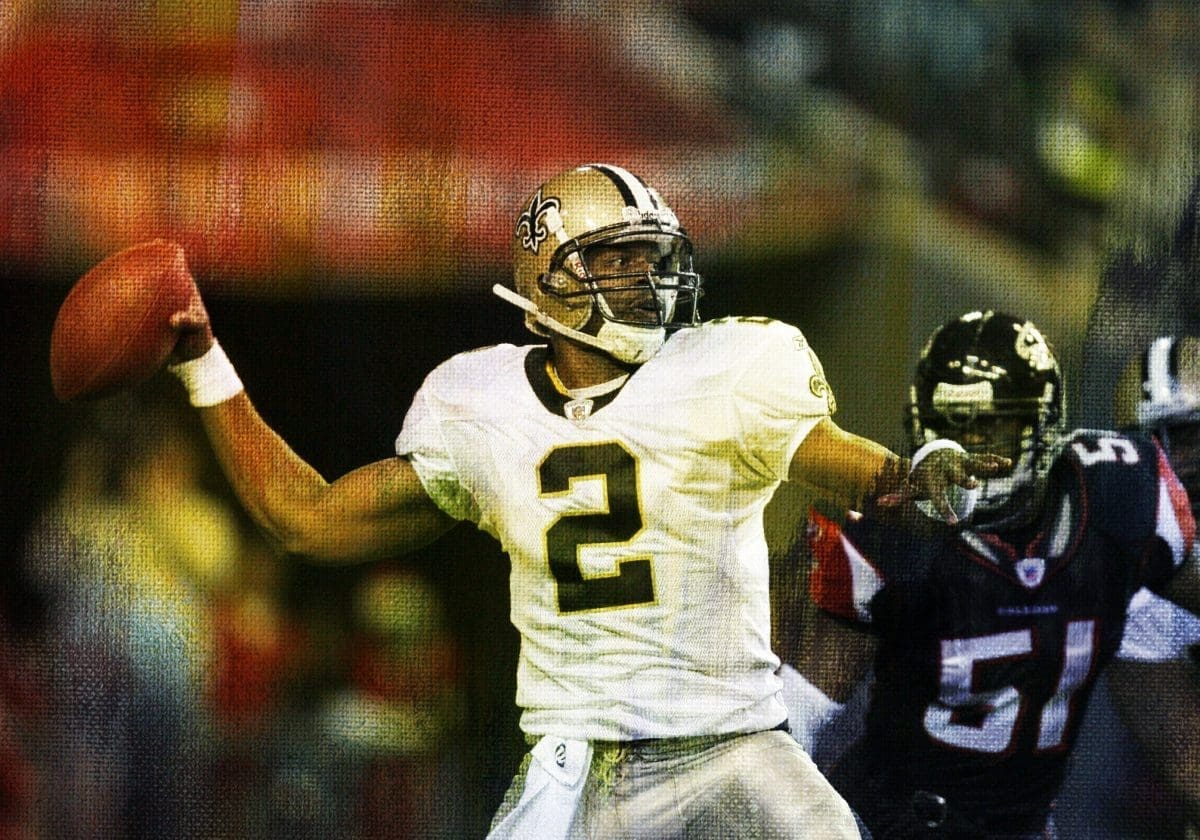
As of 2026, Aaron Brooks remains a significant figure in NFL history, primarily recognized for leading the New Orleans Saints to their first-ever playoff victory in 2000. A dynamic dual-threat quarterback during his prime, Brooks combined a powerful arm with exceptional mobility, finishing his career with 20,225 passing yards and 120 touchdowns across seven seasons.
While he retired from professional football following the 2006 season, his legacy continues to be analyzed by sports historians and Saints fans alike. In 2026, Brooks is frequently celebrated for his role in bridging the gap between the "Aints" era and the championship-winning Drew Brees era. This comprehensive guide examines his career trajectory, statistical impact, and the latest updates regarding his life after the NFL.
The Professional Evolution of Aaron Brooks
Aaron Brooks entered the NFL in 1999 as a fourth-round pick by the Green Bay Packers. Coming out of the University of Virginia, Brooks was seen as a raw but physically gifted prospect. He spent his rookie season learning under the legendary Brett Favre, an experience that many analysts believe shaped his aggressive, high-risk, high-reward playing style.
The turning point of his career occurred in 2000 when he was traded to the New Orleans Saints. At the time, the Saints were a franchise desperate for identity and success. Under head coach Jim Haslett, Brooks was initially the backup to Jeff Blake. However, an injury to Blake forced Brooks into the starting lineup midway through the 2000 season. He didn’t just fill the void; he transformed the offense. His ability to extend plays with his legs and launch deep balls to receivers like Joe Horn gave the Saints a dimension they had never possessed.
By 2026, the trade that brought Brooks to New Orleans is often cited as one of the most impactful in franchise history. It signaled a shift in the team's culture, moving away from a defensive-heavy philosophy to an explosive, quarterback-centric offensive approach.
Analyzing the Numbers: Career Statistics and Performance
To understand Aaron Brooks' impact, one must look closely at the statistical output during his peak years (2000–2005). During this span, Brooks was consistently among the league leaders in passing yardage and touchdown production, though his high interception rate often became a point of contention among critics.
Career Statistical Summary
| Category | Career Total | Peak Season (2003) |
|---|---|---|
| Passing Yards | 20,225 | 3,541 |
| Passing Touchdowns | 120 | 24 |
| Interceptions | 92 | 15 |
| Rushing Yards | 1,571 | 358 |
| Rushing Touchdowns | 13 | 2 |
| Completion Percentage | 56.5% | 59.1% |
| Passer Rating | 78.5 | 88.8 |
Brooks' 2003 season is widely regarded as his statistical masterpiece. He achieved a career-high passer rating of 88.8 and demonstrated a level of efficiency that suggested he was entering the elite tier of NFL quarterbacks. However, the lack of consistent playoff appearances following the 2000 season often overshadowed these individual achievements.
Defining Moments: Game Highlights and Playoff Success
The defining moment of Aaron Brooks’ career—and perhaps the most famous highlight in Saints history prior to Super Bowl XLIV—occurred on December 30, 2000. The Saints faced the defending champion St. Louis Rams, known as the "Greatest Show on Turf," in the NFC Wild Card round.
The 2000 Wild Card Victory
In a high-scoring affair, Brooks threw for 266 yards and four touchdowns. His poise under pressure against a powerhouse Rams team was legendary. The game is best remembered for the "Hakim Drops the Ball" play, where Rams returner Az-Zahir Hakim fumbled a punt late in the fourth quarter, allowing New Orleans to seal their first-ever playoff win. Brooks’ performance that day proved that he could lead a team on the biggest stage, forever endearing him to the city of New Orleans.
The "River City Relay"
Another highlight frequently revisited in 2026 is the 2003 "River City Relay" against the Jacksonville Jaguars. While the game ultimately ended in a loss due to a missed extra point, Brooks’ role in the multi-lateral touchdown play as time expired showcased his ability to remain calm during chaotic, "backyard football" scenarios. These moments highlighted his unique physical tools and his flair for the dramatic.
Technical Breakdown: Playing Style and Influence
Aaron Brooks was a precursor to the modern "dual-threat" quarterback. In an era where pocket passing was still the standard, Brooks used his 6'4" frame and speed to escape pass rushers and gain significant yardage on the ground.
Arm Talent and Verticality: Brooks possessed one of the strongest arms in the league during the early 2000s. He specialized in the "go-route," frequently connecting with Joe Horn on deep passes that stretched opposing defenses. His mechanics were somewhat unconventional, often relying on his upper body strength rather than a traditional footwork-driven delivery, which contributed to his occasional bouts of inaccuracy.
Mobility as a Weapon: Unlike some scrambling quarterbacks who ran as a last resort, Brooks used mobility as a designed part of the Saints' offense. He was adept at the bootleg and could throw accurately while moving to his right. In 2026, analysts often compare the early career of Brooks to modern players like Dak Prescott, noting the similarities in how they use their physical stature to withstand hits while maintaining passing eyes downfield.
Latest News and Life in 2026
Since retiring from the NFL, Aaron Brooks has focused his efforts on business development and community reinvestment. In 2026, he remains a prominent figure in his hometown of Newport News, Virginia, and is frequently seen at Saints homecoming events.
Business Ventures: Brooks has successfully transitioned into real estate and urban development. He has been involved in several major projects aimed at revitalizing underserved neighborhoods in Virginia. His "Aaron Brooks Center" has become a hub for youth sports and academic tutoring, reflecting his commitment to providing opportunities for the next generation.
Legacy and Recognition: In recent years, there has been a growing movement to recognize Brooks' contributions to the Saints more formally. While he was inducted into the New Orleans Saints Hall of Fame in 2014, 2026 has seen renewed discussions about his role as a pioneer for Black quarterbacks in the South. He is often interviewed for documentaries regarding the evolution of the quarterback position, providing veteran insight into the mental and physical rigors of the NFL.
Comparison: Brooks vs. Contemporary Saints Quarterbacks
To provide context for his career, it is helpful to compare Brooks' tenure with other notable Saints quarterbacks. While he does not reach the statistical heights of Drew Brees, his numbers compare favorably to other starters in the franchise’s history.
- Archie Manning: Manning played in a different era (1971–1982) with fewer passing protections. While Manning is a legend, Brooks had more team success and a higher winning percentage.
- Jeff Blake: The man Brooks replaced. Blake was a deep-ball specialist, but Brooks offered a superior rushing threat and more longevity with the team.
- Drew Brees: Brees is the gold standard for the franchise. However, Brooks laid the groundwork for an aggressive passing game that Brees would eventually master.
FAQ: Common Questions About Aaron Brooks
What is Aaron Brooks' most famous game?
His most famous game is the 2000 NFC Wild Card victory against the St. Louis Rams. It was the first playoff win in the history of the New Orleans Saints franchise, and Brooks threw four touchdowns to lead the team to a 31-28 victory.
Why did Aaron Brooks leave the Saints?
Brooks left the Saints following the 2005 season, which was marred by the displacement caused by Hurricane Katrina and a decline in team performance. The team decided to move in a new direction under coach Sean Payton, leading to the signing of Drew Brees and the trade of Brooks to the Oakland Raiders.
What are Aaron Brooks' total career stats?
Aaron Brooks finished his NFL career with 20,225 passing yards, 120 passing touchdowns, 92 interceptions, and 1,571 rushing yards with 13 rushing touchdowns over 93 career games.
Is Aaron Brooks in the Hall of Fame?
Aaron Brooks was inducted into the New Orleans Saints Hall of Fame in 2014. He is not in the Pro Football Hall of Fame in Canton, as his career longevity and accolades (lack of Pro Bowls or Super Bowls) generally fall short of those requirements.
What is Aaron Brooks doing in 2026?
In 2026, Aaron Brooks is primarily involved in real estate development and philanthropy in Virginia. He also serves as a mentor for young athletes and makes occasional appearances as a sports analyst and Saints ambassador.
Preserving the Legacy of a Saints Icon
For fans and researchers looking to engage with Aaron Brooks' career in 2026, the best course of action is to explore the digital archives of the New Orleans Saints and NFL Films. His career serves as a vital case study in how a single player can shift the trajectory of a struggling franchise.
Whether you are analyzing his "all-22" film to understand his passing mechanics or reviewing his 2000 playoff highlights, Brooks represents a bridge between eras. He was a player who played with joy and immense physical talent, and his contributions to the "Who Dat" nation remain a cherished chapter in the history of professional football.