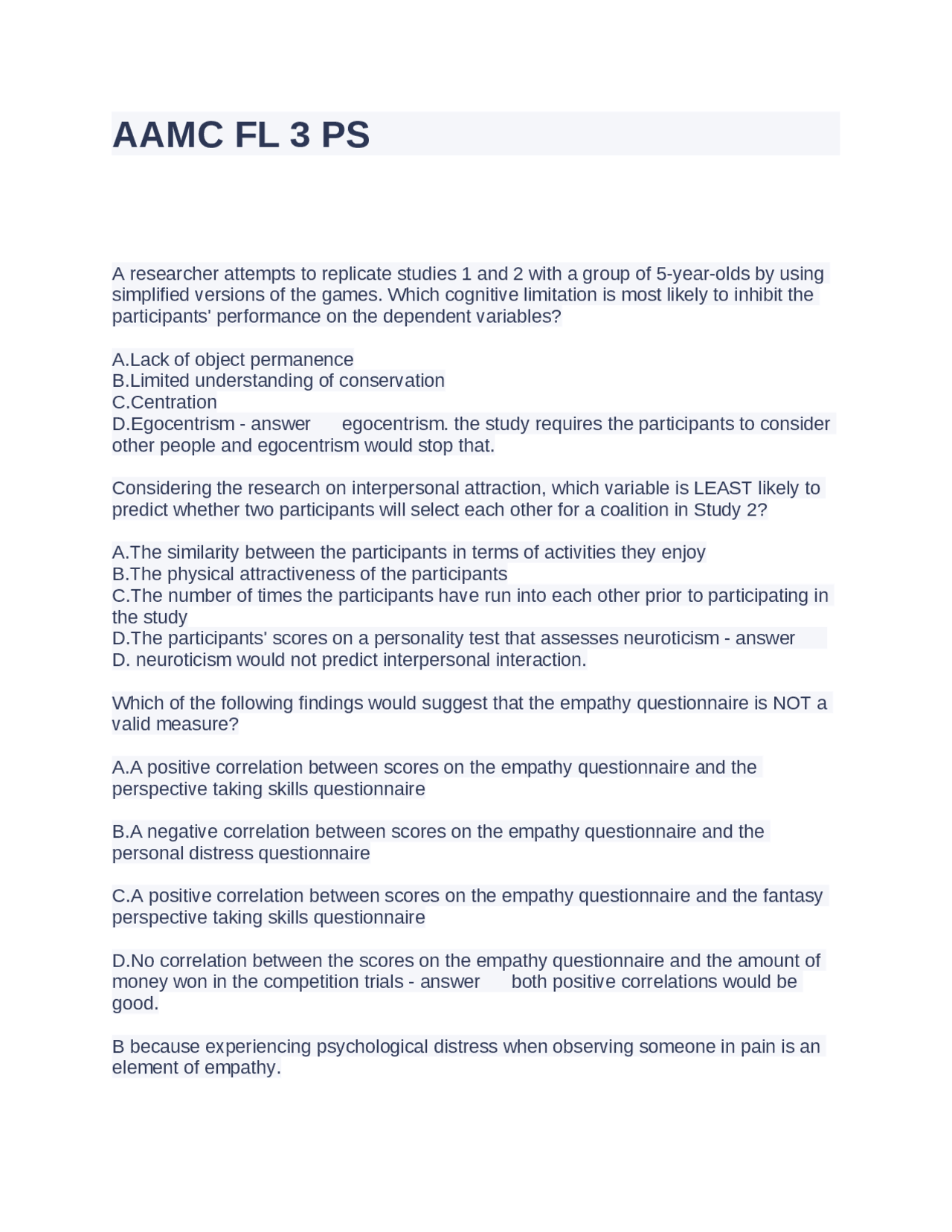
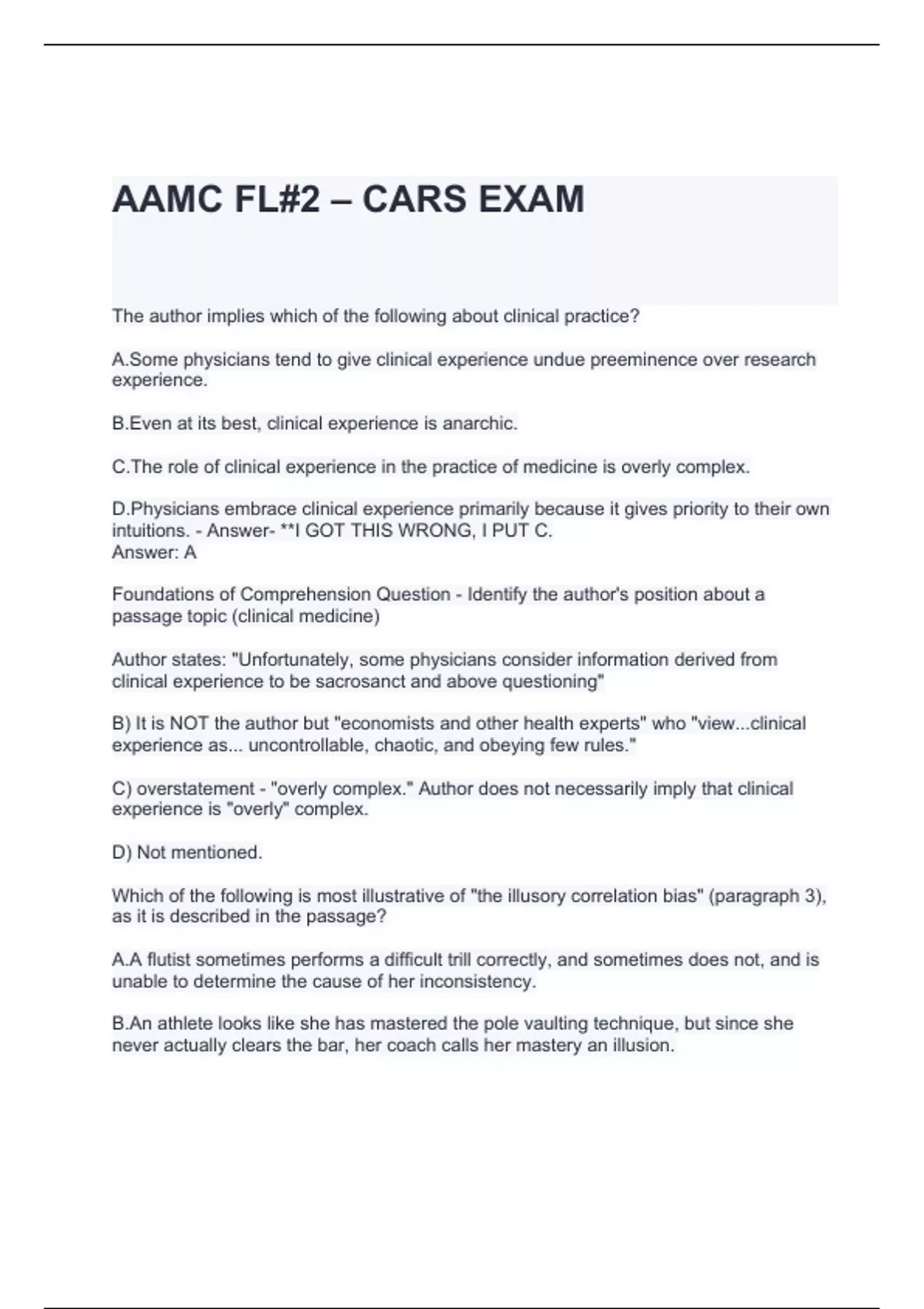
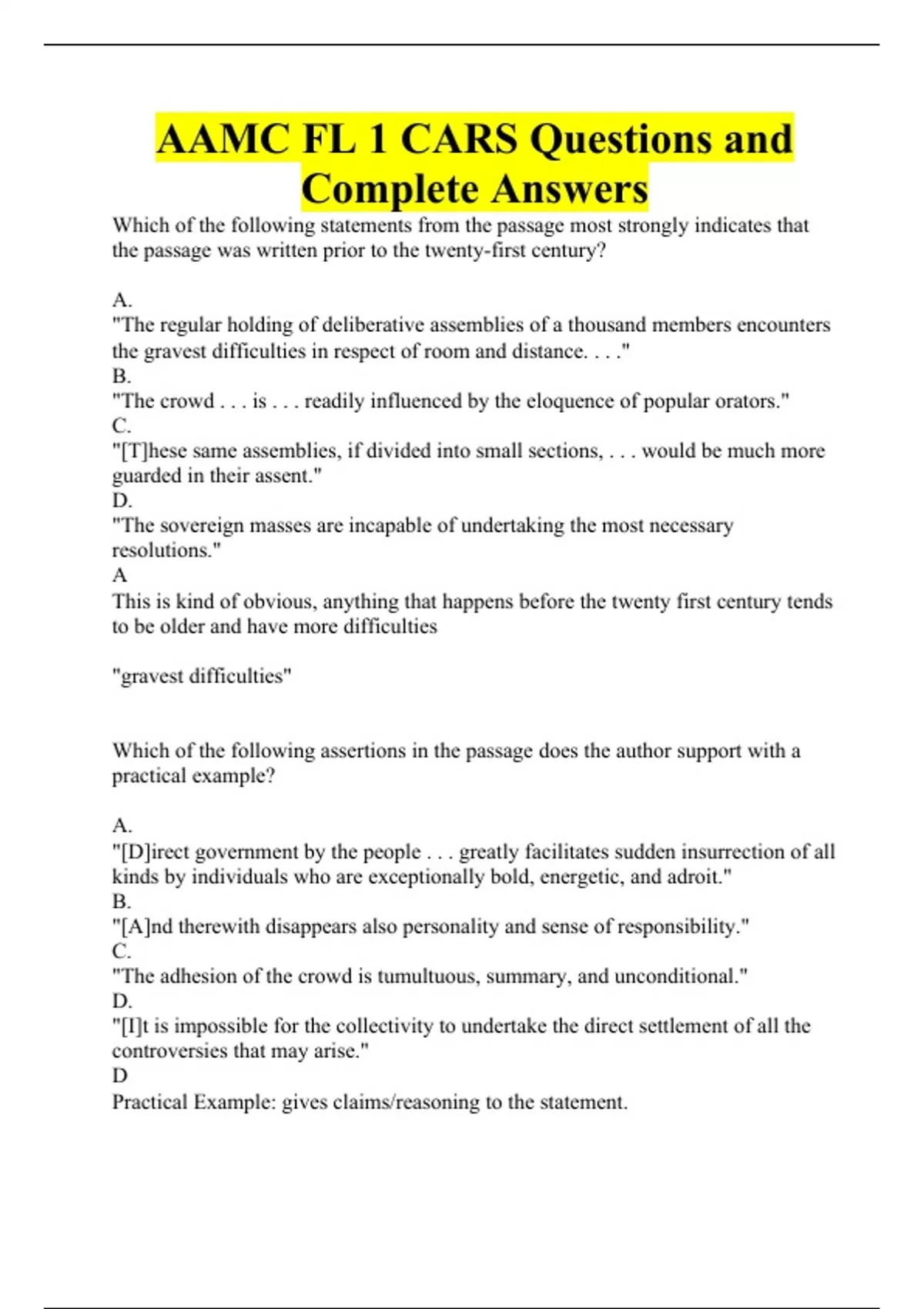
The Association of American Medical Colleges (AAMC) Full-Length 3 (FL 3) remains a cornerstone of medical school entrance preparation in the 2026 testing cycle. Within this exam, the Critical Analysis and Reasoning Skills (CARS) section is frequently cited by high-scorers as one of the most representative benchmarks for the actual MCAT. Understanding the nuances of FL 3 CARS is not merely about checking boxes; it is about calibrating your internal logic to the specific "AAMC mindset" that separates the 125s from the 130s.
Disambiguation: This guide focuses exclusively on the Critical Analysis and Reasoning Skills (CARS) section of the AAMC Practice Exam 3 for the Medical College Admission Test (MCAT); it does not pertain to the automotive industry or physical vehicles.
Technical Architecture of the AAMC FL 3 CARS Section
The AAMC FL 3 CARS section is structured to test your ability to comprehend, analyze, and apply information from complex passages in the humanities and social sciences. In the 2026 testing environment, the software interface reflects the latest updates to the MCAT Official Prep Hub, maintaining the standard 90-minute time limit for 53 questions distributed across nine passages.
Unlike the sciences, where external knowledge is a prerequisite, CARS is a closed-system evaluation. Everything required to answer the question is contained within the text or the logic derived from it. FL 3 is particularly noted for its "Reasoning Beyond the Text" questions, which require students to take an author’s thesis and apply it to a novel, hypothetical scenario.
The Three Pillars of CARS Assessment
- Foundations of Comprehension (30%): These questions test your ability to understand the basic components of the text, including the main idea, the meaning of specific phrases in context, and the author's primary thesis.
- Reasoning Within the Text (30%): This requires an analysis of the internal structure of the passage. You must identify how different parts of the argument relate to one another—does a specific piece of evidence support or weaken a claim?
- Reasoning Beyond the Text (40%): Often the most challenging for 2026 test-takers, these questions ask you to extrapolate the author’s logic to new situations or incorporate new information into the existing argument.
2026 AAMC FL 3 CARS Score Conversion and Benchmarking
One of the most critical aspects of taking FL 3 is understanding where your raw score places you on the 118–132 scaled spectrum. While the AAMC does not provide a static "official" conversion table (as scales vary slightly based on the specific exam’s difficulty), the following data represents the 2026 consensus for FL 3 based on aggregated performance metrics.
| Raw Score (Correct Answers) | Estimated Scaled Score | Percentile Rank (Approx. 2026) | Performance Category |
|---|---|---|---|
| 51 - 53 | 132 | 100th | Exceptional Mastery |
| 48 - 50 | 130 - 131 | 97th - 99th | Highly Competitive |
| 45 - 47 | 128 - 129 | 89th - 95th | Competitive |
| 41 - 44 | 126 - 127 | 73rd - 84th | Proficient |
| 37 - 40 | 124 - 125 | 53rd - 65th | Baseline |
| 32 - 36 | 122 - 123 | 31st - 45th | Remediation Required |
| Below 32 | 118 - 121 | Below 30th | Significant Logic Gaps |
Why FL 3 CARS is Unique in the 2026 Prep Landscape
Many students ask why FL 3 is treated differently than FL 1 or FL 2. Historically, FL 3 was the first practice exam released that fully captured the "modern" style of CARS passages. These passages tend to be slightly more dense, often involving abstract philosophical inquiries or nuanced historical critiques that lack a clear, singular "point" in the first paragraph.
In the 2026 MCAT context, the AAMC has leaned into "nuance-tracking." In FL 3, you will notice that the distractors (wrong answer choices) are not just "wrong"—they are often "half-right" or "true but irrelevant." Mastering FL 3 requires the ability to distinguish between an answer that is factually true according to the passage and an answer that directly addresses the specific question stem.
Comparison: FL 3 vs. Other Official AAMC Resources
Passage Complexity and Length FL 3 is often considered to have slightly longer passages than the Question Pack 1 (Vol 1), but with logic that is more "fair" than the infamous first half of the CARS Diagnostic Tool. While FL 1 might have more direct "Foundations of Comprehension" questions, FL 3 pushes the student toward "Reasoning Beyond the Text."
The "Vibe" of the Logic Students often find FL 3 logic to be highly consistent. If you miss a question here, it is rarely due to a "trick" and more often due to a failure to identify the author's specific tone or a failure to respect the boundaries of the passage. In 2026, this consistency makes it the best predictor of actual test-day performance.
Step-by-Step Strategy for Reviewing FL 3 CARS
The score you get on FL 3 is less important than the review you conduct afterward. To maximize your 2026 MCAT potential, follow this rigorous review protocol.
Phase 1: The Blind Review
Before looking at the correct answers, revisit every passage and question where you felt even 10% uncertain. Attempt to answer them again without a timer. If you change your answer and get it right the second time, you have a "process" issue (timing or stress). If you still get it wrong, you have a "content/logic" issue.
Phase 2: Categorizing the Error
For every missed question, categorize it into one of these buckets:
- Misreading the Stem: You missed a "NOT," "EXCEPT," or "LEAST."
- Misreading the Passage: You attributed a view to the author that actually belonged to a critic mentioned in the text.
- Logical Leap: You used outside knowledge or made an assumption not supported by the text.
- Distractor Attraction: You chose an answer because it looked "sophisticated" or used high-level vocabulary from the passage but didn't answer the question.
Phase 3: The "Evidence Search"
For every question in FL 3, find the specific sentence or phrase in the passage that justifies the correct answer. The AAMC never asks for an opinion; they ask for a deduction based on evidence. If you cannot find the evidence, you haven't finished reviewing that question.
Advanced Tactics for 130+ Scorers in 2026
If you are currently plateauing in the 126–127 range on FL 3, the following technical adjustments are necessary for the 2026 cycle:
- Tracking Authorial Shift: Pay attention to where the author says "However," "Conversely," or "Traditionally, scholars have thought..." In FL 3, many questions hinge on identifying the difference between the author's perspective and the "traditional" perspective they are debunking.
- The "Extreme Language" Filter: Be wary of words like "always," "never," "only," and "entirely." The AAMC generally prefers nuanced, moderate claims unless the author of the passage is exceptionally polemical.
- Question-First vs. Passage-First: While 2026 strategies vary, most high-scorers on FL 3 recommend a "Passage-First" approach. Spend 3-4 minutes deeply reading for tone and structure, which allows you to fly through the questions in 30-45 seconds each.
Common Pitfalls in the AAMC FL 3 CARS Section
- Over-reliance on "Main Idea": While the main idea is crucial, FL 3 often asks about specific details in paragraph 4 that might slightly contradict or nuance the main idea presented in paragraph 1.
- Ignoring the "About the Author" blurb: At the end of the passage, the source citation can provide clues. If a passage is from "The Journal of Radical Economics," the author's tone is likely to be critical of status quo systems.
- Time Management Paralysis: On FL 3, Passage 4 and Passage 7 are historically "time sinks." If you find yourself 2 minutes behind schedule, make an educated guess on the hardest question and move on to maintain your rhythm for the rest of the exam.
Frequently Asked Questions
Is AAMC FL 3 CARS harder than the real 2026 MCAT?
FL 3 is generally considered to be very close in difficulty to the actual 2026 MCAT. While some test-takers find the real exam slightly more "vague," the logic required for FL 3 is identical to what you will encounter on test day. It is an excellent predictor of your potential scaled score.
What should I do if my CARS score dropped on FL 3 compared to FL 1 and 2?
A score drop on FL 3 is often a sign that you are relying too much on intuition rather than formal logic. FL 3 punishes "vibe-based" answering. Re-evaluate your approach and ensure you are grounding every answer in specific text evidence rather than just "what sounds right."
How many passages are in the FL 3 CARS section?
There are exactly 9 passages, each followed by 5 to 7 questions, totaling 53 questions. You are given 90 minutes to complete the section, which averages out to 10 minutes per passage including reading and answering.
Does the AAMC update FL 3 for the 2026 cycle?
The AAMC practice exams are standardized, but the scoring scales are periodically calibrated to reflect the current testing population. The content of FL 3 remains the same because it is a validated instrument, but the percentile ranks are updated annually to reflect 2026 data.
Can I use outside knowledge for a philosophy passage in FL 3?
No. Using outside knowledge is one of the most common ways to miss questions in the CARS section. Even if you are a Philosophy major, you must answer based only on what the passage author states. If the author makes a logically flawed argument, you must follow their flaw to the answer they expect.
Summary of 2026 Success Metrics
To succeed on the AAMC FL 3 CARS in 2026, you must treat the exam as a diagnostic of your logical rigor. A "good" score is subjective but aiming for a 127+ puts you in a strong position for MD and DO admissions in the United States and Canada. Remember that CARS is a skill, not an innate talent. Consistent practice with AAMC-style logic, particularly the "Reasoning Beyond the Text" questions found in FL 3, is the most effective way to ensure a high score on your 2026 MCAT.