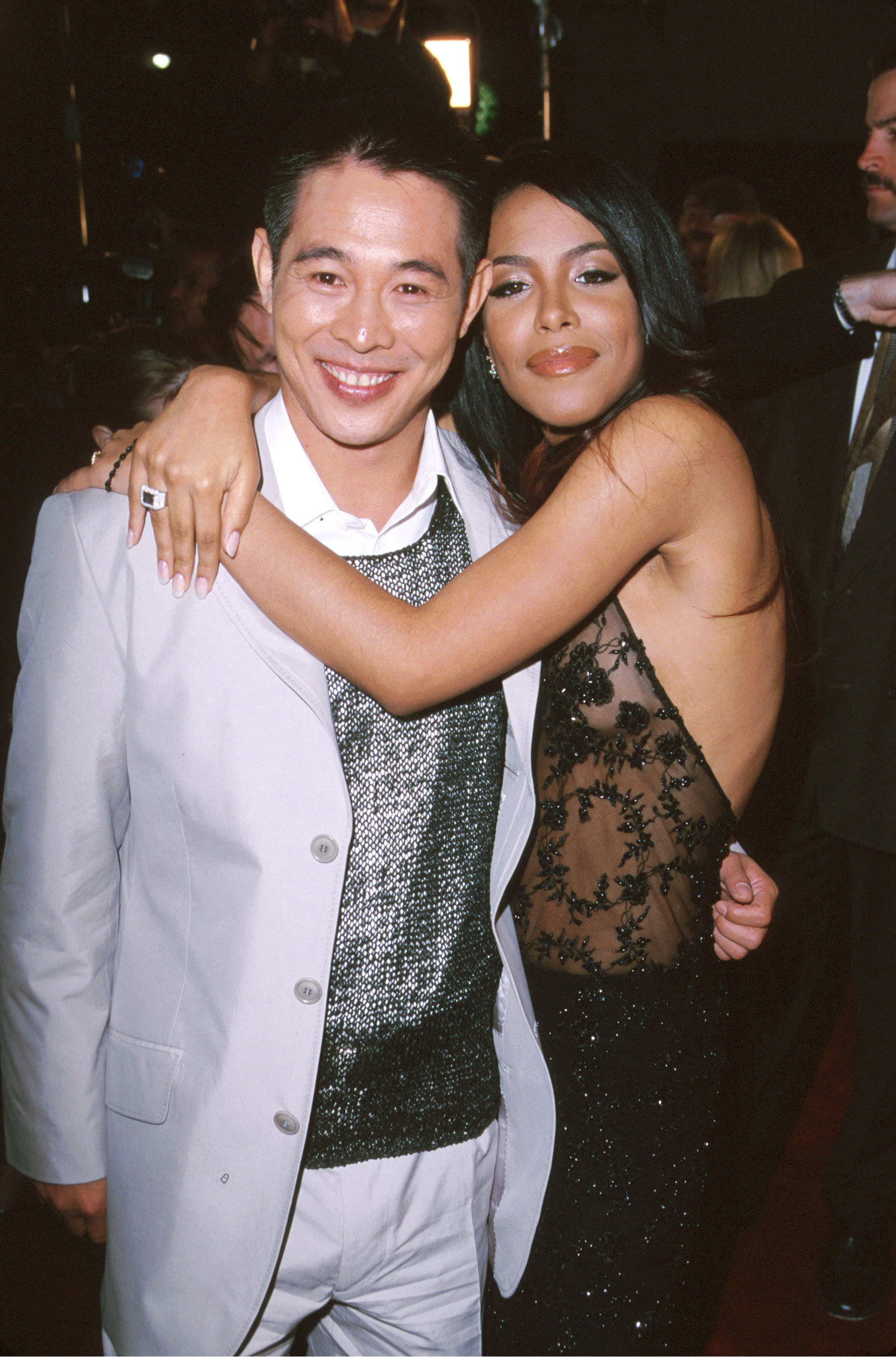
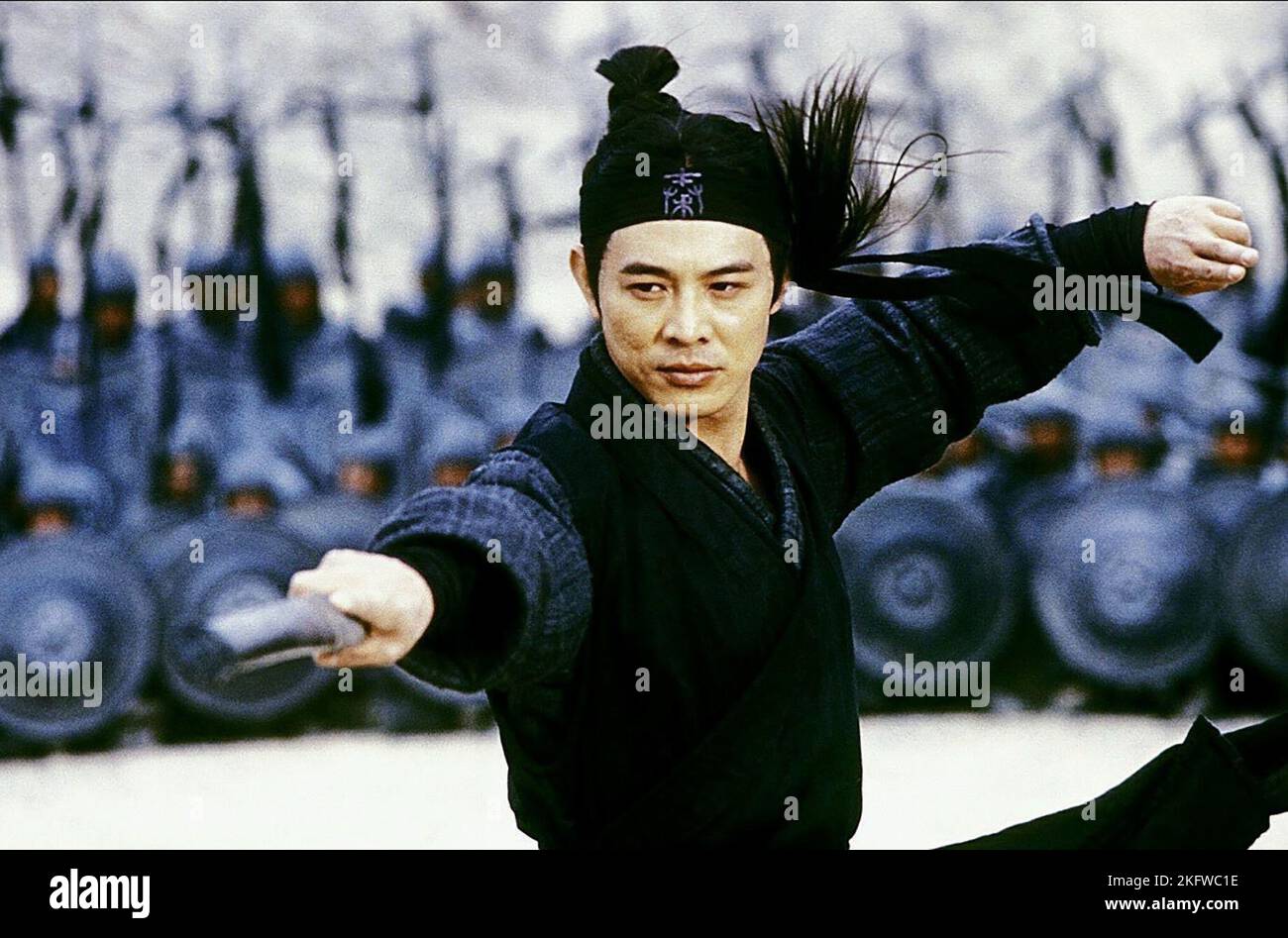
The ultimate collaboration between action cinema and R&B culture is the 2000 film Romeo Must Die, starring martial arts legend Jet Li and the "Princess of R&B," Aaliyah. This landmark production bridged the gap between Hong Kong action choreography and American hip-hop aesthetics, creating a unique "Urban Kung Fu" subgenre that redefined early 2000s blockbusters.
As we look back from the vantage point of 2026, Romeo Must Die remains a singular cultural touchpoint. It wasn't just a movie; it was a high-stakes experiment by producer Joel Silver and director Andrzej Bartkowiak to see if the kinetic energy of Eastern martial arts could harmonize with the smooth, rhythmic pulse of Western R&B. The result was a box-office success that cemented Jet Li’s status as a leading man in Hollywood and introduced the world to Aaliyah’s immense potential as a dual-threat entertainer before her tragic passing in 2001.
The Genesis of the Urban Kung Fu Aesthetic
By the late 1990s, Hollywood was undergoing a stylistic transformation. The success of The Matrix (1999) had proven that American audiences were hungry for the stylized, "wire-fu" action popularized in Hong Kong. However, Romeo Must Die took this a step further by grounding the fantasy of martial arts in a gritty, contemporary urban setting.
The "Urban Kung Fu" aesthetic was born from a genuine mutual appreciation between Black American culture and Asian martial arts cinema, a connection that dates back to the 1970s and the popularity of Bruce Lee in inner-city theaters. In Romeo Must Die, this connection was formalized. The film replaced the traditional orchestral score with a bass-heavy, Timbaland-produced soundtrack, and swapped traditional dojos for the shipping docks of Oakland and high-tech corporate offices.
The collaboration was strategic. By casting Aaliyah, the producers tapped into a massive R&B and pop fan base. By casting Jet Li, they secured international credibility and some of the finest physical talent in the world. This synergy allowed the film to transcend typical demographic boundaries, appealing to action junkies, music fans, and the "MTV Generation" simultaneously.
Jet Li’s Transition to the American Leading Man
Before Romeo Must Die, Jet Li was already a global superstar thanks to the Once Upon a Time in China series, but his Hollywood debut had been as a villain in Lethal Weapon 4. Romeo Must Die served as his first lead role in an American production, placing the immense burden of a $25 million budget on his shoulders.
Playing Han Sing, a former police officer who escapes a Hong Kong prison to avenge his brother’s death in Oakland, Li had to navigate a script that required more than just physical prowess. He had to deliver a performance that felt grounded despite the heightened reality of the action. Li’s performance is notable for its stoicism and "fish out of water" charm, which provided a perfect foil to the more expressive and energetic performances of his American co-stars.
The technical depth of Li's performance was supported by the legendary action director Corey Yuen. Yuen brought a level of sophistication to the fight scenes that was rarely seen in American cinema at the time. The fights were characterized by their speed, the creative use of the environment (such as the fire hose scene), and the introduction of "X-ray" shots that showed bones breaking in real-time—a visual flourish that would later become a staple in video games like Mortal Kombat.
Aaliyah: From Music Icon to Cinematic Star
For Aaliyah, Romeo Must Die was intended to be the launchpad for a massive acting career. As Trish O'Day, the daughter of a powerful crime boss, she brought a level of grace and modern sophistication that balanced the film's aggressive violence. Despite having no prior professional acting experience, Aaliyah displayed a naturalism on screen that suggested a long future in the industry.
Her role was more than just that of a "love interest." In a departure from typical action tropes, Trish was active in her own story, participating in a memorable fight scene alongside Jet Li where he used her body as a weapon to bypass his character's reluctance to hit a woman. This scene, in particular, highlighted the "collab" aspect of the film—Aaliyah provided the movement and the charisma, while Li provided the technical martial arts foundation.
Beyond her acting, Aaliyah’s influence permeated the entire project through her role as an executive producer of the soundtrack. Her creative partnership with producer Timbaland resulted in "Try Again," a song that achieved the then-unprecedented feat of reaching number one on the Billboard Hot 100 based solely on radio airplay. The music video for "Try Again" even featured Jet Li and borrowed the film’s visual style, further blurring the lines between cinema and music video culture.
Technical Innovations: Wire-Fu and the X-Ray Effect
The technical execution of Romeo Must Die was a blend of old-school Hong Kong stunt work and burgeoning CGI. This was the era of "Wire-fu," where actors were suspended on thin cables to perform gravity-defying feats. While some critics at the time felt the wires were too obvious, the technique allowed for a fluidity of movement that matched the rhythm of the soundtrack.
| Technical Feature | Description | Impact on Action Cinema |
|---|---|---|
| X-Ray Combat Shots | Visualized internal damage (broken ribs, ruptured organs) during hits. | Precursor to modern "impact" visuals in gaming and gore-heavy action. |
| Integrated Wire-Fu | Use of wires for long-distance kicks and hyper-fast leaps. | Brought HK-style physics to the "Urban" setting. |
| Environment-Based Stunts | Fights utilizing fire hoses, car parts, and maritime equipment. | Moved away from empty-room brawls toward interactive choreography. |
| Rhythmic Editing | Cutting the film to the tempo of R&B and Hip-Hop tracks. | Created a "Music Video" feel that appealed to younger audiences. |
The X-ray effect was perhaps the most distinctive visual legacy of the film. Directed by Bartkowiak, who had a background as a cinematographer (Speed, The Devil's Advocate), the film used these shots to punctuate the lethality of Jet Li's character without needing to rely on excessive blood. It was a stylistic choice that maintained the film's PG-13 accessibility while still satisfying the audience's desire for "hard" action.
The Shakespearean Framework: Romeo and Juliet in Oakland
While the action and music were the primary draws, the film’s narrative structure was a loose adaptation of William Shakespeare’s Romeo and Juliet. By framing the conflict around two warring families—one Chinese (the Sings) and one Black (the O'Days)—the film explored themes of racial tension, gentrification, and corporate corruption.
The Oakland waterfront served as the "Verona" of this story. The plot involved a complex real estate deal aimed at bringing an NFL stadium to the city, which required the two crime syndicates to cooperate—or destroy one another. This added a layer of socio-political subtext that was surprisingly heavy for a martial arts movie. It touched on the idea that despite the cultural differences between the two groups, they were both being manipulated by larger, more clinical corporate interests.
The "Romeo and Juliet" romance was handled with significant restraint. In fact, one of the most discussed aspects of the film was the lack of a final kiss between Li and Aaliyah. Reports from the era suggest that the producers filmed a kiss but ultimately cut it because it didn't test well with urban audiences at the time, or perhaps because they wanted to maintain the focus on the "partnership" rather than a traditional romance. In hindsight, the decision added to the film's unique, somewhat platonic chemistry, focusing on mutual respect and shared goals.
Cultural Legacy and the 2026 Perspective
In 2026, Romeo Must Die is viewed as the "Big Bang" for a specific era of cross-cultural media. It paved the way for films like Cradle 2 the Grave and Exit Wounds, which followed the same formula of pairing an international action star with a prominent musical artist. It also served as a precursor to the modern era where genre-blending is the norm rather than the exception.
The film's soundtrack remains one of the most successful of all time, serving as a time capsule for the "Timbaland Sound" that dominated the early 2000s. For many fans, the film is inextricably linked to the nostalgia of Aaliyah's career. It represents what she could have become: a versatile mogul capable of carrying a multimillion-dollar franchise.
For Jet Li, the film was a success that allowed him to command high salaries for subsequent American projects like The One and Kiss of the Dragon. While he eventually returned to more traditional Chinese cinema, Romeo Must Die proved that his "silent but deadly" persona could translate across any cultural barrier.
Frequently Asked Questions
Was Romeo Must Die based on a true story?
No, the movie is a fictional action-thriller. However, it is a loose adaptation of William Shakespeare’s play Romeo and Juliet, reimagined as a conflict between warring African American and Chinese American families in Oakland, California.
Did Aaliyah do her own stunts in the movie?
Aaliyah performed many of her own movements, particularly in the sequences that required dance-like agility. However, for the more complex martial arts maneuvers and wire-work, professional stunt doubles were utilized to ensure safety and technical precision.
Why is the soundtrack so famous?
The Romeo Must Die soundtrack is legendary because it was executive produced by Aaliyah and featured the hit single "Try Again." It showcased the cutting-edge production of Timbaland and included contributions from major artists like DMX, Ginuwine, and Mack 10, making it a definitive album of the Y2K R&B era.
Did Jet Li and Aaliyah ever work together again?
Tragically, no. Aaliyah passed away in a plane crash in August 2001, just over a year after the film's release. Romeo Must Die remains their only collaboration and Aaliyah's only completed lead film role before her posthumous appearance in Queen of the Damned.
Where was Romeo Must Die filmed?
While the story is set in Oakland, California, the majority of the film was shot in Vancouver, British Columbia, Canada. This was a common practice for Hollywood productions at the time to take advantage of tax incentives and diverse urban locations.
Final Verdict: Why the Collaboration Worked
The success of the Aaliyah and Jet Li collaboration in Romeo Must Die was not an accident; it was a masterclass in understanding cultural trends. It worked because it didn't treat its two leads as "tokens" of their respective genres. Instead, it integrated them into a cohesive visual and auditory experience.
For those looking to understand the evolution of the modern action movie, Romeo Must Die is essential viewing. It taught Hollywood that martial arts didn't have to be limited to period pieces or "Chinatown" settings, and that R&B artists could bring a level of cool, measured intensity to the big screen that traditional actors often lacked. Even decades later, the film’s energy, style, and tragic undercurrent of "what might have been" for Aaliyah make it a foundational pillar of early 21st-century cinema.