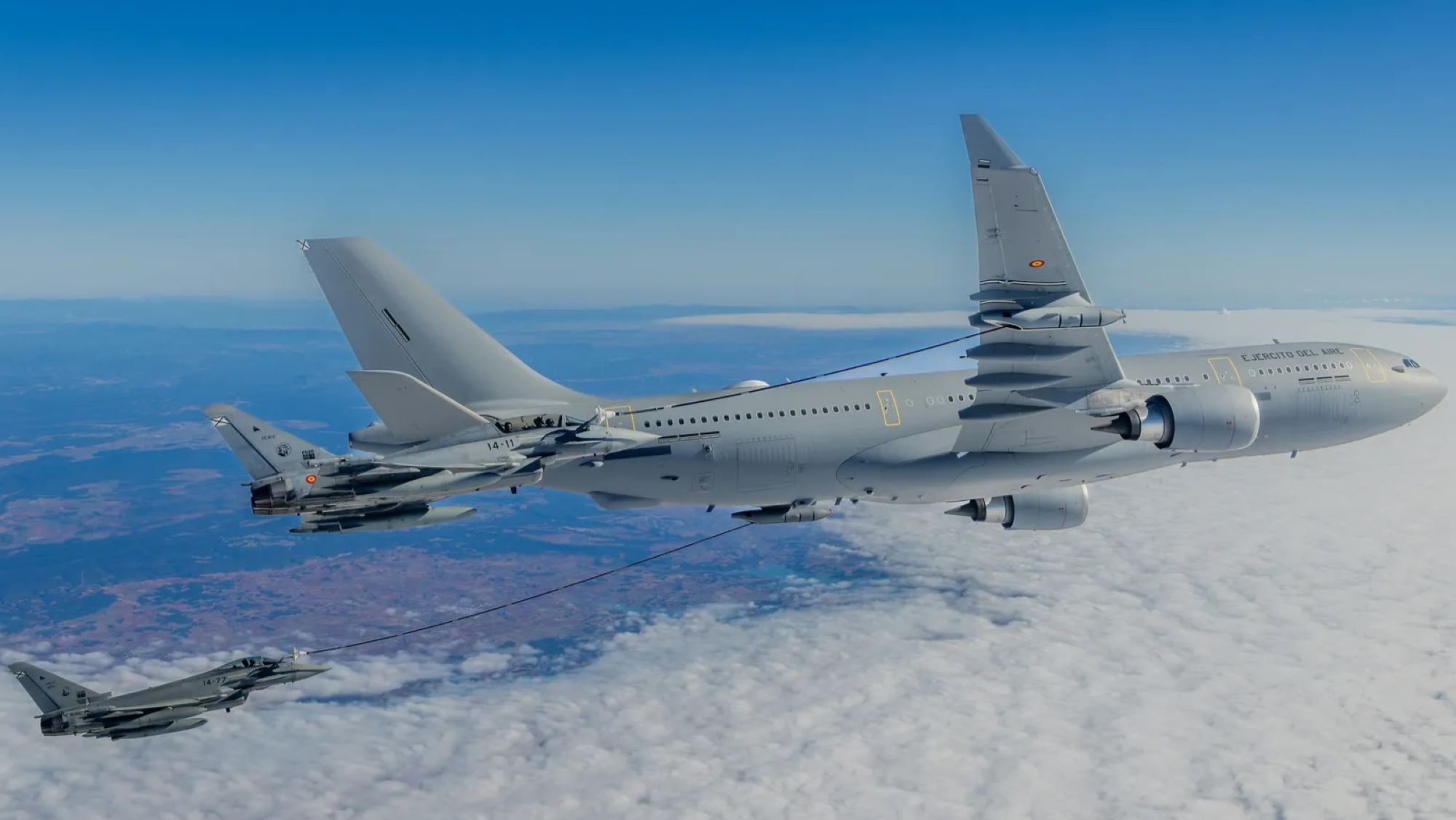
The Airbus A330-500 was a proposed shorter-fuselage variant of the successful A330-200, designed to seat approximately 220 to 240 passengers in a typical three-class configuration. Intended to serve as a direct replacement for the aging Airbus A310 and to compete with the Boeing 767-200ER, the project was ultimately shelved in the early 2000s due to lack of market interest and the superior seat-mile economics of larger variants.
The Genesis of the A330-500 Project
In the late 1990s and very early 2000s, Airbus sought to fill a specific niche in the long-haul market. At the time, the Airbus A310 was reaching the end of its production life, and many airlines were looking for a modern, efficient twin-aisle aircraft that could handle "thin" long-haul routes—routes with significant distance but not enough passenger demand to justify the larger A330-200 or -300.
The A330-500, originally referred to as the A330-100, was envisioned as a "shrink" of the existing A330 platform. By shortening the fuselage of the A330-200 by approximately four to six frames, Airbus aimed to create a lighter aircraft with exceptional range capabilities. The goal was to provide a seamless transition for A310 operators into the A330/A340 family, utilizing the same flight decks, maintenance procedures, and type ratings that made the A330 family so attractive to global carriers.
However, the "workhorse" designation for the A330-500 is often debated among aviation historians. While the A330 family itself became one of the most reliable and ubiquitous widebody series in history, the -500 variant represents a specific moment in aerospace engineering where the industry's push for smaller widebodies collided with the harsh reality of "shrink" economics.
Technical Specifications and Planned Performance
The design of the A330-500 was rooted in maximum commonality. Airbus intended to use the same wing, landing gear, and systems as the A330-200. This approach significantly reduces development costs and allows airlines to integrate the new variant into existing fleets without the need for extensive pilot retraining or new spare parts inventories.
Dimensional Data (Proposed)
The A330-500 would have featured a fuselage length of roughly 54.6 meters (179 feet), compared to the 58.8 meters of the A330-200. This reduction in length was designed to lower the Operating Weight Empty (OWE), theoretically allowing for better fuel efficiency on shorter or less-dense routes.
Range and Payload
Planned performance included a range of approximately 12,000 to 13,000 kilometers (6,500 to 7,000 nautical miles). This would have enabled the aircraft to fly transoceanic routes with ease. The power plants were expected to be the same options available for the rest of the A330 family: the General Electric CF6-80E1, the Pratt & Whitney PW4000, or the Rolls-Royce Trent 700.
Passenger Capacity
In a standard three-class layout, the A330-500 was designed to accommodate 222 passengers. In a high-density single-class configuration, it could have potentially carried up to 300 passengers, making it a versatile option for charter operators or airlines serving high-traffic regional corridors.
| Feature | Airbus A330-500 (Proposed) | Airbus A330-200 | Airbus A310-300 |
|---|---|---|---|
| Typical Seating (3-class) | 222 | 253 | 218 |
| Fuselage Length | 54.6 m | 58.8 m | 46.66 m |
| Maximum Range | ~13,000 km | 13,450 km | 9,540 km |
| Wing Span | 60.3 m | 60.3 m | 43.9 m |
| Engine Options | RR, GE, P&W | RR, GE, P&W | GE, P&W |
| Status | Cancelled | In Service | Retired (mostly) |
The "Shrink" Problem: Why the A330-500 Failed to Launch
One of the most persistent challenges in commercial aviation is the concept of "shrinking" an aircraft. While "stretching" an aircraft (adding fuselage plugs to an existing design) usually results in better seat-mile costs, shrinking often does the opposite.
The A330-500 suffered from being "over-engineered" for its size. Because it shared the heavy wing and landing gear of the larger A330-200 and -300, it carried a significant weight penalty. The structure required to support the massive wings and fuel tanks of an A330 was largely unchanged in the -500, meaning the aircraft was carrying around "dead weight" that its smaller passenger load could not economically justify.
Airlines quickly realized that the A330-200, while slightly larger, offered significantly more revenue potential for nearly the same operating cost. The marginal fuel savings of the -500 did not compensate for the loss of approximately 30 seats. Furthermore, the advent of the Boeing 787 Dreamliner project (then known as the 7E7) shifted the market's focus toward clean-sheet designs made of composite materials, which promised far better efficiency than a shortened version of an older metallic airframe.
Comparison with the A330-800neo
In the current landscape of 2026, the spiritual successor to the A330-500 is the A330-800, part of the A330neo (New Engine Option) family. Like the -500, the -800 is the shorter variant of its family (the larger being the A330-900).
The A330-800 has faced similar market challenges as the -500. While it is a highly capable aircraft with extreme range and modern Trent 7000 engines, most airlines have opted for the larger A330-900 or the Airbus A350. The history of the A330-500 serves as a cautionary tale in aviation: the "sweet spot" for widebody efficiency usually lies in the medium-to-large capacity segments, rather than the smaller "shrink" models.
The A330-500 in the Context of Global Fleet Strategy
For a brief period in early 2001, Airbus actively marketed the A330-500 to major carriers like Singapore Airlines, Lufthansa, and International Lease Finance Corporation (ILFC). The pitch was centered on versatility. At the time, regional hubs were becoming increasingly congested, and the ability to fly a smaller widebody into secondary airports with restricted runway lengths was seen as a potential advantage.
However, the events of late 2001 and the subsequent downturn in the aviation industry forced airlines to prioritize maximum efficiency and cost-cutting. Projects that occupied narrow niches, like the A330-500, were the first to be pruned from manufacturer catalogs. Airbus shifted its focus toward the A340-500/600 and later the A380, leaving the A330-200 to handle the mid-sized widebody market alone.
Operational Legacy of the A330 Family
While the A330-500 never took flight, the technology intended for it lived on. The A330 series has become the quintessential "aviation workhorse" due to several key factors:
- High Reliability: The A330 maintains a dispatch reliability rate of over 99%, making it one of the most dependable aircraft for long-haul operations.
- Commonality: Pilots can move between the A330 and A350 with minimal cross-crew qualification (CCQ) training, a concept that was central to the A330-500's initial value proposition.
- Versatility: From short-haul domestic hops in Asia to 13-hour trans-Atlantic flights, the A330 platform proved that the underlying airframe was robust enough to handle various mission profiles—even without the -500 variant.
The A330 family’s success is a testament to the design's adaptability. Even without the shortened -500 model, the A330-200 effectively covered much of the intended market by offering a "Payload-Range" capability that few other aircraft of the era could match.
FAQ
Was the Airbus A330-500 ever actually built?
No, the Airbus A330-500 never progressed beyond the design and marketing phase. Although it was officially offered to customers in 2000 and 2001, no firm orders were placed that reached the production stage. The project was officially withdrawn as Airbus focused on more popular variants and future programs like the A350.
How many passengers would the A330-500 have carried?
The aircraft was designed for a typical three-class capacity of 222 passengers. In a high-density configuration, such as those used by budget or charter airlines, it could have carried up to 300 passengers. This capacity was very similar to the older Airbus A310, which it was intended to replace.
Why did airlines prefer the A330-200 over the A330-500?
The A330-200 offered better "unit costs." Because both aircraft shared the same heavy wing, engines, and structure, the A330-200 was only slightly more expensive to operate per flight but offered approximately 30 more seats. This meant the A330-200 could generate significantly more revenue, making it the more economically viable choice for most routes.
Is there a similar aircraft flying today?
The closest modern equivalent is the Airbus A330-800neo. It is the shorter version of the A330neo family and occupies the same market niche the A330-500 once targeted. Other aircraft in this size category include the Boeing 787-8 Dreamliner and the Airbus A321XLR (though the latter is a narrow-body aircraft).
What would the range of the A330-500 have been?
The projected range was roughly 12,000 km to 13,000 km (about 6,500 to 7,000 nautical miles). This would have allowed the aircraft to perform long-haul missions, such as New York to Tokyo or London to Johannesburg, despite its smaller size.
Researching Aviation History and Technical Specs
For enthusiasts and industry professionals looking to dive deeper into the history of cancelled aircraft like the A330-500, the best resources remain official manufacturer archives and historical fleet data. Understanding why certain aircraft fail to reach production provides vital context for the current evolution of fuel-efficient, high-capacity jets.
As of 2026, the focus in the widebody market has moved entirely toward sustainability and ultra-high efficiency. The lessons learned from the A330-500—specifically regarding the weight penalties of "shrunk" airframes—continue to influence how manufacturers like Airbus and Boeing plan their future product lineups, favoring clean-sheet designs over significant fuselage reductions.