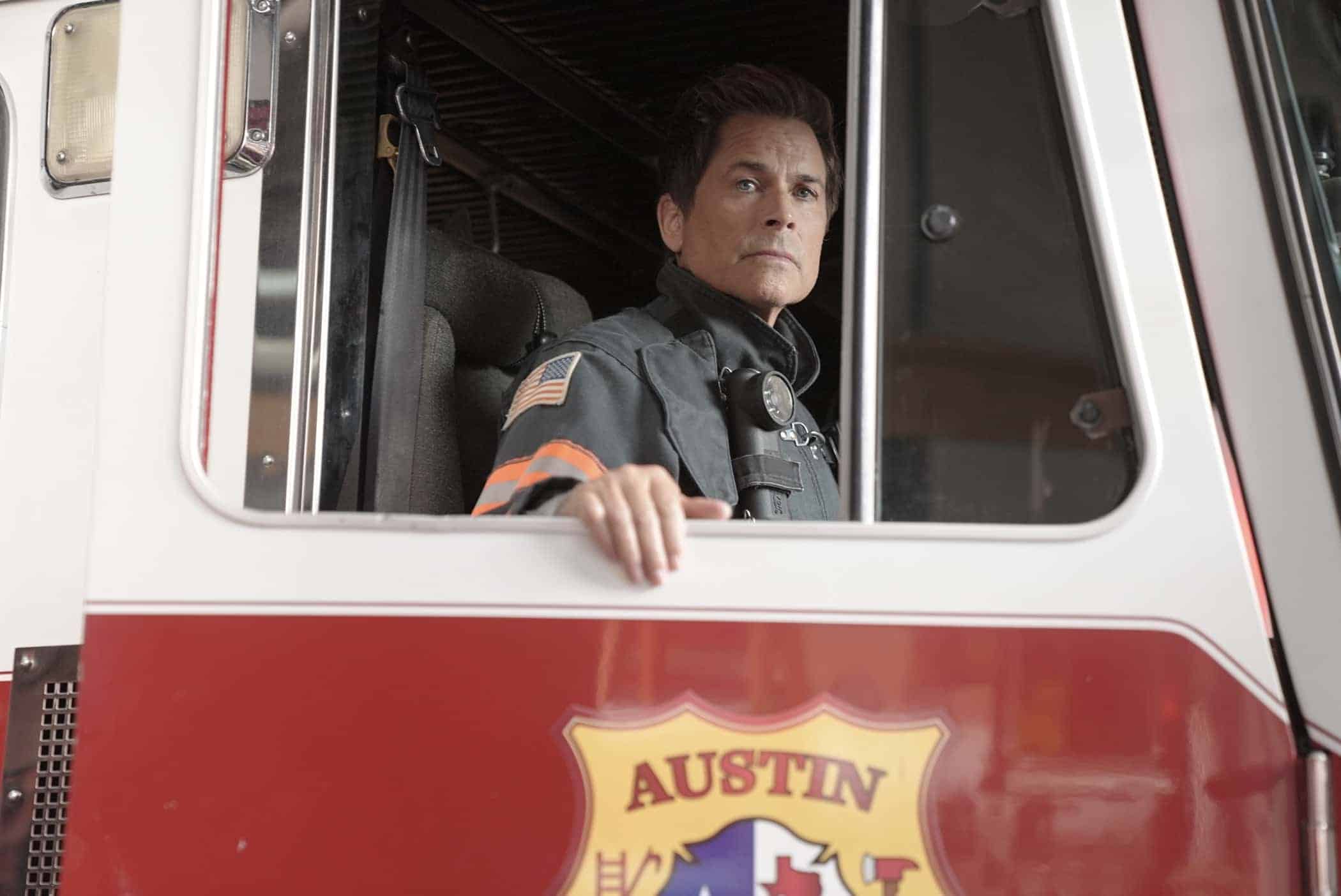
In the high-octane world of 9-1-1: Lone Star, the "asteroid" episode refers to Season 4, Episode 13, titled "Open." In this episode, a meteorite—a fragment of an asteroid—strikes a residential home in Austin, pinning a man to his bed and creating a complex rescue scenario for Captain Tommy Vega and the 126 crew. While the episode uses "cosmic collision course" themes for dramatic effect, the emergency focuses on the rare medical and structural challenges of a localized celestial impact.
The Anatomy of the Asteroid Incident in "Open" (Season 4, Episode 13)
The episode "Open" begins with a scenario that blends the show’s signature "freak accident" style with intense personal drama. While the overarching theme of the episode deals with honesty and transparency in relationships (hence the title "Open"), the physical catalyst is a literal bolt from the blue. A small meteorite, having survived its descent through the Earth's atmosphere, punches through the roof of a house and strikes a man named Chad while he is in bed.
The rescue is particularly delicate because the meteorite is not just a heavy object; it is an extraterrestrial rock that carries immense kinetic energy and residual heat. When the 126 arrives on the scene, they find Chad pinned by the leg. The rock has effectively "cauterized" or fused itself into the surrounding material, making a standard lift-and-remove operation impossible without risking a fatal hemorrhage. Captain Tommy Vega and the paramedics must stabilize the patient’s vitals while the firefighters, led by Owen Strand, determine how to extract the rock without causing the floor to collapse or the patient to bleed out.
What makes this "cosmic collision course" stand out in the series is the social awkwardness layered over the emergency. Chad was in bed with a woman who was not his wife when the strike occurred. As the rescue progresses, his wife arrives home, forcing the first responders to navigate a volatile domestic situation while performing life-saving surgery in a bedroom destroyed by a space rock.
Scientific Reality vs. TV Drama: How Realistic Was the Meteorite?
While 9-1-1: Lone Star is known for its "ripped from the headlines" emergencies, the portrayal of the meteorite in the Season 4 asteroid episode takes significant creative liberties to enhance the tension. Understanding the physics of such an event helps differentiate the "cosmic collision course" fiction from astronomical reality.
Terminal Velocity and Temperature
In the episode, the meteorite is depicted as being incredibly hot—glowing and causing immediate burns and fires. In reality, most small meteorites (those roughly the size of a grapefruit or a bowling ball) are actually cold when they hit the ground. While they generate intense heat due to friction in the upper atmosphere (the "fireball" phase), they spend the final several miles of their descent at terminal velocity, which allows them to cool down significantly. By the time they impact, they have often lost the "incandescence" shown on screen.
The Impact Force
The show accurately depicts the localized destruction. A rock traveling at terminal velocity (roughly 200 to 400 miles per hour) would easily penetrate a standard residential roof and floor. However, the likelihood of a meteorite striking a human being is infinitesimally small. Historically, there are only a handful of documented cases of humans being struck by space rocks, most notably Ann Hodges in 1954, who was hit by a meteorite while napping on her couch in Alabama.
Composition and "Glow"
The rock in 9-1-1: Lone Star has a dark, crusted appearance, which is scientifically accurate. This is known as a fusion crust, formed as the outer layer of the rock melts during atmospheric entry. However, the show's suggestion that the rock would remain "radioactive" or chemically toxic enough to require immediate HazMat isolation is generally exaggerated for television; most stony meteorites are relatively inert once they land.
Comparing Lone Star’s Cosmic Event to Other TV Disasters
The 9-1-1 franchise frequently uses natural disasters to test its characters. The meteorite strike in Lone Star belongs to a specific sub-genre of "cosmic" emergencies. The table below compares the scale and impact of the 9-1-1: Lone Star asteroid event with other notable fictional and real-world celestial incidents.
| Incident Type | Series/Film | Scale of Disaster | Scientific Accuracy | Primary Emergency Challenge |
|---|---|---|---|---|
| Meteorite Strike | 9-1-1: Lone Star (S4E13) | Localized (Single Home) | Moderate | Traumatic impalement & structural collapse. |
| Meteor Shower | Smallville (Pilot) | Regional (Town-wide) | Low | Mass casualties and radioactive "Kryptonite" debris. |
| Solar Flare | 9-1-1 (Original) (S6E11) | Global/Regional | High | Electrical grid failure and navigation blackouts. |
| Asteroid Impact | Deep Impact | Global/Extinction | High | Tsunami and atmospheric heating. |
| Chelyabinsk Meteor | Real World (2013) | Regional (City-wide) | N/A (Actual Event) | Pressure wave shattering glass; thousands of injuries. |
Production Insights: Creating the Impact Scene
As of 2026, looking back at the production of Season 4, the "asteroid" episode remains a fan favorite for its practical effects. To create the "cosmic collision course" visual, the production team had to balance a realistic-looking impact site with the logistical needs of a multi-camera shoot in a cramped "bedroom" set.
- The Practical Rig: The hole in the ceiling and the debris were created using a combination of pre-damaged set pieces and pneumatic dust launchers to simulate a recent impact.
- The "Hero" Prop: The meteorite itself was a custom-molded prop made of high-density foam and coated in resins to give it the appearance of a metallic/stony fusion crust. Internal LED lights and small smoke machines were used to simulate the "heat" and "hiss" of the rock.
- Medical Realism: The show’s medical consultants worked with the actors to ensure that the "crush syndrome" Chad experienced was portrayed accurately. In such incidents, removing a heavy object too quickly can release toxins into the bloodstream (myoglobin), leading to kidney failure. This added a "ticking clock" element to the extraction.
Character Development and the Fallout of the Incident
Beyond the technical rescue, the asteroid episode serves as a pivot point for several character arcs. For Captain Owen Strand, the incident reinforces his philosophy that the universe is chaotic and that first responders are the only line of defense against that chaos.
For Tommy Vega, the emergency highlights her ability to maintain professional composure in the face of absurd circumstances. The "cosmic collision course" of Chad’s infidelity and the meteorite strike required Tommy to act as both a medical professional and a de facto mediator. This episode is often cited by fans as a prime example of the show's "Lone Star" identity: taking a massive, world-ending concept like an asteroid impact and shrinking it down to a messy, human-sized tragedy.
Real-World Preparedness for Meteorite Impacts
While 9-1-1: Lone Star dramatizes a direct hit, real-world agencies like NASA’s Planetary Defense Coordination Office (PDCO) focus on much larger threats. As we move through 2026, the focus on "cosmic collisions" has shifted from fiction to reality with missions like DART (Double Asteroid Redirection Test).
- Detection: NASA tracks over 95% of near-Earth objects (NEOs) that are large enough to cause global devastation.
- Local Response: In the unlikely event of a small meteorite strike like the one seen in Austin, local EMS and Fire departments are trained in "Structural Collapse" and "Heavy Rescue" protocols. The primary concern is rarely the rock itself, but the fire it starts and the integrity of the building it hits.
- Reporting: If you encounter a meteorite in real life, experts recommend not touching it immediately (due to potential temperature extremes, though usually cold) and reporting the location to a local university or the International Meteor Organization.
Frequently Asked Questions
Which episode of 911 Lone Star has the asteroid?
The asteroid/meteorite event occurs in Season 4, Episode 13, titled "Open." While fans often search for "asteroid," the object is technically a meteorite because it has made impact with the Earth's surface.
Does the man hit by the meteorite in 911 Lone Star survive?
Yes, Chad survives the initial impact and the subsequent rescue. Thanks to the quick thinking of Tommy Vega and the 126, they were able to manage his "crush syndrome" and extract him from the bed before the structural damage to the house became fatal.
Is the 911 Lone Star asteroid episode based on a true story?
The episode is loosely inspired by the Ann Hodges case of 1954, the only well-documented instance of a human being struck by a meteorite. However, the domestic drama and the specific "heat" of the rock were dramatized for the show.
What is the difference between an asteroid and a meteorite in this context?
An asteroid is a large rocky body orbiting the sun. When a piece of it enters Earth's atmosphere, it becomes a meteor (a "shooting star"). If that piece survives the heat of entry and lands on the ground, it is called a meteorite. The "911 Lone Star asteroid episode" technically features a meteorite.
Did 911 Lone Star have a larger cosmic disaster in Season 5?
Season 5 (which aired leading up to 2025) featured a massive three-episode opening event involving a multi-train derailment and a toxic gas cloud. While not "cosmic" in origin, it mirrored the "collision course" intensity of the Season 4 meteorite episode on a much larger city-wide scale.
Recommended Viewing for Disaster Enthusiasts
If you are interested in the "cosmic collision course" themes of 9-1-1: Lone Star, you should view the series in an order that highlights its escalating disaster arcs. Start with Season 4, Episode 13 ("Open") to see the localized meteorite strike, then move to the Season 5 premiere to see how the production team handled the "Trainwreck" arc, which many critics consider the spiritual successor to the asteroid episode in terms of technical complexity and rescue stakes. For a real-world comparison, many viewers also recommend the documentary coverage of the 2013 Chelyabinsk event to see how actual first responders handle cosmic debris on a metropolitan scale.