90s television refers to the era of broadcast and cable programming between 1990 and 1999, defined by the dominance of "Must See TV" sitcoms, the rise of the Fox network, and the expansion of niche cable channels like Nickelodeon and MTV. This decade transformed television from a secondary medium into a primary driver of global pop culture and fashion.
The landscape of 90s television was a unique bridge between the traditional three-network dominance of the mid-20th century and the fragmented, high-definition streaming world of 2026. During this period, "appointment viewing" reached its zenith. Families gathered around cathode-ray tube (CRT) sets at specific times to watch shared cultural events, a phenomenon that has largely dissipated in the era of on-demand content. The 1990s introduced a new level of realism, edge, and diversity to the small screen, moving away from the sanitized family dynamics of the 1970s and 80s toward more complex, often cynical, narratives.
The Transformation of the Network Landscape
In the early 1990s, the "Big Three" networks—ABC, CBS, and NBC—faced their first legitimate threat in decades: the rise of the Fox Broadcasting Company. Fox disrupted the established order by targeting a younger, more urban demographic with "edgy" programming like The Simpsons, Married... with Children, and In Living Color. This competition forced the older networks to innovate, leading to a decade of high-risk, high-reward programming.
The 1996 Telecommunications Act further altered the industry by allowing for massive media consolidation. This period saw the birth of The WB and UPN, networks specifically designed to capture the growing teenage and African American markets. By the late 90s, the concept of a "prime time" block had evolved into a sophisticated marketing machine, most notably NBC’s Thursday night "Must See TV" lineup, which at its peak anchored the American economy’s advertising spend for the entire week.
The Sitcom Revolution: Seinfeld and Friends
If one genre defines 90s television, it is the multi-camera sitcom. Two shows, in particular, fundamentally changed the way stories were told: Seinfeld and Friends.
Seinfeld: The "Show About Nothing"
Debuting in late 1989 but dominating the 1990s, Seinfeld broke the traditional sitcom mold by rejecting the "lesson of the week" format. Its creators, Larry David and Jerry Seinfeld, famously adhered to a "no hugging, no learning" policy. This cynical, observational approach to comedy resonated with Gen X audiences and changed how dialogue was written. Concepts from the show—like "close talkers," "shrinkage," and "Festivus"—became permanent fixtures in the English lexicon.
Friends: The Ensemble Powerhouse
While Seinfeld was cynical, Friends (1994–2004) was aspirational. It perfected the ensemble dynamic, where each character was equally essential to the plot. The show’s influence on 90s culture was immense, from Jennifer Aniston’s "The Rachel" haircut to the popularization of coffee shop culture. Economically, Friends set new precedents for talent negotiations when the six lead actors banded together to demand equal pay, eventually reaching $1 million per episode by the final seasons.
Serialized Drama and the Birth of Prestige TV
The 1990s were pivotal for dramatic storytelling, shifting away from purely episodic "procedurals" (where every problem is solved in 44 minutes) toward long-form serialization.
- Twin Peaks (1990–1991): David Lynch’s surrealist murder mystery proved that television could be as cinematically ambitious and strange as feature films. Though it only ran for two seasons initially, its DNA is visible in every prestige drama that followed.
- The X-Files (1993–2002): This series combined the "Monster of the Week" format with a complex, multi-year "mythology" arc. It pioneered the concept of the "internet fandom," as viewers took to early message boards to debate alien conspiracies.
- ER and NYPD Blue: These shows brought a gritty, handheld-camera realism to medical and police dramas. ER, in particular, was known for its fast-paced "walk and talk" scenes and high production values, often feeling more like a weekly action movie than a standard drama.
- The Sopranos (1999): While it only aired its first season in the 90s, the debut of The Sopranos on HBO signaled the end of the broadcast era’s dominance and the beginning of the "Golden Age of Television," where cable networks would become the home for adult, complex narratives.
The Golden Age of Animation and Children’s Programming
For many, 90s television is synonymous with the explosion of high-quality animation. This wasn't just for children; the 90s saw the birth of "adult animation" as a viable prime-time genre.
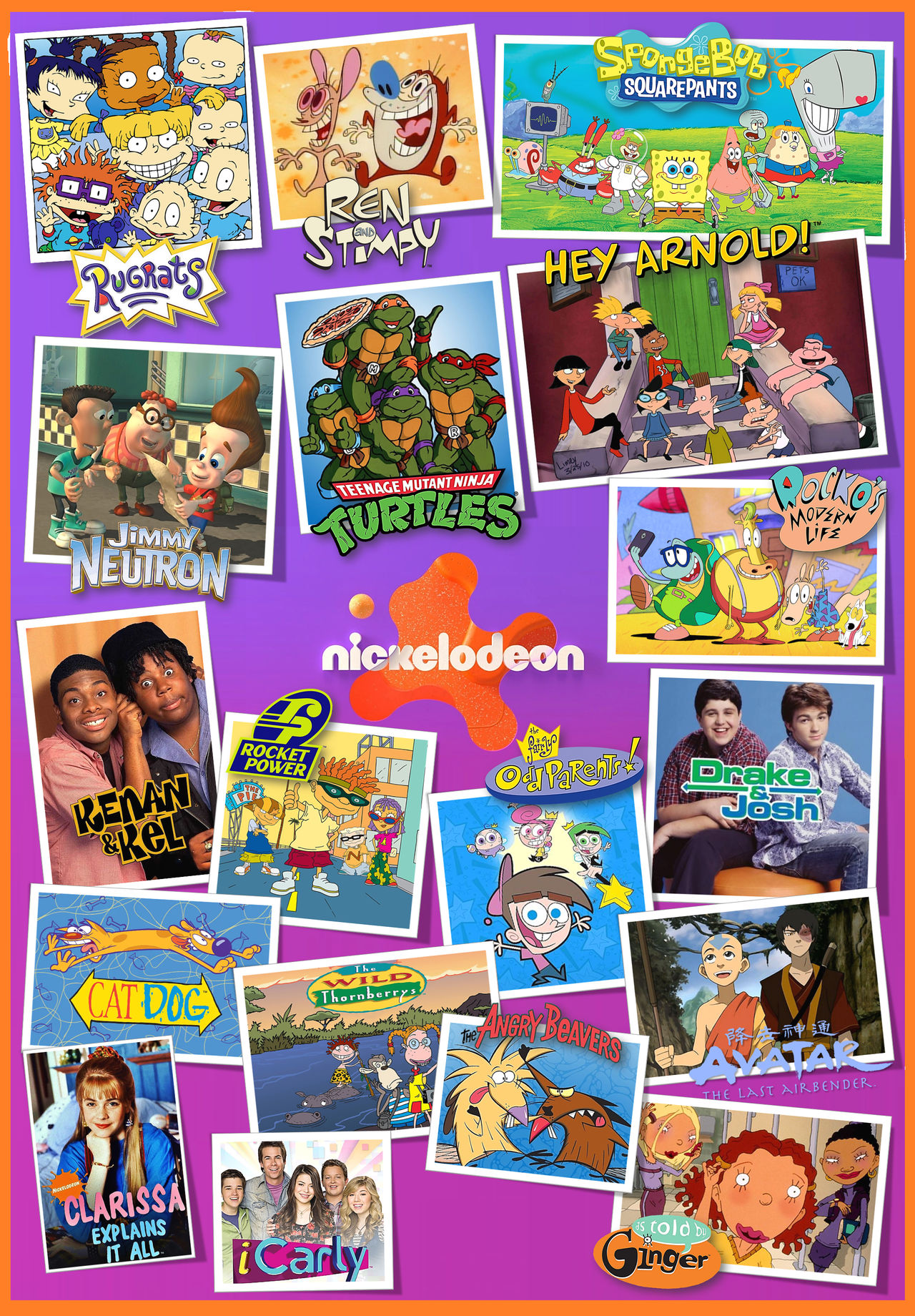
Nickelodeon emerged as a cultural powerhouse during this decade. With its "Nicktoons" lineup—including Rugrats, Doug, and The Ren & Stimpy Show—the network moved away from the toy-driven cartoons of the 80s toward creator-driven content. These shows often contained sophisticated humor that appealed to adults while remaining accessible to kids.
On the broadcast side, The Simpsons transitioned from a series of shorts on The Tracey Ullman Show to a global phenomenon. It provided a satirical mirror to the American family and remains the longest-running scripted show in history. Meanwhile, the Disney Afternoon block (DuckTales, Darkwing Duck) brought feature-film quality animation to weekday afternoons, creating a ritual for millions of school-aged children.
Cultural Representation and Diversity
The 1990s saw a significant increase in the visibility of diverse voices on television, though the industry still had far to go. The Fox network and later The WB and UPN provided platforms for shows like Living Single, Martin, The Fresh Prince of Bel-Air, and Moesha.
The Fresh Prince of Bel-Air, in particular, was instrumental in bringing hip-hop culture into the mainstream while tackling serious issues of class and race within the Black community. Additionally, the decade saw a landmark moment in 1997 when Ellen DeGeneres’s character came out as gay on the sitcom Ellen, a move that was controversial at the time but paved the way for modern LGBTQ+ representation.
Technological Impact and Viewing Habits
The 1990s was the last decade of analog television. Most households viewed content in a 4:3 aspect ratio on standard-definition sets. However, the way people interacted with their TVs was changing:
- The VCR: While invented earlier, VCR ownership peaked in the 90s, allowing for "time-shifting." People could record their favorite shows and skip commercials, the precursor to modern DVR and streaming.
- Channel Surfing: The proliferation of cable (increasing from a few dozen to hundreds of channels) gave rise to "channel surfing." Remote controls became standard equipment, leading to faster-paced editing to keep viewers from clicking away.
- The DVD Transition: By 1997, the DVD began to replace the VHS tape, offering higher resolution and "special features," which turned television shows into collectible box sets for the first time.
| Show Title | Original Network | Run Years | Primary Genre | 2026 Streaming Home (Typical) |
|---|---|---|---|---|
| Seinfeld | NBC | 1989–1998 | Sitcom | Netflix |
| The X-Files | Fox | 1993–2002 | Sci-Fi/Drama | Hulu / Disney+ |
| Friends | NBC | 1994–2004 | Sitcom | Max |
| The Fresh Prince | NBC | 1990–1996 | Sitcom | Max / Peacock |
| Buffy the Vampire Slayer | WB / UPN | 1997–2003 | Supernatural | Hulu / Disney+ |
| The Simpsons | Fox | 1989–Pres. | Animation | Disney+ |
| Twin Peaks | ABC | 1990–1991 | Mystery | Paramount+ |
Accessing 90s Television in 2026
As of 2026, nostalgia for the 1990s remains a major driver in the streaming industry. Most iconic series from this decade have been meticulously remastered. While they were originally shot for 4:3 square televisions, many have been scanned from original 35mm film negatives to provide 16:9 widescreen 4K resolutions.
However, viewers should be aware that "remastered" versions sometimes crop the original image to fit modern screens, potentially cutting off visual gags (notably in The Simpsons). For the most authentic experience, many fans seek out "Original Aspect Ratio" settings on streaming platforms. Furthermore, music licensing remains a hurdle for 90s shows; series like The Wonder Years or Dawson's Creek often feature different soundtracks on streaming services than they did during their original broadcast due to expired rights.
Where to Watch
- Max: Home to the Warner Bros. catalog, including Friends and The Fresh Prince.
- Disney+: Houses the entire Simpsons library and the 90s "Disney Renaissance" series.
- Hulu/Paramount+: Often carry the grittier dramas like ER or the Star Trek spin-offs (Deep Space Nine and Voyager).
- Physical Media: 4K Blu-ray releases of 90s classics remain popular for purists who want the original music and uncompressed video quality.
Top-Rated 90s Shows for Modern Viewers
- The West Wing (1999): While it started at the end of the decade, its sharp dialogue and idealistic view of politics remain highly bingeable.
- Buffy the Vampire Slayer: Often cited by academics as one of the most important shows for its subversion of gender tropes and metaphorical storytelling.
- Frasier: A rare spin-off that arguably surpassed its predecessor (Cheers), offering sophisticated, high-brow humor that has aged exceptionally well.
Common Questions About 90s Television
Why did 90s sitcoms use laugh tracks?
Laugh tracks, or "live studio audiences," were used to simulate a communal theater experience and signal to viewers at home when a joke occurred. In the 90s, most sitcoms were filmed in front of an actual audience of 200–300 people to provide genuine timing for the actors. By the early 2000s, the "single-camera" format (like Malcolm in the Middle) began to phase out the need for recorded laughter.
What was the first reality TV show of the 90s?
While reality TV exploded in the 2000s, it began in 1992 with MTV’s The Real World. The show’s premise—"seven strangers picked to live in a house"—was a social experiment that focused on issues like HIV/AIDS, racism, and sexuality, which were rarely discussed so openly on broadcast television at the time.
Why do some 90s shows look blurry on modern 4K TVs?
Many 90s shows, particularly those shot on tape (like soap operas or some sitcoms), have a limited resolution that cannot be truly "upconverted" to 4K. Shows shot on 35mm film look excellent when remastered, but those finished on videotape often suffer from "motion blur" or a "soft" image when viewed on large 2026-era screens.
What is "Must See TV"?
"Must See TV" was an advertising slogan used by NBC to brand its Thursday night lineup. During the mid-90s, this block included Friends, Seinfeld, and ER. It was arguably the most successful branding exercise in television history, ensuring that millions of people were tuned to the same channel for four consecutive hours.
Preserving the 90s Television Experience
To get the most out of 90s television today, it is recommended to research the specific "version" of the show you are watching. If you are a cinephile, look for platforms that offer the original 4:3 aspect ratio to see the framing as the directors intended. For those interested in the cultural context, many podcasts and retrospective documentaries (often found on YouTube or streaming "Extras" sections) provide insight into the behind-the-scenes struggles and societal impacts of these shows.
Whether you are revisiting a childhood favorite or discovering the "Show About Nothing" for the first time, 90s television offers a window into a pre-smartphone world where the TV set was the undisputed center of the American home.