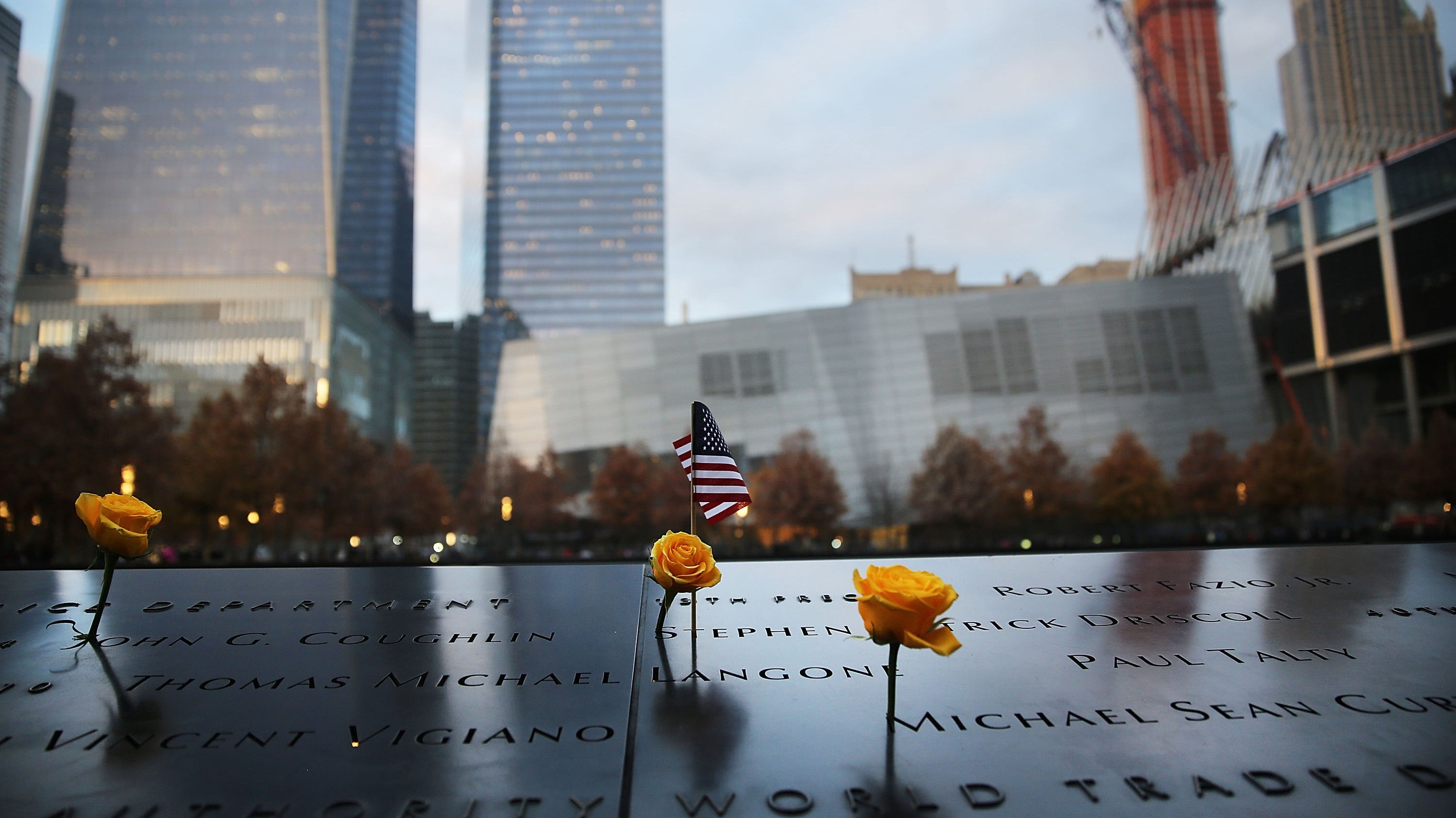
The 9/11 response encompasses both the immediate emergency operations conducted on September 11, 2001, and the multi-decade federal healthcare, compensation, and policy framework established for responders and survivors. On the day of the attacks, local emergency services, military forces, and civilian mariners executed the largest urban rescue and evacuation effort in U.S. history. In the years since, the federal government formalized long-term support through the World Trade Center Health Program and the September 11th Victim Compensation Fund (VCF).
Immediate Tactical Response at the Crash Sites
The initial tactical response to the September 11 attacks occurred simultaneously across three main locations: the World Trade Center complex in Lower Manhattan, the Pentagon in Arlington County, Virginia, and a field near Shanksville, Pennsylvania. Each site presented unprecedented operational challenges for local, state, and federal emergency personnel.
- September 11, 2001 Attacks
- Lower Manhattan (WTC)
- FDNY, NYPD, PAPD
- Maritime Evacuation
- Search & Recovery
- Pentagon Site
- Arlington Fire
- Fort Myer, MDW
- FBI Lead Agency
- Shanksville, PA
- PA State Police
- Volunteer Fire
- FBI / NTSB
- Lower Manhattan (WTC)
The World Trade Center (New York City)
When American Airlines Flight 11 struck the North Tower (1 WTC) at 8:46 a.m. EDT, the Fire Department of the City of New York (FDNY) dispatched units within seconds. Battalion 1, led by Chief Joseph Pfeifer, was among the first on scene, establishing a command post in the lobby of 1 WTC. Minutes later, the New York City Police Department (NYPD) and the Port Authority Police Department (PAPD) mobilized officers to assist with civilian evacuation and perimeter security.
Following the impact of United Airlines Flight 175 into the South Tower (2 WTC) at 9:03 a.m., incident commanders upgraded the alarm levels to unprecedented ranks. Emergency personnel successfully evacuated an estimated 14,000 to 15,000 individuals from the complex before the collapse of both towers. However, critical structural communications limitations—such as radio repeater failures and poor interagency radio interoperability—impeded communication between the FDNY command posts and tactical units inside the upper floors.
When the South Tower collapsed at 9:59 a.m., followed by the North Tower at 10:28 a.m., 343 FDNY firefighters, 71 law enforcement officers (including 37 PAPD officers and 23 NYPD officers), and 8 private paramedic personnel lost their lives. The search and recovery operation, known officially as the operations at "Ground Zero," continued continuously until May 30, 2002.
The Pentagon (Arlington, Virginia)
At 9:37 a.m., American Airlines Flight 77 crashed into the western facade of the Pentagon. The Arlington County Fire Department (ACFD) assumed incident command under an Incident Command System (ICS) structure, coordinating a multi-jurisdictional response that included the Fort Myer Fire Department, the District of Columbia Fire and Emergency Medical Services, and regional hazardous materials units.
Unlike the communications breakdown in Manhattan, the response at the Pentagon benefited from pre-established regional mutual-aid agreements and shared radio frequencies among Washington Metropolitan Area jurisdictions. The Federal Bureau of Investigation (FBI) designated the site a federal crime scene, balancing search-and-rescue operations with evidence collection alongside the Military District of Washington.
Shanksville, Pennsylvania
At 10:03 a.m., United Airlines Flight 93 crashed into a field in Stonycreek Township near Shanksville, Pennsylvania, after passengers and crew attempted to retake control of the aircraft from hijackers. Local volunteer fire departments, including the Shanksville Volunteer Fire Department, responded alongside the Pennsylvania State Police. Due to the high-velocity impact, emergency responders secured the site for the FBI and the National Transportation Safety Board (NTSB) to conduct forensic identification and flight data recovery.
The Maritime Evacuation of Lower Manhattan
Following the collapse of the World Trade Center towers, transit subways, bridges, and tunnels in Lower Manhattan were shut down, trapping hundreds of thousands of civilians at the southern tip of Manhattan Island. What followed was the largest waterborne evacuation in recorded history, eclipsing the 1940 evacuation of Dunkirk in total volume within a single day.
Maritime Evacuation Process
- Infrastructure Lockdown: Bridges, tunnels, and subway lines closed.
- USCG Call to All Ships: Coast Guard issues broadcast for all available craft.
- Civilian Vessel Response: Ferries, tugs, charter boats dock at Battery Pier.
- Mass Transports: Over 500,000 civilians evacuated in under 9 hours.
The United States Coast Guard (USCG) Activity New York issued a radio broadcast calling on all available vessels to assist in the evacuation. Within minutes, dozens of private, commercial, and municipal craft converged on the piers of Lower Manhattan. The fleet included NY Waterway ferries, Staten Island Ferries, Circle Line sightseers, commercial tugboats, party boats, and private yachts.
Between 10:00 a.m. and 7:00 p.m. on September 11, this improvised civilian-led armada transported over 500,000 people from Manhattan to safety in New Jersey, Brooklyn, and Staten Island. Coast Guard Sector New York coordinated vessel traffic control to ensure orderly docking at improvised landing zones along the Battery, Hudson River Park, and South Street Seaport.
Federal Air and Defense Response: SCATANA and Airspace Closure
The federal operational response on September 11 required rapid decisions by civil aviation authorities and the Department of Defense to secure U.S. airspace against further hijackings.
- ATC Ground Stop: At 9:25 a.m., the Federal Aviation Administration (FAA) issued a national ground stop, prohibiting the takeoff of all civilian aircraft nationwide.
- Systemwide Airspace Closure: At 9:45 a.m., Ben Sliney, the FAA’s National Operations Manager (working his first day in the position), ordered all airborne civilian aircraft—approximately 4,500 planes—to land immediately at the nearest suitable airport.
- SCATANA Implementation: For the first time in U.S. history, elements of the Security Control of Air Traffic and Air Navigation Aids (SCATANA) plan were executed, granting military control over national airspace.
- Operation Noble Eagle: The North American Aerospace Defense Command (NORAD) deployed fighter jets from Otis Air National Guard Base and Langley Air Force Base to establish combat air patrols over major metropolitan areas, initiating the air defense mission known as Operation Noble Eagle.
- Operation Yellowtail / Operation Yellow Ribbon: The Canadian government and NAV CANADA initiated Operation Yellow Ribbon, diverting over 220 international flights bound for the United States to Canadian airports, primarily in Newfoundland and Nova Scotia.
Long-Term Public Health and Compensation Programs
The destruction of the World Trade Center released tens of thousands of tons of toxic debris containing pulverised concrete, asbestos, lead, mercury, dioxins, and polycyclic aromatic hydrocarbons into Lower Manhattan. In response to widespread chronic respiratory conditions, cancers, and psychological trauma suffered by responders and survivors, the U.S. Congress created federal support programs.
Federal Legislative & Healthcare Timeline
- 2001: Air Transportation Safety and System Stabilization Act (Original VCF)
- 2011: James Zadroga 9/11 Health & Compensation Act (Est. WTC Health Program)
- 2015: Zadroga Act Reauthorization (Extends WTC Health Program to 2090)
- 2019: Never Forget the Heroes Act (Permanently funds VCF through 2090)
The World Trade Center Health Program
Established under the James Zadroga 9/11 Health and Compensation Act of 2010 and administered by the National Institute for Occupational Safety and Health (NIOSH) within the Centers for Disease Control and Prevention (CDC), the World Trade Center Health Program provides medically necessary monitoring and treatment for covered physical and mental health conditions.
- Eligible Groups: FDNY personnel, NYPD/PAPD officers, Ground Zero recovery workers, volunteers, and survivors (individuals who lived, worked, attended school, or were present in the New York City Disaster Area).
- Covered Conditions: Aerodigestive disorders (such as chronic rhinosinusitis, asthma, and GERD), dozens of types of cancer (including prostate cancer, breast cancer, thyroid cancer, and hematologic malignancies), and mental health conditions (such as PTSD, major depressive disorder, and anxiety disorders).
- Network: Clinical Centers of Excellence located throughout the New York metropolitan region, alongside a National Provider Network for eligible individuals living elsewhere in the United States.
The September 11th Victim Compensation Fund (VCF)
Originally created by Congress shortly after the attacks to provide financial relief to victims' families and prevent systemic litigation against commercial airlines, the original VCF operated from 2001 to 2004 under Special Master Kenneth Feinberg.
In 2011, the Zadroga Act reopened the VCF to compensate individuals who suffered physical injuries or illnesses resulting from exposure to toxic dust during rescue, recovery, and debris removal operations. In 2019, Congress passed the Never Forget the Heroes, John Alvarez, Jr., James Zadroga, and Ray Pfeifer Authorization Act, permanently fully funding the VCF and extending the claim filing deadline through October 1, 2090.
Comparative Summary of Response Frameworks
| Response Component | Operational Scope / Lead Agency | Primary Objective | Timeframe | Key Outcome / Legislative Basis |
|---|---|---|---|---|
| Ground Zero Tactical Emergency | FDNY, NYPD, PAPD, NYC OEM | Search, rescue, and civilian evacuation | Sept 11, 2001 – May 30, 2002 | Evacuated ~15,000 civilians; lost 412 first responders. |
| Pentagon Incident Command | Arlington County FD, FBI, MDW | Fire suppression, tactical rescue, crime scene preservation | Sept 11, 2001 – Sept 21, 2001 | Successful multi-agency ICS execution; 189 total fatalities. |
| Lower Manhattan Boatlift | US Coast Guard, civilian mariners | Mass waterborne civilian evacuation | Sept 11, 2001 (09:59–19:00 EDT) | Evacuated >500,000 individuals across the Hudson and East Rivers. |
| National Airspace Shutdown | FAA, NORAD, NAV CANADA | Neutralize airborne threats; secure national airspace | Sept 11, 2001 – Sept 13, 2001 | Landed ~4,500 planes safely; established Operation Noble Eagle. |
| WTC Health Program | CDC / NIOSH | Medical monitoring and treatment of covered health conditions | 2011 – Present (Authorized to 2090) | Title XXXIII of Public Health Service Act (Zadroga Act). |
| Victim Compensation Fund (VCF) | U.S. Department of Justice | Non-economic and economic loss financial compensation | 2001–2004; 2011 – Present (Funded to 2090) | 49 U.S.C. 40101 Note; Never Forget the Heroes Act (2019). |
Structural and Policy Reforms in U.S. Emergency Management
The operational vulnerabilities identified during the 9/11 response triggered major structural reforms in domestic security, disaster mitigation, and interagency communications across federal, state, and local governments.
Establishment of DHS and FEMA Reorganization
In November 2002, Congress enacted the Homeland Security Act, creating the U.S. Department of Homeland Security (DHS). DHS consolidated 22 separate federal agencies—including the Federal Emergency Management Agency (FEMA), the U.S. Coast Guard, the Transportation Security Administration (TSA), and the U.S. Customs and Border Protection—under a single cabinet-level executive authority to streamline national emergency preparedness and intelligence sharing.
- Department of Homeland Security
- FEMA (Preparedness & Response)
- U.S. Coast Guard (Maritime)
- TSA (Transportation Security)
- CBP (Customs & Border Prot.)
- U.S. Secret Service (Protection)
Adoption of NIMS and the Incident Command System
Following systemic inter-agency coordination problems on September 11, Homeland Security Presidential Directive 5 (HSPD-5) mandated the development of the National Incident Management System (NIMS). NIMS established a standardized, nationwide framework enabling federal, state, tribal, and local emergency personnel to work together seamlessly using common terminology, standard command structures, and unified command procedures.
Emergency Communications Interoperability and FirstNet
The inability of FDNY portable radios to transmit reliably through heavy structural steel, combined with frequency incompatibility between NYPD aircraft and FDNY ground commanders, led to federal spectrum reallocations.
Congress subsequently established the First Responder Network Authority (FirstNet) under the Middle Class Tax Relief and Job Creation Act of 2012. FirstNet deployed a dedicated, high-speed wireless broadband network reserved specifically for public safety entities, ensuring prioritized tactical data and voice communications during major disasters.
Health Eligibility and Claims Support for First Responders and Survivors
Navigating federal support programs requires understanding the distinct eligibility criteria for the WTC Health Program and the VCF. While the programs work closely together, they are legally distinct entities operated by different federal departments.
Two-Step Health & Compensation Process
- Step 1: Enroll in the WTC Health Program (CDC/NIOSH)
- Obtain official medical certification of a 9/11-related condition.
- Step 2: File a Claim with the Victim Compensation Fund (DOJ)
- Submit certified condition and proof of presence for financial award.
Step 1: Verification of Exposure and Presence Boundaries
Applicants must demonstrate geographic presence within specific disaster zones during designated timeframes:
- New York City Disaster Area: Manhattan south of Canal Street, or along designated barge loading/landfill routes (such as the Fresh Kills Landfill on Staten Island), between September 11, 2001, and July 31, 2002.
- Pentagon Site: The crash site area in Arlington, Virginia, between September 11, 2001, and November 19, 2001.
- Shanksville Site: The crash site area in Stonycreek Township, Pennsylvania, between September 11, 2001, and October 4, 2001.
Step 2: Medical Certification vs. Financial Claim Filing
- Medical Certification: Individuals must first apply to the WTC Health Program to receive medical monitoring. A program physician must evaluate the condition and submit it to NIOSH for formal health certification.
- Financial Claim Submission: Once a covered physical health condition is certified by the WTC Health Program, the claimant may file a claim for non-economic (pain and suffering) and economic (lost earnings, out-of-pocket medical expenses) losses with the September 11th Victim Compensation Fund.
Disclaimer: Health and compensation rules are governed by federal regulations subject to administrative updates. Claimants should consult official program guidelines or qualified legal counsel for individual claims assistance.
Frequently Asked Questions
Who qualifies for benefits under the World Trade Center Health Program?
Qualifying individuals include 9/11 first responders (firefighters, law enforcement, search-and-recovery personnel, sanitation workers, construction personnel) and local survivors (residents, workers, students, and daycare attendees) present in the New York City Disaster Area (south of Canal Street), at the Pentagon, or in Shanksville, Pennsylvania, during specified period windows between September 11, 2001, and July 31, 2002.
What is the current deadline to register a claim with the September 11th Victim Compensation Fund?
Under the Never Forget the Heroes Act of 2019, the VCF is fully funded and authorized to accept and process claims through October 1, 2090. However, specific registration deadlines apply relative to when an individual's physical condition is formally certified by the WTC Health Program or when a death certificate is issued.
How did interagency communications fail on September 11, and how were they fixed?
On 9/11, emergency personnel experienced severe radio communications failures due to damaged radio repeaters in the towers, mismatched frequency allocations between NYPD and FDNY units, and structural interference from reinforced concrete and steel. These failures were addressed through the mandatory nationwide implementation of the National Incident Management System (NIMS) and the launch of FirstNet, a dedicated, prioritized public-safety broadband network.
What was the Lower Manhattan boatlift, and who organized it?
The Lower Manhattan boatlift was an emergency maritime evacuation that safely moved over 500,000 civilians off Manhattan Island in less than nine hours on September 11. It was launched after the U.S. Coast Guard issued a radio broadcast calling for all available craft. Hundreds of private tugboat captains, ferry operators, charter boat crews, and municipal mariners responded voluntarily.
What is the administrative difference between the WTC Health Program and the VCF?
The World Trade Center Health Program is administered by the Department of Health and Human Services (CDC/NIOSH) and provides direct medical monitoring, diagnostic screenings, and medical treatment for certified 9/11 conditions. The September 11th Victim Compensation Fund (VCF) is administered by the Department of Justice and provides monetary compensation for economic and non-economic losses caused by certified physical injuries or deaths resulting from the attacks and their cleanup.
Accessing Official 9/11 Health and Compensation Resources
First responders, survivors, and family members seeking care or financial compensation should proceed through official federal administrative channels:
- World Trade Center Health Program: Visit the official CDC portal at cdc.gov/wtc or call 1-888-982-4748 to verify eligibility, locate Clinical Centers of Excellence, or enroll in national monitoring programs.
- September 11th Victim Compensation Fund: Access claim submission materials, legal representative registration forms, and policy guides directly at vcf.gov or call the VCF Helpline at 1-855-885-1555.
- National September 11 Memorial & Museum Registry: For researchers, historians, and relatives seeking historical rosters of responders and victims, consult the official registry archives at 911memorial.org.