Major 9/11 memorials honor the 2,977 victims killed in the terrorist attacks of September 11, 2001, as well as the six people killed in the 1993 World Trade Center bombing. The primary sites include the National September 11 Memorial in New York City, the Pentagon Memorial in Arlington, Virginia, and the Flight 93 National Memorial in Shanksville, Pennsylvania.
Overview of the Principal 9/11 Memorial Sites
The events of September 11, 2001, altered modern history and led to the creation of three national memorial sites at the locations of the attacks. Each site serves a distinct role in public remembrance, reflecting the specific context of the location, the victims lost, and the events that transpired there.
While hundreds of local, regional, and international tributes exist, three primary locations form the cornerstone of official national remembrance in the United States:
- The National September 11 Memorial & Museum in Lower Manhattan, located at the site of the former World Trade Center complex.
- The Pentagon Memorial in Arlington County, Virginia, situated adjacent to the west wall of the Pentagon.
- The Flight 93 National Memorial near Shanksville, Pennsylvania, administered by the National Park Service.
These memorials were designed through architectural competitions and public consultation processes. They provide permanent spaces for tribute, historical documentation, and education. Understanding the differences in location, layout, ticketing requirements, and access rules for each site helps visitors plan an informative and respectful visit.
The National September 11 Memorial (New York City)
Situated on the 16-acre World Trade Center complex in Lower Manhattan, the National September 11 Memorial commemorates the 2,753 people killed at the World Trade Center site on September 11, 2001, and the six people killed in the February 26, 1993, building bombing.
- World Trade Center Memorial Plaza
- North Pool (North Tower Footprint)
- South Pool (South Tower Footprint)
- 9/11 Memorial Museum (Subterranean)
Design Principles and Layout
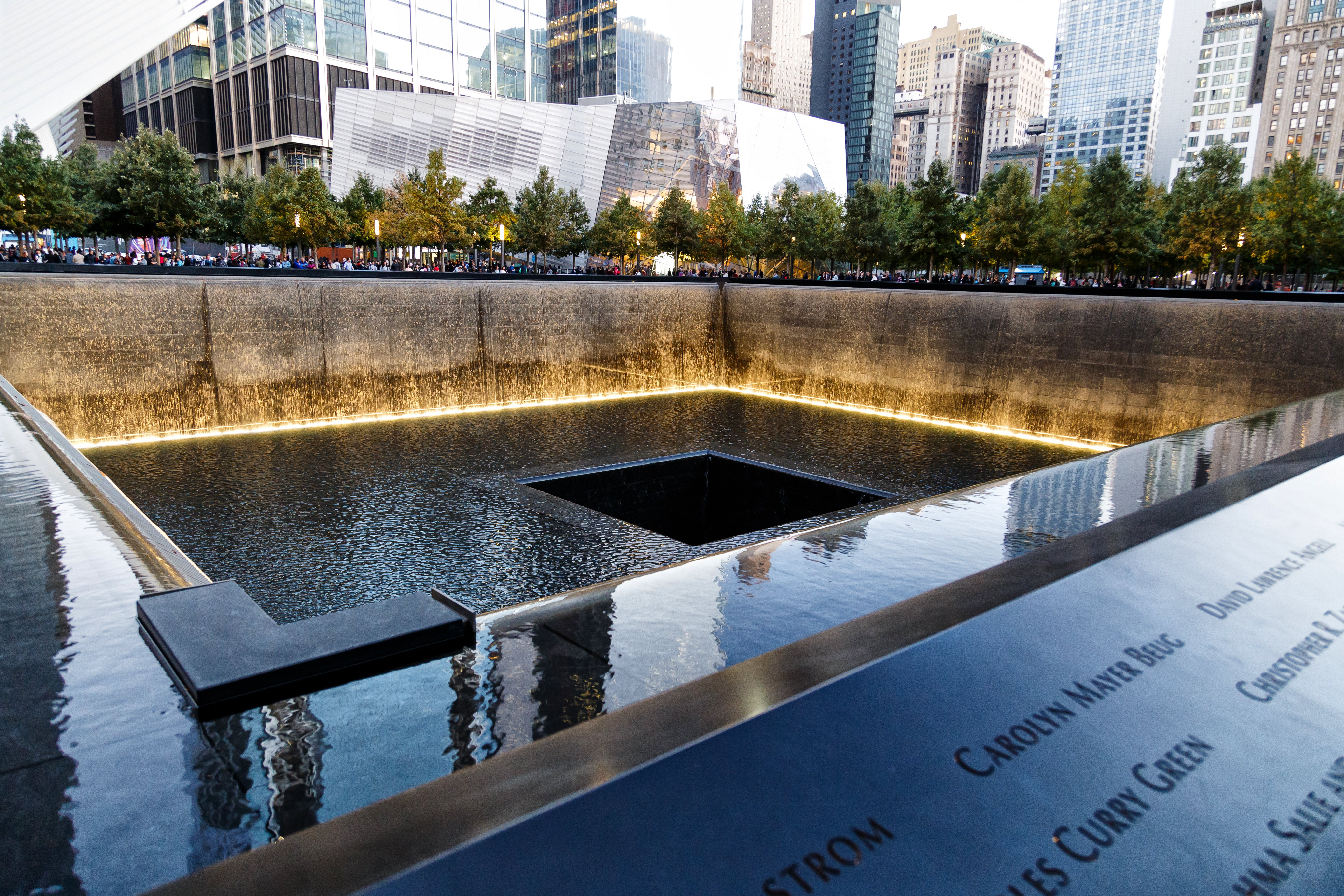
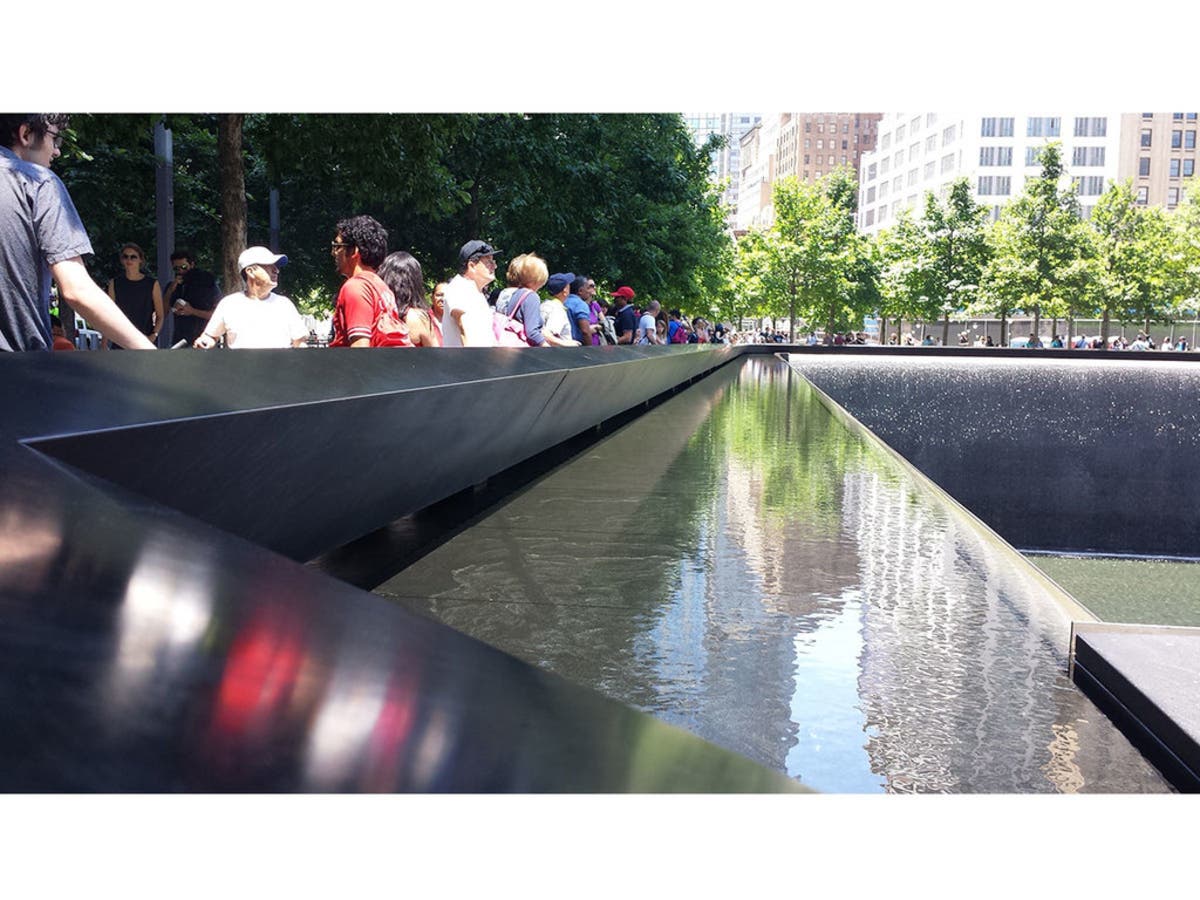
Designed by architect Michael Arad and landscape architect Peter Walker, the memorial is titled Reflecting Absence. The design features two massive recessed pool footprints situated within the exact footprints where the Twin Towers once stood. Each pool measures roughly an acre in size and features 30-foot waterfalls cascading down granite walls—the largest man-made waterfalls in North America.
The water flows into center voids, symbolizing loss and the physical absence left by the towers. Surrounding the pools is a plaza lined with more than 400 swamp white oak trees, intended to create a peaceful canopy separate from the surrounding city streets.
Arrangements of Names
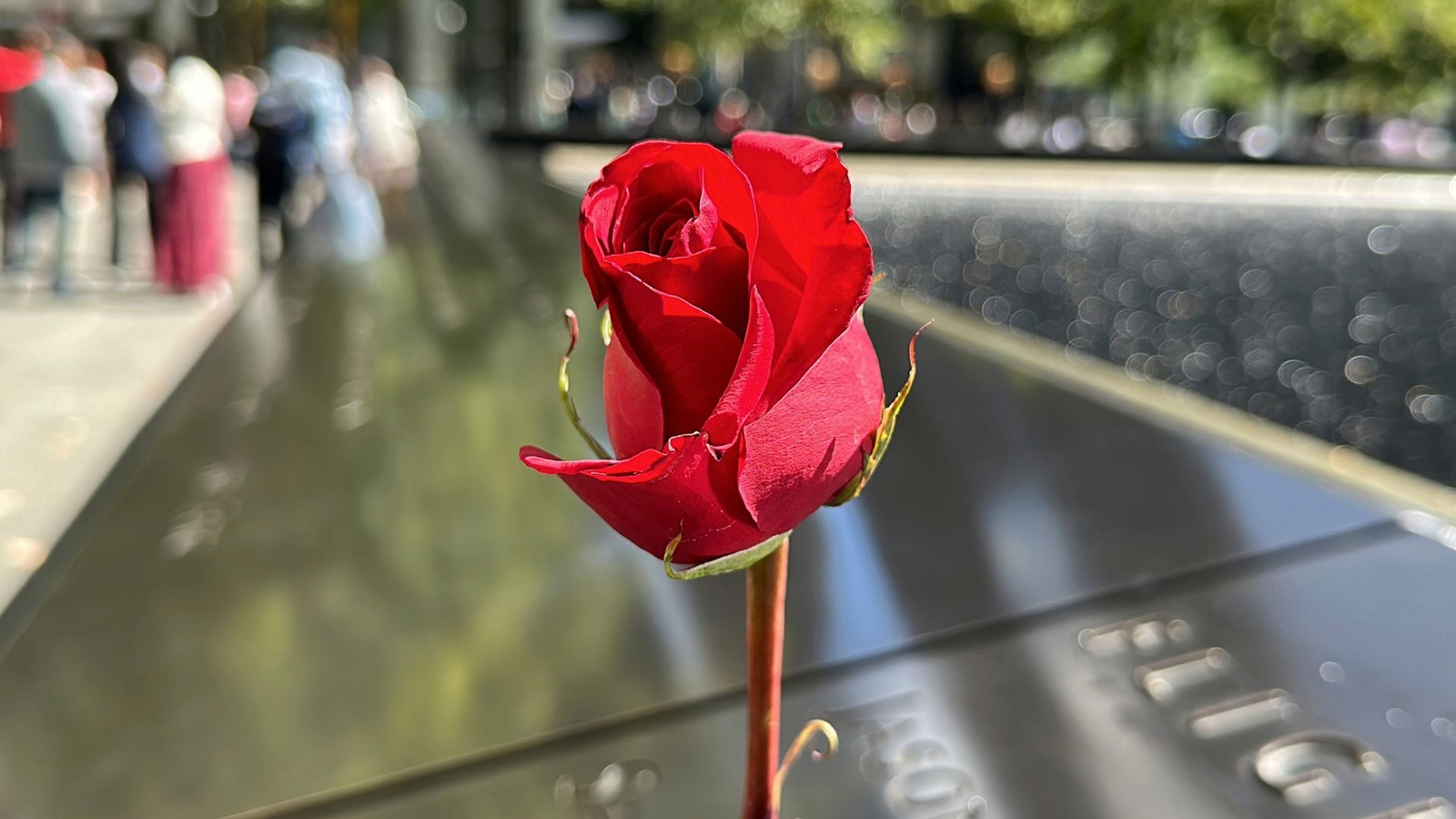
The names of 2,983 victims are bronze-engraved into parapets surrounding the two pools. The layout does not arrange names alphabetically or chronologically; instead, it uses a system of "meaningful adjacencies." Names are grouped based on where victims were located during the attacks, their affiliations (such as specific first responder agencies or companies), and requests from surviving family members to place personal friends or colleagues next to one another.
- North Pool: Surrounds the footprint of the original North Tower (1 WTC). It includes the names of victims killed inside the North Tower, passengers and crew aboard American Airlines Flight 11, and victims of the 1993 World Trade Center bombing.
- South Pool: Surrounds the footprint of the original South Tower (2 WTC). It includes the names of victims killed inside the South Tower, passengers and crew aboard United Airlines Flight 175, first responders who answered the call in NYC, passengers and crew aboard American Airlines Flight 77, passengers and crew aboard United Airlines Flight 93, and victims at the Pentagon.
Visiting Rules and Access Details
- Plaza Access: The outdoor 9/11 Memorial Plaza is open to the public daily without an entry fee. Tickets or reservations are not required to walk around the pools or view the exterior plaza.
- Museum Entry: The subterranean 9/11 Memorial Museum requires timed-entry admission tickets. The museum houses primary historical artifacts, including structural steel pieces, personal belongings, broadcast recordings, and first-responder vehicles. Purchasing tickets online in advance is strongly advised due to capacity limits.
- Operating Hours: Plaza hours typically run from early morning to late evening (commonly 8:00 AM to 8:00 PM daily). Museum operating hours vary seasonally and usually require final entries two hours prior to closing.
The Pentagon Memorial (Arlington, Virginia)
Located just outside Washington, D.C., in Arlington, Virginia, the Pentagon Memorial pays tribute to the 184 individuals who lost their lives on September 11, 2001, when American Airlines Flight 77 struck the southwest wall of the Pentagon building. This includes 59 passengers and crew on board the aircraft and 125 personnel inside the building.
- West Wall of the Pentagon
- Facing Pentagon: Victims on Flight 77
- Facing Away: Victims inside the Building
- Age Lines: 1989 (Age 3) to 1930 (Age 71)
Architectural Concept
Designed by Julie Beckman and Keith Kaseman of KBAS Studio, the Pentagon Memorial covers a 1.93-acre park. The design centers on 184 cantilevered granite bench units, known as "Memorial Units." Each bench is positioned over a lit pool of flowing water and is inscribed with the name of a victim.
Deciphering the Design Orientation
The layout of the Pentagon Memorial uses a directional mapping system based on age and location:
- Timeline of Ages: The benches are arranged along age lines corresponding to the birth years of the victims, ranging from Dana Falkenberg (age 3) to John Yamnicky Sr. (age 71).
- Direction of Reading: The orientation of each bench indicates whether the person died aboard Flight 77 or inside the Pentagon building.
- If the reader faces the Pentagon building while reading the victim's name, that individual was on board American Airlines Flight 77.
- If the reader faces away from the Pentagon building toward the sky, that individual was inside the Pentagon structure.
Access and Logistical Information
- Admission: The Pentagon Memorial is free to enter and open to the public 365 days a year. Reservations are not required for outdoor entry.
- Transportation and Parking: Public transportation via the Washington Metro (Pentagon Station on the Blue and Yellow lines) provides direct access. Parking at the Pentagon is strictly controlled; visitors using personal vehicles generally park at nearby public facilities such as Pentagon City.
- Security Constraints: Because the memorial directly adjoins an active military headquarters, photography is strictly limited to the designated memorial park boundaries. Photography of the surrounding Pentagon facility or security checkpoints is prohibited.
Flight 93 National Memorial (Shanksville, Pennsylvania)
The Flight 93 National Memorial protects the crash site of United Airlines Flight 93 in Stonycreek Township, near Shanksville, Pennsylvania. On September 11, 2001, 40 passengers and crew members thwarted an attack aimed at the U.S. Capitol or White House by resisting four hijackers, causing the plane to crash into an open field.
Key Elements of the Site
Administered by the National Park Service, the memorial spans over 2,200 acres and consists of three distinct features:
The Visitor Center Complex: Situated on a ridge overlooking the crash site, the center offers interactive exhibits, flight paths, audio logs from passengers, and physical artifacts retrieved from the field.
The Wall of Names and Plaza: A concrete walkway follows the edge of the crash area boundary to the Wall of Names, which consists of 40 individual slabs of polished white Virginia granite. Each slab is engraved with the name of a passenger or crew member. A wooden boulder marks the impact point within the debris field; this area is restricted to surviving family members.
The Tower of Voices: Located near the park entrance, this 93-foot-tall concrete structure holds 40 custom-designed wind chimes. The chimes generate unique tones driven by the wind, symbolizing the voices of the 40 passengers and crew.
Tower of Voices (Entrance)
Visitor Center Complex (Overview Ridge)
Wall of Names
Restricted Impact Site / Boulder
Access and Practical Guidance
- Location: The park is located in rural Somerset County, approximately 80 miles southeast of Pittsburgh. Vehicle travel is required as public transportation does not service the site directly.
- Fees: Entry to the park, visitor center, and grounds is free of charge.
- Park Hours: Grounds are open daily from sunrise to sunset. The Visitor Center maintains standard operating hours (typically 9:00 AM to 5:00 PM local time). Detailed conditions and seasonal schedules are maintained on the official National Park Service Flight 93 page.
Comparative Overview of Major 9/11 Memorial Sites
| Site Name | Location | Primary Architectural Feature | Admission Fee | Reservation Required? |
|---|---|---|---|---|
| National September 11 Memorial | Lower Manhattan, New York City, NY | Twin recessed waterfall pools (Reflecting Absence) | Free (Plaza) | No for Plaza; Yes for Museum |
| 9/11 Memorial Museum | Lower Manhattan, New York City, NY | Subterranean historical exhibits and structural artifacts | Paid (Varies by age/tier) | Yes (Timed-entry tickets) |
| Pentagon Memorial | Arlington County, VA (Adjacent to Pentagon) | 184 cantilevered granite bench units over water | Free | No |
| Flight 93 National Memorial | Stonycreek Twp / Shanksville, PA | Wall of Names, Tower of Voices, impact field | Free | No |
Visitor Etiquette, Security, and Accessibility
All major 9/11 memorial sites serve as solemn grounds of remembrance and, in many cases, final resting places for unidentified human remains. Visitors are expected to observe high standards of respect and adhere to operational guidelines.
Conduct Guidelines
- Tone and Decorum: Quiet, respectful behavior is requested across all sites. Loud speech, recreational games, running, and playing music on speakers are prohibited.
- Rubbings and Tributes: Respectful pencil rubbings of victim names on the bronze parapets (NYC) or granite benches/walls (Pentagon/Shanksville) are permitted. Leaving personal tribute items is allowed in designated areas, but items may be periodically cleared by park staff in accordance with site management policies.
- Commercial Activities: Unsafe actions, commercial filming without permits, and political demonstrations are restricted at all national memorial grounds.
Security Screening Procedures
- New York City (Museum): Entry into the subterranean 9/11 Museum requires passing through airport-style security screening, including metal detectors and X-ray inspection of bags. Large luggage and oversized backpacks are prohibited and cannot be stored on-site.
- Pentagon Site: Visitors must follow all posted signage regarding restricted zones. Law enforcement officers monitor the perimeter. Weapons of any kind are strictly forbidden.
- Shanksville Site: Security personnel and National Park Service Rangers patrol the premises. Standard national park regulations apply.
Accessibility Standards
All three major sites comply with the Americans with Disabilities Act (ADA):
- Wheelchair-accessible pathways, ramps, and elevators are present throughout the National September 11 Memorial Plaza, the indoor Museum, the Pentagon Memorial park grounds, and the Flight 93 Visitor Center complex.
- Service animals trained to perform tasks for individuals with disabilities are permitted across all site areas, indoor and outdoor.
- Assistive listening devices and captioning services are available for indoor audio/visual exhibits at the 9/11 Museum and Flight 93 Visitor Center.
Notable Regional and International Tributes
Beyond the three national sites, hundreds of community-based memorials exist across North America and internationally. Many of these incorporate reclaimed structural steel from the World Trade Center towers, distributed by the Port Authority of New York and New Jersey through its World Trade Center Steel Program.
Select Regional & International Tributes
| Memorial Name | Distinct Feature |
|---|---|
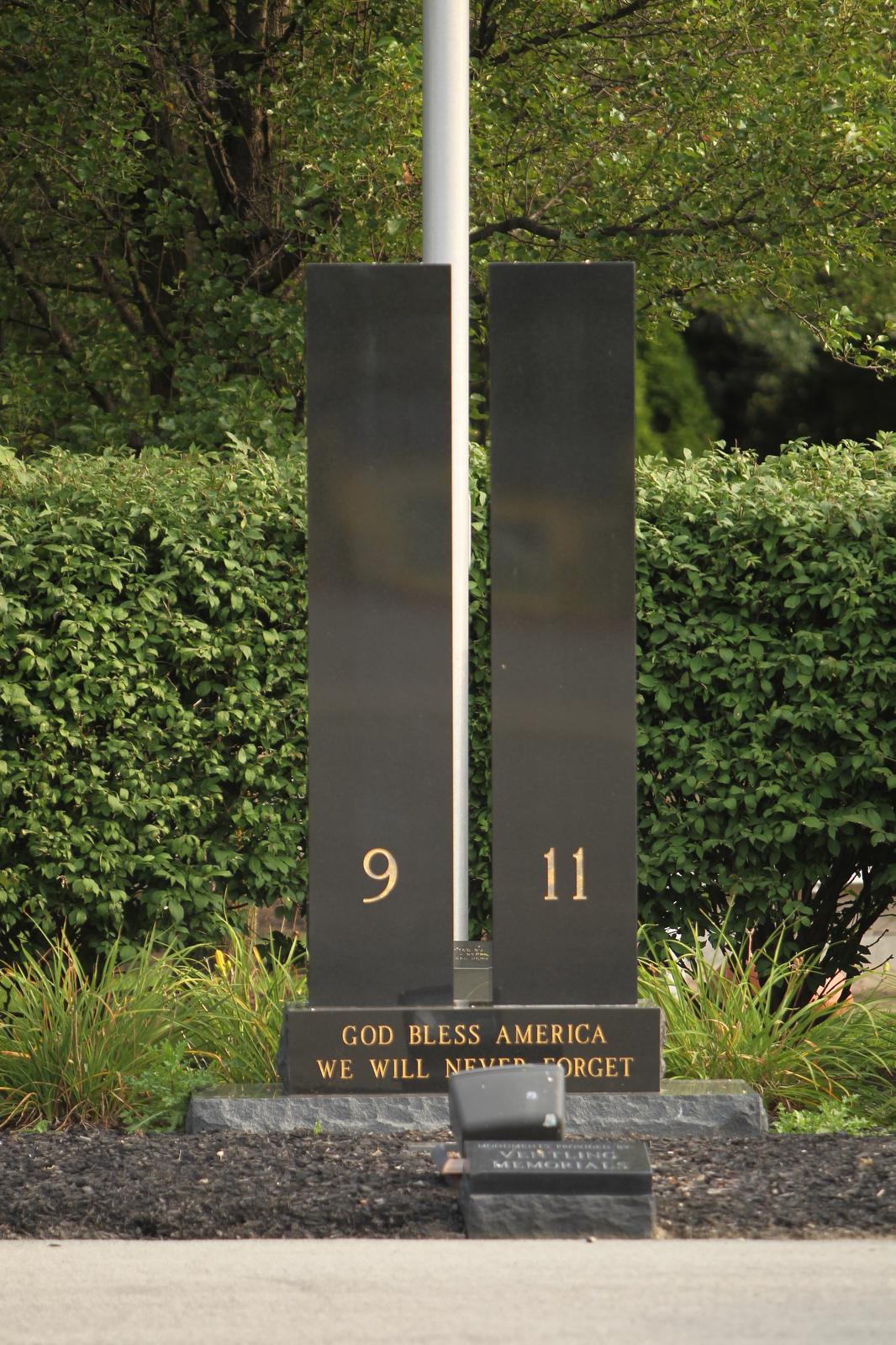
| Empty Sky (Jersey City) | Twin granite walls pointing toward WTC |
| Postcards (Staten Island) | Sculptural wings facing Manhattan |
| 9/11 Memorial (London) | Steel beam resting in Grosvenor Square |
| Memory and Light (Padua) | Glass wall encasing structural beam |
Key Regional Tributes in the United States
- Empty Sky (Jersey City, New Jersey): Situated in Liberty State Park, this state memorial consists of two parallel 30-foot-high granite walls that frame the horizon where the Twin Towers once stood. The interior walls are engraved with the names of 749 New Jersey residents killed on 9/11.
- Postcards (Staten Island, New York): Located along the St. George Esplanade, this memorial features two large fiberglass structures resembling folded letters or postcards. It honors the 274 Staten Island residents killed in the 1993 and 2001 attacks.
- Boston Logan International Airport Memorial (Boston, Massachusetts): Honors the passengers and crew members of American Airlines Flight 11 and United Airlines Flight 175, both of which departed from Logan Airport on the morning of September 11.
Selected International Memorials
- Grosvenor Square 9/11 Memorial (London, United Kingdom): Located near the former U.S. Embassy site, this garden memorial honors the 67 British citizens killed in the attacks, housing a steel beam fragment recovered from the World Trade Center.
- Memory and Light (Padua, Italy): Designed by architect Daniel Libeskind, this tribute incorporates a twisted steel beam from the World Trade Center set within a 17-meter-tall glass structure shaped like an open book.
- Since 9/11 (United Kingdom): An educational charity tribute utilizing a 4-tonne piece of World Trade Center steel installed to promote peace and historical education among students.
Frequently Asked Questions
Do I need tickets to visit the 9/11 Memorial pools in New York City?
No, the outdoor 9/11 Memorial Plaza and its reflecting pools are open to the public free of charge without tickets. However, if you plan to enter the subterranean 9/11 Memorial Museum located beneath the plaza, you must purchase a timed-entry ticket.
Is photography allowed at all 9/11 memorial sites?
Still photography for personal use is generally allowed outdoors at the NYC Memorial Plaza, Flight 93 National Memorial, and Pentagon Memorial park grounds. However, indoor photography inside the 9/11 Museum may have restrictions on specific historical exhibits, and photography facing active security checkpoints or military buildings at the Pentagon is strictly prohibited.
Why are names on the NYC 9/11 Memorial not listed alphabetically?
The names surrounding the twin pools are arranged through "meaningful adjacencies." Rather than alphabetical ordering, names are placed based on victim location, company affiliations, flight numbers, and specific requests from surviving family members who asked for colleagues, friends, or family members to be memorialized side by side.
How much time should I plan for a visit to the Flight 93 National Memorial?
Visitors typically spend between 1.5 to 3 hours exploring the Flight 93 National Memorial. This allows sufficient time to view the exhibits inside the Visitor Center, walk along the path to the Wall of Names, observe the crash site border, and visit the Tower of Voices near the park entrance.
Are pieces of World Trade Center steel installed in other locations?
Yes, the Port Authority of New York and New Jersey operated a program that distributed thousands of pieces of World Trade Center structural steel to fire departments, municipalities, educational institutions, and international organizations. As a result, hundreds of local 9/11 memorials across all 50 U.S. states and dozens of foreign countries incorporate original steel fragments.
Planning Your Visit to a 9/11 Memorial
When arranging a visit to any 9/11 memorial, advance planning ensures a smooth experience while accommodating site-specific regulations.
- Verify Facility Hours: Check the official managing organization's website for seasonal adjustments or special closure dates prior to departure.
- Book Museum Tickets Early: If traveling to New York City, secure timed-entry tickets for the 9/11 Memorial Museum several weeks in advance, particularly during peak travel seasons.
- Review Transportation Options: Assess public transit choices, especially for urban sites like Lower Manhattan and the Pentagon, where personal vehicle parking is limited or restricted.
- Prepare for Outdoor Conditions: The majority of memorial elements—including the twin footprints in NYC, the open-air bench plaza at the Pentagon, and the expansive walkways at Shanksville—are exposed to weather. Bring appropriate attire for seasonal conditions.
- Observe Security Guidelines: Travel light to simplify security screenings at indoor museum facilities and avoid bringing prohibited items near federal property boundaries.