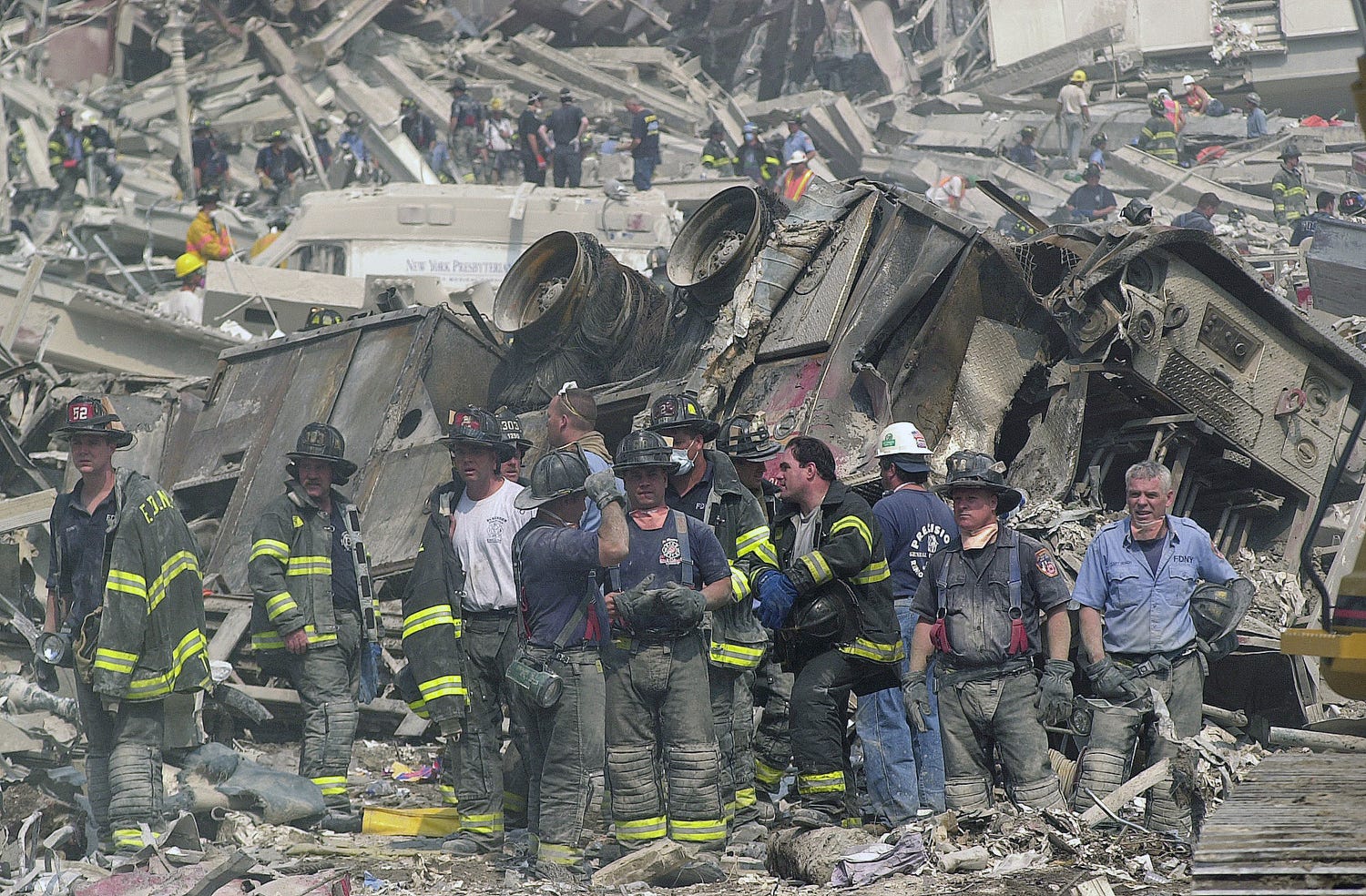
9/11 first responders include police officers, firefighters, paramedics, military personnel, construction workers, sanitation staff, and volunteers who performed rescue, recovery, debris removal, and support operations following the September 11, 2001 terrorist attacks. Eligible responders can access lifetime medical monitoring and treatment through the World Trade Center Health Program and secure financial compensation via the September 11th Victim Compensation Fund.
Understanding 9/11 First Responders: Eligibility and Exposure Zones
The term 9/11 first responders encompasses thousands of men and women who answered the call of duty during and after the attack on the World Trade Center in New York City, the Pentagon in Arlington, Virginia, and the crash site near Shanksville, Pennsylvania. Beyond emergency personnel, this category includes thousands of trade workers, utility crews, and civilian volunteers who worked under hazardous environmental conditions.
Exposure to toxic dust, pulverized concrete, asbestos, heavy metals, volatile organic compounds (VOCs), and burning jet fuel created severe, long-term health risks. Federal law establishes specific geographic exposure zones and minimum timeframes to determine eligibility for federal health and compensation benefits.
9/11 Exposure Zones & Sites:
- NYC Disaster Area
- Lower Manhattan south of Canal Street
- Fresh Kills Landfill (Staten Island)
- NYC Barges, Piers, & Debris Transfer Routes
- OCME (Office of Chief Medical Examiner)
- Pentagon Site
- Crash site & immediate security perimeter
- Shanksville, PA Site
- Flight 93 crash perimeter & recovery zone
Eligible Responder Categories
- Firefighters and Emergency Medical Services (EMS): Active and retired members of the Fire Department of the City of New York (FDNY) and volunteer fire departments who responded to any of the three attack sites.
- Law Enforcement: Officers from the New York City Police Department (NYPD), Port Authority Police Department (PAPD), New York State Police, FBI, U.S. Marshals, and local municipal departments.
- Rescue and Recovery Workers: Heavy equipment operators, ironworkers, carpenters, electricians, labor union members, and sanitation workers involved in clearing Ground Zero, load-out sites, and the Fresh Kills Landfill.
- Volunteers and Support Personnel: Red Cross personnel, Salvation Army volunteers, clergy, and unaffiliated individuals who provided direct support services at official relief sites.
Mandatory Hours and Presence Requirements
To qualify for medical benefits and compensation, responders must prove physical presence within an official exposure zone during the statutory timeframe:
- New York City Exposure Zone: Includes all areas of Manhattan south of Canal Street, the Fresh Kills Landfill, and any barges, piers, or morgue locations used for debris processing or forensic work. Presence must be established between September 11, 2001, and July 31, 2002.
- Pentagon and Shanksville Sites: Responders must have assisted in rescue, recovery, investigation, or site cleanup within the designated crash site perimeters between September 11, 2001, and November 19, 2001.
- Minimum Duration Thresholds: For the NYC site, responders typically must demonstrate presence for at least 4 hours between September 11 and September 14, 2001; at least 24 hours during the month of September 2001; or a cumulative total of at least 80 hours between September 11, 2001, and July 31, 2002. FDNY responders and individuals present during the initial collapse face simplified duration rules.
The World Trade Center Health Program: Free Care and Monitoring
The World Trade Center Health Program (WTCHP) was established by federal law under the James Zadroga 9/11 Health and Compensation Act of 2010 and reauthorized by Congress through 2090. Administered by the National Institute for Occupational Safety and Health (NIOSH) within the Centers for Disease Control and Prevention (CDC), the program provides medical monitoring and treatment for certified conditions resulting from 9/11 exposures.
| WTC Health Program (WTCHP) Overview | |
|---|---|
| Administering Agency | NIOSH / CDC |
| Authorization | James Zadroga 9/11 Health & Compensation Act (thru 2090) |
| Core Services | Annual health evaluations, diagnostics, treatments |
| Out-of-Pocket Cost | $0 (No copays, deductibles, or insurance billing) |
| Primary Requirement | Proof of presence + medical certification of condition |
Scope of Services Provided
The WTCHP is not standard health insurance; it is a specialized healthcare system dedicated solely to 9/11-related health conditions. Key services include:
- Annual Medical Monitoring: Free baseline and ongoing yearly physical and mental health screenings tailored to detect toxic exposure symptoms early.
- Diagnostic Examinations: Full coverage for lab work, diagnostic imaging (CT scans, X-rays), pulmonary function testing (spirometry), and biopsy procedures required to evaluate potential 9/11-related conditions.
- Medical Treatment and Medications: Fully covered medical care, surgical interventions, prescription drugs, and physical therapy for certified conditions, provided without copayments, deductibles, or out-of-pocket expenses.
Care Delivery Options
Responders living in the New York metropolitan area receive care through specialized Clinical Centers of Excellence (CCEs) located at major academic medical institutions (such as Mount Sinai, Stony Brook University, NYU Langone, Northwell Health, and Rutgers). Responders residing outside the NY tri-state region access care nationwide through the National Provider Network (NPN), which coordinates local doctors and facilities across all 50 states.
Covered Medical Conditions for 9/11 Responders
Federal regulations explicitly define which health conditions qualify for certification under the WTCHP. The complete official list is documented in the WTC Health Program Covered Conditions repository and is periodically updated as peer-reviewed scientific studies establish links to 9/11 exposures.
Categories of Covered Conditions
| Aerodigestive Disorders | Cancers | Mental Health |
|---|---|---|
| Chronic Rhinitis/Sinusitis | Prostate | PTSD |
| Asthma & COPD | Breast | Major Depression |
| GERD (Acid Reflux) | Lung & Colon | Generalized Anxiety |
| Sleep Apnea | Melanoma/Skin | Substance Use |
| Pulmonary Fibrosis | Leukemia/Lymphoma |
Aerodigestive and Respiratory Disorders
Inhaling toxic dust clouds caused acute mucosal injury and persistent systemic inflammation. Common covered aerodigestive conditions include:
- Upper Airway Disorders: Chronic rhinitis, chronic sinusitis, nasal polyps, and pharyngitis.
- Lower Airway Disorders: Asthma, reactive airways dysfunction syndrome (RADS), chronic obstructive pulmonary disease (COPD), chronic bronchitis, and interstitial lung diseases (such as pulmonary fibrosis).
- Gastrointestinal Disorders: Gastroesophageal reflux disease (GERD), often co-occurring with chronic cough and upper airway irritation.
- Sleep Disorders: Sleep apnea secondary to chronic upper airway inflammation or structural obstruction caused by toxic exposure.
Cancer Certifications
Over 70 distinct types of cancer are officially covered by the program. Scientific research confirms that exposure to benzene, dioxins, asbestos, polycyclic aromatic hydrocarbons (PAHs), and heavy metals at Ground Zero significantly increased cancer risks. Frequently certified cancers include:
- Solid Tumors: Prostate, breast, lung, colorectal, thyroid, kidney, bladder, and brain cancers.
- Skin Cancers: Melanoma, basal cell carcinoma, and squamous cell carcinoma.
- Blood and Lymphatic Cancers: Non-Hodgkin lymphoma, Hodgkin lymphoma, multiple myeloma, and various forms of leukemia.
Mental Health Conditions
The psychological trauma of responding to mass disaster conditions led to widespread mental health diagnoses. WTCHP covers psychiatric care and psychological counseling for conditions linked to 9/11 service, including:
- Post-Traumatic Stress Disorder (PTSD)
- Major Depressive Disorder
- Generalized Anxiety Disorder and Panic Disorder
- Acute Stress Disorder and Substance Use Disorders secondary to trauma
The September 11th Victim Compensation Fund: Financial Recovery
While the WTCHP handles healthcare delivery, the September 11th Victim Compensation Fund (VCF) provides tax-free financial compensation to eligible responders and survivors. Administered by the Special Master under the U.S. Department of Justice, the VCF was permanently funded and authorized through 2090 under the Never Forget the Heroes, James Zadroga, Ray Pfeifer, and Luis Alvarez Permanent Authorization Act.
| September 11th Victim Compensation Fund (VCF) | |
|---|---|
| Administering Agency | U.S. Department of Justice (DOJ) |
| Primary Purpose | Financial compensation for physical injuries & death |
| Mandatory Prerequisite | Medical certification of physical illness by WTCHP |
| Types of Awards | Non-economic loss, economic loss, wrongful death |
| Tax Status | Tax-free federal compensation |
Prerequisites for Filing a Claim
To receive financial compensation from the VCF, a responder must meet three foundational criteria:
- Proof of Presence: Documented evidence establishing that the individual worked or volunteered within the exposure zone during the statutory dates.
- WTCHP Certification: The responder must have their physical health condition formally certified by the WTC Health Program. The VCF does not evaluate medical causality directly; it relies exclusively on WTCHP certifications for physical injuries and illnesses.
- Lawsuit Dismissal/Release: The applicant must show that any civil lawsuits related to 9/11 injuries were formally dismissed or settled in accordance with federal statutory deadlines.
Compensation Award Categories
VCF awards are divided into two main categories:
- Non-Economic Loss (Pain and Suffering): Calculates financial remedies for physical pain, emotional distress, permanent physical impairment, and loss of enjoyment of life. Statutory caps generally limit non-economic awards for non-cancer conditions to $90,000 and cancer conditions to $250,000, though the Special Master can approve higher amounts for severe, multiple, or extraordinary conditions.
- Economic Loss (Lost Wages and Out-of-Pocket Expenses): Compensates for documented past lost earnings, future loss of earning capacity, pension loss, and unreimbursed medical expenses directly resulting from the certified physical condition.
- Deceased Claims and Wrongful Death: Surviving spouses, dependents, or personal representatives of deceased responders can file claims for financial loss, burial expenses, and non-economic loss suffered due to a 9/11-certified cause of death.
Comparison of Federal 9/11 Assistance Programs
Understanding how the WTCHP and the VCF interact is vital for responders navigating the support ecosystem. While both programs stem from 9/11 relief legislation, they operate independently under different federal departments.
| Feature / Dimension | World Trade Center Health Program (WTCHP) | September 11th Victim Compensation Fund (VCF) |
|---|---|---|
| Primary Administrator | CDC / NIOSH (Dept. of Health & Human Services) | Special Master (U.S. Department of Justice) |
| Primary Function | Medical monitoring, diagnostic testing, and healthcare treatment | Tax-free monetary compensation for physical harm or loss |
| Benefit Type | Direct medical services (no out-of-pocket costs) | Financial payouts (lump sum cash settlements) |
| Covered Health Scope | Physical illnesses AND mental health conditions | Physical illnesses and conditions ONLY (mental health excluded) |
| Required Proof | Presence in zone + clinical diagnosis matching criteria | Presence in zone + official WTCHP physical condition certification |
| Financial Cap | No lifetime dollar limits on medical treatment | Statutory caps on non-economic loss; economic loss based on loss calculation |
| Program Lifetime | Authorized & funded through 2090 | Authorized & funded through 2090 |
Step-by-Step Guide: Filing Your Claim and Securing Certification
Navigating the federal application process requires careful organization of medical records and deployment history. Responders should follow a structured approach to prevent processing delays.
Responder Application Pipeline:
- Step 1: Gather Proof of Presence
- (Employer logs, affidavits, WTC logs, shift records)
- Step 2: Apply to WTC Health Program (WTCHP)
- (Submit application & exposure documentation)
- Step 3: Complete Clinical Evaluation
- (Attend monitoring exam; obtain physical cert)
- Step 4: Register with VCF Online
- (Preserves legal right to file future claims)
- Step 5: Submit Complete VCF Claim Package
- (Provide wage data, medical records, cert proof)
Step 1: Establish Proof of Presence
Before applying to either program, collect official records verifying your physical presence at an exposure site. High-value documentation includes:
- Official agency deployment records, shift logs, or memo book entries.
- Employer pay stubs, worker's compensation records, or overtime slips referencing 9/11 site work.
- Letters from union officials, supervisors, or site commanders detailing specific duties and dates.
- Sworn affidavits from co-workers, supervisors, or non-family eyewitnesses attesting to your presence.
Step 2: Enroll in the WTC Health Program
Submit an application to the WTCHP online or via mail. Include your proof of presence documents. Once accepted as an eligible responder, schedule an initial health evaluation at your nearest Clinical Center of Excellence or through the National Provider Network.
Step 3: Secure Medical Certification
During your clinical evaluation, physicians evaluate whether your current health conditions match the diagnostic criteria established by NIOSH. If a medical condition is found to be linked to your 9/11 exposure, the program issues an official WTCHP Certification. This certification unlocks full medical coverage for that condition.
Step 4: Register with the VCF
Register online at the official VCF website. Registration is not a claim submission; it simply preserves your right to file a claim in the future. All responders who worked in the exposure zone are advised to register immediately, regardless of whether they are currently sick, to protect their legal rights.
Step 5: Submit Your VCF Claim Package
Once you receive a physical health certification from the WTCHP, complete your VCF claim filing. Submit detailed financial documentation, wage history, and disability proof if claiming lost earnings or loss of employment capacity.
Essential Actions for 9/11 First Responders and Families
Whether you are currently experiencing symptoms or remain fully healthy, taking timely administrative actions ensures access to lifetime care and financial security.
- Register Even If Asymptomatic: Cancers and chronic lung diseases associated with 9/11 toxic exposure often have latency periods spanning decades. Registering with the VCF and enrolling in the WTCHP ensures you can access immediate care and compensation if a condition develops later.
- Maintain Independent Records: Keep personal copies of all deployment logs, medical records, diagnostic scans, tax returns, and correspondence with federal agencies in a dedicated personal archive.
- Review Deceased Family Member Eligibility: Spouses, children, or personal representatives of deceased 9/11 responders may be entitled to significant wrongful death compensation and survivor benefits through the VCF if toxic exposure contributed to the individual's death.
- Consult Authorized Specialists: If assistance is needed with complex claims involving wage loss, disability offsets, or deceased responder estates, work with accredited legal representatives or experienced non-profit responder advocate groups.
Frequently Asked Questions About 9/11 First Responder Benefits
What is the deadline to register for the September 11th Victim Compensation Fund?
Under the VCF Permanent Authorization Act, the VCF registration deadline is extended through October 1, 2090. However, specific claim filing deadlines depend on the date a responder's physical condition is certified by the WTCHP or the date of a responder's death. Registering early preserves your right to file at any time in the future.
Can out-of-state responders get treatment through the WTC Health Program?
Yes, out-of-state responders can receive full medical monitoring and care through the WTCHP National Provider Network (NPN). The NPN coordinates local clinics, specialists, and pharmacies across all 50 states, ensuring responders do not need to travel to New York to receive certified care.
Are mental health conditions compensated by the Victim Compensation Fund?
No, the VCF is statutorily limited to paying financial compensation for certified physical health conditions and injuries. While the WTC Health Program fully covers mental health treatment and therapy (such as for PTSD or depression), the VCF cannot issue financial monetary awards for standalone mental health claims.
What if an employer no longer has records proving my 9/11 service?
If official employer records are unavailable, applicants can submit secondary evidence. This includes contemporaneous photographs, personal memo books, transit receipts, medical records from site triage centers, or sworn third-party affidavits from supervisors, colleagues, or witnesses who can confirm your presence in the exposure zone.
Does receiving VCF compensation affect social security or pension benefits?
VCF compensation awards are tax-free under federal law. However, calculating economic loss awards involves reviewing collateral source offsets, such as disability pensions or Social Security Disability Insurance (SSDI) payments received for the same certified condition. The VCF adjustments ensure individuals are compensated fairly without double recovery.
Recommended Next Actions for Responders
If you served as a responder or cleanup worker at any 9/11 exposure site, take these concrete steps to protect your health and legal rights:
- Enroll in the WTCHP: Request an initial monitoring examination through the CDC WTC Health Program to establish a health baseline.
- Preserve Your Rights with the VCF: Create an account and register your name with the September 11th Victim Compensation Fund.
- Compile Your Documentation: Organize employer records, union logs, and sworn affidavits in a secure digital or physical folder.
- Schedule Annual Screenings: Attend yearly monitoring appointments regularly, as early detection of toxic exposure conditions significantly improves treatment outcomes.