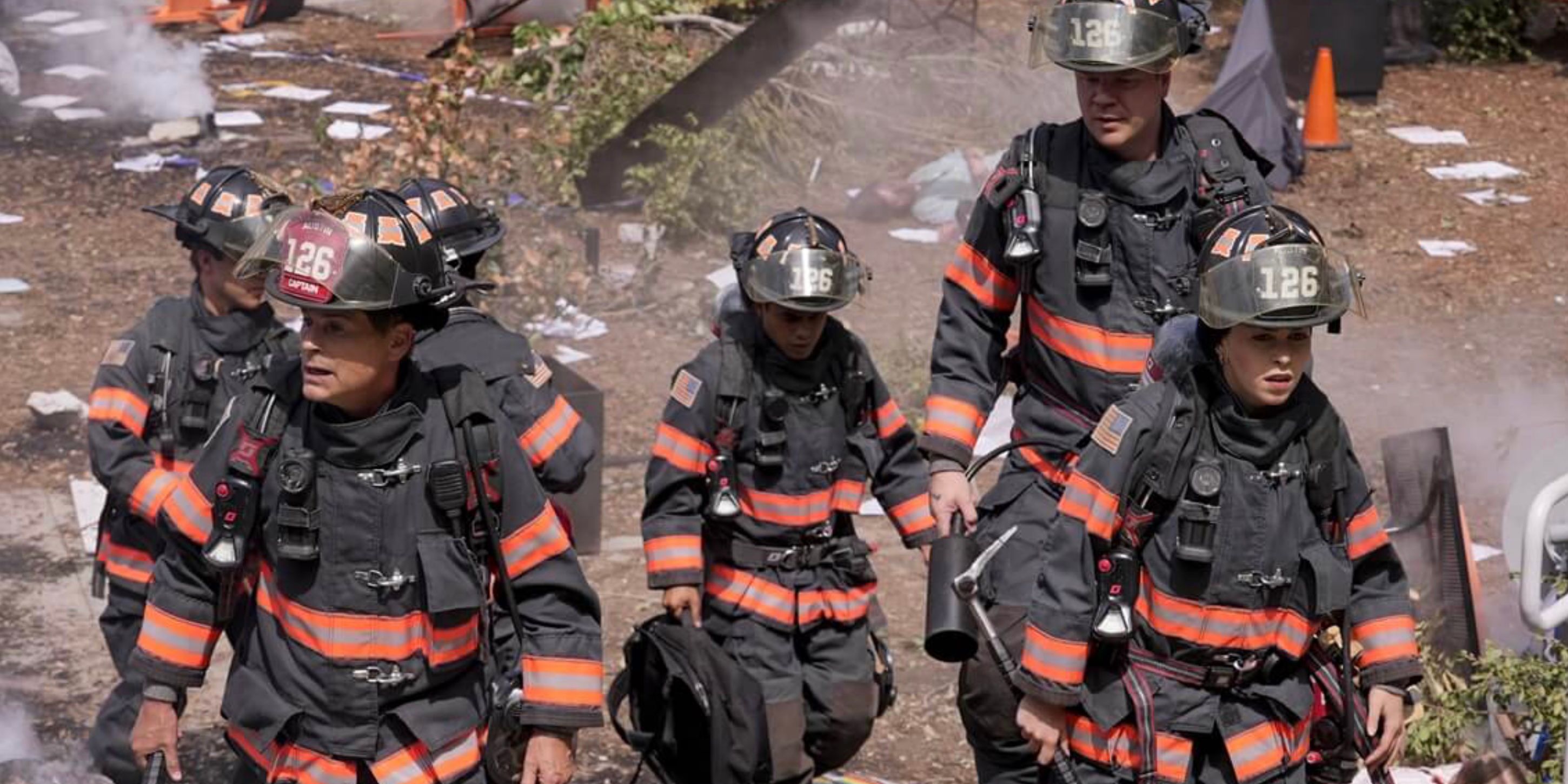
9-1-1: Lone Star is an American procedural television drama that follows New York firefighter Captain Owen Strand as he relocates to Austin, Texas, to rebuild a firehouse devastated by a tragedy. The series is funded through network license fees paid by the Fox Broadcasting Company to production studio 20th Television, supplemented by California state film tax credits, international distribution, and subscription video-on-demand (SVOD) streaming rights.
What 9-1-1: Lone Star Is About: Core Premise and Narrative Architecture
Created by Ryan Murphy, Brad Falchuk, and Tim Minear, 9-1-1: Lone Star serves as a tactical expansion of the original 9-1-1 franchise. The series shifts the operational lens from Los Angeles to Austin, Texas, exploring the unique environmental, social, and logistical challenges faced by first responders in the Lone Star State.
The narrative catalyst centers on a catastrophic explosion at a fertilizer plant in Austin, which results in the tragic deaths of nearly the entire crew of Firehouse Station 126. The sole survivor of the operational disaster is firefighter Judd Ryder (played by Jim Parrack). To rebuild the station from the ground up, the Austin Fire Department hires Captain Owen Strand (Rob Lowe), a veteran New York City firefighter who was the sole survivor of his Manhattan station on September 11, 2001.
- Station 126 Tragedy (Fertilizer Plant Explosion)
- Recruitment of Capt. Owen Strand (FDNY Veteran)
- Rebuilding Firehouse 126 (Diverse Specialist Team)
- Integrated Response Operations (Fire, EMS, Police)
Owen brings his son, T.K. Strand (Ronen Rubinstein), a firefighter and recovering addict, with him to Texas. Tasked with assembling a modern, highly specialized crew, Owen intentionally recruits firefighters from across the country who bring unique skill sets, backgrounds, and perspectives to the job.
The series balances high-octane emergency interventions—such as flash floods, severe ice storms, wildfires, and industrial accidents—with complex personal storylines. Key thematic elements include:
- Occupational Trauma and Survival: Examining the physical and psychological toll on first responders, including post-traumatic stress disorder (PTSD), occupational cancer, and survivor's guilt.
- Inclusion and Identity: Presenting a ground-breaking ensemble cast that highlights underrepresented groups within traditional emergency services, including transgender, Muslim, and LGBTQ+ responders.
- Family and Community: Exploring how an operational team forms a surrogate family to navigate both workplace life-or-death decisions and complex home dynamics.
Character Ecosystem and Key Operational Roles
The dramatic tension of 9-1-1: Lone Star relies on an integrated emergency response ecosystem comprising the Austin Fire Department (AFD), Emergency Medical Services (EMS), and the Austin Police Department (APD).
- Station 126 Operations
- Fire Department
- Owen Strand
- Judd Ryder
- Marjan Marwani
- Paul Strickland
- Mateo Chavez
- EMS Division
- Tommy Vega
- Nancy Gillian
- Law Enforcement
- Carlos Reyes
- Fire Department
Fire Department Crew (Engine 126)
- Captain Owen Strand (Rob Lowe): The tactical leader of Station 126. Beyond managing high-stakes rescues, his personal arc deals with his battle against lung cancer stemming from his time as a 9/11 first responder, as well as maintaining his demanding health regimen.
- Judd Ryder (Jim Parrack): The original Austin firefighter who survived the initial 126 disaster. He provides essential local context, cultural balance, and seasoned operational experience to the newly formed team.
- T.K. Strand (Ronen Rubinstein): Owen's son, who transitions during the series from a firefighter to a dedicated paramedic, working through substance abuse recovery and navigating his relationship with police officer Carlos Reyes.
- Marjan Marwani (Natacha Karam): A devout Muslim firefighter and adrenaline enthusiast whose digital presence and technical expertise often bring public visibility to the firehouse.
- Paul Strickland (Brian Michael Smith): A transgender male firefighter known for his exceptional keen eye for detail, diagnostic intuition, and structural analysis during extraction operations.
- Mateo Chavez (Julian Works): An eager, DACA recipient firefighter who overcomes severe learning obstacles like dyslexia to pass his academy exams and prove his tactical worth.
Emergency Medical Services (EMS) & Law Enforcement
- Captain Tommy Vega (Gina Torres): A veteran EMS captain who returns to the field after years away to support her family financially. She leads the paramedic team at 126 with steady tactical authority and profound empathy.
- Nancy Gillian (Brianna Baker): A reliable, quick-thinking paramedic who forms an integral part of Tommy Vega’s front-line medical team.
- Carlos Reyes (Rafael Silva): An Austin Police Department officer—and later detective—whose work frequently intersects with Station 126's emergency calls, providing the series with a key law enforcement perspective.
How 9-1-1: Lone Star Is Funded: The Financial Engine Behind the Drama
Understanding how 9-1-1: Lone Star is funded requires examining the modern business model of prime-time network television, studio production licensing, and state incentive programs. Unlike independent films financed by private equity or pre-sales, network procedural dramas rely on a complex ecosystem combining network license fees, studio deficit financing, state production tax credits, and post-broadcast distribution windows.
- FINANCIAL FLOW DIAGRAM
- Fox Broadcasting (Network)
- License Fee per Episode paid to 20th Television (Disney Studio)
- Broadcast Rights received from 20th Television (Disney Studio)
- 20th Television (Disney Studio)
- Production Budget (Deficit Finance)
- CA Tax Incentives (Film Commission)
- Downstream SVOD (Hulu / Disney+)
- Fox Broadcasting (Network)
1. Studio Ownership vs. Network Licensing (The Disney-Fox Split)
The corporate structure behind 9-1-1: Lone Star underwent a unique shift during the show's development.
Historically, television networks and their sister production studios belonged to the same parent company. However, following the 2019 acquisition of 21st Century Fox assets by The Walt Disney Company, the production studio—20th Television—became part of Disney Television Studios, while the Fox Broadcasting Company remained an independent broadcast network under the newly formed Fox Corporation.
Because Fox Network no longer owned 20th Television, a license fee model was required:
- Licensing Fee: Fox Corporation paid an episode license fee to Disney’s 20th Television for the exclusive primary broadcast rights to air 9-1-1: Lone Star in the United States.
- Production Costs: Premium procedural dramas featuring extensive visual effects, large ensemble casts, and location stunts often cost between $4 million and $6 million per episode to produce.
- Deficit Financing: The license fee paid by the network rarely covers 100% of the initial production cost for high-end procedural dramas. The producing studio (20th Television/Disney) absorbs the remaining cost—known as deficit financing—with the explicit strategy of recouping those losses and generating profits through secondary distribution channels.
2. State Production Incentives and Filming Locations
Although 9-1-1: Lone Star is set in Austin, Texas, the vast majority of the series is actually filmed in and around Los Angeles, California, with secondary second-unit photography captured in Texas for establishing shots.
To manage production costs, the series relies heavily on state tax incentives provided through the California Film & Television Tax Credit Program, administered by the California Film Commission.
- Qualified Expenditure Rebates: California offers tax credits ranging from 20% to 25% on qualified expenditures, such as local crew wages, equipment rentals, and studio soundstage usage.
- Location Substitution: By using backlot sets, local California ranches (such as Blue Cloud Movie Ranch), and Los Angeles suburbia to double for Travis County, Texas, the production team minimizes travel costs, per diem allowances, and remote operational logistics while benefiting from tax offsets.
3. Downstream Revenue: Streaming, International, and Syndication
To offset the initial production deficit, 20th Television monetizes 9-1-1: Lone Star across multiple domestic and international platforms:
- SVOD (Subscription Video on Demand): In the United States, next-day streaming rights were secured by Hulu (controlled by Disney). Globally, the show streams under the Star banner on Disney+ in international territories. Streaming platforms pay licensing internal transfers or direct content fees to the production studio.
- International Broadcast Sales: 20th Television distribution teams sell linear broadcast rights to international networks across Europe, Latin America, and Asia-Pacific regions.
- Traditional Syndication & Digital VOD: The studio earns secondary income from electronic sell-through (EST) platforms like Apple TV, Amazon Prime Video, and Google TV, as well as off-network cable syndication deals.
Comparative Overview: Narrative Focus vs. Financial Structure
| Category Dimension | Narrative & Storytelling Aspects | Financial & Business Model Aspects |
|---|---|---|
| Primary Objective | Depict first-responder challenges, firefighter drama, and personal growth. | Maximize viewership ratings to sell high-value broadcast advertising slots. |
| Lead Entities | Firehouse 126, Austin EMS, and Austin Police Department. | 20th Television (Disney Studio) & Fox Broadcasting (Network). |
| Geographic Focus | Set in Austin, Travis County, Texas. | Filmed primarily in Los Angeles, CA, utilizing California state film tax credits. |
| Major Expense / Investment | Stunt coordination, CGI fire/weather effects, custom physical props. | Cast talent salaries (e.g., Rob Lowe, Gina Torres), crew wages, studio lease fees. |
| Monetization Drivers | High audience engagement, fan retention, social media virality. | Network license fees, SVOD streaming deals (Hulu/Disney+), international syndication. |
Production Challenges and Budgetary Impact on Show Lifespan
High-concept procedural television shows face unique financial pressures as they progress through multiple seasons. The economic realities of producing 9-1-1: Lone Star directly influenced operational decisions made by the studio and network over time.
Cast Compensation & Talent Escalators
In broadcast network television, standard talent contracts typically cover an initial six-year term with automatic annual pay escalations.
With high-profile leads like Rob Lowe (who also serves as an executive producer) and Gina Torres, talent costs represent a significant percentage of the overall line-item budget. As a show matures into later seasons, maintaining cast salaries alongside complex visual-effects budgets places upward pressure on per-episode expenses.
Structural Costs of Practical and Visual Effects
Unlike standard workplace comedies or legal dramas set inside courtroom soundstages, first-responder procedurals require extensive spending on safety and special effects:
- Practical Pyrotechnics: Controlled fire sequences, vehicle extrications, and collapsed building sets require licensed pyrotechnicians, specialized safety officers, and heavy machinery.
- Computer-Generated Imagery (CGI): Major disaster arcs—such as volcanic fissures, ice storms, and dust storms—require extensive post-production visual effects work, which carries high vendor costs per episode.
- On-Set Medical & Fire Advisors: To maintain realistic tactical procedures, the production hires retired firefighters, paramedics, and medical consultants to oversee on-set operations.
Per-Episode Budget Allocations (Estimated Distribution)
| Budget Category | Percentage Share |
|---|---|
| Cast & Executive Talent | 30-35% |
| VFX, Practical Effects & Stunts | 20-25% |
| Below-the-Line Crew & Technical Equipment | 25-30% |
| Post-Production, Editing & Score | 10-15% |
Network-Studio Friction in Third-Party Models
Because Fox Broadcasting does not own 20th Television, Fox does not share in the lucrative long-term off-network syndication or international streaming profits generated by Disney.
As a result, when license fees escalate in later seasons, non-owning networks often struggle to justify paying higher fees if live broadcast ad revenues decline. This fundamental financial dynamic is a primary reason third-party network dramas face rigorous contract renegotiations after their fourth or fifth seasons.
Frequently Asked Questions
Is 9-1-1: Lone Star a direct spinoff of the original 9-1-1 series?
Yes. 9-1-1: Lone Star is a direct spinoff created by the same core creative team (Ryan Murphy, Brad Falchuk, and Tim Minear). While set in Texas instead of Los Angeles, it exists within the same fictional universe, allowing for narrative crossover episodes featuring characters from both shows.
Why was 9-1-1: Lone Star filmed in California instead of Texas?
The decision to film in California was primarily driven by established studio infrastructure, access to specialized technical crews, and regional production incentives. Filming in Los Angeles allowed production company 20th Television to utilize existing soundstage facilities and apply for the California Film & Television Tax Credit, while sending second-unit crews to Austin for exterior B-roll footage.
Who owns the intellectual property and master rights to 9-1-1: Lone Star?
The series rights are owned by 20th Television, a division of Disney Television Studios. Although the show originally premiered on the Fox Broadcasting Company network, Fox licensed the broadcast rights, while Disney retained ownership of the underlying intellectual property, international distribution rights, and streaming catalog.
How do emergency visual effects affect the series' budget?
Emergency procedural scenes require dedicated visual effects budgets for elements such as smoke, flame augmentation, weather hazards, and structural collapses. CGI work, combined with live-action stunt teams and dedicated safety personnel, makes procedurals like 9-1-1: Lone Star significantly more expensive to produce per hour than standard studio-bound dramas.
Where can viewers stream 9-1-1: Lone Star?
In the United States, past episodes and seasons of 9-1-1: Lone Star are available for streaming on Hulu, alongside digital purchase platforms like Apple TV and Amazon Prime Video. Internationally, the series is distributed primarily via Disney+ under the Star content hub.
Key Takeaways for Media Analysts and Viewers
For readers analyzing the business and narrative framework of modern television, 9-1-1: Lone Star illustrates key industry trends:
- Evaluate Narrative Structure: Recognize how the show combines traditional procedural emergency-of-the-week formats with overarching serial drama elements focused on trauma, recovery, and inclusion.
- Understand Third-Party Network Economics: Note how the division between broadcast networks (Fox) and independent studios (Disney's 20th Television) impacts how shows are licensed, funded, and ultimately renewed or concluded.
- Recognize the Role of Filming Incentives: State film tax credits play a crucial role in determining where network television shows are physically produced, often resulting in California doubling for locations like Texas.
- Track Multi-Platform Monetization: Broadcast television shows rely on streaming services (Hulu/Disney+) and international licensing to offset up-front production deficits incurred during network broadcast runs.