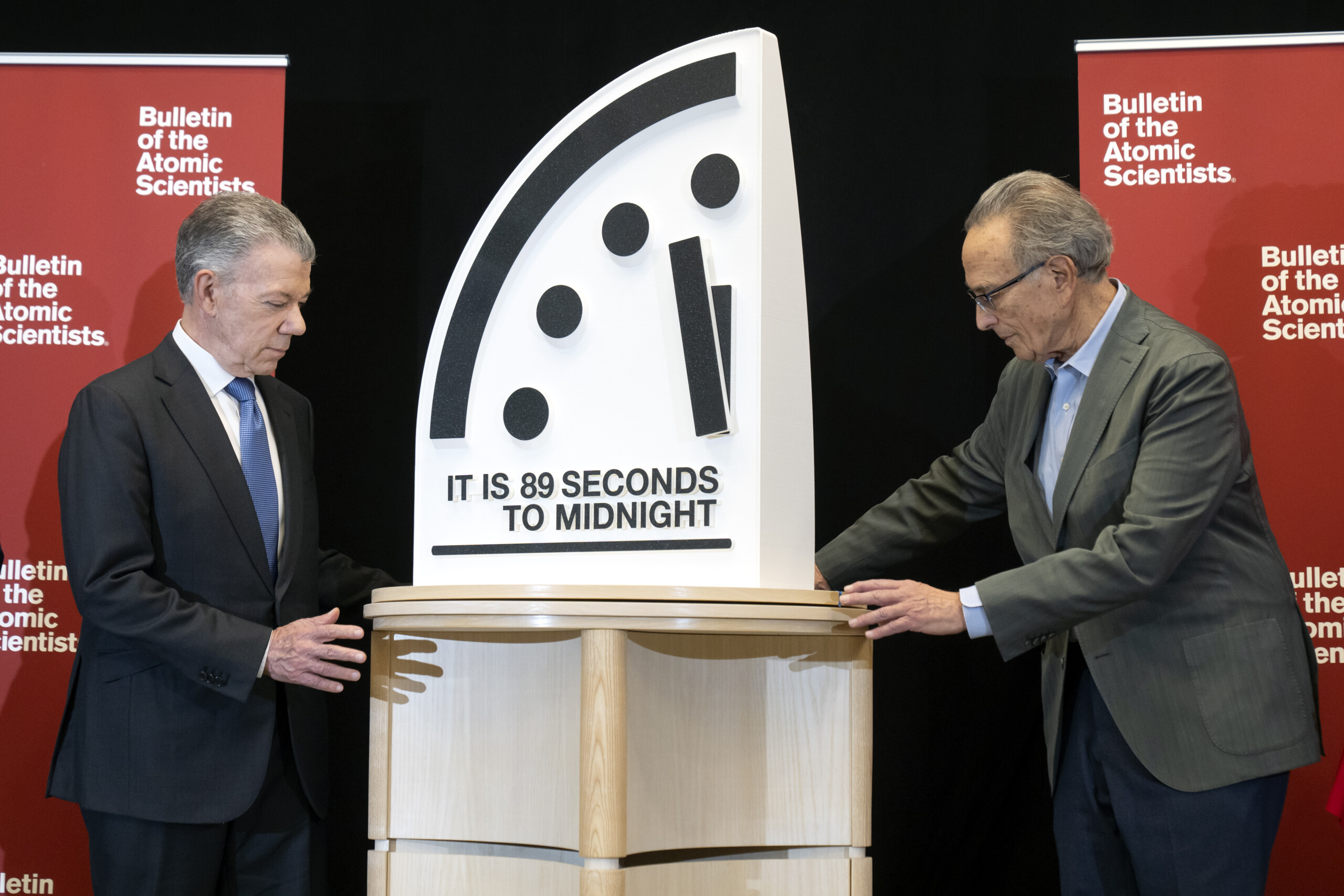
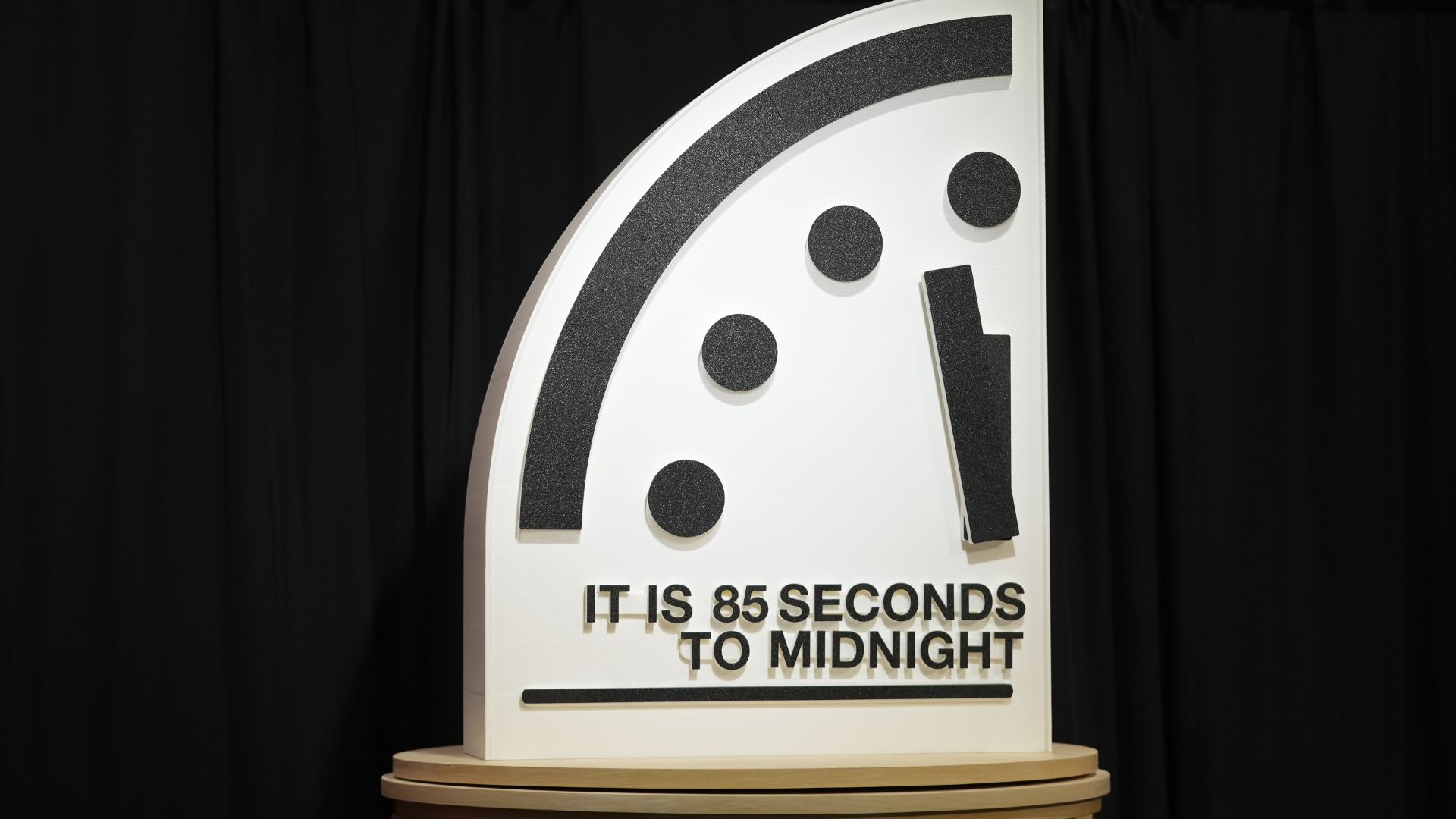
The phrase "85 seconds to midnight" represents a severe warning of imminent existential catastrophe on the Doomsday Clock. Maintained by the Bulletin of the Atomic Scientists, midnight symbolizes civilizational collapse or global human extinction, while the seconds remaining measure humanity's proximity to self-destruction from nuclear weapons, climate change, biological threats, and disruptive technologies.
Understanding the Doomsday Clock: Origin and Core Symbolism
The Doomsday Clock is a world-renowned visual design and risk assessment framework created in 1947. Designed by artist Martyl Langsdorf—wife of Manhattan Project physicist Alexander Langsdorf—the clock originally appeared on the cover of the Bulletin of the Atomic Scientists magazine. It was established by scientists who had participated in the development of the first nuclear weapons and subsequently recognized the urgent need to inform the public and policy leaders about the catastrophic potential of atomic energy.
At its core, the Doomsday Clock is a metaphor for human vulnerability. "Midnight" on the clock does not denote a specific hour of the day or an isolated tactical emergency; rather, it represents civilizational collapse—a point of complete, irreversible global disaster from which human society cannot recover.
The minutes and seconds remaining before midnight serve as a normalized index of existential risk. The distance from midnight fluctuates based on global political stability, technological developments, international treaties, and collective environmental stewardship. When international agreements are signed and nuclear arsenals are reduced, the minute hand moves backward, away from midnight. Conversely, when diplomatic communications break down, arms races intensify, or planetary environmental boundaries are breached, the hand advances closer to midnight.
Historically, the clock's time was measured exclusively in minutes. However, in 2020, the Bulletin shifted the unit of measurement from minutes to seconds, setting the clock at 100 seconds to midnight. This structural change signaled that humanity had entered an era where threats move faster, interact more unpredictably, and allow leaders significantly less time to react during a crisis.
What "85 Seconds to Midnight" Means in Modern Risk Assessment
A setting of 85 seconds to midnight—or any time within the sub-90-second realm—signals an extraordinary level of systemic global vulnerability. While the official setting was placed at 90 seconds to midnight in early 2023 and maintained through 2024, public discussion, academic risk models, and policy analysis frequently examine hypothetical or projected shifts down to 85 seconds to evaluate the impact of escalating multi-domain crises.
- SECURE REGIME
- 17 Min to Midnight (1991) (Cold War Ends)
- CRITICAL DANGER REGIME
- 2 Min (1953/2018) (H-Bomb Tests)
- 90s (2023-2024) (War & AI Risk)
- 85s / Midnight (Existential Threat)
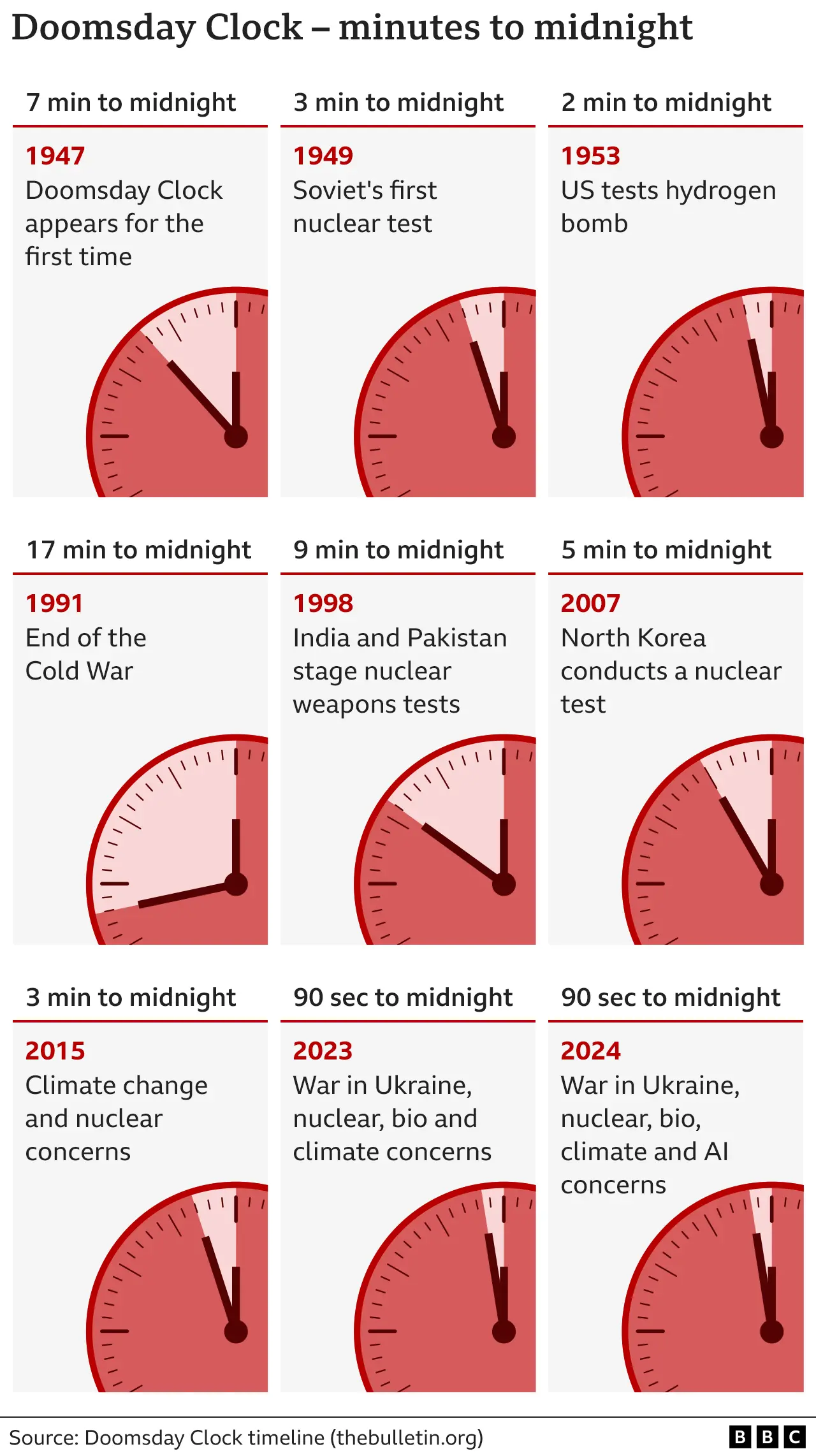
To understand what 85 seconds to midnight signifies, it is helpful to contrast it with historical baselines:
- 17 Minutes to Midnight (1991): The furthest the clock's hands have ever been from midnight occurred following the end of the Cold War and the signing of the Strategic Arms Reduction Treaty (START) between the United States and the Soviet Union.
- 2 Minutes to Midnight (1953 and 2018): In 1953, 2 minutes (120 seconds) reflected the atmospheric testing of hydrogen bombs by both the U.S. and the USSR. In 2018, the clock returned to 2 minutes due to worsening nuclear rhetoric and international inaction on carbon emissions.
- 90 Seconds to Midnight (2023–2024): The closest official setting in history, driven by Russia’s invasion of Ukraine, nuclear posture escalation, record global temperatures, and un-regulated AI development.
- 85 Seconds to Midnight (Conceptual / Incremental Shift): Represents a further contraction of humanity's margin for error. A move to 85 seconds indicates that existing international safeguards, diplomatic channels, and environmental limits are deteriorating faster than governance systems can adapt.
Measuring existential danger in seconds rather than minutes reflects a fundamental change in how global threats interact. During the 20th century, existential risk was primarily single-domain: nuclear conflict between two superpower blocs. In the 21st century, threats are multi-domain and interconnected. A crisis in energy infrastructure caused by extreme weather can escalate geopolitical tensions, which in turn can trigger cyber warfare against early-warning systems, increasing the likelihood of nuclear miscalculation.
The Four Key Drivers Behind the Doomsday Clock's Hands
The Science and Security Board of the Bulletin evaluates four primary threat vectors when determining the position of the clock's hands. An 85-second threshold reflects simultaneous breakdown across multiple vectors:
- EXISTENTIAL RISK THREAT VECTORS
- Nuclear Risk & Conflict
- Climate Change & Degradation
- Bio-Threats & Pandemics
- Disruptive Tech & AI Systems
1. Nuclear Proliferation and Geopolitical Conflict
Nuclear risk remains the primary structural component of the Doomsday Clock. The threat is driven not only by total stockpile sizes, but by the collapse of foundational arms control frameworks. The expiration or suspension of landmark agreements—such as the Intermediate-Range Nuclear Forces (INF) Treaty and key provisions of the New START treaty—has dismantled long-standing verification mechanisms. Furthermore, modernization programs across nuclear-armed nations introduce hypersonic delivery vehicles, low-yield tactical nuclear weapons, and automated command networks, all of which reduce decision-making windows during a crisis.
2. Climate Change and Planetary Tipping Points
Climate change acts as a risk multiplier across all global domains. The Bulletin incorporates climate metrics such as global average surface temperatures, greenhouse gas concentrations, ocean acidification, and the loss of polar ice sheets. Beyond direct environmental impacts, climate change destabilizes agricultural supply chains, drives mass migration, and exacerbates resource competition over fresh water and arable land. When climate mitigation pledges fall short of targets set by the Intergovernmental Panel on Climate Change (IPCC), the hands of the clock advance.
3. Biological Threats and Biosafety Safeguards
Biological risks encompass both naturally occurring pandemics and human-engineered biological threats. Rapid advances in synthetic biology, gene editing, and gain-of-function research have lowered the technical barrier to synthesizing lethal pathogens. Combined with inadequate global biosafety protocols and vulnerable public health infrastructures, biological hazards pose a direct threat to civilizational stability.
4. Disruptive Technologies and Information Ecosystems
In recent years, disruptive technology has emerged as a distinct risk category. This includes:
- Generative and Autonomous AI: Artificial intelligence systems integrated into intelligence gathering, target selection, or critical infrastructure management introduce risks of algorithmic error and unintended escalation.
- Information Deterioration: The proliferation of deepfakes, automated disinformation campaigns, and the decline of authoritative information sources weaken democratic governance and undermine the public trust required to build consensus on global threats.
- Cyber Warfare: Attacks on satellite communication systems, power grids, and strategic command centers can trigger rapid, accidental escalation between armed states.
How the Doomsday Clock Time Is Determined and Announced
The setting of the Doomsday Clock is not a computerized calculation or a real-time defense posture indicator. Instead, it is a deliberate judgment rendered by world-leading experts through a formal review process.
The Decision-Making Body
The time is set by the Bulletin’s Science and Security Board (SASB), a panel composed of theoretical physicists, nuclear scientists, climate specialists, cybersecurity researchers, and international security policy experts. The SASB acts in close consultation with the Bulletin’s Board of Sponsors, which historically includes dozens of Nobel Laureates.
The Evaluation Methodology
The board meets formally twice a year to review quantitative data and qualitative developments across global security metrics. Their evaluation considers:
- Status of international arms control treaties and nuclear posture statements.
- Annual global greenhouse gas emission levels and extreme climate event data.
- Epidemiological developments and international compliance with the Biological Weapons Convention.
- Developments in emerging technologies, autonomous systems, and cyber warfare capabilities.
- The operational health of international diplomatic institutions, such as the United Nations Security Council.
Public Announcement Protocol
The updated setting of the Doomsday Clock is announced annually in late January during a live news conference, typically hosted at the National Press Club in Washington, D.C. The announcement includes a detailed formal statement explaining the precise reasoning behind moving, holding, or turning back the clock's hands.
Historical Timeline of Key Doomsday Clock Settings
The table below illustrates major shifts in the Doomsday Clock's setting from its creation through recent years, detailing the political and environmental contexts behind each movement:
| Year | Setting | Time Shift | Key Geopolitical & Environmental Drivers |
|---|---|---|---|
| 1947 | 7 Minutes to Midnight | Baseline | Initial setting following the atomic bombings of Hiroshima and Nagasaki and the start of the nuclear arms race. |
| 1953 | 2 Minutes to Midnight | -5 Minutes | United States and Soviet Union test hydrogen bombs within nine months of each other, marking the peak Cold War peril of the era. |
| 1963 | 12 Minutes to Midnight | +3 Minutes | Signing of the Partial Test Ban Treaty, limiting atmospheric nuclear testing and establishing early diplomatic guardrails. |
| 1972 | 12 Minutes to Midnight | +2 Minutes | Strategic Arms Limitation Talks (SALT I) and the Anti-Ballistic Missile (ABM) Treaty signed by the U.S. and USSR. |
| 1984 | 3 Minutes to Midnight | -1 Minute | Deterioration of U.S.-Soviet relations, Soviet invasion of Afghanistan, and acceleration of the strategic defense initiative. |
| 1991 | 17 Minutes to Midnight | +7 Minutes | End of the Cold War, collapse of the Soviet Union, and signing of the Strategic Arms Reduction Treaty (START I). |
| 2007 | 5 Minutes to Midnight | -2 Minutes | Climate change is officially added to nuclear threats as an explicit existential risk vector considered by the Bulletin. |
| 2017 | 2.5 Minutes to Midnight | -30 Seconds | Rise of unchecked nationalism, nuclear non-proliferation threats, and public questioning of scientific consensus on climate change. |
| 2020 | 100 Seconds to Midnight | -20 Seconds | Clock moves to seconds for the first time; citation of arms control collapse, severe climate inaction, and cyber-disinformation networks. |
| 2023 | 90 Seconds to Midnight | -10 Seconds | War in Ukraine, nuclear signaling, climate extremes, and biological vulnerabilities push the clock to its closest setting ever. |
| 2024 | 90 Seconds to Midnight | No Change | Continued high-level risk across nuclear warfare, accelerated global warming, and unregulated advances in generative AI. |
| Ref. | 85 Seconds to Midnight | Conceptual | Represents heightened multi-domain risks where systemic governance failures further compress crisis reaction times. |
Comparing Existential Risk Indicators: Doomsday Clock vs. Tactical Readiness Systems
A common source of confusion is the distinction between the Doomsday Clock and tactical military readiness indicators, such as the U.S. military’s DEFCON system. While both evaluate security conditions, their purpose, scope, and operational methodologies differ entirely.
| DOOMSDAY CLOCK | DEFCON SYSTEM |
|---|---|
| • Focus: Global Civilizational Risk | • Focus: U.S. Military Operational Readiness |
| • Timeframe: Strategic / Long-Term | • Timeframe: Tactical / Immediate Real-Time |
| • Scope: Multidisciplinary Risk | • Scope: Military Force Posture |
| • Maintained by: Academic Panel | • Maintained by: U.S. Department of Defense |
Key Differences
- Scope of Risk: The Doomsday Clock measures broad, systemic, civilizational risks—including ecological stability and technological safety—across all nations. DEFCON (Defense Readiness Condition) strictly measures the operational posture of the United States Armed Forces.
- Time Horizon: The Doomsday Clock operates on a strategic, long-term timeline, reflecting structural security conditions accumulated over months and years. DEFCON operates on a tactical, real-time basis, shifting rapidly in response to immediate military intelligence or active conflicts.
- Public Accessibility: The Doomsday Clock is an open science-communication tool designed to foster public debate and civic engagement. DEFCON levels are classified military operational statuses managed by the U.S. Department of Defense.
International Policy Frameworks Required to Turn Back the Hands
The Doomsday Clock is not designed to induce fatalism; its ultimate purpose is to catalyze actionable policy solutions. Turning the clock’s hands back requires concrete steps across international governance, technology management, and climate action:
Rebuilding Strategic Arms Control
- Bilateral and Multilateral Treaties: Nuclear powers must re-engage in formal arms control negotiations to replace expiring agreements, establish clear caps on warhead deployment, and prohibit hypersonic delivery platforms.
- De-Escalation Protocols: Re-establishing direct communication channels ("hotlines") between military commands reduces the risk of accidental launch triggered by radar misinterpretation or cyber interference.
Accelerating Decarbonization and Planetary Guardrails
- Enforcing Paris Agreement Targets: States must accelerate transition timelines away from fossil fuels, meeting net-zero carbon requirements to limit global warming to 1.5°C above pre-industrial levels as outlined by international climate bodies.
- Loss and Damage Funding: Supporting developing nations through climate adaptation funding builds international stability and prevents resource conflicts.
Establishing Guardrails for Emerging Technologies
- AI Safety Governance: International bodies must implement binding standards for frontier artificial intelligence models, prohibiting fully autonomous lethal weapons systems (LAWS) and requiring human oversight in nuclear command pathways.
- Biosecurity Monitoring: Strengthening enforcement of the Biological Weapons Convention (BWC) and updating global laboratory safety standards prevents the accidental release or intentional misuse of synthetic pathogens.
How Individuals and Institutions Can Respond to Global Risk Signals
While the Doomsday Clock evaluates global governance, individual citizens, educational institutions, and civic organizations play an important role in driving systemic change.
To turn the warning of the Doomsday Clock into actionable progress:
- Engage in Civic Advocacy: Support legislative measures that promote international diplomacy, climate action, and biosecurity funding. Public pressure remains a key catalyst for policy changes.
- Promote Information Literacy: Counter disinformation by relying on verified scientific literature, peer-reviewed studies, and primary source documents from recognized international institutions.
- Implement Institutional Climate Adaptation: Organizations can lower their operational carbon footprint, adopt sustainable procurement strategies, and integrate climate risk management into institutional planning.
- Support Scientific and Ethical Tech Oversight: Technical professionals working in software, AI, and biotechnology should adhere to strict ethical codes, advocate for responsible safety testing, and support public transparency in research.
Frequently Asked Questions
Is 85 seconds to midnight an official setting of the Doomsday Clock?
The official setting of the Doomsday Clock was placed at 90 seconds to midnight in 2023 and retained through 2024. References to "85 seconds to midnight" reflect public and analytical discussions surrounding potential future shifts, modeling how further geopolitical tension or climate degradation compresses the clock's margin of safety.
Does the Doomsday Clock move automatically during a crisis?
No. The clock does not move automatically or in real time during breaking news events. The hands are set deliberately by the Science and Security Board of the Bulletin of the Atomic Scientists following a comprehensive, bi-annual evaluation of global strategic trends.
Has the Doomsday Clock ever moved backward?
Yes. The clock's hands have moved backward eight times in its history. The largest backward shift occurred in 1991, when the clock was moved to 17 minutes to midnight following the end of the Cold War and the execution of major nuclear reduction treaties.
Who founded the Bulletin of the Atomic Scientists?
The Bulletin of the Atomic Scientists was founded in 1945 by Manhattan Project researchers—including Albert Einstein, J. Robert Oppenheimer, and Eugene Rabinowitch—who sought to address the public safety and policy implications of atomic technology.
What happens if the Doomsday Clock reaches midnight?
Midnight represents a hypothetical catastrophic threshold: global nuclear war, unchecked climate collapse, or an uncontrollable biological event that leads to civilizational collapse or human extinction. The clock is designed as a warning system to prevent midnight from ever being reached.
EDITORIAL CATEGORY METADATA: