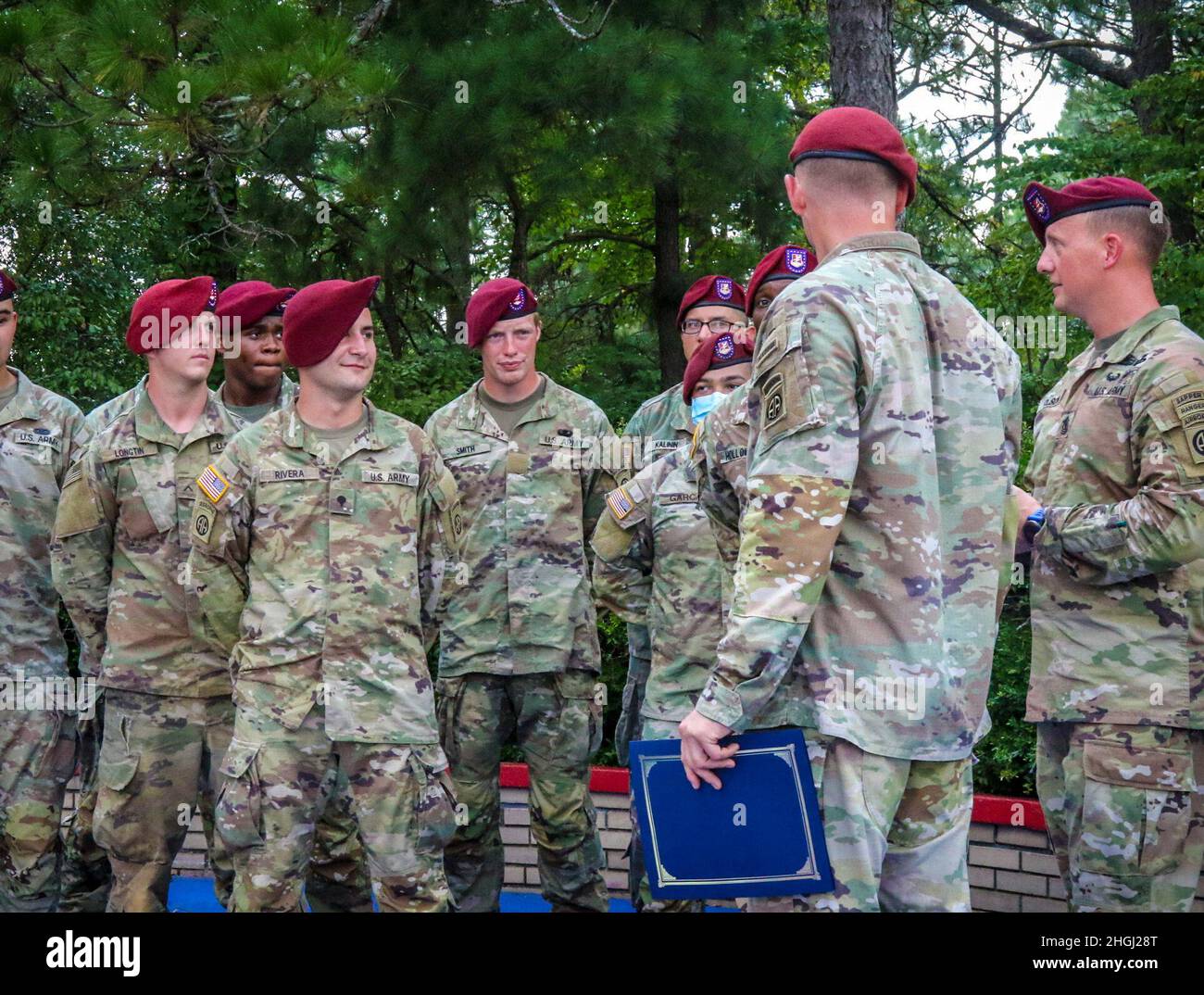
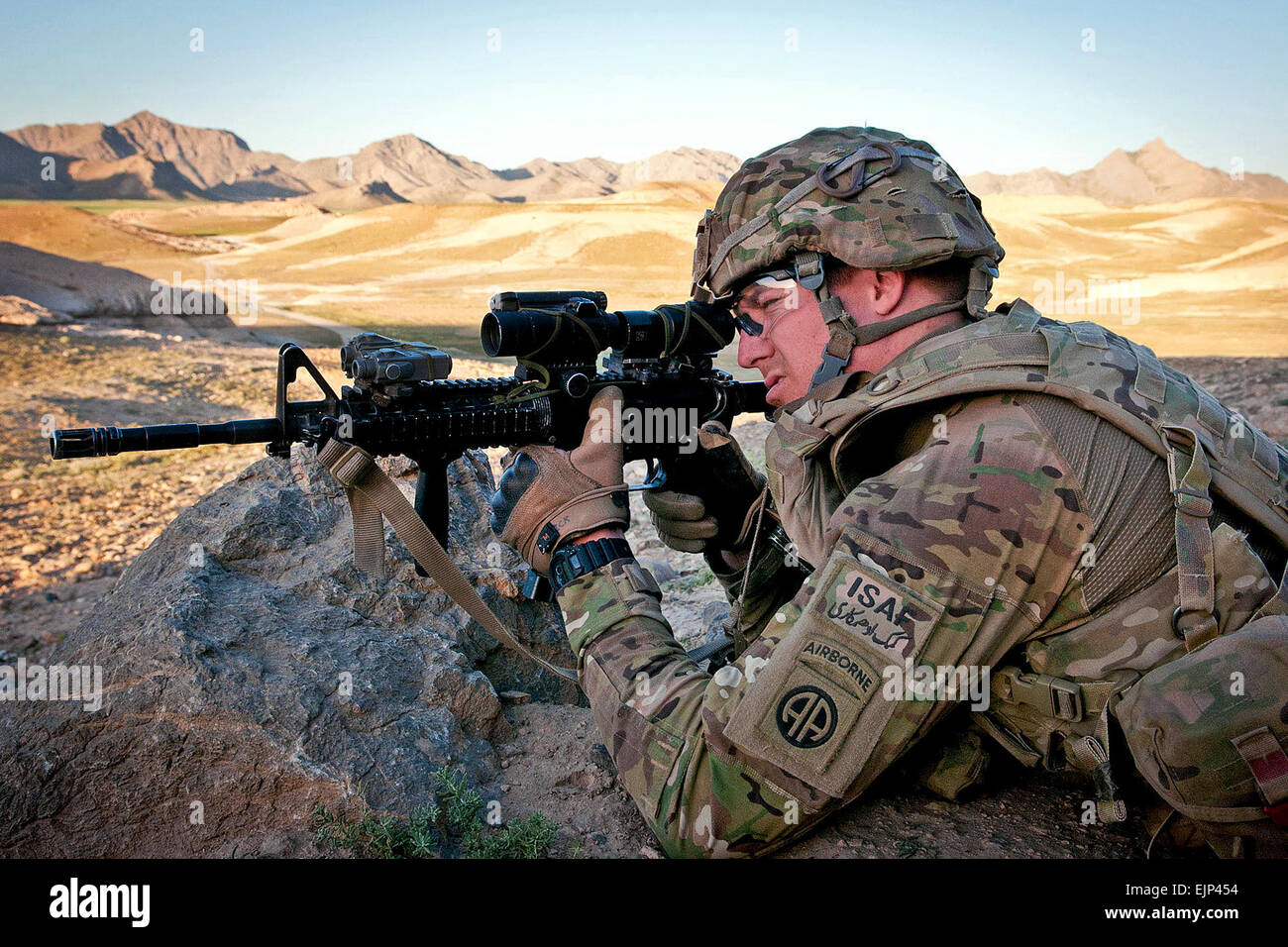
The 82nd Airborne Division is an active-duty airborne infantry division of the United States Army specializing in joint forcible entry operations. Stationed at Fort Liberty, North Carolina, the division serves as the primary combat element of the XVIII Airborne Corps and maintains the Immediate Response Force capability to deploy combat-ready forces anywhere worldwide within 18 hours.
Strategic Mission and the Immediate Response Force
The primary operational mandate of the 82nd Airborne Division is joint forcible entry (JFE). This strategic capability allows the United States military to project combat power into hostile or denied environments without requiring a pre-existing land base or staging area. Operating under the XVIII Airborne Corps, the division provides strategic flexibility to U.S. Geographic Combatant Commands by securing critical terrain—such as airfields, seaports, and key transportation nodes—to enable the follow-on flow of heavier military forces.
At the core of the division's readiness posture is the Immediate Response Force (IRF). The IRF is a high-readiness task force centered around one of the division’s Infantry Brigade Combat Teams (IBCTs), supported by artillery, aviation, engineering, logistics, and intelligence assets. On a rotating basis, one brigade assumes the IRF responsibility, keeping its personnel and equipment on continuous notification status.
The operational parameters of the Immediate Response Force include:
- 18-Hour Notification to Departure: The lead battalion task force (known as the DRB-1 or Deployment Readiness Battalion 1) must be wheels-up and airborne within 18 hours of receiving an official execution order.
- Global Reach: The division trains to execute intercontinental strategic airlift missions directly from Pope Army Airfield at Fort Liberty to target drop zones globally.
- Autonomous Combat Capability: The inserted airborne forces are structured to operate independently for initial operational windows while establishing command networks, securing perimeter defense, and accepting follow-on strategic airlifts.
Historical Development: From WWI to Modern Warfare
The origin and combat record of the 82nd Airborne Division reflect over a century of evolution in infantry tactics, doctrine, and strategic mobility.
- 1917: Formed as 82nd Division (Camp Gordon, GA)
- 1942: Converted to 1st U.S. Airborne Division
- 1943–1945: WWII Combat Drops (Sicily, Salerno, Normandy, Market Garden)
- 1965–1991: Cold War & Regional Deployments (Dominican Rep., Vietnam, Grenada, Panama, Gulf War)
- 2001–Present: GWOT & Rapid Contingencies (Afghanistan, Iraq, Kabul Evac, Europe Deterrence)
World War I and Organization
The unit was originally organized on August 5, 1917, as the 82nd Division at Camp Gordon, Georgia. Because its initial members hailed from all 48 states in the Union at the time, the division acquired the moniker "All American," which inspired its iconic "AA" shoulder sleeve insignia. During World War I, the 82nd Division saw extensive combat during the Lorraine, St. Mihiel, and Meuse-Argonne offensives.
World War II: The Airborne Pioneer
On August 15, 1942, under the command of Major General Matthew B. Ridgway, the unit was reconstituted as the U.S. Army's first airborne division, becoming the 82nd Airborne Division. During World War II, the division conducted four major combat parachute and glider insertions:
- Operation Husky (Sicily, July 1943): The first combat airborne assault executed by the U.S. Army at the divisional level.
- Operation Avalanche (Salerno, September 1943): Parachute insertions executed to reinforce the Allied beachhead in Italy.
- Operation Overlord (Normandy, June 1944): Paratroopers dropped behind enemy lines near Sainte-Mère-Église to secure key roads and bridges preceding the amphibious landings at Utah Beach.
- Operation Market Garden (Netherlands, September 1944): The division captured crucial bridges in the Nijmegen area under Major General James M. Gavin.
The division also played a decisive role in holding the northern shoulder of the German bulge during the Battle of the Bulge in winter 1944–1945.
Cold War through Modern Engagements
Following WWII, the 82nd Airborne Division established its permanent home at Fort Liberty (formerly Fort Bragg), North Carolina. It responded to numerous national and international crises, including Operation Power Pack in the Dominican Republic (1965), the Vietnam War (3rd Brigade deployment), Operation Urgent Fury in Grenada (1983), and Operation Just Cause in Panama (1989). During Operation Desert Storm in 1991, the division secured the left flank of the Allied coalition's armored sweep into Iraq.
Following the September 11 attacks, elements of the 82nd Airborne Division deployed continuously in support of Operation Enduring Freedom in Afghanistan and Operation Iraqi Freedom. Recent operations highlight its contingency role:
- August 2021 (Kabul Evacuation): The 1st Brigade Combat Team and division headquarters deployed on short notice to Hamid Karzai International Airport (HKIA) to secure and manage the non-combatant evacuation operation (NEO).
- February 2022 (European Deterrence): Thousands of 82nd Airborne paratroopers deployed to Poland to reinforce NATO's eastern flank following Russia's invasion of Ukraine.
Organizational Structure of the 82nd Airborne Division
The 82nd Airborne Division operates as a modular, highly deployable light infantry division optimized for vertical envelopment. The division headquarters oversees three Infantry Brigade Combat Teams (Airborne), a Division Artillery, a Combat Aviation Brigade, and a Sustainment Brigade.
- 82nd Airborne Division Headquarters
- 1st IBCT (Devil)
- 2nd IBCT (Falcon)
- 3rd IBCT (Panther)
- DIVARTY (Artillery)
- 82nd CAB (Pegasus)
Subordinate Brigades and Units
- 1st Infantry Brigade Combat Team (Airborne) – "Devil Brigade": Comprises airborne infantry battalions, a cavalry squadron, an engineer battalion, and a brigade support battalion structured for rapid forced-entry tasks.
- 2nd Infantry Brigade Combat Team (Airborne) – "Falcon Brigade": Maintains matching tactical capabilities, providing operational redundancy for the Immediate Response Force cycle.
- 3rd Infantry Brigade Combat Team (Airborne) – "Panther Brigade": Completes the division's combat maneuver triad, undergoing continuous modernization with light mobility platforms and enhanced communications systems.
- 82nd Airborne Division Artillery (DIVARTY): Exercises fire control over the division's field artillery assets, synchronizing lethal and non-lethal indirect fires across the operational area.
- 82nd Combat Aviation Brigade (Pegasus): Provides air assault capabilities, heavy lift, aerial reconnaissance, and attack helicopter support using rotary-wing platforms.
- 82nd Airborne Division Sustainment Brigade: Manages aerial delivery operations, ammunition management, field maintenance, and medical support across the division's tactical footprint.
Comparative Overview of Subordinate Units
The tactical versatility of the 82nd Airborne Division relies on the specialized integration of its maneuver, fire support, and aviation sub-commands.
| Unit Designation | Unit Nickname | Primary Operational Role | Core Platforms & Systems |
|---|---|---|---|
| 1st IBCT (Airborne) | Devil Brigade | Light Infantry / Forced Entry | T-11 Parachutes, JLTV, Infantry Squad Vehicles (ISV) |
| 2nd IBCT (Airborne) | Falcon Brigade | Light Infantry / Air Assault | T-11 Parachutes, TOW Missile Systems, 81mm Mortars |
| 3rd IBCT (Airborne) | Panther Brigade | Light Infantry / Combined Arms | T-11 Parachutes, Small Unmanned Aircraft Systems (sUAS) |
| 82nd DIVARTY | Flame of the Airborne | Fire Support & Counter-fire | M777A2 (155mm), M119A3 (105mm) Howitzers |
| 82nd Combat Aviation | Pegasus Brigade | Aerial Insertion, Attack, Recon | AH-64E Apache, UH-60M Black Hawk, CH-47F Chinook |
| 82nd Sustainment | Provider Brigade | Aerial Delivery & Logistics | Container Delivery Systems (CDS), Heavy Drop Platforms |
Airborne Equipment and Technical Operations
Executing mass tactical airborne drops requires specialized equipment designed to absorb shock, survive dynamic deployments from high-speed military transport aircraft, and function reliably on combat landing zones.
Airborne Operation Phase Flow:
- Green Ramp Prep
- Strategic Airlift
- Static-Line Exit
- DZ Assembly & Combat
Parachute Systems
The division utilizes static-line parachute systems for tactical troop insertions:
- T-11 Main Parachute System: Replaced the legacy T-10D system. The T-11 features a modified cruciform (square) canopy design that increases surface area, lowering the average rate of descent from roughly 22 feet per second to 14.5 feet per second for a standard fully loaded paratrooper. This drop in velocity significantly reduces jump-related landing injuries.
- T-11R Reserve Parachute: An omni-directional reserve system designed to deploy rapidly in the event of a main canopy malfunction or partial inversion.
Tactical Airlift and Heavy Drop Infrastructure
Airborne operations rely on joint integration with the United States Air Force Air Mobility Command. Transport platforms include:
- Boeing C-17 Globemaster III: Capable of dropping up to 102 paratroopers or heavy equipment platforms via static-line deployment.
- Lockheed Martin C-130J Super Hercules: Performs tactical drops of up to 64 paratroopers in tactical low-altitude environments.
Heavy equipment—including M119 and M777 howitzers, Joint Light Tactical Vehicles (JLTVs), and supply pallets—is dropped using Type V Airdrop Platforms pulled by extraction parachutes. This equipment allows the division to bring medium firepower and ground mobility onto the drop zone within minutes of the initial troop landing.
How to Join the 82nd Airborne Division: Requirements and Pathway
Assignment to the 82nd Airborne Division requires satisfying general U.S. Army enlistment parameters alongside airborne qualification standards.
- Recruitment/Commissioning
- Basic Combat Training (BCT) & Advanced Individual Training (AIT / OSUT)
- Basic Airborne Course (BAC) at Fort Moore, GA
- Assignment to Fort Liberty & Advanced Airborne School Integration
Entry Requirements and Enlistment Options
Prospective Soldiers can secure a path to an airborne unit through specific enlistment mechanisms:
- Option 4 Enlistment Contract: Guarantees an opportunity to attend the Basic Airborne Course (BAC) following completion of Initial Entry Training (Basic Combat Training and Advanced Individual Training/One Station Unit Training).
- Volunteering During Initial Training: Soldiers in critical Military Occupational Specialties (MOS)—such as 11B (Infantryman), 13F (Joint Fire Support Specialist), 68W (Combat Medic), or 92R (Parachute Rigger)—can volunteer for airborne training while attending AIT or OSUT if training slots are available.
- Officer Accessions: Officers commissioning through ROTC, West Point, or Officer Candidate School (OCS) may request branch assignments to airborne-designated units or request BAC slots during their Basic Officer Leadership Course (BOLC).
Physical and Administrative Prerequisites
To qualify for airborne training, candidates must meet the following criteria:
- Medical Fitness: Pass a Class 1A Airborne physical exam, establishing clear vision, normal color perception, healthy spinal integrity, and no cardiovascular limitations.
- Physical Fitness: Pass the Army Combat Fitness Test (ACFT) and demonstrate baseline upper-body and core strength required for canopy control and landing falls.
- ASVAB Scores: Obtain qualifying scores based on the specific MOS assigned within the airborne force.
The Basic Airborne Course (BAC)
Located at the U.S. Army Airborne School (1st Battalion, 507th Infantry Regiment) at Fort Moore, Georgia, the three-week course consists of three distinct phases:
- Ground Week: Focuses on the Parachute Landing Fall (PLF), mock-door exits, and building lower-body endurance to absorb impact without injury.
- Tower Week: Introduces vertical height training using the 34-foot mock tower and the 250-foot free tower to master canopy control, mass-exit timing, and emergency procedures.
- Jump Week: Requires candidates to complete five static-line jumps from military aircraft (C-130 or C-17), including a combat equipment jump and a night jump, to earn the basic Parachutist Badge ("Jump Wings").
Career Progression and Elite Qualifications
Once assigned to the 82nd Airborne Division at Fort Liberty, paratroopers can pursue advanced professional military education through specialized schools located on post or through external army pipelines.
Advanced Airborne and Tactical Schools
- Jumpmaster School: Conducted at the Advanced Airborne School (Fort Liberty), this course trains Noncommissioned Officers (NCOs) and Officers in static-line parachute rigging, personnel inspection (JMPI), aircraft safety, and Drop Zone Safety Officer (DZSO) duties. Earning the Senior Parachutist or Master Parachutist Badge represents a key milestone in an airborne leader's career.
- Pathfinder School: Focuses on navigating ground teams, establishing drop zones (DZs) and helicopter landing zones (HLZs), calculating wind drift parameters, and managing air-to-ground tactical communications.
- Reconnaissance and Surveillance Leaders Course (RSLC): Develops advanced skills in long-range reconnaissance, land navigation, target acquisition, and stealth operations.
Practical Guidance for Service Members Seeking Assignment
For current service members or prospective recruits aiming to serve effectively within the 82nd Airborne Division, taking targeted preparation steps helps ensure success:
- Prioritize Lower-Body and Core Strength: Parachute landing falls generate substantial impact force on ankles, knees, hips, and the lumbar spine. Incorporate functional leg training, core stability work, and loaded rucking into physical conditioning routines to minimize overuse injuries.
- Master Technical Fundamentals Early: In airborne operations, small procedural details impact safety. Pay close attention to rigging procedures, equipment sizing, and canopy inspection techniques taught at BAC and unit-level jump refresher courses.
- Maintain Operational Flexibility: Due to the Immediate Response Force mission, paratroopers stationed at Fort Liberty must keep personal, financial, and family affairs in continuous order. Unexpected contingency deployments can occur with minimal advance warning.
- Pursue Leadership Qualifications: Early career progression within the 82nd Airborne Division favors Soldiers who earn the Jumpmaster qualification. Securing a spot on the Jumpmaster track demonstrates technical proficiency and willingness to accept responsibility for peer safety.
Frequently Asked Questions
Where is the 82nd Airborne Division headquartered?
The 82nd Airborne Division is headquartered at Fort Liberty, North Carolina (formerly Fort Bragg). It conducts major deployment processing out of nearby Pope Army Airfield.
What does the "AA" patch on the 82nd Airborne uniform stand for?
The "AA" stands for "All American." When the division was formed in 1917, its members originated from all 48 U.S. states existing at the time, leading to the creation of the double-A shoulder insignia.
How fast can the 82nd Airborne Division deploy worldwide?
Under its Immediate Response Force (IRF) mission, the division can deploy a lead battalion task force anywhere in the world within 18 hours of receiving an official deployment order, with full brigade elements following within 96 hours.
What parachute system does the 82nd Airborne Division currently use?
The division primarily uses the T-11 static-line parachute system for personnel drops. The T-11 features a square cruciform canopy that provides a slower, safer rate of descent compared to older round parachutes like the T-10D.
How long is the U.S. Army Basic Airborne Course?
The Basic Airborne Course at Fort Moore, Georgia, lasts three weeks. It is divided into Ground Week, Tower Week, and Jump Week, culminating in five qualifying static-line jumps.
Preparing for Assignment to the Airborne Division
Serving in the 82nd Airborne Division requires a high standard of physical readiness, mental endurance, and tactical discipline. Service members preparing for assignment to Fort Liberty should focus on building strong physical conditioning—particularly core strength and leg resilience—to meet the physical demands of static-line airborne insertions. Once assigned, paratroopers should aim to complete advanced professional military education, such as Jumpmaster or Pathfinder schools, to contribute to the readiness of America's primary rapid deployment capability.