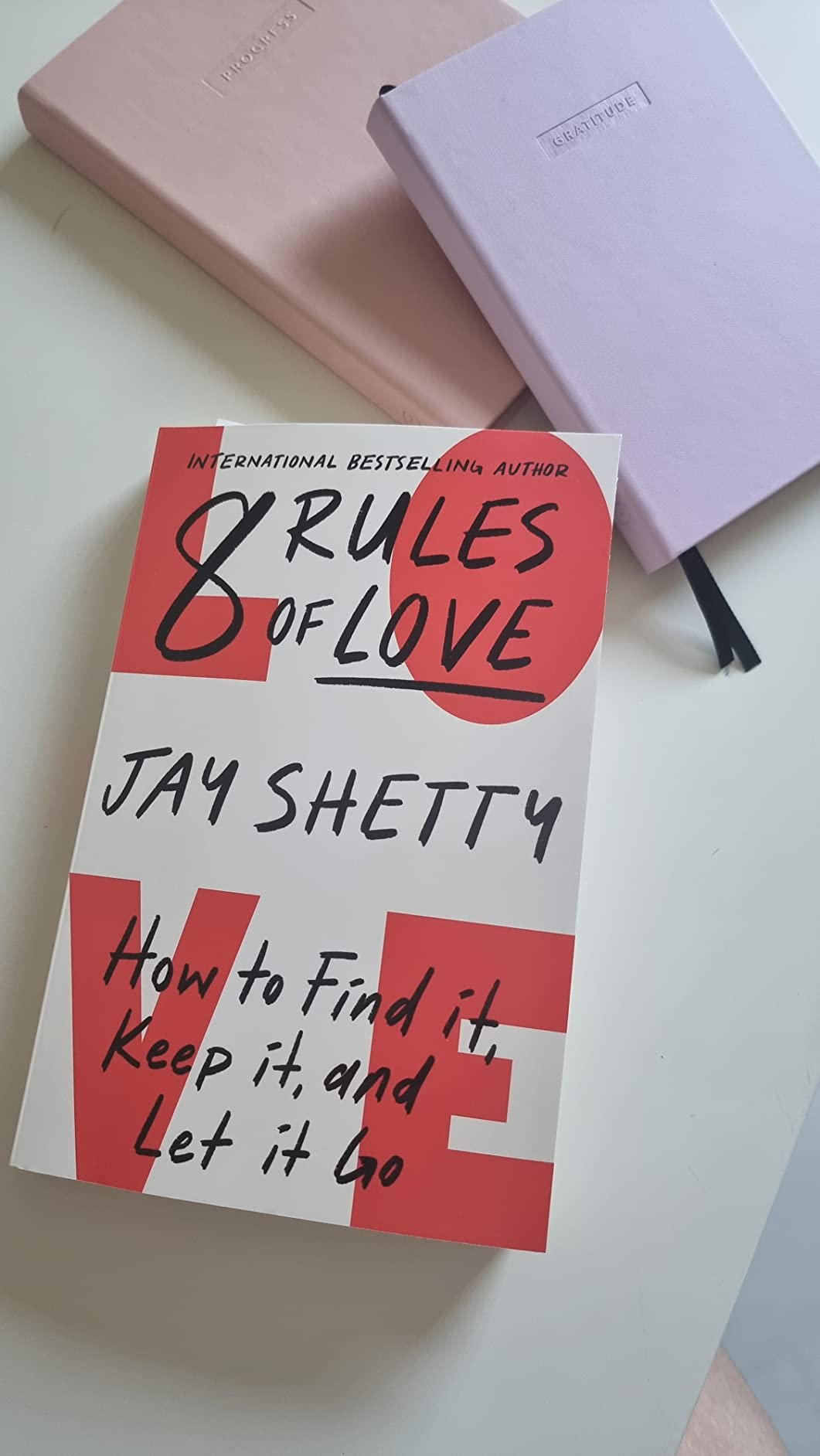
The "8 Rules of Love" provides a structured framework for navigating the complexities of modern relationships by blending ancient Vedic wisdom with contemporary psychological insights. Developed by Jay Shetty, this guide transitions readers through four distinct stages: solitude, compatibility, healing, and connection. By treating love as a skill to be practiced rather than a feeling to be found, the rules help individuals build resilient, purposeful, and enduring partnerships.
Understanding the Foundation of Intentional Love
In a cultural landscape often dominated by "dating app fatigue" and romanticized media tropes, the quest for lasting happiness frequently feels elusive. As of 2026, the shift toward intentionality in relationships has become more pronounced, with more people seeking psychological and philosophical depth in their personal lives. The "8 Rules of Love" serves as a corrective to the myth that love is a spontaneous spark that maintains itself. Instead, it posits that love is a series of choices and habits that require deliberate cultivation.
The methodology is rooted in the concept of the four ashramas, or stages of life, found in the Vedas. Traditionally, these stages guided individuals from studenthood to householder life, then into reflection, and finally toward spiritual liberation. Shetty adapts these stages for modern romance, suggesting that many relationship failures stem from skipping the foundational work of self-understanding. Before one can successfully share a life with another, they must first understand the architecture of their own mind, habits, and emotional triggers.
Rule 1: Let Yourself Be Alone
The first rule emphasizes that solitude is the essential prerequisite for a healthy relationship. Solitude is distinct from loneliness; while loneliness is a state of deprivation, solitude is a state of presence. When individuals cannot be happy alone, they often enter relationships out of a "scarcity mindset," looking for a partner to fill a void or "complete" them. This creates a foundation of codependency rather than mutual growth.
By mastering solitude, you learn self-regulation. You become aware of your own thoughts and emotions without the immediate need for external validation. This stage allows you to identify your values, passions, and boundaries. Practically, this involves spending time in "conscious loneliness," where you intentionally observe your discomfort with being alone and work through it. When you are comfortable in your own company, you choose a partner based on preference and compatibility rather than desperate necessity.
Rule 2: Don’t Ignore Your Karma
In the context of love, karma refers to the patterns, habits, and cycles we carry from our past. These are often inherited from family dynamics or previous romantic failures. Rule 2 encourages a deep audit of your relationship history to identify recurring themes—such as a tendency to choose unavailable partners or a habit of withdrawing during conflict.
Ignoring these patterns ensures their repetition. To break the cycle, one must practice "Vichara," or reflective inquiry. This involves questioning why certain traits attract you and why you react to specific triggers. Understanding your "relationship karma" allows you to approach new connections with a heightened sense of awareness, ensuring that you are not simply playing out a pre-written script from your childhood or your last breakup.
Rule 3: Define Love Before You Think It, Feel It, or Say It
One of the primary causes of relationship friction is the lack of a shared definition of love. For one person, love might mean constant physical presence; for another, it might mean providing emotional security or shared intellectual pursuits. Rule 3 suggests that "love" is often used as a vague catch-all term that masks disparate expectations.
Before committing to a partner, you must define what love looks like in practice. This includes identifying your "non-negotiables" and your "preferences." Jay Shetty suggests breaking love down into three components:
- Attraction: The initial physical or energetic pull.
- Connection: Shared values and intellectual alignment.
- Commitment: The daily decision to show up and work through challenges. Defining these terms early prevents the "bait and switch" feeling that often occurs when the initial infatuation fades and the reality of different expectations sets in.
| Aspect of Love | Traditional Myth | The 8 Rules Perspective |
|---|---|---|
| Origin | Love is a feeling that "happens" to you. | Love is a skill you learn and practice. |
| Self-Worth | Your partner completes you. | You must be whole before you can be half of a couple. |
| Conflict | Arguments mean the relationship is failing. | Conflict is an opportunity for growth and understanding. |
| Purpose | The relationship is the ultimate goal. | The relationship supports each individual's higher purpose (Dharma). |
| Longevity | "Happily ever after" is a destination. | Happiness is a daily practice within the relationship. |
Rule 4: Your Partner Is Your Guru
Seeing your partner as a "guru" or a teacher transforms the way you handle friction. In this framework, a partner is not there to simply please you, but to reflect your own areas for growth. When a partner points out a flaw or when a disagreement arises, the "guru" perspective encourages you to look inward rather than becoming defensive.
This rule does not suggest that you should tolerate toxic behavior or that your partner is always right. Rather, it means that the relationship serves as a mirror. If your partner’s behavior triggers an intense emotional reaction, Rule 4 asks: "What is this teaching me about my own insecurities or my need for control?" When both partners adopt this mindset, the relationship becomes a laboratory for personal evolution, where each person supports the other’s journey toward becoming their best self.
Rule 5: Purpose Comes First
Rule 5 addresses the common pitfall of "losing oneself" in a relationship. In the Vedic tradition, Dharma refers to one's individual purpose or calling. Shetty argues that for a relationship to be sustainable, both individuals must maintain their separate sense of purpose. When a relationship becomes the sole focus of your life, it puts an unsustainable amount of pressure on your partner to be your everything—your source of joy, your career coach, and your spiritual guide.
To implement this rule, partners must create space for each other to pursue their individual goals, hobbies, and friendships. A healthy partnership consists of two people moving in the same direction, but on their own paths. By prioritizing your purpose, you bring more energy, creativity, and fulfillment back into the relationship, preventing the stagnation and resentment that often accompany "merging" too completely with a partner.
Rule 6: Win or Lose Together
Conflict is inevitable, but how it is managed determines the longevity of the bond. Rule 6 shifts the focus from "winning the argument" to "solving the problem." In many relationships, disagreements become a zero-sum game where one person must be "right" and the other "wrong." This dynamic creates a "me vs. you" mentality that erodes trust.
The "Win or Lose Together" approach requires adopting a "we vs. the problem" stance. This involves:
- Active Listening: Understanding the partner's perspective before formulating a rebuttal.
- Emotional Regulation: Taking "time-outs" when emotions run too high to communicate effectively.
- Validation: Acknowledging the partner's feelings even if you disagree with their logic. When you realize that your partner's loss is ultimately your loss, the incentive to be "right" diminishes in favor of finding a harmonious resolution.
Rule 7: You Don’t Break in a Breakup
Rule 7 focuses on the stage of healing. Breakups are often viewed as failures or as periods of being "broken." Shetty reframes the end of a relationship as a transition and an opportunity to return to Rule 1 (Solitude) with new wisdom. A breakup does not negate the love that existed; rather, it signifies that the "season" of that specific connection has concluded.
Healing requires a conscious effort to process the "karma" of that relationship so that the lessons are carried forward without the baggage. This involves practicing forgiveness—not necessarily for the other person's sake, but to release yourself from the burden of anger and resentment. By understanding that your core identity is separate from your relationship status, you maintain your integrity and resilience even when a partnership ends.
Rule 8: Love Again and Again
The final rule expands the definition of love beyond the romantic sphere. While society often prioritizes romantic love as the "highest" form of affection, the 8th rule suggests that love is an infinite resource that should be extended to friends, family, the community, and the world at large.
This universal love, or Metta, prevents the isolation that can occur when a couple becomes too insular. By practicing compassion and service toward others, you cultivate a "heart of love" that makes your romantic relationship even richer. Loving "again and again" means choosing to remain open-hearted despite past pains, and recognizing that every interaction is an opportunity to express the skills of love—patience, kindness, and presence—that you have worked so hard to develop.
Common Mistakes to Avoid When Applying the Rules
- Rushing the Solitude Phase: Many people read Rule 1 and try to "check it off" in a weekend. True solitude requires a consistent practice of being alone with one's thoughts over months or years.
- Using "Partner as Guru" to Excuse Abuse: This rule applies to healthy, growth-oriented challenges. It should never be used to justify emotional, verbal, or physical abuse.
- Projecting Your Karma onto the Partner: While it’s important to see patterns, avoid blaming your partner for your past traumas. The goal of Rule 2 is self-awareness, not externalizing blame.
- Sacrificing Dharma for Harmony: People often suppress their purpose to avoid conflict. This leads to long-term resentment. True harmony allows for individual pursuit of purpose.
Frequently Asked Questions
Can these rules be applied if I am already in a long-term marriage?
Yes. While the rules are structured to follow the lifecycle of a relationship, they are equally effective as a diagnostic tool for established couples. For example, long-term partners can revisit Rule 3 to redefine what love looks like in their current stage of life or Rule 5 to ensure they haven't lost their individual purposes over the years.
What is the most important rule for someone who is recently single?
Rule 1 (Let Yourself Be Alone) and Rule 7 (You Don’t Break in a Breakup) are critical. The focus should be on internal stability and processing the lessons of the previous relationship (Rule 2) before attempting to find a new partner. This prevents the "rebound" cycle where old mistakes are simply repeated with new people.
How do I know if my partner is a "Guru" or just incompatible?
A "Guru" partner challenges you in ways that lead to self-improvement and higher awareness, even if it is uncomfortable. Incompatibility, on the other hand, involves a fundamental misalignment of values (Rule 3) or a lack of desire to "Win or Lose Together" (Rule 6). If the friction leads to exhaustion rather than growth, it may be an issue of compatibility.
Is it possible to follow Rule 5 (Purpose First) without being selfish?
Prioritizing your purpose is not about ignoring your partner's needs; it is about ensuring you have a full "tank" of energy and identity to bring to the relationship. When you are fulfilled by your own work and passions, you are less likely to drain your partner with constant demands for validation and entertainment.
Moving Forward with Intentionality
To successfully implement the 8 rules of love in 2026, start by performing a "love audit." Assess which rule you are currently struggling with most—whether it is the inability to be alone or the tendency to "fight to win." Focus on one rule at a time, practicing the specific habits associated with it for at least 30 days. By shifting your perspective from "finding the right person" to "becoming the right person" and "building the right skills," you create a foundation for happiness that is not dependent on external circumstances, but on your own internal mastery of love.