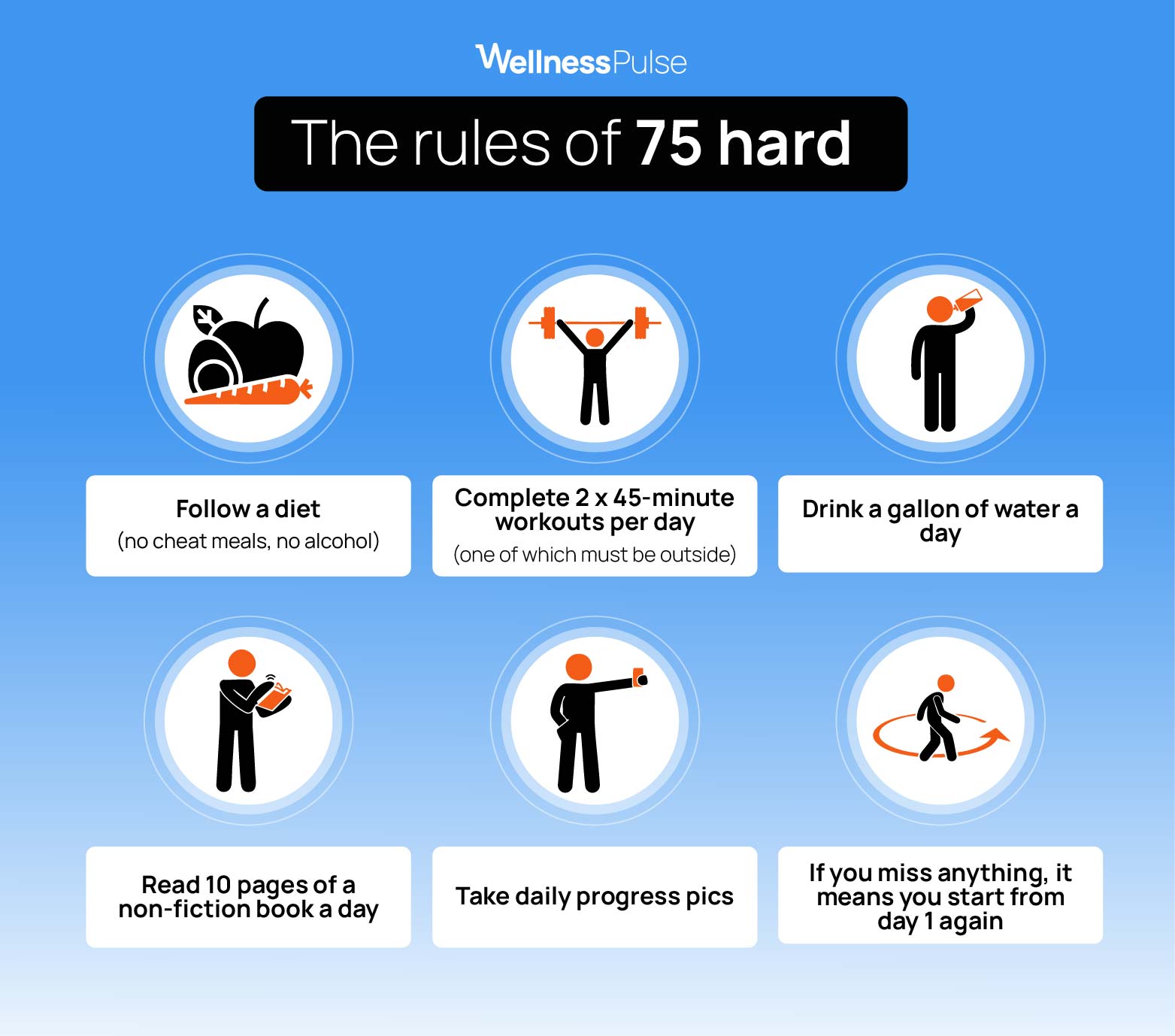
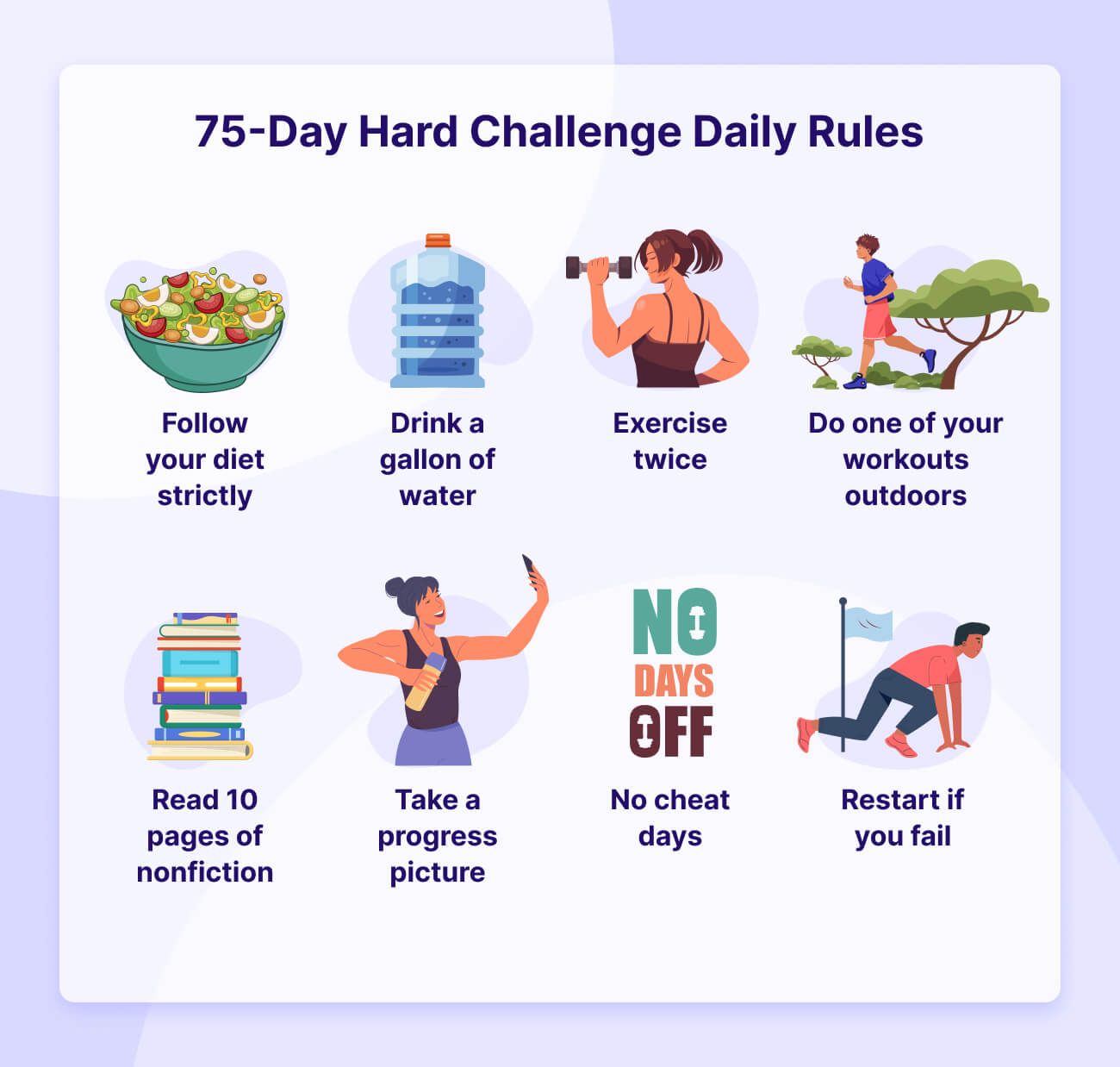
75 Hard is a 75-day mental toughness program created by entrepreneur Andy Frisella that requires participants to complete five specific tasks every day without compromise. These tasks include following a strict diet, completing two 45-minute workouts (one must be outdoors), drinking a gallon of water, reading ten pages of non-fiction, and taking a progress photo. If a single task is missed, the participant must restart the challenge from Day 1.
The program has evolved from a viral social media trend into a recognized standard for discipline and "grit" training. As we move through 2026, the 75 Hard challenge remains a cornerstone of the self-improvement landscape, differentiated from standard fitness challenges by its focus on psychological resilience rather than just physical aesthetics. While many people approach it to lose weight, the creator emphasizes that the primary goal is to develop a "boss-level" mindset and the ability to execute tasks regardless of environmental conditions or personal feelings.
The Core Philosophy of the 75 Hard Program
To understand what 75 Hard means, one must first look beyond the surface-level physical requirements. Created by Andy Frisella in 2019, the program was designed as a "tactical guide to winning the war with yourself." It is fundamentally based on the concept of "critical tasks" and the elimination of the "bitch voice"—the internal dialogue that encourages procrastination, comfort-seeking, and compromise.
Unlike traditional fitness programs that offer "rest days" or "balanced approaches," 75 Hard is binary. You either did it, or you didn't. This rigidity is the defining feature of the program. It aims to build "mental callouses" by forcing participants to navigate the complexities of life—social gatherings, work stress, travel, and illness—without allowing those factors to interfere with their daily commitments. By 2026, the program’s influence has permeated corporate leadership training and high-performance coaching because it tests a person's ability to remain consistent when the initial motivation has long since faded.
The Five Non-Negotiable Daily Tasks
The program functions through the daily repetition of five specific rules. Each rule is designed to target a different aspect of discipline, from physical health to intellectual growth and self-accountability.
1. Follow a Diet with No Alcohol or Cheat Meals
The program does not mandate a specific diet like Keto, Paleo, or Vegan; instead, it requires you to choose a structured plan that aligns with your goals and stick to it perfectly. The key constraint is the total prohibition of alcohol and "cheat meals." In the context of 75 Hard, a cheat meal is defined as any food that falls outside your chosen nutritional parameters. This rule is less about the calories and more about the psychological battle of saying "no" in social situations or moments of high stress.
2. Two 45-Minute Workouts (One Must Be Outdoors)
Participants must complete two separate 45-minute exercise sessions. These cannot be back-to-back; there must be a significant gap between them to ensure they represent two distinct choices to be disciplined. The requirement that one workout must be outdoors is often the most challenging aspect. Whether it is raining, snowing, or blistering heat, the outdoor workout must occur. This is intended to teach participants that they cannot control their environment, but they can control their reaction to it.
3. Drink One Gallon of Water
Consuming 128 ounces (approximately 3.78 liters) of plain water daily is mandatory. This task focuses on physical health and cellular hydration, but it also serves as a logistical challenge. It requires the participant to manage their time and intake throughout the day to avoid being forced to drink half a gallon late at night. Note that additives like flavor packets or powders generally do not count toward this total in the strictest interpretation of the rules.
4. Read 10 Pages of Non-Fiction
Participants must read ten pages of a book that focuses on personal development, professional skills, or educational topics. Audiobooks and podcasts do not count toward this requirement. The goal is to cultivate the habit of focused, intentional learning and to engage the brain in a way that passive listening does not allow.
5. Take a Daily Progress Photo
While it may seem vain, the daily photo is a exercise in documentation and detail-orientedness. It creates a visual record of the transformation, but more importantly, it is the task most likely to be forgotten. Forgetting the photo at 11:59 PM is a common reason for Day 1 restarts, reinforcing the need for constant awareness and attention to detail.
| Requirement | Specification | Primary Goal |
|---|---|---|
| Duration | 75 Consecutive Days | Habit formation & resilience |
| Diet | Any clean plan; 0 alcohol; 0 cheats | Impulse control & discipline |
| Workouts | 2 x 45 min (1 must be outdoors) | Physical grit & environmental adaptation |
| Water | 1 Gallon (128 oz) daily | Health & logistical planning |
| Reading | 10 pages physical/e-book (Non-fiction) | Intellectual growth |
| Photo | 1 daily progress picture | Attention to detail & accountability |
| Failure | Miss any task, even slightly | Restart at Day 1 |
The Mechanics of the "Day 1 Restart"
The most significant aspect of how 75 Hard works is the lack of a "grace period." In most modern fitness apps and programs of 2026, there are mechanisms for "streak freezes" or makeup sessions. 75 Hard rejects this. If you drink 127 ounces of water instead of 128, you start over. If you read nine pages instead of ten, you start over.
This "all or nothing" mechanic is designed to break the habit of making excuses. Most people live in a "gray area" where they are "mostly" good with their habits. 75 Hard forces you into a "black or white" reality. This teaches the participant that "almost" does not count in high-stakes environments. The psychological impact of having to restart on Day 60 because of a forgotten photo is devastating, but it is also where the most profound mental growth occurs.
Physical and Psychological Considerations
While 75 Hard is marketed as a mental program, it has significant physical implications that require careful management. Because there are no programmed rest days, the risk of overtraining or overuse injuries is real. Successful participants often balance their workouts by pairing a high-intensity session (like weightlifting or running) with a low-intensity session (like walking or yoga).
From a nutritional standpoint, the prohibition of alcohol for 75 days can lead to significant improvements in sleep quality, liver function, and cognitive clarity. However, the rigidity of the "no cheat meal" rule can be difficult for individuals with a history of disordered eating. It is essential to choose a diet that provides enough fuel for two workouts a day. Most experts in 2026 suggest a macro-balanced approach rather than extreme caloric restriction to sustain the energy levels needed for the full duration of the challenge.
Common Obstacles and How to Overcome Them
Navigating 75 Hard requires more than just willpower; it requires a tactical approach to scheduling.
- The Outdoor Workout: Check the weather forecast 24 hours in advance. If a storm is predicted for the evening, complete the outdoor workout in the morning. Having appropriate gear (rain jackets, cold-weather layers) is essential for safety.
- The Water Intake: Use a marked container to track progress. A common mistake is waiting until the afternoon to start, which leads to sleep disruption due to frequent bathroom trips at night.
- The Reading Requirement: Do not leave the reading until you are in bed. Tiredness often leads to falling asleep mid-page, which results in a fail. Read during a lunch break or immediately after a workout.
- Social Pressure: The "no alcohol" rule often draws the most scrutiny from peers. Preparing a standard response or choosing to bring your own seltzer to events can help mitigate social friction without breaking the program's rules.
Critiques and Safety Limitations
Despite its popularity, 75 Hard is not without its critics. Medical professionals often point out that a "one gallon of water" rule does not account for individual body weight or sweat rates, which could potentially lead to hyponatremia in smaller individuals. Furthermore, the lack of rest days can be counterproductive for muscle recovery.
It is highly recommended that anyone considering 75 Hard in 2026 consult with a healthcare provider before beginning, particularly regarding the dietary changes and the sudden increase in exercise volume. The program is a test of will, but it should not be a test of how much physical damage your body can sustain. Modifying the intensity of the workouts—for instance, making the outdoor session a brisk walk—is a common and safe way to adhere to the rules while allowing the body to recover.
FAQ
Does an indoor walk count as an outdoor workout?
No. One of the two 45-minute workouts must be completely outdoors, exposed to the elements. This rule is designed to force you to deal with conditions you cannot control, such as rain, wind, or cold. Even if you have a home gym or a treadmill, you must step outside for one of your sessions to remain compliant with the program.
Can I listen to an audiobook for the reading requirement?
No. The rules specifically state that you must read 10 pages of a physical book or an e-reader (like a Kindle). Audiobooks are considered passive consumption and do not meet the requirement for active, focused reading. The goal is to build the discipline of sitting down and concentrating on text without distractions.
What happens if I miss the progress photo?
If you forget to take the photo, even if you completed every other task perfectly, you must restart at Day 1 the following morning. The photo is often called the "compliance check" because it is the easiest task to forget, testing your ability to remain mindful and attentive to your commitments throughout the entire day.
Can I do two workouts back-to-back?
No. The two 45-minute workouts must be separate sessions. While the creator has not specified an exact number of hours between them, the general consensus is that there should be enough time for your heart rate to return to a resting state and for you to have moved on to other daily activities. This ensures you are making the choice to work out twice, rather than just extending one long session.
Is 75 Hard a weight loss program?
While many people lose weight on 75 Hard due to the increased activity and lack of alcohol/processed foods, it is officially categorized as a mental toughness program. The physical changes are viewed as a byproduct of the mental discipline required to complete the 75 days. If your only goal is weight loss, there are more flexible programs available, but 75 Hard is specifically for those seeking a psychological overhaul.
Strategic Recommendation for Starting 75 Hard
If you are planning to begin 75 Hard, the most effective next step is to perform a "Phase Zero" week. During this week, do not officially start Day 1, but begin tracking your water intake and selecting your reading material. Use this time to prep meals and identify your two workout windows. The most common cause of failure in the first week is a lack of logistical preparation. By 2026, many participants use digital planners to map out their "outdoor windows" based on hyper-local weather apps. Once your environment is prepared and your "why" is clearly defined, you can begin Day 1 with a higher probability of reaching Day 75 without a restart.