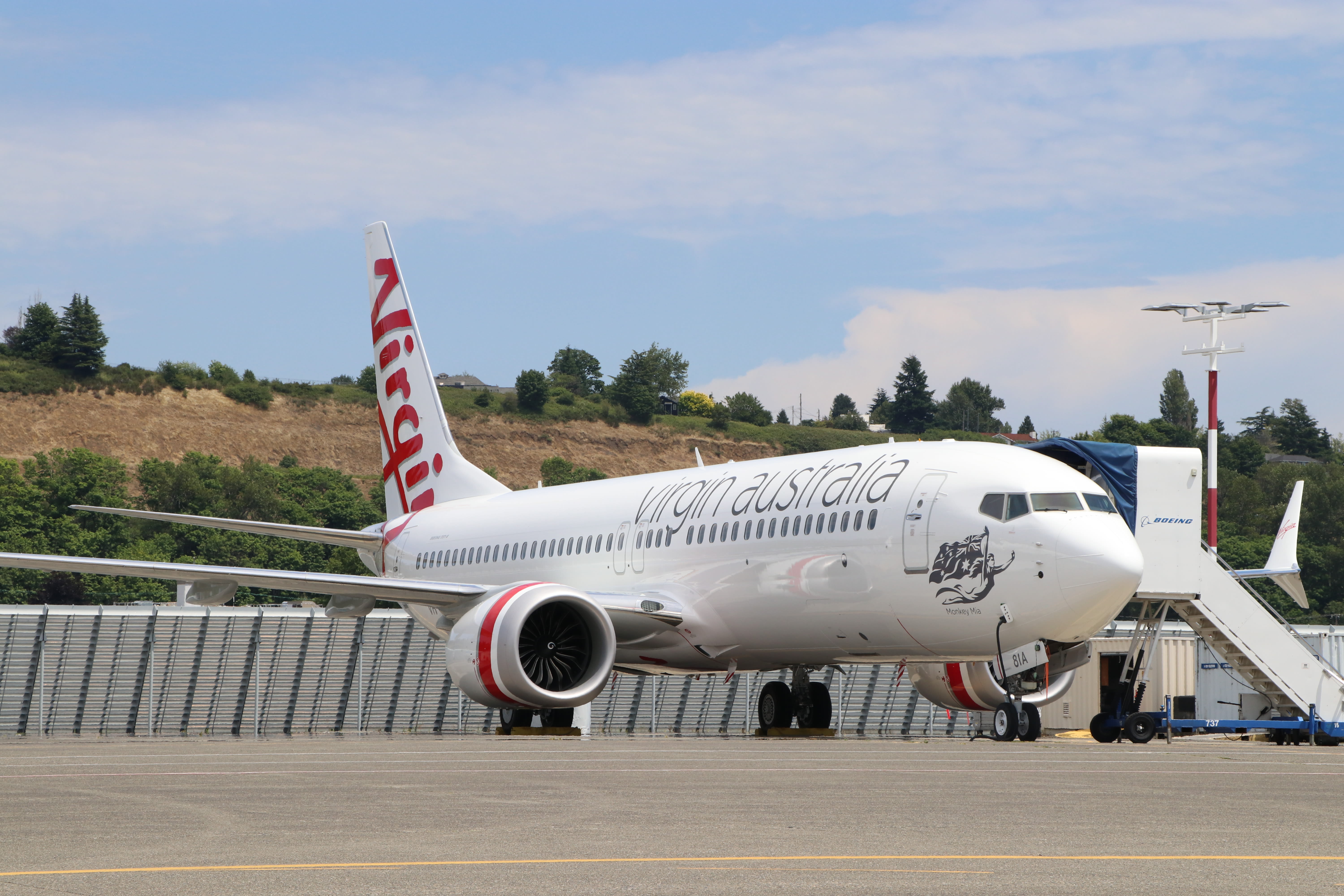
The Boeing 737-800 is a narrow-body, twin-engine jet airliner that serves as the cornerstone of many global airline fleets. As a prominent member of the 737 Next Generation (NG) family, the -800 variant balances passenger capacity, operational range, and fuel efficiency, making it the most widely used aircraft in the short-to-medium haul commercial sector since its introduction.
Origins and Development of the 737 Next Generation
The Boeing 737-800 was developed to replace the older 737-400, serving as the direct competitor to the Airbus A320 family. Boeing officially launched the Next Generation program in 1993, with the -800 variant performing its maiden flight in 1997. The design goal was to provide an aircraft that could fly further, carry more passengers, and operate at a lower cost-per-seat than its predecessors.
Engineers achieved these objectives by integrating a redesigned wing, a modernized glass cockpit, and highly efficient CFM56-7B engines. The wing surface area was increased by 25%, and the wingspan extended by 16 feet compared to the 737 Classic series. This allowed for increased fuel capacity and higher cruise speeds. By the time production shifted focus toward the 737 MAX series, the 737-800 had cemented its legacy as the most commercially successful iteration of the 737 line.
Technical Specifications and Performance Metrics
The 737-800 is engineered for versatility, capable of operating from mid-sized regional airports while maintaining the range necessary for transcontinental flights. Its technical profile is defined by its ability to carry between 162 and 189 passengers depending on the cabin configuration and seat pitch chosen by the operator.
The aircraft is powered by two CFM International CFM56-7B turbofan engines, which are known for their reliability and ease of maintenance. These engines offer multiple thrust ratings, allowing airlines to tailor the aircraft's performance to their specific route requirements, such as high-altitude airports or short-runway environments. With a maximum takeoff weight (MTOW) of approximately 174,200 pounds (for the high-gross-weight version) and a range of roughly 3,000 nautical miles, the aircraft provides a highly flexible operational envelope.
Key Technical Comparison
| Feature | 737-800 Specification |
|---|---|
| Length | 129 ft 6 in |
| Wingspan | 117 ft 5 in |
| Typical Seating | 162–189 |
| Maximum Range | ~3,000 nautical miles |
| Engines | 2x CFM56-7B |
| Max Cruise Speed | Mach 0.785 |
Operational Role in Global Aviation
The primary appeal of the 737-800 lies in its operational flexibility. Unlike wide-body aircraft that are restricted to high-density long-haul routes, the 737-800 excels in the "hub-and-spoke" model and the point-to-point operations favored by low-cost carriers. Its landing gear design and ground-handling requirements are relatively standard, allowing it to interface with the infrastructure of almost any international airport.
Airlines frequently equip their 737-800 fleets with "blended winglets"—upward-curving extensions at the tips of the wings. These winglets reduce aerodynamic drag, particularly during the climb phase of flight, which results in significant fuel savings and reduced CO2 emissions. For airlines operating hundreds of cycles per month, this modification significantly lowers operational overhead.
Maintenance and Lifecycle Management
Managing a fleet of 737-800 aircraft requires strict adherence to maintenance intervals defined by Boeing and civil aviation authorities. Because the fleet has been in operation for decades, the industry possesses a massive database of maintenance requirements and common wear-and-tear patterns.
Maintenance programs are typically categorized into:
- A-Checks: Routine inspections performed every 400 to 600 flight hours, covering the interior, fluids, and emergency systems.
- C-Checks: Detailed, heavy maintenance checks performed every 20 to 24 months, involving deep structural inspection and system testing.
- D-Checks: Known as the "heavy maintenance visit," these occur every 6 to 10 years and involve an almost complete disassembly of the aircraft to ensure structural integrity.
Operators often utilize specialized maintenance, repair, and overhaul (MRO) facilities. Given the age of many existing airframes, aging aircraft programs (AAPs) are essential to monitor for fatigue-related cracks, particularly around the "pickle fork" section—the attachment point where the fuselage connects to the wing.
Common Challenges and Considerations
While the 737-800 is highly regarded for its reliability, operators must navigate specific challenges. One significant factor is the transition to newer flight deck technologies. While the -800 glass cockpit was revolutionary upon release, modern Air Traffic Management (ATM) systems now require advanced navigation capabilities, such as Performance-Based Navigation (PBN) and Required Navigation Performance (RNP) authorization. Older -800s may require avionics upgrades to remain compliant with evolving airspace regulations.
Furthermore, noise abatement procedures at major airports can limit the operational hours for older aircraft. Operators must ensure that their engine performance remains within noise certification standards, which may occasionally necessitate hush-kit installations or specific thrust-management procedures during takeoff and approach.
Future Outlook and Sustainability
As of 2026, the 737-800 remains a staple of the global fleet. While production has ceased in favor of the MAX series, the aftermarket for the -800 remains robust. Many units are being converted from passenger configurations to dedicated freighters (BCF - Boeing Converted Freighters). This process involves replacing the passenger doors with large cargo doors, reinforcing the main deck floor, and installing cargo handling systems. This secondary life for the airframe allows it to serve the booming e-commerce and logistics sectors for years after its passenger service life ends.
Sustainability initiatives are also reshaping how the 737-800 is operated. Airlines are increasingly utilizing Sustainable Aviation Fuel (SAF) in these engines to mitigate carbon output. While the CFM56-7B is not as efficient as the newer LEAP engines on the 737 MAX, the existing fleet of 737-800s remains carbon-efficient enough to be a vital asset for airlines balancing fleet renewal costs with environmental targets.
Frequently Asked Questions
How does the 737-800 differ from the 737 MAX 8?
The 737-800 belongs to the Next Generation (NG) family, while the MAX 8 is the subsequent generation. The MAX 8 features larger, more fuel-efficient engines, a redesigned tail cone, and advanced winglets, along with a revised flight control system and updated avionics suite.
Is the 737-800 considered a safe aircraft?
The 737-800 has an extensive safety record compiled over millions of flight cycles. It is subject to rigorous regulatory oversight from bodies like the FAA and EASA. As with all aircraft, safety is maintained through strict adherence to documented maintenance schedules and mandatory service bulletins.
What is the typical service life of a 737-800 airframe?
The design service goal for the 737-800 is typically around 75,000 to 90,000 flight cycles or approximately 25 to 30 years. Many aircraft reach this age and are either retired, parted out for spares, or converted into cargo freighters to extend their utility.
Can the 737-800 fly transoceanic routes?
While designed primarily for short-to-medium-haul routes, the 737-800 is capable of ETOPS (Extended-range Twin-engine Operations Performance Standards) operations. This allows it to fly routes that take it further than 60 minutes from a diversion airport, provided the operator has the necessary certifications and the aircraft is configured accordingly.
Next Steps for Airline Operators and Professionals
For those involved in the procurement or maintenance of 737-800 units, the immediate next step is to conduct a thorough technical records audit. If you are assessing an airframe for purchase or lease, ensure that the aircraft’s "back-to-birth" maintenance records are complete, including all life-limited part (LLP) tags and documentation of all major structural modifications. Prospective operators should consult the current Boeing Maintenance Planning Document (MPD) to verify that their maintenance organization is certified to perform the specific level of work required for the airframe's current age.