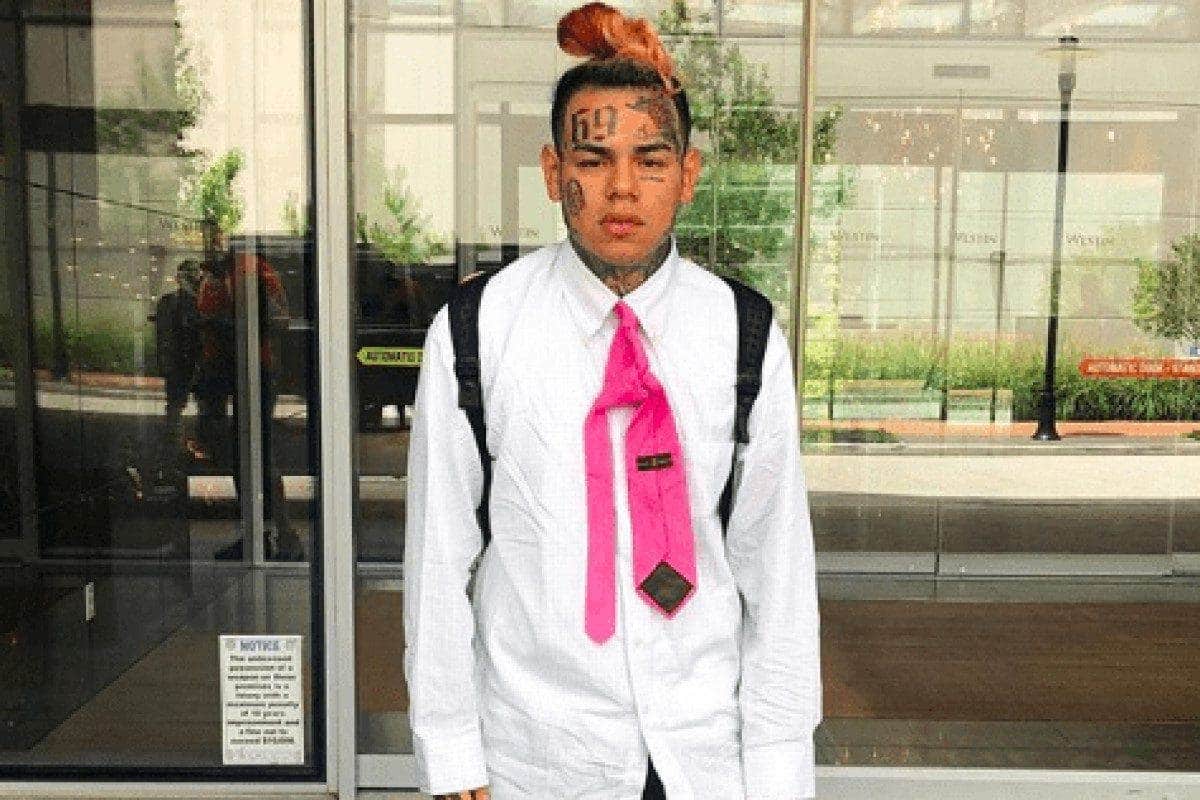
The criminal history of Daniel Hernandez, known globally as Tekashi69 or 6ix9ine, is a complex saga of rapid musical success intertwined with violent gang affiliation and a high-stakes federal racketeering case. His 2018 arrest and subsequent decision to testify against the Nine Trey Gangsters fundamentally altered the "street code" in hip-hop.
The Meteoric Rise: From Bushwick to SoundCloud Superstardom
Before becoming a household name for his legal battles, Daniel Hernandez was a high school dropout working at a Brooklyn deli. His transformation into 6ix9ine was a calculated branding effort that combined an aggressive, screaming vocal style with a vivid, rainbow-themed aesthetic. By 2017, his debut single "Gummo" became a viral sensation, peaking at number 12 on the Billboard Hot 100.
The core of 6ix9ine's early appeal was his "untouchable" persona. Unlike many of his peers, Hernandez leaned heavily into a public association with the Nine Trey Gangsters, a violent set of the United Blood Nation. This affiliation provided him with the "street credibility" that many fans craved, but it also laid the groundwork for his eventual downfall. During 2017 and early 2018, his social media presence was defined by provocative "trolling," where he would fly to rival cities and record videos mocking local gangs, all while protected by his Nine Trey security detail.
This period was characterized by a symbiotic—and eventually parasitic—relationship. Hernandez funded the gang’s activities using his music revenue, while the gang provided him with the image of a "real" gangster. However, as the music industry took notice, so did the Federal Bureau of Investigation (FBI) and the Bureau of Alcohol, Tobacco, Firearms and Explosives (ATF).
The Nine Trey Bloods Affiliation: Trading Music for Street Cred
The Nine Trey Gangsters were not merely a background element of 6ix9ine’s career; they were integrated into his management and security. Key figures such as Kifano "Shotti" Jordan served as his manager, while other members like Anthony "Harv" Ellison and Aljermiah "Nuke" Mack were frequently seen in his music videos.
The relationship began to sour in mid-2018. Internal power struggles within Nine Trey led to Hernandez being kidnapped and robbed by his own associates, including Ellison, in July 2018. This incident was a turning point. Hernandez realized that the men he was paying for protection were now viewing him as a target for extortion. Despite the violence, Hernandez continued to release music, but his inner circle was collapsing under the weight of federal surveillance and internal betrayal.
By the time federal agents intervened in November 2018, Hernandez had already attempted to publicly distance himself from the gang during a televised interview on "The Breakfast Club." However, according to the Department of Justice (DOJ), his prior involvement in shootings and armed robberies made him a central figure in their ongoing RICO investigation.
The Federal Takedown: RICO Charges and the Great Betrayal
On November 18, 2018, Daniel Hernandez and several of his associates were arrested on federal racketeering and firearms charges. The indictment alleged that the Nine Trey Gangsters were a "criminal enterprise" involved in murder, robbery, and narcotics trafficking. Hernandez faced a minimum of 47 years in prison, with the potential for a life sentence.
Faced with the prospect of spending the rest of his life behind bars, Hernandez made a decision that would define his legacy: he became a cooperating witness for the government. This move, colloquially known as "snitching," is traditionally considered the ultimate sin in hip-hop culture. However, from a legal perspective, it was Hernandez's only viable path to freedom.
The 5K1 Letter and Legal Cooperation
Hernandez’s cooperation was formalized through a 5K1 letter, a document submitted by prosecutors that details a defendant's "substantial assistance" to the government. This allows a judge to depart from mandatory minimum sentencing guidelines. Over several days of testimony in 2019, Hernandez provided an unprecedented look into the inner workings of Nine Trey. He identified gang members, detailed specific crimes, and even named other celebrities he claimed had gang ties.
His testimony was instrumental in securing convictions for Anthony Ellison and Aljermiah Mack. While the "street" condemned him, the legal system rewarded him. In December 2019, Hernandez was sentenced to just two years in prison (including time already served), far below the 47-year minimum he initially faced.
Post-Prison Reality: Trolling, Records, and Declining Returns
In April 2020, Hernandez was released to home confinement due to the COVID-19 pandemic. He immediately returned to the spotlight, shattering Instagram Live viewership records and releasing the single "GOOBA," which debuted at number three on the Billboard Hot 100. His strategy was clear: lean into the "snitch" label and use the controversy to drive engagement.
However, the initial surge of curiosity eventually gave way to diminishing returns. By 2021 and 2022, his album sales began to plummet. The hip-hop industry largely blacklisted him; major artists refused to collaborate, and radio stations were hesitant to play his music. The controversy that once fueled his rise had become a ceiling for his growth.
By 2024 and 2025, the narrative around 6ix9ine shifted from his music to his frequent legal and personal skirmishes. He faced lawsuits over unpaid bills, allegations of domestic violence, and a highly publicized arrest in the Dominican Republic. As of 2026, the 6ix9ine "phenomenon" serves as a case study in the volatility of internet-driven fame and the consequences of mixing corporate music interests with real-world organized crime.
Comparative Analysis of 6ix9ine’s Career Phases
| Phase | Years | Key Events | Legal Status |
|---|---|---|---|
| The Rise | 2017–2018 | Release of "Gummo," "Kooda," and "Day69." Viral fame. | Active investigation by FBI/ATF. |
| The Fall | 2018–2020 | Arrested on RICO charges; testified against Nine Trey. | Incarcerated / Cooperating Witness. |
| The Comeback | 2020–2021 | Released "GOOBA"; "TROLLZ" hits #1. | Home confinement / Supervised release. |
| The Decline | 2022–2025 | Sales drop; legal issues in DR; financial lawsuits. | Civil litigation / Periodic arrests. |
| Current Status | 2026 | Independent artist; limited industry support. | Active supervised release / Ongoing civil cases. |
Why the 6ix9ine Phenomenon Matters in Hip-Hop History
The 6ix9ine saga is more than a celebrity gossip story; it represents a fundamental shift in how the music industry interacts with criminal entities. For decades, hip-hop has maintained a "no-snitching" code, but Hernandez’s case proved that in the digital age, viral fame can—at least temporarily—override traditional cultural norms.
His case also highlighted the dangers of "clout chasing," where artists adopt dangerous personas to gain social media engagement. The federal government's use of the RICO Act in his case set a precedent that has since been used against other high-profile rap collectives, most notably in the YSL RICO case involving Young Thug. Hernandez’s willingness to testify dismantled the myth of the "unbreakable" gang bond, showing that when faced with federal life sentences, self-preservation often outweighs loyalty.
Frequently Asked Questions
Did 6ix9ine actually go to witness protection?
No, Daniel Hernandez declined the witness protection program. He opted to hire a massive, 24/7 private security detail instead, believing that his fame would make it impossible for him to live a "normal" life under a new identity. His security costs have been estimated to exceed $1 million per year.
Is 6ix9ine still in a gang?
As of 2026, Hernandez is not known to be affiliated with any gang. His cooperation with the federal government resulted in a complete severance from the Nine Trey Gangsters. In fact, his testimony made him a "persona non grata" within most gang cultures globally.
How much time did 6ix9ine serve in prison?
Hernandez served approximately 17 months in federal custody before being moved to home confinement in April 2020. His total sentence was two years, but he received credit for time served and was granted an early transition to home confinement due to health risks associated with asthma and the pandemic.
Why was 6ix9ine arrested in the Dominican Republic?
In late 2023 and early 2024, Hernandez faced multiple legal issues in the Dominican Republic, including allegations of assaulting music producers and a separate case involving domestic violence. These incidents highlighted his continued struggle with volatility and legal compliance post-prison.
Can 6ix9ine still tour and perform?
While he can technically perform, 6ix9ine faces significant hurdles. Many venues refuse to book him due to the security risks associated with his presence. Furthermore, he is banned from several countries and has seen limited domestic touring opportunities since his release.
Final Recommendation for Following the Case
For those analyzing the intersection of hip-hop and the legal system, the 6ix9ine case remains the gold standard for understanding federal racketeering (RICO) prosecutions. If you are researching this topic for academic or legal purposes, it is recommended to review the official unsealed court transcripts from the Southern District of New York. These documents provide a factual, unfiltered account of his testimony that often contradicts the sensationalized narratives found on social media. As of 2026, Hernandez remains a cautionary tale of how the pursuit of "clout" can lead to a permanent entanglement with the federal justice system.