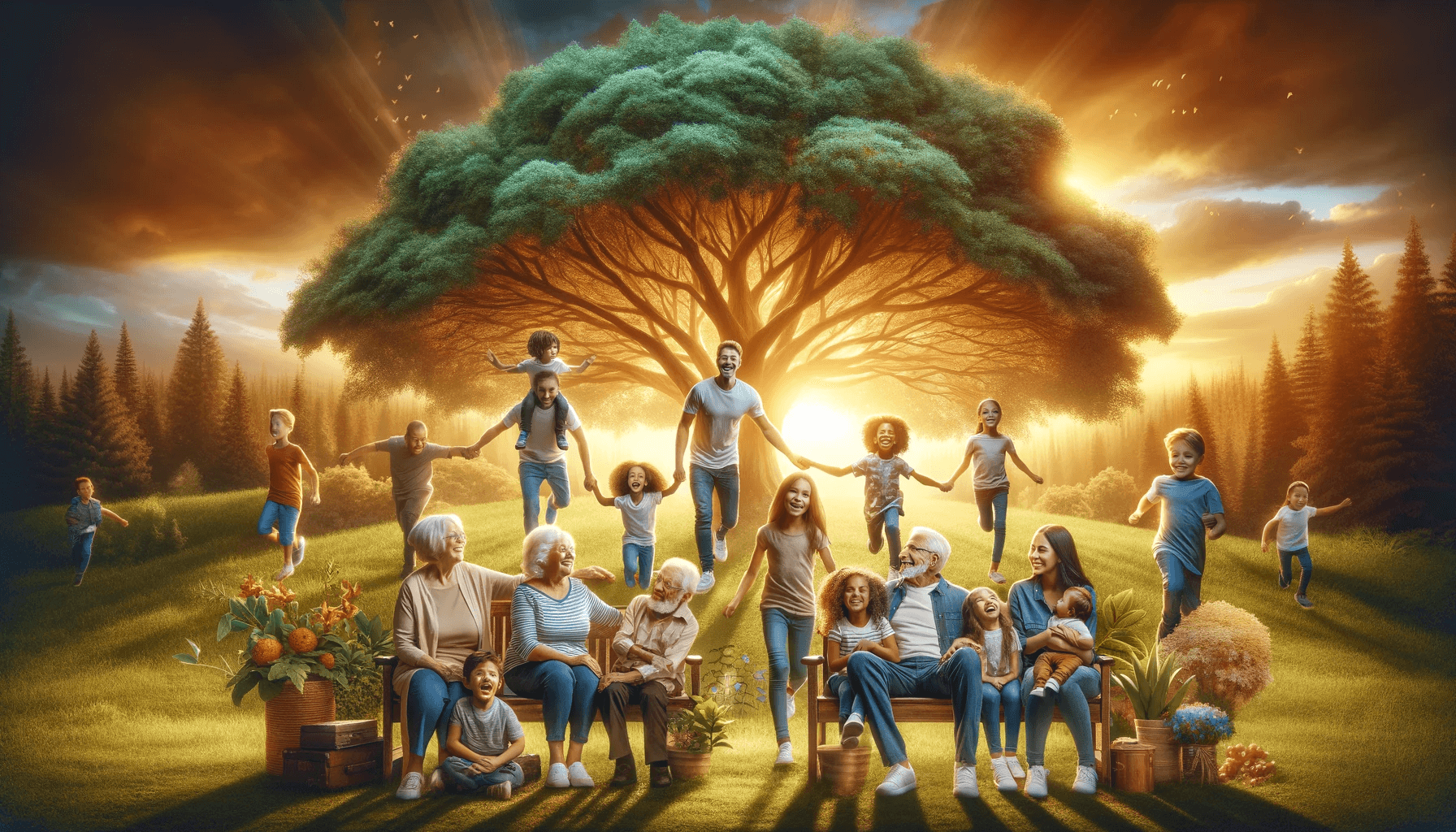
A 6 generation family represents an extraordinary demographic milestone where six living generations of a direct biological or adoptive lineage coexist simultaneously. Achieving this rare testament to longevity and early family formation requires exceptional lifespans combined with young parenting across consecutive generations, unified by intentional efforts to preserve oral history, estate continuity, and intergenerational bonds.
Demographic Drivers Behind Six-Generation Lineages
The existence of a six-generation family is a statistical rarity in modern demographics. For six living tiers of a single family to overlap, several biological and social factors must align over nearly a century. On average, a new generation is introduced every 20 to 30 years. In a typical family structure, this results in three or four living generations at any given point—ranging from great-grandparents to newborns.
To reach six living generations, the average age of childbirth across five consecutive generations must drop to between 15 and 20 years, paired with exceptional longevity at the top tier. For example, if a matriarch or patriarch lives to age 98, their child might be 80, their grandchild 62, their great-grandchild 44, their great-great-grandchild 26, and their great-great-great-grandchild a newborn.
- [Gen 6: G3-Grandparent] ~95–100+ Years Old
- [Gen 5: G2-Grandparent] ~75–80 Years Old
- [Gen 4: Great-Grandparent] ~55–60 Years Old
- [Gen 3: Grandparent] ~38–42 Years Old
- [Gen 2: Parent] ~20–22 Years Old
- [Gen 1: Child / Newborn] 0–2 Years Old
Demographic studies conducted by organizations like the National Institute on Aging highlight that while global average life expectancies have increased over the past century, overall birth rates have declined and the average age of first-time parenthood has risen in many developed nations. Consequently, six-generation families remain remarkably uncommon.
According to historical records from Guinness World Records, the highest number of living generations ever documented in a single direct family line is seven, achieved by the family of Augusta Bunge in the United States in 1989. When a family successfully spans six living tiers today, it provides a rare, living bridge across distinct historical epochs—connecting individuals born in the mid-20th century directly with those who will live well into the 22nd century.
Mapping the Six Living Links: Roles and Relationships
Understanding the structure of a six-generation family requires defining the distinct roles and responsibilities carried by each generation. Rather than operating as isolated households, families that maintain close ties across six tiers often build resilient support networks where each generation fulfills a distinct function.
Generation 6: The Great-Great-Great-Grandparent (3rd Great-Grandparent)
Occupying the apex of the family tree, the 3rd great-grandparent is the living anchor of the lineage. Typically in their nineties or early one-hundreds, this individual offers an living connection to history. Their primary role shifts from active caretaking to serving as a source of wisdom, oral history, and familial identity.
Generation 5: The Great-Great-Grandparent (2nd Great-Grandparent)
Often in their late seventies or eighties, great-great-grandparents frequently act as the senior administrators of family traditions. Having transitioned out of primary workforce participation, they often dedicate time to maintaining family records, coordinating large gatherings, and providing guidance to younger adult descendants.
Generation 4: The Great-Grandparent
Usually in their late fifties or sixties, great-grandparents often bridge the gap between working adults and retirees. They provide practical stability, assisting with financial advice, mentorship, and support for their growing adult children and grandchildren.
Generation 3: The Grandparent
Typically in their late thirties or late forties, grandparents in a six-generation family are often far younger than society's traditional image of a grandparent. Many are still actively advancing their careers while simultaneously guiding their own young adult children through early parenthood.
Generation 2: The Parent
Generally in their late teens or early twenties, the parent handles the day-to-day responsibilities of child-rearing. They rely heavily on the collective wisdom and physical support of the five generations above them, benefiting from an unusually wide safety net of advice and caregiving assistance.
Generation 1: The Child
The youngest member of the lineage symbolizes the continuation of the family's legacy. Born into a deep social and familial network, this child grows up surrounded by living history, surrounded by relatives across a century-wide age spectrum.
Preserving Heritage: Oral Histories, Genealogy, and Archival Methods
A six-generation family possesses a rare opportunity to capture living memory spanning up to ten decades. Without structured archiving efforts, valuable personal narratives, cultural traditions, and historical contexts risk being lost over time.
Structuring Oral History Interviews
Capturing the memories of the fifth and sixth generations requires a clear, respectful approach. Using guidance aligned with standard practices from institutions such as the Library of Congress, family historians should prioritize video or high-fidelity audio recordings rather than relying solely on written notes.
- Focus on Contextual Memory: Ask open-ended questions about daily life, major historical events, community shifts, and early family challenges rather than simple dates.
- Keep Sessions Brief: Conduct multiple 30-to-45-minute interviews rather than marathon sessions to prevent fatigue for elderly relatives.
- Use Visual Prompts: Bring out historical photo albums, heirlooms, or family letters to trigger specific memories and detailed stories.
Digital Preservation and Lineage Verification
To ensure genealogy remains accurate and accessible for future descendants, families should combine physical preservation with modern digital archiving tools.
- Digitize Physical Documents: Scan birth certificates, marriage licenses, land deeds, and photographs at high resolution (minimum 600 DPI for photographs) and store them in redundant cloud backups.
- Cross-Reference Official Public Records: Verify oral family trees against official government census data, military service records, and immigration logs available through repositories such as the National Archives and public genealogical platforms like FamilySearch.
- Maintain a Centralized Family Tree: Use standardized genealogical database formats (such as GEDCOM files) to allow descendants to view, update, and preserve the lineage across digital devices.
Structural Comparison of Living Generational Tiers
The table below outlines the distinct age profiles, family functions, and legacy contributions of each tier in a six-generation family system.
| Tier / Generation Title | Typical Age Bracket | Primary Sociological Role | Key Family Focus & Priorities | Legacy Contribution |
|---|---|---|---|---|
| Generation 6(3rd Great-Grandparent) | 90–105+ years | Living Matriarch / Patriarch | Health maintenance, sharing oral history, giving blessings | Cultural foundation, ancestral memory, oral traditions |
| Generation 5(2nd Great-Grandparent) | 72–89 years | Senior Family Steward | Coordinating family reunions, organizing photo archives, estate continuity | Traditions preservation, genealogical records |
| Generation 4(Great-Grandparent) | 54–71 years | Mentor & Practical Guide | Career completion, estate planning, assisting younger parents | Financial guidance, intergenerational stability |
| Generation 3(Grandparent) | 36–53 years | Active Bridge Generation | Balancing career, supporting young adult children, active care assistance | Practical childcare support, modern wisdom |
| Generation 2(Parent) | 18–35 years | Primary Caregiver | Child-rearing, establishing home and career foundation | Passing down values, nurturing the future line |
| Generation 1(Child / Infant) | 0–17 years | Future Torchbearer | Growth, education, absorbing family culture and identity | Continuation of the family line, future steward |
Financial and Estate Strategies for Multi-Tiered Families
Managing assets, real estate, and healthcare decisions across six living generations presents unique legal and financial considerations. Traditional wealth transfer plans often assume assets pass simply from parent to child upon death. However, when six generations are alive simultaneously, multiple generations may reach retirement age at the same time, necessitating a more comprehensive approach to estate management.
- Multigenerational Estate
- Family Revocable Trust
- Protects Senior Assets & Healthcare Directives
- Generation-Skipping Trust (GST)
- Directs Capital to Gen 1 & 2 Education
- Family Revocable Trust
Generation-Skipping Trusts and Asset Protection
When family assets pass sequentially through five or six generations over a brief period, probate costs and transfer taxes can repeatedly erode wealth.
- Generation-Skipping Trusts (GSTs): A GST allows senior family members to pass assets directly to grandchildren or great-grandchildren, skipping intermediate tiers that may already be financially stable. This strategy minimizes redundant transfer taxes across closely spaced generations.
- Family Revocable Living Trusts: Creating a centralized family trust helps consolidate real estate, intellectual property, or family businesses. It ensures seamless management if an elderly relative becomes incapacitated, bypassing prolonged probate court proceedings.
Healthcare Powers of Attorney and Directives
With multiple elders living well into their eighties, nineties, or past one hundred, clear healthcare authorization is critical. Every adult generation (Tiers 3 through 6) should maintain updated Advance Healthcare Directives (living wills) and designate Durable Power of Attorney for healthcare. This prevents legal confusion and ensures medical preferences are respected during critical moments.
Overcoming Cultural and Technological Divides in Large Families
Spanning a century of birth dates inevitably introduces significant differences in cultural norms, communication preferences, and technological familiarity. A great-great-great-grandparent born before widespread television adoption shares a family circle with a child growing up alongside advanced artificial intelligence. Building unity across these differences requires deliberate effort.
- Intergenerational Communication
- Digital Channels
- Secure Video Family Calls
- Private Digital Photo Vaults
- Group Messaging Apps
- In-Person Traditions
- Structured Storytelling
- Annual Multi-Gen Summits
- Shared Heirloom Preservation
- Digital Channels
Bridging Communication Gaps
- Hybrid Gathering Models: While younger generations often rely on instant messaging and social platforms, older generations generally prefer direct phone calls or in-person visits. Establishing a structured communication routine—such as weekly phone calls paired with a secure family photo-sharing application—keeps all generations connected.
- Shared Storytelling Circles: At multi-generational family gatherings, design activities that invite every age group to participate. Pair teenagers or young adults with great-great-grandparents to record family histories or scan old photo albums, turning historical discovery into a joint project.
Establishing Shared Values While Respecting Autonomy
Maintaining unity across dozens of extended relatives requires focusing on shared core values—such as mutual support, education, integrity, and resilience—while allowing individual branches the freedom to make their own lifestyle, career, and personal choices. Avoid letting traditional hierarchies turn into rigid control; leadership within a multi-generational family should focus on encouragement and support rather than control.
Frequently Asked Questions
How common is a 6 generation family?
A six-generation family is extremely rare worldwide. It requires an exceptional combination of high longevity at the top tier (often 95+ years) and young parenting ages (typically between 15 and 20 years old) across five consecutive generations in a single direct lineage.
What is the official title for a 6th generation ancestor?
In standard genealogical terminology, the parent of your great-great-grandparent is called your great-great-great-grandparent or 3rd great-grandparent. Similarly, the child at the base of the six generations is the 3rd great-grandchild to the senior matriarch or patriarch.
What is the world record for the most generations alive in one family?
The documented world record recognized by Guinness World Records belongs to the family of Augusta Bunge (USA), who became a great-great-great-great-grandparent (7th generation) in 1989 at the age of 109, living alongside six direct generations of her descendants.
How do estate plans handle six living generations?
Estate plans for six-generation families frequently use irrevocable or generation-skipping trusts (GSTs) to manage wealth efficiently across multiple living tiers. These structures protect capital from being repeatedly taxed or tied up in probate court as assets pass down the family line.
What is the best way to capture family stories from an elderly matriarch or patriarch?
The most effective approach is to conduct recorded, semi-structured interviews using high-quality video or audio tools. Ask open-ended questions focused on lived experiences and use historical family photographs as prompts to help trigger detailed memories.
Establishing Your Family's Multigenerational Stewardship Plan
Building a lasting family legacy requires intentional organization, ongoing communication, and structured planning. Families aiming to preserve their history and strengthen their ties across multiple generations can follow this clear, step-by-step roadmap:
- Form a Family History Committee: Assign specific responsibilities to relatives across different age groups. Have younger members manage digital scanning and cloud archives, while middle generations coordinate interviews with elderly relatives.
- Establish a Secure Digital Archive: Create a private cloud storage vault to house digitized photos, legal documents, military records, and recorded oral histories. Backup these files across both cloud storage and local physical hard drives.
- Review Legal and Estate Structures: Consult an estate planning attorney experienced in multi-generational wealth management. Ensure that revocable living trusts, advance healthcare directives, and powers of attorney are updated for all adult relatives.
- Schedule an Annual Family Summit: Host an annual gathering—either in person or through a hybrid digital format—to celebrate milestones, welcome new family members, update genealogical records, and reinforce shared values across all living generations.