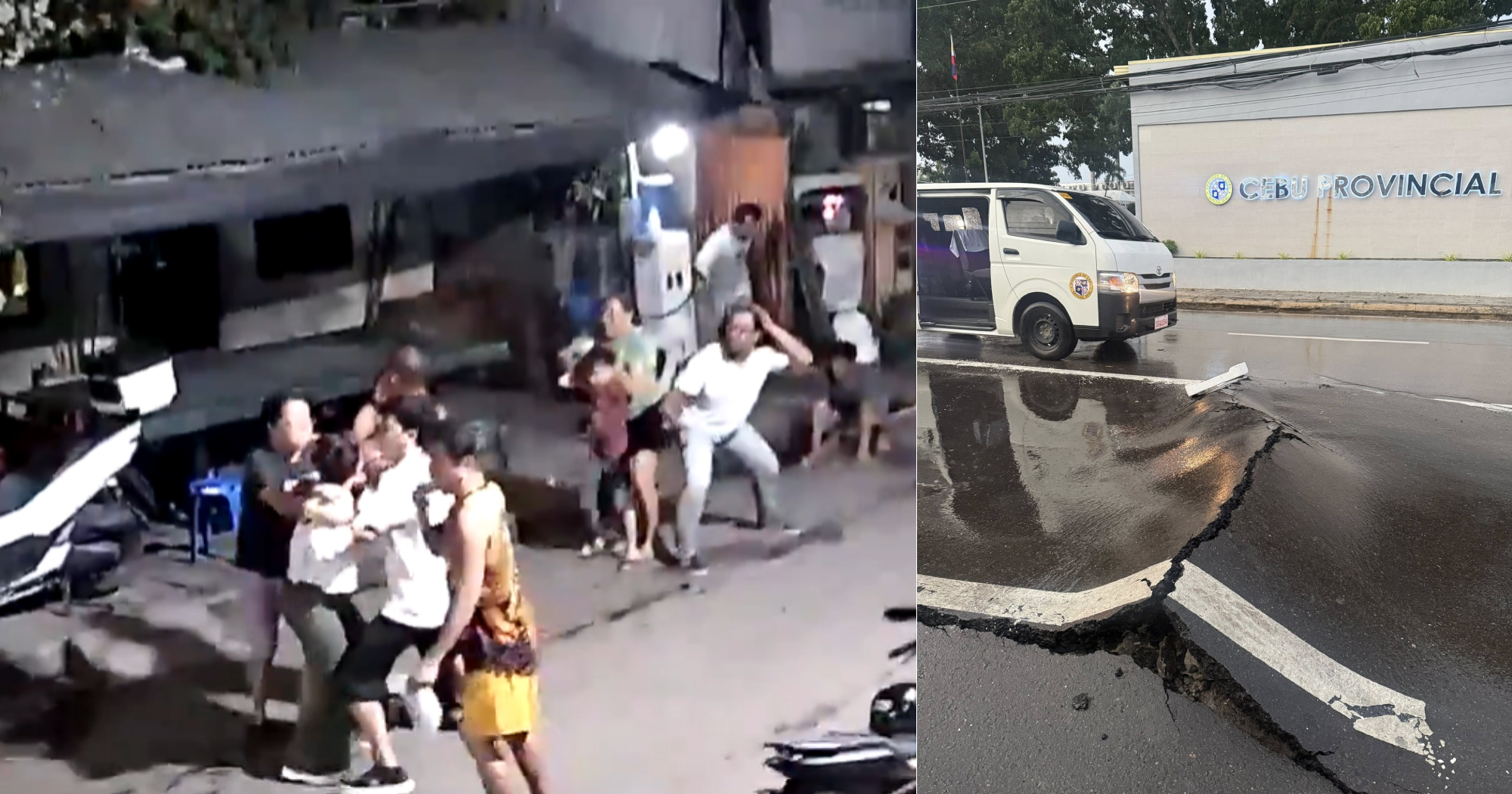
A 6.9 magnitude earthquake in the Philippines typically refers to a major seismic event capable of causing severe structural damage and loss of life, most notably exemplified by the December 15, 2019, quake in Davao del Sur. Such events result from the country's location along the Pacific Ring of Fire, where the subduction of tectonic plates triggers frequent and intense crustal movements. Understanding these events involves analyzing geological faults, building resilience through strict engineering codes, and maintaining rigorous community preparedness.
The Significance of the 6.9 Magnitude Earthquake in Philippine History
The Philippines is one of the most seismically active countries in the world, but specific magnitudes carry distinct weights in the national consciousness. A 6.9 magnitude earthquake is classified as "strong" to "major" on the Richter scale. In the context of the Philippines, the most significant recent event of this exact magnitude occurred on December 15, 2019, centered in the municipality of Matanao, Davao del Sur, in the Mindanao region.
This specific event was part of a sequence of powerful tremors that struck Mindanao in the latter half of 2019. The 6.9 magnitude quake was particularly devastating because it followed several other high-magnitude events, meaning the ground and existing structures were already compromised. It resulted in several fatalities, hundreds of injuries, and the collapse of significant infrastructure, including a prominent grocery store in Padada.
What happened during this event serves as a critical case study for geologists and disaster risk reduction (DRR) experts. The quake was caused by the movement of local faults in the Cotabato fault system. This system is a complex network of ground ruptures that can generate shallow, high-intensity shaking. Because the focus (hypocenter) was relatively shallow, the energy released at the surface was intense, leading to a PHIVOLCS Earthquake Intensity Scale (PEIS) rating of VII (Destructive) in nearby areas.
The Science Behind the Shake: Tectonic Drivers in the Archipelago
To understand what a 6.9 magnitude earthquake means for the Philippines, one must first understand the archipelago's complex tectonic setting. The country is wedged between two major converging tectonic plates: the Philippine Sea Plate to the east and the Eurasian Plate (or the Sunda Block) to the west.
The Philippine Fault Zone (PFZ)
The most dominant terrestrial feature is the Philippine Fault Zone, a 1,200-kilometer-long left-lateral strike-slip fault that transects the entire archipelago from Luzon to Mindanao. While the 6.9 magnitude event in Davao del Sur was linked to the Cotabato fault system, the PFZ remains the primary source of many significant earthquakes. When stress builds up along these fault lines due to plate convergence, the eventual release of energy manifests as the shaking we measure as magnitude.
Subduction Zones and Trenches
The Philippines is surrounded by subduction zones, including the Manila Trench, the Sulu Trench, and the Philippine Trench. In these areas, one plate is being forced beneath another. A 6.9 magnitude earthquake occurring offshore in these trenches can pose a significant tsunami risk. However, the 2019 Mindanao quake was inland, highlighting that "what happened" was primarily a terrestrial disaster characterized by ground rupture and liquefaction rather than oceanic displacement.
Immediate and Long-Term Impacts of a 6.9 Magnitude Event
When a 6.9 magnitude earthquake strikes a populated area in the Philippines, the consequences are multifaceted, affecting the economy, public health, and urban development.
Structural Integrity and Engineering Failures
One of the most immediate outcomes of the 6.9 quake was the exposure of "soft-story" buildings and non-ductile concrete structures. In Mindanao, many older buildings or those built without strict adherence to the National Building Code of the Philippines (NBCP) suffered catastrophic failures. This magnitude serves as a "stress test" for urban planning. It revealed that even relatively new structures could fail if the soil conditions—such as the presence of alluvial deposits prone to liquefaction—were not properly accounted for during the foundation design.
Socio-Economic Disruption
Beyond the immediate rubble, a 6.9 magnitude event triggers a cascade of economic challenges. In 2026, we look back at these events as catalysts for regional inflation and displacement. When local markets and distribution centers are destroyed, food security is threatened. For the Mindanao region, which is a major agricultural hub, the damage to irrigation systems and rural roads meant that produce could not reach the ports, leading to millions of pesos in lost revenue.
Psychological and Social Trauma
The term "earthquake swarm" became a household phrase following the 6.9 magnitude event. When a large quake is followed by hundreds of aftershocks, the population experiences sustained psychological stress. This led to a phenomenon where residents preferred sleeping in tents outdoors for weeks, fearing that their homes—even those marked safe—would collapse during an aftershock.
Comparing Seismic Scales and Their Meaning
Understanding the difference between Magnitude (the energy released) and Intensity (the perceived shaking and damage) is crucial for interpreting reports from PHIVOLCS.
| Feature | Magnitude (Richter/Mw) | Intensity (PEIS) |
|---|---|---|
| Definition | Instrumental measure of energy released at the source. | Qualitative measure of effects on people, structures, and environment. |
| Measurement | Fixed value for a single earthquake (e.g., 6.9). | Varies depending on distance from the epicenter and local soil. |
| Observation | Seismographs and mathematical models. | Visual inspection and human testimony. |
| Typical Range for 6.9 | Constant at 6.9. | Can range from Intensity IV (Moderately Strong) to Intensity VIII (Very Destructive). |
A 6.9 magnitude earthquake essentially means that a massive amount of energy was released. However, "what it means" for a specific town depends entirely on the PEIS. A town 50 kilometers away might feel an Intensity V (Strong), while a town directly above the rupture might experience Intensity VII or VIII.
Lessons Learned: Engineering and Building Codes
The 6.9 magnitude earthquakes of the past decade have forced a re-evaluation of the National Building Code. As of 2026, the focus has shifted from merely surviving a quake to "functional recovery." This means buildings should not only remain standing but should also be usable shortly after the event.
- Soil Testing Requirements: There is now a stricter mandate for comprehensive geotechnical studies before constructing multi-story buildings. In areas like Davao and Metro Manila, where soil can behave like liquid during intense shaking (liquefaction), standard foundations are no longer sufficient.
- Retrofitting Older Structures: The 2019 events highlighted that many public buildings, such as schools and hospitals, were built under older, less stringent codes. National programs have since been accelerated to retrofit these "legacy" buildings with carbon fiber wraps or base isolators.
- The "Big One" Preparedness: The 6.9 magnitude events are often viewed as "dress rehearsals" for the predicted 7.2 magnitude earthquake along the West Valley Fault in Metro Manila. If a 6.9 can cause such damage in Mindanao, a 7.2 in the densely populated capital would be exponentially more catastrophic.
Disaster Response and Recovery Frameworks in 2026
As of 2026, the Philippine government, through the National Disaster Risk Reduction and Management Council (NDRRMC), has refined its response protocols based on the lessons from 6.9 magnitude events.
The "National Earthquake Resilience Program" now emphasizes decentralized response. Recognizing that a 6.9 magnitude quake can sever communication lines and collapse bridges, local government units (LGUs) are now required to maintain independent emergency caches and satellite-based communication systems.
Furthermore, the integration of the FaultFinder app and real-time seismic monitoring by PHIVOLCS allows for faster issuance of "Earthquake Information" bulletins. Within minutes of a 6.9 event, local authorities now receive automated intensity estimates, helping them prioritize search and rescue operations in the hardest-hit zones.
Practical Steps for Earthquake Preparedness
Given that the Philippines will inevitably face another 6.9 magnitude earthquake or higher, individual and communal preparedness is the most effective tool for reducing casualties.
Before the Event
- Structural Audit: Have a licensed civil engineer check your home for cracks or structural weaknesses. Ensure that the house is not built on a fault line or in a high-risk liquefaction zone.
- Secure Heavy Furniture: A common cause of injury in 6.9 magnitude quakes is falling cabinets, televisions, and appliances. Bolt these items to the wall.
- Emergency Kits: Maintain a "Go Bag" containing at least three days' worth of water, non-perishable food, a whistle, a flashlight, a first-aid kit, and copies of important documents.
During the Event
- Drop, Cover, and Hold on: This remains the gold standard. Seek shelter under a sturdy table and hold on to it.
- Stay Away from Glass: In urban areas, falling glass from high-rise buildings is a major hazard.
- If Outdoors: Move to an open area away from power lines, trees, and buildings.
After the Event
- Expect Aftershocks: A 6.9 magnitude quake will produce significant aftershocks. Some may be nearly as strong as the initial quake (magnitudes of 5.0 to 6.0).
- Check Utilities: Turn off gas valves and check for electrical damage to prevent fires.
- Wait for Official Clearance: Do not re-enter damaged buildings until they have been inspected by local building officials or structural engineers.
What a 6.9 Magnitude Earthquake Means for You
Ultimately, a 6.9 magnitude earthquake in the Philippines is a reminder of the country's geological reality. It means that the earth is shifting and that our infrastructure must adapt to survive. For the average citizen, it means the difference between being a victim and a survivor lies in proactive preparation and the refusal to be complacent during periods of seismic quiet.
FAQ
How many 6.9 magnitude earthquakes have hit the Philippines recently?
While the Philippines experiences thousands of earthquakes annually, events of 6.9 magnitude are less frequent. The most notable one in the last decade occurred on December 15, 2019, in Mindanao. Other large events, such as the 7.6 magnitude quake in late 2023, often overshadow smaller (but still major) 6.9 events in public memory.
Can a 6.9 magnitude earthquake cause a tsunami?
Yes, if the earthquake occurs underwater and involves vertical displacement of the seafloor. While the 2019 Mindanao 6.9 event was inland and did not cause a tsunami, any earthquake above magnitude 6.5 located offshore in the Philippine or Manila Trenches is monitored closely by PHIVOLCS for tsunami potential.
Is a 6.9 earthquake considered "The Big One"?
No. "The Big One" usually refers to a specific predicted 7.2 magnitude earthquake along the West Valley Fault in Metro Manila. A 6.9 magnitude quake releases significantly less energy than a 7.2 (as the Richter scale is logarithmic), but it is still categorized as a major earthquake capable of widespread destruction.
What is the safest place to be during a 6.9 magnitude earthquake?
The safest place is an open area away from structures, trees, and power lines. If you are indoors, the safest action is to "Drop, Cover, and Hold On" under a sturdy piece of furniture until the shaking stops. Do not attempt to run outside while the ground is moving, as falling debris is a leading cause of injury.
Next Actions for Residents and Property Owners
If you live in a high-risk seismic zone in the Philippines, your next step should be a professional evaluation of your residence or workplace. Consult the PHIVOLCS FaultFinder to see if your property sits near an active fault line. Additionally, participate in the quarterly "National Simultaneous Earthquake Drill" (NSED) to ensure that your family or employees know exactly how to react when the next major tremor occurs.