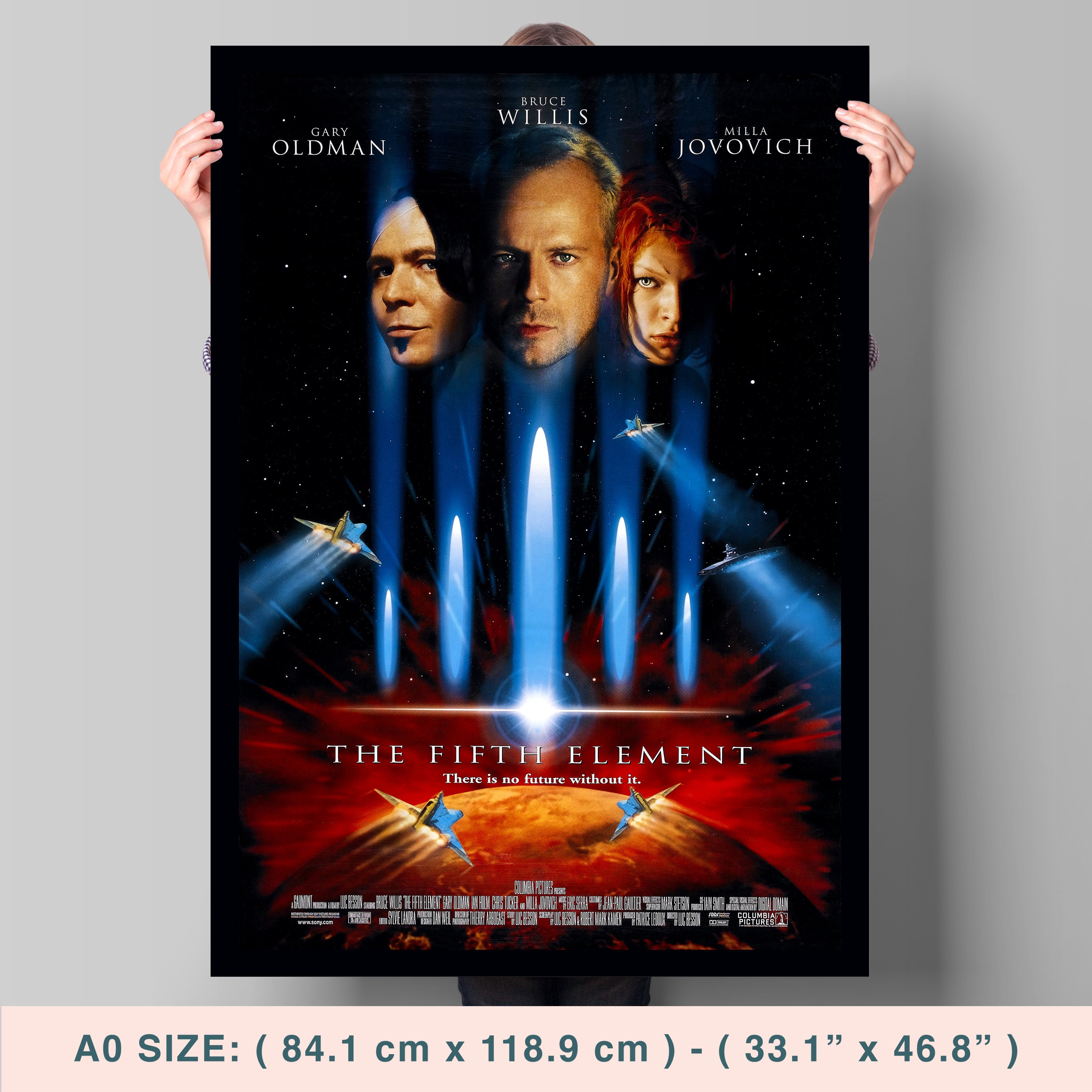
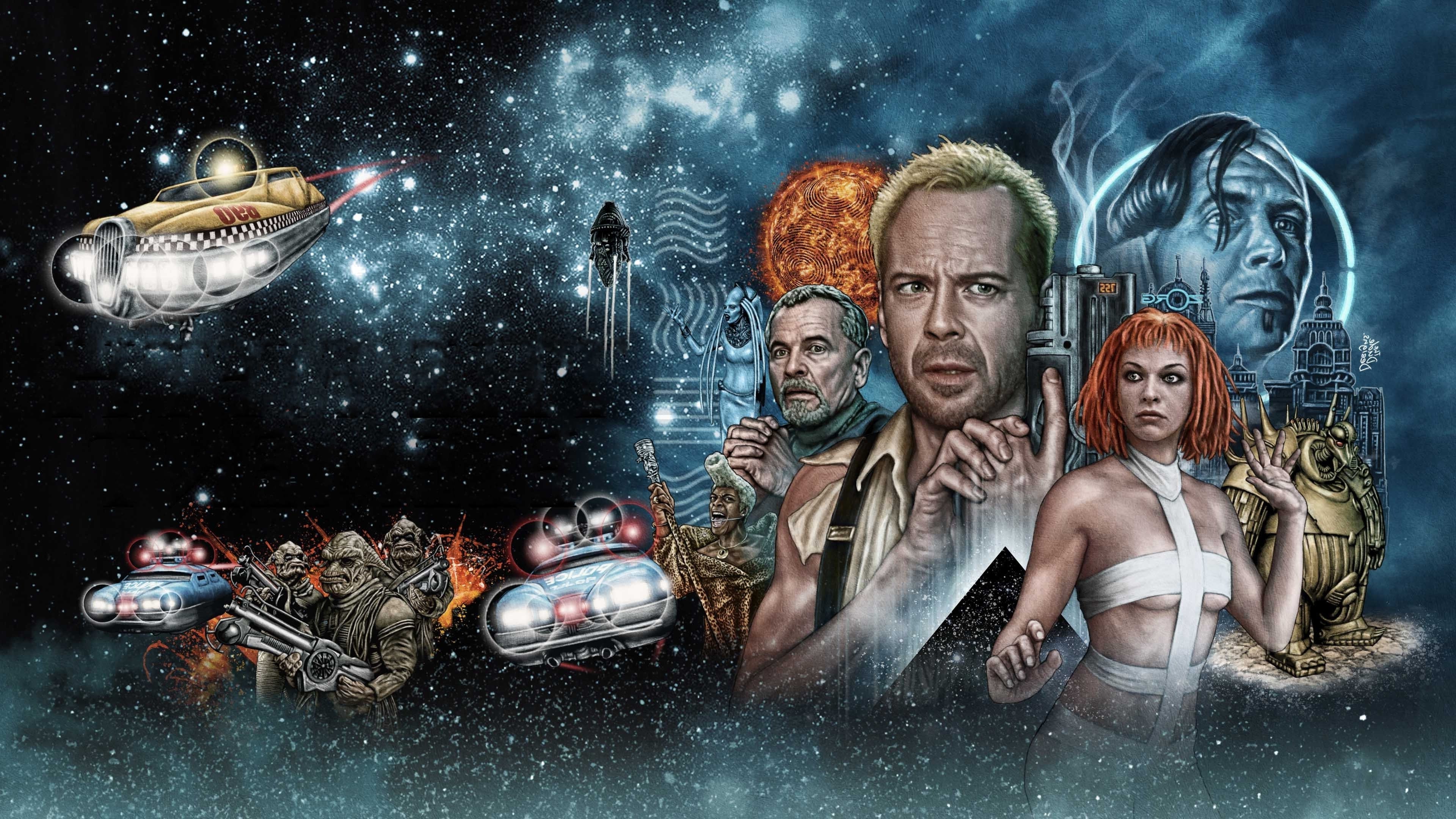
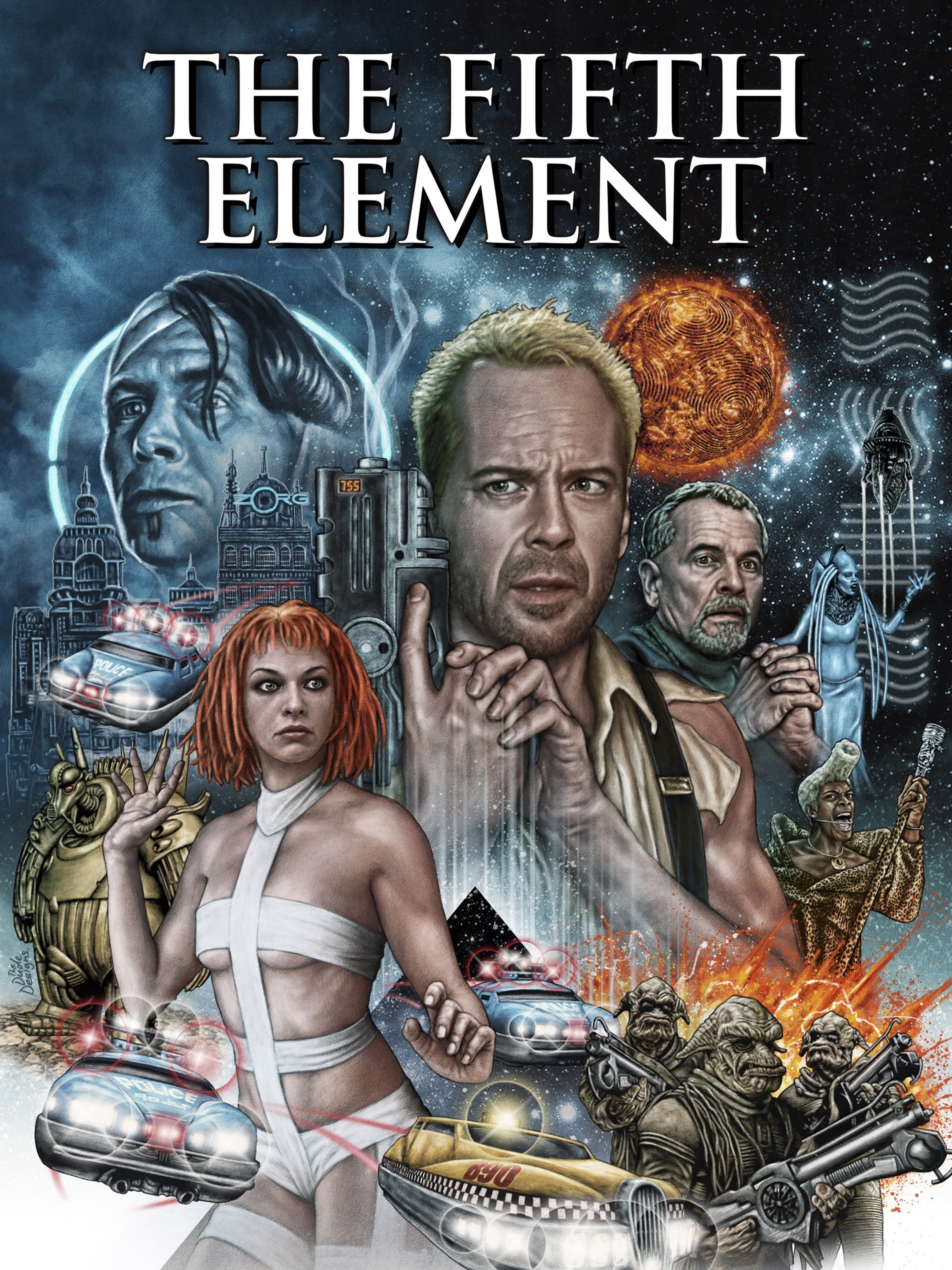
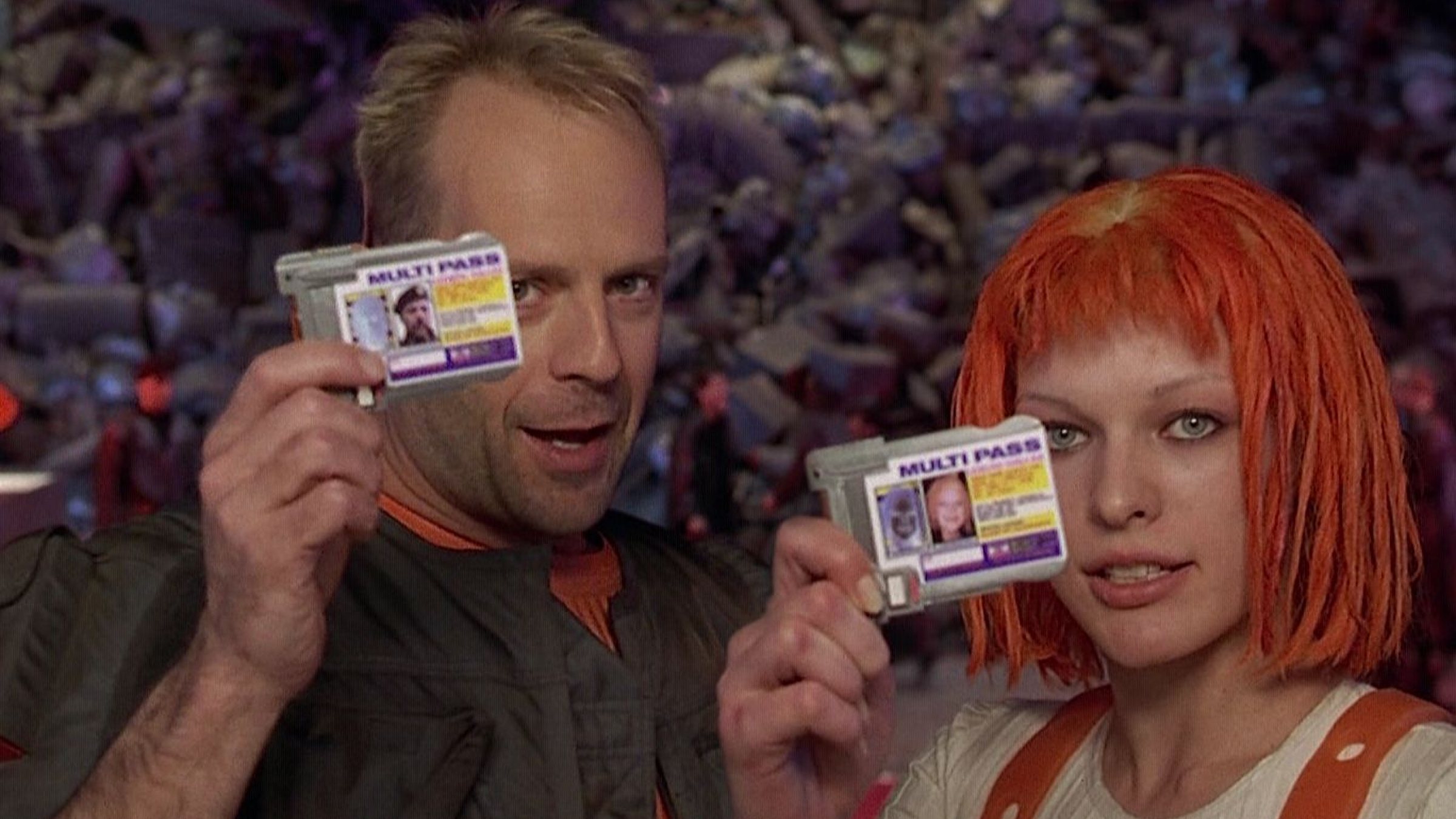
The Fifth Element is a seminal 1997 science fiction film directed by Luc Besson, centered on the quest to protect Earth from an ancient cosmic threat. By combining four elemental stones with a mysterious "fifth element," protagonist Korben Dallas and the supreme being Leeloo must thwart the Great Evil to ensure humanity's survival.
Nearly three decades after its initial release, The Fifth Element remains a towering achievement in world cinema, particularly within the science fiction genre. As of 2026, the film’s influence persists in fashion, digital effects, and narrative world-building. What began as a teenage daydream for Luc Besson eventually manifested as a $90 million production—the most expensive non-Hollywood film ever produced at the time. This article explores the intricate details of the film’s development, its enduring characters, the technical artistry behind its visuals, and its status as a cornerstone of cult cinema.
The Narrative Foundation and the Five Elements
The story of The Fifth Element is rooted in a fictionalized cosmic prophecy. Every five thousand years, a "Great Evil" returns to the universe with the sole purpose of extinguishing all life. The only weapon capable of stopping this entity is a combination of five elements. Four of these are represented by physical stones—Earth, Air, Fire, and Water—while the fifth is a biological "Supreme Being" that acts as the focal point for the other four.
The film opens in 1914 Egypt, where a race of benevolent aliens known as the Mondoshawans arrive to retrieve these elements for safekeeping as World War I looms. Fast-forwarding to the 23rd century, the Mondoshawans attempt to return the elements to Earth as the Great Evil approaches, but their ship is destroyed by the Mangalores, a mercenary alien race hired by the film’s antagonist, Jean-Baptiste Emanuel Zorg.
The core of the movie follows the reconstruction of the Fifth Element from a handful of surviving cells. This process creates Leeloo, a highly advanced being who escapes her creators and literally falls into the life of Korben Dallas, a world-weary, ex-special forces major turned taxi driver. The narrative then shifts into a high-stakes race against time, moving from the neon-soaked skylines of a futuristic New York City to the luxurious space resort of Fhloston Paradise.
Character Profiles and Archetypes
One of the reasons The Fifth Element has maintained its popularity through 2026 is its masterful characterization. Luc Besson, along with co-writer Robert Mark Kamen, created a cast of characters that feel both archetypal and entirely unique.
Korben Dallas (Bruce Willis)
Korben Dallas serves as the audience's anchor in a chaotic future. Willis portrays him with a blend of "everyman" exhaustion and elite competence. Unlike many sci-fi heroes of the 1990s, Dallas is motivated by a simple desire for peace and a "perfect girl," rather than abstract notions of heroism. His military background provides the necessary skills for the film’s third-act combat sequences, but his vulnerability makes him relatable.
Leeloo (Milla Jovovich)
Leeloo, or Leeloominaï Lekatariba Lamina-Tchaï Ekbat De Sebat, is the heart of the film. Jovovich’s performance required the creation of a fictional language (the Divine Language) consisting of over 400 words. Leeloo represents the duality of the "Supreme Being"—possessing the power to destroy the Great Evil while remaining innocent and curious about the human condition. Her struggle to process human history, specifically the concept of war, provides the film's primary emotional weight.
Jean-Baptiste Emanuel Zorg (Gary Oldman)
Zorg is a quintessential eccentric villain. As an industrialist working for the Great Evil, he justifies his destruction through a twisted interpretation of the "broken window fallacy," arguing that chaos creates jobs and fuels the economy. Oldman’s performance is famously heightened, featuring a Southern-inflected accent and a transparent plastic headpiece that exemplifies the film’s unique aesthetic.
Ruby Rhod (Chris Tucker)
Perhaps the most polarizing and ultimately celebrated character is the media personality Ruby Rhod. In the 23rd century, celebrity culture is amplified to its logical extreme. Ruby Rhod is hyper-verbal, gender-fluid in his fashion, and obsessively concerned with "the buzz." Tucker’s high-energy performance serves as a comedic counterpoint to the film’s more serious high-stakes action.
Visual Design: The Influence of Moebius and Gaultier
The aesthetic of The Fifth Element is its most distinguishing feature. Rather than the "used future" or "cyberpunk" aesthetic popularized by Star Wars or Blade Runner, Besson opted for a "daylight" future. The world of 2263 is bright, colorful, and saturated.
This vision was brought to life by two legendary French comic book artists: Jean Giraud (better known as Moebius) and Jean-Claude Mézières. Their influence is visible in the flying taxi designs, the multi-layered verticality of New York City, and the organic shapes of the alien technology. The film essentially functions as a live-action realization of The Incal and Valérian and Laureline, the latter of which Besson would later adapt directly.
Complementing the environmental design were the costumes of Jean-Paul Gaultier. Gaultier designed over 900 costumes for the film, including the iconic "bandage" outfit worn by Leeloo and the leopard-print jumpsuits worn by Ruby Rhod. Gaultier’s involvement ensured that the film didn't just look like science fiction; it looked like high fashion. Even in 2026, these designs are frequently cited as inspirations for contemporary runway shows and pop music visuals.
Technical Milestones and Sound Design
The film’s production was a massive technical undertaking. At a time when CGI was beginning to dominate the industry (following Jurassic Park), The Fifth Element relied heavily on practical effects, miniatures, and intricate prosthetics. The "Big Orange" sequence—the aerial taxi chase—used a combination of massive physical models and early digital compositing to create a sense of scale that remains impressive even by 2026 standards.
The soundscape of the film is equally legendary. Composed by Eric Serra, the soundtrack blends orchestral elements with electronic beats and world music. The centerpiece of the audio experience is the "Diva Dance," performed by the character Diva Plavalaguna. The sequence features the voice of Albanian opera singer Inva Mula. Parts of the aria were considered humanly impossible to sing due to the rapid transitions between notes, requiring Serra to digitally sample and edit Mula’s voice to achieve the final extraterrestrial sound.
| Feature | Description | Key Fact |
|---|---|---|
| Director | Luc Besson | Started writing the story at age 16. |
| Production Year | 1997 | Most expensive non-US production at the time. |
| Visual Designers | Moebius & Jean-Claude Mézières | Based on French "bande dessinée" comics. |
| Costume Designer | Jean-Paul Gaultier | Personally checked every extra's outfit. |
| Main Antagonist | The Great Evil (Mr. Shadow) | Never appears on screen with the protagonist. |
| The 5th Element | Leeloo | Represents "Love" as the ultimate weapon. |
| Modern Status (2026) | 4K Ultra HD / Streaming | Frequently ranked in top 100 sci-fi films. |
The Legacy of the "Supreme Being" Philosophy
Beyond the explosions and alien shootouts, The Fifth Element explores the philosophical question of whether humanity is worth saving. The "Fifth Element" is not a physical object like the four stones, but a living being capable of emotion.
When Leeloo reaches the letter "W" in her search of human history and discovers "War," she loses her will to fulfill her purpose. The film posits that the four elements are useless without the fifth—which is revealed to be love. This thematic resolution, while criticized by some as simplistic during its 1997 debut, has aged well in an era where audiences often crave optimistic or humanistic resolutions to apocalyptic scenarios. The film suggests that technology and ancient prophecies are secondary to the simple, human connection between two people.
Critical Reception and Cultural Evolution
Upon its release in May 1997, The Fifth Element received a mixed response. American critics were often baffled by its "European" sensibilities—its campiness, its refusal to take itself too seriously, and its frantic pacing. However, it was a massive international success, grossing over $263 million worldwide.
In the decades following, critical consensus shifted dramatically. The film is now regarded as a masterpiece of "maximalist" cinema. Its influence is seen in the works of James Gunn, Lana and Lilly Wachowski, and even in modern video game design (notably the Mass Effect series). In 2026, the film is frequently screened at festivals and is a staple of 4K home theater demonstrations, largely due to its vibrant color palette and complex sound mixing.
Frequently Asked Questions
What exactly is the Fifth Element?
The Fifth Element is Leeloo, a "Supreme Being" created to act as a catalyst for the four elemental stones (Earth, Air, Fire, Water). While the stones provide the raw energy, Leeloo provides the focus. The film ultimately reveals that the "Fifth Element" is a metaphor for love, which is the only force capable of activating the weapon to defeat the Great Evil.
Who played the Diva Plavalaguna?
The character was physically portrayed by French actress Maïwenn (who was in a relationship with Luc Besson at the time). However, the incredible operatic vocals were provided by the Albanian soprano Inva Mula. The performance remains one of the most iconic scenes in science fiction history due to its unique blend of opera and techno.
Why is Gary Oldman’s character never in a scene with Bruce Willis?
This is one of the most famous trivia facts about the film: the protagonist (Korben Dallas) and the antagonist (Zorg) never meet, speak to, or even see each other throughout the entire movie. They are constantly in the same locations—such as the spaceport or Fhloston Paradise—but their paths never cross, highlighting the chaotic and coincidental nature of the plot.
Is there a sequel to The Fifth Element?
Despite the film's massive success and cult following, a sequel was never produced. Luc Besson has stated in various interviews over the years that while he had massive amounts of material (originally intending the story to be two films), he preferred to let the original stand as a self-contained story. His 2017 film, Valerian and the City of a Thousand Planets, is often considered a spiritual successor due to its similar visual style.
How can I watch The Fifth Element in 2026?
As of 2026, The Fifth Element is widely available on major streaming platforms, often included in the libraries of services like Netflix, Paramount+, or Sony’s "Core" streaming service, depending on regional licensing. For the best experience, the 2023 30th-anniversary 4K Ultra HD Blu-ray (or the 2026 digital equivalent) offers the highest fidelity, featuring Dolby Vision and a Dolby Atmos soundtrack that fully utilizes the film’s award-winning sound design.
Recommendations for Viewers
To fully appreciate The Fifth Element, viewers should approach it not as a hard science fiction film in the vein of Interstellar, but as a high-concept space opera with heavy influences from European comic books.
- Watch the 4K Remaster: The film’s color-grading is essential to its identity. Avoid older DVD or low-resolution versions that muddy the vibrant oranges and blues.
- Pay Attention to the Background: The world-building is incredibly dense. From the McDonald's drive-thrus of the future to the varying designs of the various alien races, the film rewards repeat viewings.
- Contextualize the Fashion: Understanding that Jean-Paul Gaultier designed the costumes helps explain the deliberate "theatricality" of the characters’ appearances.
- Listen for the Music: Eric Serra’s score is a character in its own right. The way it syncs with the action—particularly in the opening pyramid sequence and the Diva’s performance—is a masterclass in film editing.
Whether you are a long-time fan or a newcomer in 2026, The Fifth Element remains a testament to the power of singular directorial vision. It is a film that dares to be ridiculous, beautiful, and heartfelt all at once.