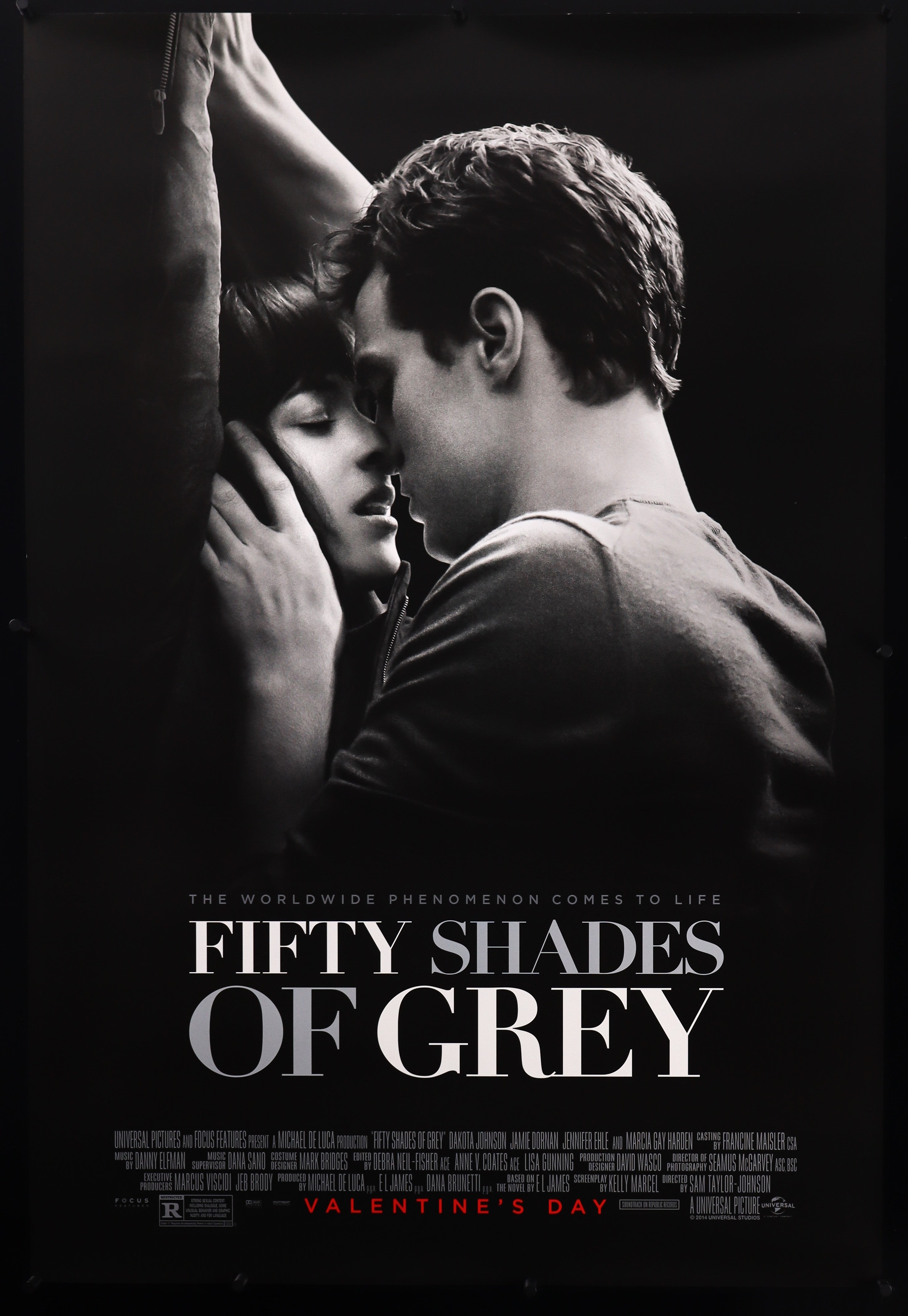
Fifty Shades of Grey (frequently searched as "50 Shades of Gray") is a worldwide erotic romance phenomenon created by British author E. L. James. Originating in 2009 as fan fiction before formal publication in 2011, the story follows college graduate Anastasia Steele and billionaire executive Christian Grey across a bestselling trilogy and a blockbuster film adaptation series.
Origin and Literary Evolution: From Fan Fiction to Global Bestseller
The narrative that became Fifty Shades of Grey began as a web-based creative writing effort. Writing under the pen name "Snowqueen's Icedragon," Erika Mitchell (known professionally as E. L. James) published an episodic Twilight fan fiction serial titled Master of the Universe. The fan fiction recast Stephenie Meyer's vampire characters Edward Cullen and Bella Swan as alternative-universe human counterparts: an enigmatic Seattle corporate tycoon and an insecure college student.
As online readership grew across episodic fan-fiction archives, James revised the text to establish original intellectual property. She replaced the original character names with Christian Grey and Anastasia "Ana" Steele, adjusted the background lore, and expanded the explicit adult narrative themes. In May 2011, an Australian virtual publisher named The Writers' Coffee Shop released the revised narrative as an e-book and print-on-demand paperback under the title Fifty Shades of Grey.
- Master of the Universe (2009 Fan Fiction)
- The Writers' Coffee Shop (2011 E-Book / Print-on-Demand)
- Vintage Books / Random House (2012 Mass-Market Acquisition)
Virality across blogs, social media, and word-of-mouth recommendations drove unprecedented e-book sales in late 2011 and early 2012. Recognizing its commercial potential, Vintage Books (an imprint of Penguin Random House) acquired the publishing rights in March 2012. Upon releasing updated trade paperback and digital editions in April 2012, the trilogy set record-breaking sales speeds across English-language publishing markets. The book series broke global publishing records, selling over 150 million copies worldwide and accelerating the rise of the modern adult romance e-book sector.
The title's spelling often creates search confusion: while the official book and film releases use the British spelling "Grey" to match the protagonist's surname, the Americanized spelling "50 Shades of Gray" remains one of the most common search variations worldwide.
The Complete Trilogy Breakdown: Books, Plot Arc, and Reading Order
The core narrative of the franchise spans three primary novels that trace the complex emotional, contractual, and romantic evolution between Anastasia Steele and Christian Grey.
1. Fifty Shades of Grey (2011 / Vintage Books 2012)
The inaugural novel introduces 21-year-old literature student Anastasia Steele, who interviews 27-year-old billionaire entrepreneur Christian Grey for her college newspaper as a favor to her roommate, Kate Kavanagh. A powerful mutual attraction develops, but Christian reveals that he does not engage in traditional romantic relationships. Instead, he proposes a formal non-disclosure agreement and a non-consensual/BDSM practitioner contract defining a dominant/submissive partnership. The book explores Ana’s negotiation of these boundaries, Christian’s personal trauma, and the tension between emotional intimacy and sexual control, ending in a dramatic emotional rift.
2. Fifty Shades Darker (2012)
Picking up shortly after the events of the first book, the sequel focuses on the reconciliation and renegotiation of Ana and Christian's relationship. Attempting a traditional romantic commitment without formal submissive contracts, the pair must navigate external threats and psychological hurdles. This installment introduces key antagonist figures, including Jack Hyde—Ana's predatory editor at Independent Publishing Group (SIP)—and Elena Lincoln (Mrs. Robinson), the older woman who introduced a teenage Christian to the BDSM lifestyle. The story deepens Christian's back-story and ends with his marriage proposal to Ana.
3. Fifty Shades Freed (2012)
The final chapter in the main trilogy shifts to the challenges of young married life, power imbalances, and physical security. As Ana settles into her career and her new status as Mrs. Grey, Jack Hyde initiates a dangerous campaign of revenge against Christian’s family. Meanwhile, Ana and Christian struggle with unplanned life changes, including an unexpected pregnancy that forces Christian to confront his deepest fears regarding fatherhood and emotional vulnerability.
Film Adaptations: Cast, Production, and Box Office Impact
Universal Pictures and Focus Features acquired the worldwide screen rights to the trilogy in March 2012 for a reported $5 million, setting off one of the most covered production cycles in modern Hollywood history.
| Film Adaptation Trilogy | Director | Script | Global Box Office |
|---|---|---|---|
| Fifty Shades of Grey (2015) | Sam Taylor-Johnson | Kelly Marcel | $569.7 Million |
| Fifty Shades Darker (2017) | James Foley | Niall Leonard | $381.5 Million |
| Fifty Shades Freed (2018) | James Foley | Niall Leonard | $371.9 Million |
Casting and Creative Direction
The casting process generated extensive public speculation. Dakota Johnson was cast as Anastasia Steele, a role that launched her to international stardom. Following the departure of Charlie Hunnam due to scheduling conflicts and creative concerns, Northern Irish actor Jamie Dornan was selected to play Christian Grey.
The first film, released in February 2015, was directed by Sam Taylor-Johnson with a screenplay by Kelly Marcel. Creative differences between Taylor-Johnson and author E. L. James over narrative fidelity and tone led to Taylor-Johnson's departure from subsequent installments. Director James Foley took over for Fifty Shades Darker (2017) and Fifty Shades Freed (2018), with screenplays written by James's husband, author Niall Leonard.
Box Office Performance and Financial Success
Despite mixed reviews from film critics, the trilogy achieved major commercial success at the box office. Produced on modest mid-tier budgets, the three films collectively grossed over $1.32 billion globally, solidifying the franchise as one of Universal Pictures' most profitable romantic drama properties.
| Film Title | Release Date | Production Budget | Global Box Office | Director |
|---|---|---|---|---|
| Fifty Shades of Grey | February 13, 2015 | $40 Million | $569.7 Million | Sam Taylor-Johnson |
| Fifty Shades Darker | February 10, 2017 | $55 Million | $381.5 Million | James Foley |
| Fifty Shades Freed | February 9, 2018 | $55 Million | $371.9 Million | James Foley |
The films were also notable for their commercially successful soundtrack albums. Multi-platinum singles such as Ellie Goulding’s "Love Me Like You Do," The Weeknd’s "Earned It," and Zayn & Taylor Swift’s "I Don't Wanna Live Forever" earned Academy Award and Grammy Award nominations, providing strong promotion for the theatrical releases.
Comparative Analysis: Book Trilogy vs. Film Series
Adapting a written narrative characterized by extensive internal monologue into a visual medium required structural and thematic changes. The original books rely heavily on Ana's internal voice, framed in the prose as her "inner goddess" and subconscious self.
| Key Adaptation Changes: Novels | Key Adaptation Changes: Film Adaptation |
|---|---|
| Deep internal monologues | Visual subtext & dialogue |
| Explicit contract negotiations | Streamlined playroom scenes |
| Gradual, lengthy plot pacing | Accelerated thriller subplots |
Key Differences Between Books and Screen Adaptations
- Internal Monologue vs. Visual Subtext: The novels dedicate significant space to Ana's internal commentary, self-doubt, and romantic ideals. The films replaced these internal passages with visual pacing, subtle physical performances, and practical dialogue.
- Explicitness and Censorship: While the novels contained lengthy, explicit descriptions of BDSM practices, the movie adaptations softened these sequences to secure an R rating from the Motion Picture Association (MPA) rather than an NC-17, aiming to maximize theatrical distribution.
- Pacing of Thriller Subplots: The second and third films streamlined side plots—such as Jack Hyde's stalker campaign and Leila Williams's intrusive appearances—to fit two-hour runtime constraints, focusing screen time on the lead actors' dynamic.
- Character Softening: Christian Grey's behavior in the original novel is noticeably harsher and more controlling than his cinematic representation. Jamie Dornan's portrayal, under the direction of Taylor-Johnson and Foley, emphasizes Christian's psychological vulnerability earlier in the narrative.
Cultural Impact, Critical Reception, and Industry Legacy
The publication of Fifty Shades of Grey marked a major turning point in modern publishing, popular media, and cultural discussions surrounding romance fiction.
Impact on Publishing and "Mommy Porn" Media Framing
The explosive sales of the trilogy changed traditional publishing strategies. Major publishing houses significantly increased acquisitions of adult erotic romance, leading media outlets to coin popular descriptors such as "mommy porn" to describe mainstream erotic fiction targeting adult women. It accelerated the shift toward e-books, as digital reading devices allowed readers to consume adult-themed romance discreetly in public spaces.
Psychological and BDSM Community Critiques
The franchise faced substantial scrutiny from relationship counselors, safety advocates, and members of the real-world BDSM and kink communities. Critics argued that the books blurred the line between healthy, consensual BDSM and abusive relationship dynamics. Community leaders pointed out that Christian Grey frequently violates core BDSM principles—such as informed consent, safe words, clear communication, and emotional safety—by relying on financial coercion, stalking, and psychological intimidation.
Key Takeaway: Real-world BDSM organizations emphasize that consensual kink rests upon clear boundaries and ongoing communication, contrasting with the boundary-crossing behaviors depicted in the early stages of Christian and Ana's relationship.
Literary and Cinematic Critical Reception
From a literary perspective, many reviewers criticized the novels for repetitive prose, thin character development, and predictable dialogue. Similarly, film critics often criticized the screenplays for flat narrative tension. However, Dakota Johnson’s performance consistently received praise for bringing humor, agency, and nuance to Anastasia Steele despite script limitations.
Extended Universe and Spin-off Works: The Grey Series
Following the conclusion of the primary trilogy, E. L. James expanded the franchise by re-telling the original narrative entirely from Christian Grey’s perspective. This companion trilogy provides insight into Christian’s internal thoughts, traumatic childhood experiences, and business dealings.
- Primary Trilogy (Ana's POV) to Companion Trilogy (Christian's POV):
- Fifty Shades of Grey (2011) corresponds to Grey (2015)
- Fifty Shades Darker (2012) corresponds to Darker (2017)
- Fifty Shades Freed (2012) corresponds to Freed (2021)
- ** Grey: Fifty Shades of Grey as Told by Christian (2015):** Covers the events of the first book, detailing Christian’s psychological reaction to meeting Ana, his corporate stress, and the haunting nightmares stemming from his early childhood neglect.
- ** Darker: Fifty Shades Darker as Told by Christian (2017):** Focuses on Christian’s emotional turmoil during his brief separation from Ana, his efforts to change his relationship habits, and his historical connection with Elena Lincoln.
- ** Freed: Fifty Shades Freed as Told by Christian (2021):** Concludes the perspective swap, exploring Christian's anxiety regarding marriage, fear of parenthood, and final resolution of past trauma.
Frequently Asked Questions
What is the correct order to read the 50 Shades of Gray books?
The standard reading order for the original series is Fifty Shades of Grey (Book 1), Fifty Shades Darker (Book 2), and Fifty Shades Freed (Book 3). Readers who want Christian Grey's perspective can follow up with the companion books: Grey (2015), Darker (2017), and Freed (2021).
Why is it spelled "Grey" in the title instead of "Gray"?
The official title uses the British spelling "Grey" because it directly references the surname of the lead male protagonist, Christian Grey. However, searchers frequently use the alternative spelling "50 Shades of Gray" interchangeably.
Was 50 Shades of Gray originally Twilight fan fiction?
Yes, the narrative was originally posted online as an episodic Twilight fan fiction titled Master of the Universe under the pseudonym "Snowqueen's Icedragon." Author E. L. James later altered the names, removed fan fiction elements, and expanded the material into an original novel.
Where can viewers watch the 50 Shades of Gray movies?
Streaming availability for the film trilogy changes periodically based on regional licensing agreements. The movies routinely stream on platforms like Peacock, Max, or Hulu, and remain widely available for digital rental or purchase via platforms like Amazon Prime Video, Apple TV, and Vudu.
Are the 50 Shades movies appropriate for all audiences?
No. All three films in the trilogy are rated R by the Motion Picture Association due to strong sexual content, explicit nudity, and mature language. They are intended strictly for adult audiences.
How to Experience the Franchise Today
For readers and viewers exploring the franchise for the first time, starting with the original material provides the clearest narrative context:
- Start with the Core 2011–2012 Book Trilogy: Begin with the original three novels (Fifty Shades of Grey, Fifty Shades Darker, and Fifty Shades Freed) to experience the narrative as it was initially presented to audiences worldwide.
- Watch the Unrated Film Editions: For screen viewers, the home video unrated cuts of the three films offer extended scenes that include additional narrative context omitted from the theatrical cuts.
- Explore Christian's Perspective for Deep Context: Readers interested in the psychological background of Christian Grey can read the companion trilogy (Grey, Darker, and Freed), which offers insights into his character motivation and corporate operations.