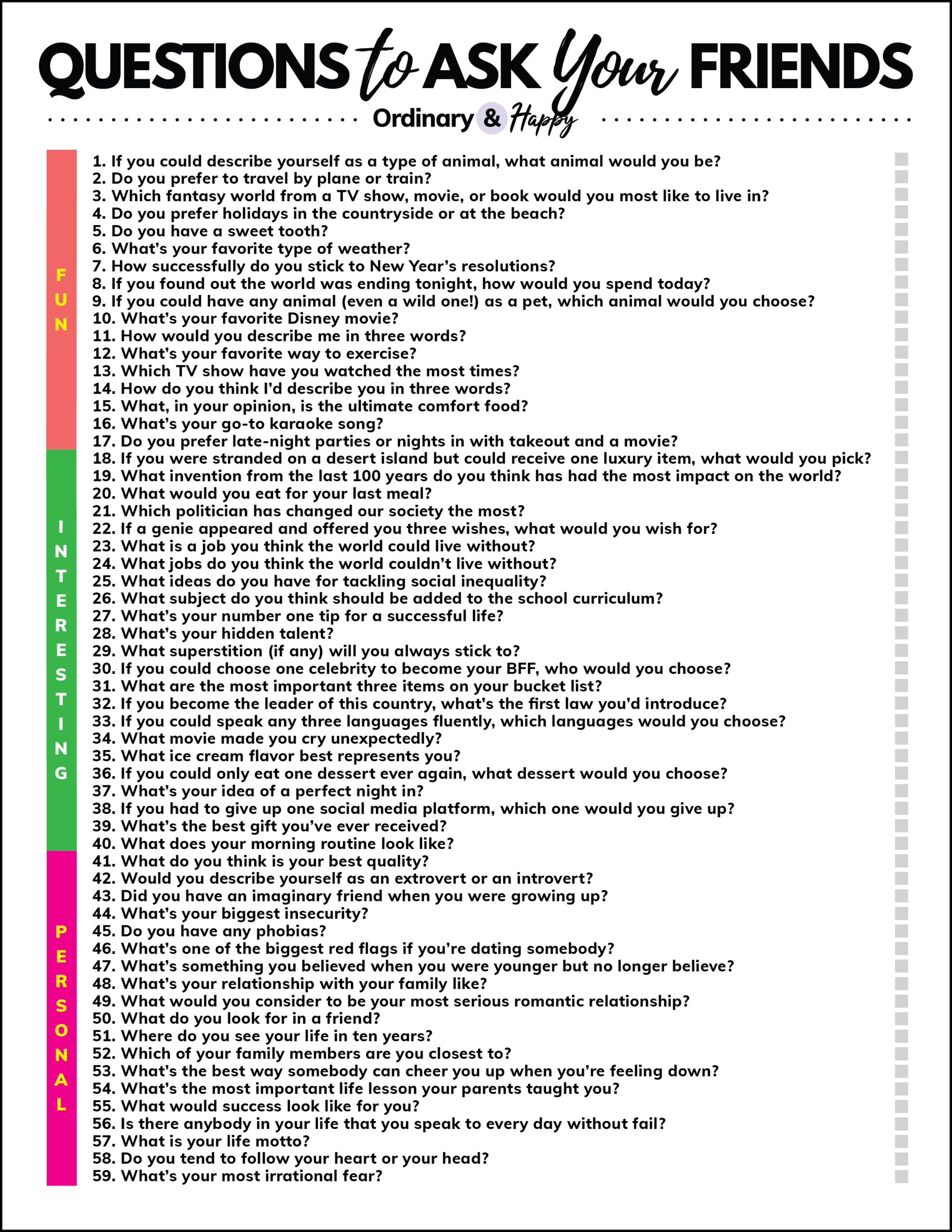
Building meaningful friendships requires moving beyond superficial small talk and engaging in deliberate, vulnerable dialogue. By asking structured, open-ended questions categorized by emotional depth, friends can navigate personal values, past experiences, and future ambitions in a safe environment. This guide provides 50 curated prompts alongside practical strategies to cultivate psychological safety and lasting intimacy.
The Psychology of Deep Conversations: Why Moving Beyond Small Talk Matters
Superficial interactions, such as discussing weather or daily schedules, serve an important social purpose by establishing basic rapport. However, relying exclusively on surface-level topics often leads to conversational fatigue and social detachment. According to Social Penetration Theory, developed by psychologists Altman and Taylor, interpersonal relationships develop through gradual, predictable shifts from superficial topics to intimate self-disclosure.
When individuals exchange personal stories, vulnerabilities, and core beliefs, their brains release oxytocin and dopamine, reinforcing trust and social bonding. This process requires reciprocal vulnerability—a back-and-forth exchange where both participants share at similar levels of depth. Without intentional prompts, conversations tend to settle into comfortable routines. Introducing structured questions helps break these routines, inviting friends to reflect on who they are, what they value, and how they navigate life's challenges.
The 50 Questions: Categorized for Every Stage of Friendship
To ensure questions match the comfort level and maturity of your friendship, this list is organized into four distinct tiers. Start with Tier 1 for new acquaintances or casual settings, and progress toward Tier 4 as mutual trust deepens.
Tier 1: Icebreakers and Core Values (Questions 1–12)
These prompts establish basic rapport, reveal personal philosophy, and highlight daily habits without creating unnecessary emotional pressure.
- What personal value or principle do you refuse to compromise on, regardless of the situation?
- How has your definition of a successful week changed over the last few years?
- What is one hobby or interest you have not tried yet, but feel drawn toward?
- What small, everyday ritual brings you the most consistent joy?
- When you feel overwhelmed, what is your most reliable way to reset?
- Which piece of advice from a mentor or family member has stuck with you the longest?
- How do you prefer to receive support when you are going through a difficult period?
- What is a common misconception people often have about you when they first meet you?
- What book, movie, or song has significantly altered your perspective on life?
- What skill or habit are you currently trying to cultivate?
- How do you usually handle unexpected disruptions to your daily plans?
- What does high-quality rest look like to you?
Tier 2: Retrospectives and Life Lessons (Questions 13–25)
Retrospective questions encourage self-reflection on past decisions, growth trajectories, and pivotal moments that shaped identity.
- What is a belief or opinion you held strongly five years ago that you have since changed your mind about?
- What failure or setback turned out to be one of your most valuable learning experiences?
- If you could give your younger self one piece of insight about relationships, what would it be?
- What was a pivotal turning point in your life that shaped your current trajectory?
- What past accomplishment are you proudest of, even if it received little public recognition?
- How did your family's approach to conflict affect how you handle disagreements today?
- What is a risk you took that did not pay off, and what did you learn from it?
- Which past friendship or relationship taught you the most about personal boundaries?
- What season of your life felt the most challenging, and how did you navigate through it?
- What childhood dream or passion do you still carry with you today?
- What lesson about money or work took you the longest to fully understand?
- How have your priorities shifted since you started your current career or path?
- What experience made you feel most connected to your community or surroundings?
Tier 3: Vulnerability and Inner Mindsets (Questions 26–38)
These prompts require psychological safety and a high level of trust. They address internal struggles, emotional patterns, and active personal development.
- What insecurity or self-doubt do you struggle with most frequently?
- When was the last time you felt truly lonely, and how did you process that emotion?
- What area of your life currently feels like it demands the most emotional effort?
- Is there something you feel you need to forgive yourself for?
- What fear do you worry might hold you back from achieving your long-term goals?
- How comfortable are you asking for help, and what makes it easy or difficult for you?
- What part of your character or personal development are you actively working to improve?
- What expectation from society or family do you feel the most pressure to conform to?
- When was the last time you cried, and what triggered those feelings?
- What personal boundary do you find hardest to enforce with people you care about?
- In what areas of life do you feel most misunderstood by the people around you?
- What emotional habit would you like to unlearn?
- How do you handle internal guilt when you have to say no to someone?
Tier 4: Future Hopes, Fears, and Bond Refinement (Questions 39–50)
Tier 4 questions focus on future orientation, mutual vision, and optimizing the dynamic between you and your friend.
- What is one major goal you want to achieve over the next three years?
- What kind of legacy or impact do you hope to leave in your professional or personal life?
- How can I be a better friend to you in this current chapter of your life?
- What is a project or creative endeavor you dream of pursuing if time and money were not constraints?
- How do you see our friendship evolving as our life circumstances change?
- What major life transition are you anticipating, and how are you preparing for it?
- What is something you want us to experience or accomplish together in the future?
- What environment or setting makes you feel most authentic and relaxed?
- How do you define meaningful personal growth for yourself in the coming decade?
- What fear about aging or getting older crosses your mind most often?
- What is one practical thing someone could do for you right now to lighten your load?
- What is something you appreciate about our relationship that we don't talk about enough?
Framework for Readiness: Selecting the Right Questions
Not every setting or stage of friendship is appropriate for high-vulnerability prompts. Pushing for emotional depth too quickly can cause discomfort, while sticking to surface topics indefinitely can prevent meaningful connection. Use the operational breakdown below to match question intensity with context and mutual readiness.
| Question Tier | Primary Conversational Focus | Ideal Setting & Context | Emotional Risk Level | Primary Communication Objective |
|---|---|---|---|---|
| Tier 1: Icebreakers & Core Values | Daily habits, core principles, personal preferences | Casual gatherings, coffee breaks, road trips | Low | Establish comfort and identify shared values. |
| Tier 2: Retrospectives & Lessons | Personal history, past choices, life trajectory | One-on-one dinners, quiet walks, unstructured catch-ups | Moderate | Understand background and personal growth over time. |
| Tier 3: Vulnerability & Inner Mindsets | Current emotional state, doubts, internal conflicts | Intimate late-night chats, private spaces, quiet home settings | High | Build deep trust and process emotional challenges together. |
| Tier 4: Future Hopes & Bond Refinement | Long-term vision, relationship dynamics, mutual goals | Goal-planning sessions, annual retreats, focused check-ins | Moderate to High | Align long-term expectations and strengthen friendship dynamics. |
Practical Guidelines for Facilitating Meaningful Dialogue
Introducing structured questions into conversation requires subtlety and social awareness. Abruptly firing off deep questions can feel like an interrogation rather than a natural conversation.
1. Apply the Rule of Reciprocal Self-Disclosure
Self-disclosure works best as a gradual, shared exchange. When you ask a deep question, be prepared to answer it first or share your own thoughts soon after. This demonstrates vulnerability, sets expectations for the response depth, and reduces the emotional pressure on your friend.
2. Practice Active, Uninterrupted Listening
Deep conversations fail when participants spend their listening time planning what to say next. Demonstrate active listening by:
- Maintaining open body language and comfortable eye contact.
- Avoiding immediate advice-giving unless explicitly requested.
- Validating emotional experiences before pivoting to solutions (e.g., "That sounds genuinely challenging, thank you for sharing that with me").
3. Use Follow-Up Probes
Keep the conversation focused on the main topic by asking gentle follow-up questions instead of immediately changing the subject. Effective probes include:
- "What was going through your mind when that happened?"
- "How has that experience shaped how you handle similar situations now?"
- "What felt like the hardest part of that decision?"
4. Respect Emotional Boundaries
If a friend hesitates, gives a brief answer, or explicitly states that a topic feels uncomfortable, pivot smoothly. Pushing past established emotional boundaries damages trust rather than building it. Offer an easy exit route by saying, "We can shift to another topic anytime you'd like."
Common Pitfalls That Stall Deep Conversations
Even with good intentions, conversation dynamics can derail if subtle social cues are missed. Avoid these three common pitfalls:
- Treating Prompts Like an Interrogation: Avoid running through questions sequentially without letting responses naturally open up broader discussions. A single question should ideally lead to ten to fifteen minutes of organic dialogue.
- Offering Immediate Unsolicited Advice: When friends share vulnerabilities or ongoing struggles, jumping directly into problem-solving can feel dismissive. Prioritize empathetic listening over fixing.
- Comparing Traumas or Achievements: Avoid shifting the focus back to yourself by over-indexing on your own similar experiences. Keep the spotlight on your friend's narrative before introducing your perspective.
Frequently Asked Questions
How do I transition from small talk to these questions naturally?
Anchor the question to an existing conversational topic or shared context. For instance, if you are discussing a busy workweek, transition using Tier 1 Question 5: "Speaking of busy weeks, when you feel totally overwhelmed like this, what is your most reliable way to reset?"
What should I do if a friend gives a short, surface-level answer?
Accept the short answer without pressuring them to share more. A brief response often signals that the person is either tired, unfocused, or not yet ready for deep self-disclosure. You can gently signal openness by sharing your own concise thought, then letting the conversation flow naturally.
How often should friends engage in deep conversations?
Deep conversations require emotional energy and are not necessary for every interaction. A balance of light banter, shared activities, and occasional deep check-ins creates a sustainable friendship dynamic. Aim for dedicated, intentional catch-ups every few weeks or months depending on your schedule.
Can these questions be used in group settings?
Tier 1 and selected Tier 2 questions work exceptionally well in group settings, such as dinner parties or road trips, as they encourage story-sharing. Tier 3 and Tier 4 questions are best reserved for one-on-one interactions where privacy and focused attention are guaranteed.
Putting Deeper Conversations Into Practice
To introduce these questions into your relationships, start by selecting two or three prompts from Tier 1 or Tier 2 that fit your friend's personality. Schedule a low-pressure environment—such as a quiet coffee, a walk in a park, or a relaxed evening at home—where uninterrupted dialogue is possible.
Prioritize curiosity over performance. The goal of these prompts is not to complete a questionnaire, but to create a reflective space where both you and your friend feel seen, understood, and valued. Over time, integrating intentional questioning into your routine transforms casual acquaintances into resilient, lifelong friendships.