Mastering equine ownership and equestrian riding requires a clear understanding of horse biology, daily care regimens, breed-specific traits, and riding discipline fundamentals. This comprehensive guide details essential husbandry practices, breed classification standards across major equine categories, and core riding methodologies designed to support health, safety, and athletic performance for horse and rider.
Fundamentals of Equine Care and Daily Husbandry
Proper care forms the bedrock of equine health, longevity, and performance. Horses possess complex digestive systems and physiological structures that demand precise, consistent management. Neglecting fundamental husbandry practices quickly leads to metabolic disturbances, lameness, and chronic disease.
- Nutrition: 1.5%–2.0% body weight in forage/day
- Hydration: 8–12 gallons fresh water daily
- Hoof Maintenance: Professional trim every 6–8 weeks
- Dental Care: Annual float to remove sharp points
- Parasite Control: Fecal egg counts & targeted doses
Nutrition and Hydration Standards
As hindgut fermenters, horses require continuous access to high-quality forage to maintain healthy cecum and colon function. A healthy horse must consume approximately 1.5% to 2.0% of its body weight in dry forage daily—primarily high-quality grass or grass-legume mixed hay. Concentrates (grains and commercial feeds) should supplement, not replace, forage, and should only be provided to meet energy demands for heavy work, growth, lactation, or body condition maintenance.
Access to clean, temperature-regulated water is mandatory. An adult horse drinks between 8 and 12 gallons of water per day, a volume that increases substantially in hot weather or during intensive work. Dehydration drastically elevates the risk of impaction colic, making water availability a critical health priority.
Routine Hoof and Dental Maintenance
Equine hooves grow continuously at an average rate of 1/4 to 3/8 inch per month. Routine trimming or shoeing by a certified farrier must occur every 6 to 8 weeks to maintain proper hoof-pastern axis alignment, prevent quarter cracks, and manage heel balance. Daily hoof picking before and after turnouts prevents thrush, an anaerobic bacterial infection of the frog, and removes lodged stones.
Equine teeth continuously erupt throughout the horse's life, wearing unevenly due to the sideways chewing motion. This creates sharp enamel points along the outside of the upper teeth and inside of the lower teeth, leading to oral lacerations, difficulty chewing (quidding), and bit resistance. Annual dental examinations and floating (filing sharp points smooth) by a qualified equine veterinarian ensure proper mastication and bit comfort.
Preventive Health Protocols
Preventive healthcare relies on structured vaccination and deworming schedules tailored to regional pathogen risks. Core vaccinations recommended by veterinary associations include:
- Tetanus
- Eastern and Western Equine Encephalomyelitis (EEE/WEE)
- Rabies
- West Nile Virus
Risk-based vaccines—such as Equine Influenza, Equine Herpesvirus (EHV-1/EHV-4), and Strangles—should be administered based on travel frequency, boarding conditions, and local exposure risk. Modern parasite control relies on strategic deworming guided by fecal egg counts (FEC) rather than rotational calendar treatments, reducing chemical resistance in parasites while controlling small strongyles and tapeworms.
Navigating Horse Breeds: Classification Across Light, Draft, Warmblood, and Pony Types
Understanding equine diversity requires categorizing breeds by conformation, ancestry, and functional utility. Whether analyzing popular light horses, powerful heavy draft draft animals, highly specialized warmbloods, or versatile ponies, each category exhibits distinct physiological and behavioral traits.
Light Riding Horses
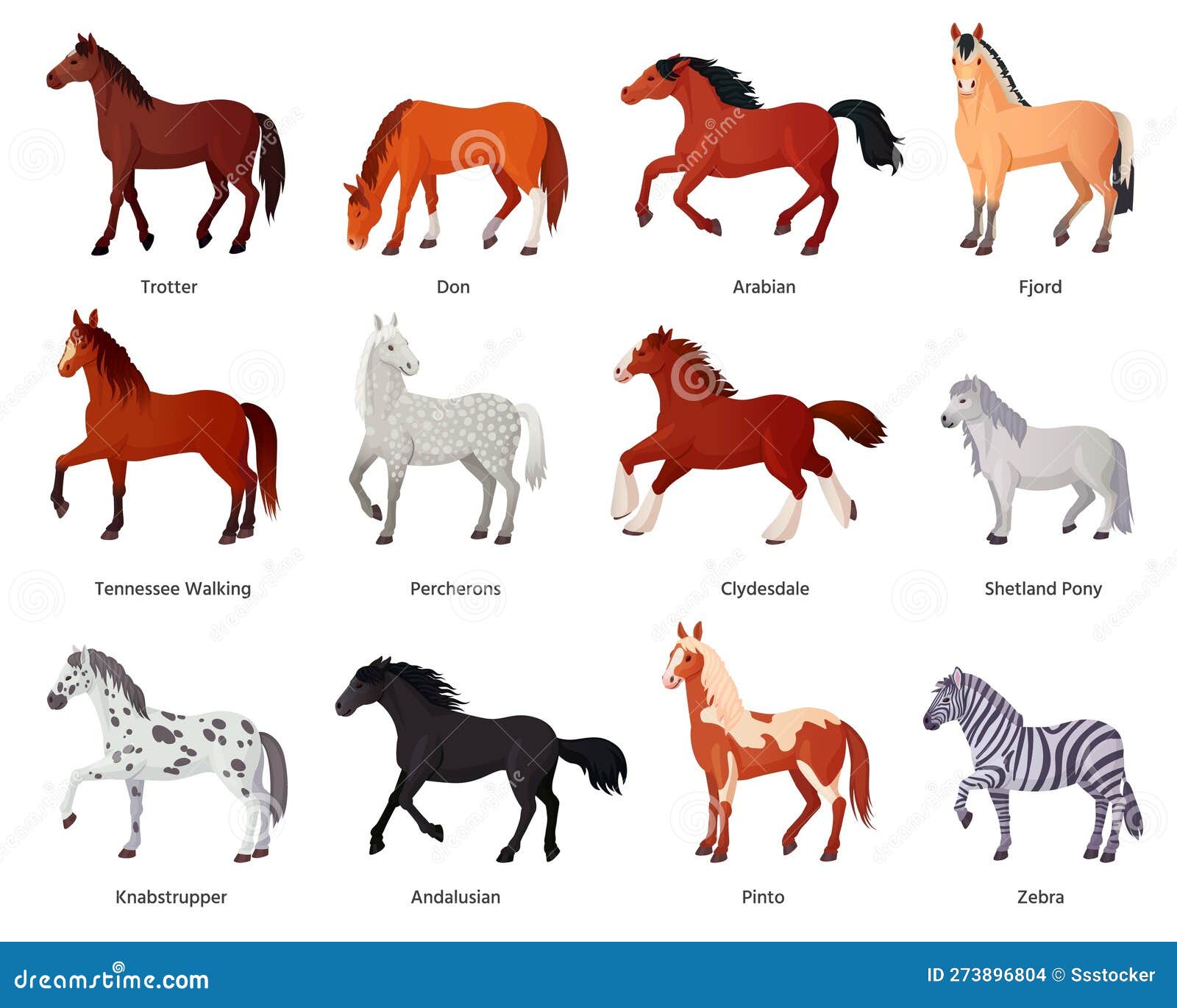
Light horses typically stand between 14.2 and 17 hands high (hh) and weigh between 900 and 1,300 pounds. Bred primarily for speed, agility, endurance, and riding comfort, this classification includes iconic breeds such as the American Quarter Horse, Thoroughbred, Arabian, and Morgan.
The American Quarter Horse excels in sprinting, stock work, and western disciplines due to its muscular hindquarters and low center of gravity. The Arabian, characterized by a dished facial profile and high tail carriage, dominates endurance riding thanks to superior cardiovascular efficiency and high proportions of slow-twitch muscle fibers. The Thoroughbred remains the international standard for flat racing and traditional sport hunting.
Gaited Breeds
Gaited horses represent a specialized subset of light horses possessing natural intermediate four-beat ambling gaits in addition to, or instead of, the standard trot. Breeds such as the Tennessee Walking Horse (known for the running walk), the Paso Fino (celebrated for the classic paso fino, paso corto, and paso largo), and the Missouri Fox Trotter offer exceptionally smooth rides. These smooth movement patterns result from specific genetic variations (specifically the DMRT3 gene) that alter spinal coordination during locomotion.
Warmbloods and Sport Horses
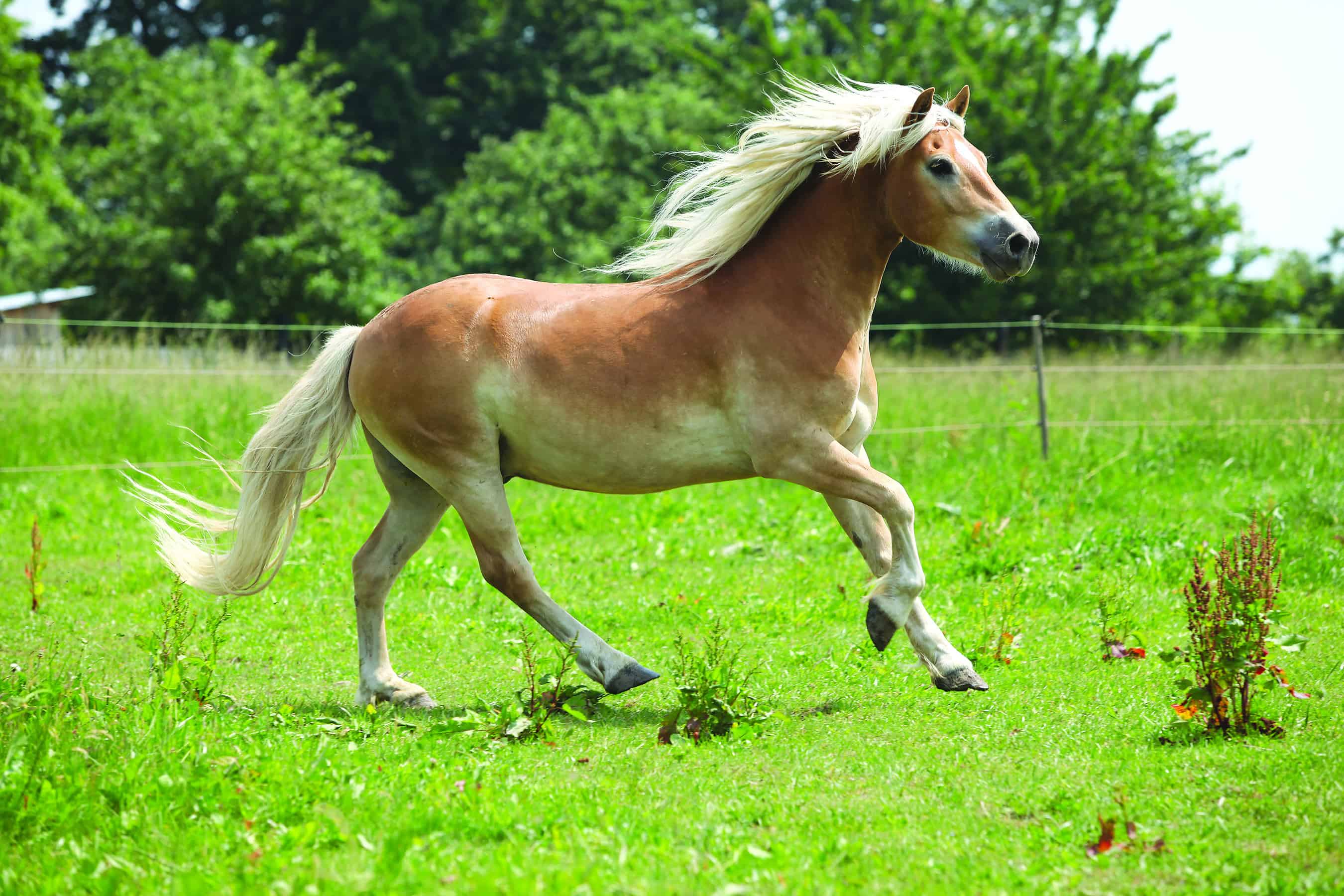
Warmbloods were developed in Europe by crossing heavy draft breeds with refined light horses like Thoroughbreds and Arabians. Regulated by strict studbook registries utilizing athletic performance testing, breeds such as the Hanoverian, Dutch Warmblood (KWPN), Holsteiner, and Oldenburg dominate international English disciplines including dressage, show jumping, and eventing. They combine structural substance and large bone mass with athletic mobility and calm temperaments.
Draft Horses and Heavy Breeds
Draft horses—including the Clydesdale, Percheron, Belgian, and Shire—were selectively bred for heavy hauling, agricultural work, and artillery transport. Standing up to 18 hands or more and weighing between 1,500 and 2,400 pounds, draft breeds feature dense bone, upright shoulders, deep chests, and remarkably docile temperaments ("gentle giants"). Modern draft horses participate in heavy harness driving, logging, hitch classes, and crossbreeding programs to produce heavy sport horses.
Ponies and Small Breeds
By international standard, any equine measuring under 14.2 hands (58 inches) at the withers is categorized as a pony. Breeds such as the Shetland, Welsh Pony, and Connemara exhibit exceptional hardiness, dense bone structure, thick coats, and high feed efficiency. Despite their smaller stature, ponies often possess remarkable proportional strength and jump capacity relative to their size, serving as ideal mounts for young riders and driving enthusiasts.
Comparative Matrix of Equine Breed Categories
The following matrix compares key traits across the primary functional categories of horses, detailing physical metrics, primary applications, and management considerations.
| Breed Category | Average Height Range (Hands) | Average Weight Range (lbs) | Representative Breeds | Primary Disciplines & Uses | Key Management Considerations |
|---|---|---|---|---|---|
| Light Horses | 14.2 – 16.2 hh | 900 – 1,200 lbs | Quarter Horse, Arabian, Thoroughbred, Morgan | Trail, Western Pleasure, Sprinting, Reining, Endurance | High energy variance; requires balanced forage-to-grain ratio based on workload. |
| Gaited Horses | 14.0 – 16.0 hh | 900 – 1,150 lbs | Tennessee Walker, Paso Fino, Missouri Fox Trotter | Trail Riding, Pleasure, Distance Riding, Gaited Classes | Requires specialized shoeing and saddle fitting to accommodate shoulder rotation during ambling gaits. |
| Warmbloods | 16.0 – 17.2 hh | 1,200 – 1,600 lbs | Hanoverian, KWPN, Holsteiner, Oldenburg | Grand Prix Dressage, Show Jumping, Eventing | High caloric needs during training; requires careful monitoring for developmental orthopedic disorders during growth. |
| Draft Horses | 16.0 – 19.0 hh | 1,500 – 2,400 lbs | Belgian, Percheron, Clydesdale, Shire | Heavy Harness, Agricultural Work, Exhibition Hitches | Susceptible to chronic progressive lymphedema (CPL); demands heavy-duty equipment and larger housing space. |
| Ponies | 11.0 – 14.2 hh | 400 – 950 lbs | Shetland, Welsh Pony, Connemara, New Forest | Youth Riding, Driving, Hunter Ponies, Eventing | High risk for equine metabolic syndrome (EMS) and founder (laminitis); strict grazing management required. |
Core Riding Principles: Equitation and Movement Mechanics
Developing effective riding skill requires a clear understanding of biomechanics, aid delivery, and balanced position. Equitation principles apply across both main riding traditions: English and Western.
- Natural Aids (Primary)
- Seat & Weight shifts
- Leg pressures
- Rein contact & open reins
- Voice cues
- Artificial Aids (Secondary)
- Crop / Whip
- Spurs
- Training reins / Martingales
Biomechanics of the Balanced Seat
A balanced seat aligns the rider’s ear, shoulder, hip, and heel in a continuous vertical line perpendicular to the ground. This posture allows the rider to stay centered over the horse’s gravity point (located near the 13th vertebra, behind the withers).
- Pelvic Position: The pelvis must remain neutral—neither tipped forward (hollow back) nor collapsed backward (roach back)—allowing the lower spine to absorb movement fluidly.
- Leg Position: Heels drop naturally, maintaining flexible ankles, while knees and thighs remain soft against the saddle flaps without gripping tightly.
- Upper Body and Hands: Shoulders remain open and relaxed. Hands stay independent of the seat, creating a soft, elastic line of contact from the rider's elbow through the rein to the horse's mouth.
Application of Natural and Artificial Aids
Riders communicate with horses using natural aids (seat, weight, legs, hands, and voice) supplemented when necessary by artificial aids (spurs, crops, martingales).
- Seat and Weight: Tensing or relaxing core muscles and subtly shifting body weight directs speed, impulsion, and directional changes without over-reliance on rein pressure.
- Leg Aids: Used to generate forward energy, ask for lateral movement (side-passing, leg-yielding), and maintain engagement of the hindquarters.
- Rein Aids: Regulate speed, establish directional bend, and shape the horse's head and neck position. Reins should guide, never forcefully pull or control the movement.
- Artificial Aids: Crop and spurs act strictly as extensions of the natural leg aids to reinforce responsiveness, never as tools for punishment.
The Four Natural Gaits
Riders must understand the footing patterns and mechanics of the four natural equine gaits:
- Walk: A symmetrical, lateral four-beat gait without a suspension phase. Footfall sequence: left hind, left fore, right hind, right fore.
- Trot (or Jog): A diagonal two-beat gait with a brief phase of suspension. Diagonal pairs move simultaneously (e.g., right hind and left fore together).
- Canter (or Lope): An asymmetrical three-beat gait with a suspension phase. A left-lead canter follows the sequence: right hind, left hind and right fore simultaneously, left fore (leading leg), followed by suspension.
- Gallop: A fast, four-beat variation of the canter where the diagonal pair breaks into independent footfalls, ending with a distinct phase of flight.
Preventive Healthcare and Emergency Management
Equine care demands proactive emergency preparation. Recognize acute symptoms early to secure prompt veterinary treatment and limit permanent harm.
Colic Recognition and Emergency Response
Colic refers broadly to abdominal pain in horses, ranging from mild gas buildup to fatal intestinal twists (torsion). Recognizing early signs saves lives:
- Early Indicators: Flank watching, biting at the abdomen, pawing the ground, frequent lying down and rolling, lack of gut sounds (borborygmi), elevated heart rate (>40-45 bpm), and refusal of feed.
- Immediate Protocols: Remove all feed immediately. Check vitals (heart rate, respiration, capillary refill time, internal temperature). Walk the horse gently if it attempts to roll violently, and contact an equine veterinarian right away. Do not administer pain medications without explicit instructions from your vet.
- Remove all feed and forage from stall immediately.
- Measure vitals: Heart Rate, Respiration, Temp, Gums.
- Listen for gut sounds in all four abdominal quadrants.
- Call Equine Veterinarian with clear vital data.
- Hand-walk gently only if horse is violently rolling.
Laminitis (Founder) Prevention and Treatment
Laminitis is an inflammation of the sensitive laminae inside the hoof capsule, leading to structural breakdown and potential rotation of the coffin bone (distal phalanx). Causes include excessive consumption of starch/sugars (pasture gorging), systemic infections, hyperinsulinemia (Equine Metabolic Syndrome), or overload laminitis from supporting weight on an injured opposite limb.
Symptoms include a classic "sawhorse stance" (leaning back on heels), strong digital pulses at the back of the fetlock, and extreme reluctance to walk. Emergency care requires immediate cold-water icing of the lower legs, absolute stall rest on deep shavings, and veterinary administration of anti-inflammatory medications.
Equipment, Tack Fitting, and Safety Standards
Using proper equipment ensures both horse comfort and rider safety. Ill-fitting tack causes muscle atrophy, performance refusal, and chronic spinal pain.
Saddle Fit Mechanics
A properly fitted saddle must conform to both horse and rider anatomy.
- Wither Clearance: The gullet must clear the withers by 2 to 3 fingers width when the rider is mounted, ensuring no pressure rests directly on the spinal processes.
- Tree Width and Angle: The angle of the tree points must mirror the angle of the horse's shoulders. A tree that is too narrow pinches the trapeziums muscle; a tree that is too wide presses down onto the spine.
- Panel Contact: Panels must bear weight evenly along the broad back muscles (longissimus dorsi) without bridging (gapping in the middle) or rocking (excessive pressure in the center).
Helmet and Protective Gear Safety Standards
Riders should always wear an approved equestrian helmet compliant with ASTM F1163/SEI or VG1 safety standards. Unlike bicycle helmets, equestrian safety helmets are engineered to absorb impacts from higher falls and protect against equine hoof impacts. Helmets must be replaced immediately following any severe fall or after five years of routine use due to structural foam degradation.
Frequently Asked Questions
What is the ideal daily forage-to-grain ratio for a standard riding horse?
A standard riding horse doing light work should receive 80% to 100% of its daily caloric intake from forage (hay or pasture). Grain or concentrate feeds should only make up 0% to 20% of the total diet to address specific energy shortages or balance vitamin and mineral gaps.
How often should a farrier evaluate and trim a horse's hooves?
A professional farrier should evaluate and trim or shoe a horse every 6 to 8 weeks. This interval prevents overgrowth, maintains proper hoof angles, and preserves balanced weight distribution across the hoof wall.
What is the functional difference between an English saddle and a Western saddle?
English saddles are lighter, have smaller skirts, and lack a saddle horn, facilitating closer leg contact for dressage, jumping, and hacking. Western saddles feature a heavy wooden or synthetic tree, high cantle, broad skirts, and a saddle horn designed to distribute weight broadly for long days in the saddle and working cattle.
How can a horse owner recognize the early signs of colic?
Early signs of colic include pawing the ground, turning to look at the flanks, lying down at unusual times, refusal to eat or drink, lack of intestinal gut sounds, and elevated pulse rates. Immediate veterinary intervention is required if these signs appear.
Why is dynamic saddle fitting important for sport and pleasure horses?
Dynamic saddle fitting prevents tissue damage, pressure sores, and back pain by ensuring the saddle tree adapts to the horse's back as muscles contract and flex during movement. A poorly fitted saddle causes muscle atrophy and behavioral resistance under tack.
Action Plan: Steps for Equine Care and Management
To build an efficient, safe environment for both horse and rider, establish a structured daily management routine and maintain a clear professional support network.
Schedule routine Farrier, Vet, and Dental dates.
Calculate forage ratio based on horse weight.
Inspect saddle clearance and bit fitting quarterly.
Stock an equine emergency kit with vital tools.
Audit safety gear (ASTM/SEI helmet compliance).
Establish a Professional Care Network: Build an active working relationship with a licensed equine veterinarian, a certified farrier, and an experienced equine nutritionist or trainer.
Audit Feeding Schedules: Weigh forage and concentrate feeds with a scale rather than measuring by volume (scoops or flakes) to maintain stable body condition scores (target 4 to 6 on the Henneke 1-9 scale).
Perform Daily Physical Checks: Inspect horses daily for subtle changes in heat or swelling in the lower limbs, track water consumption, and monitor digital pulses and hoof health.
Assemble an Emergency First Aid Kit: Keep a dedicated barn kit stocked with vet wrap, sterile non-stick pads, antiseptic wash, thermometer, stethoscope, bandage scissors, and your veterinarian’s contact details visible near the entrance.