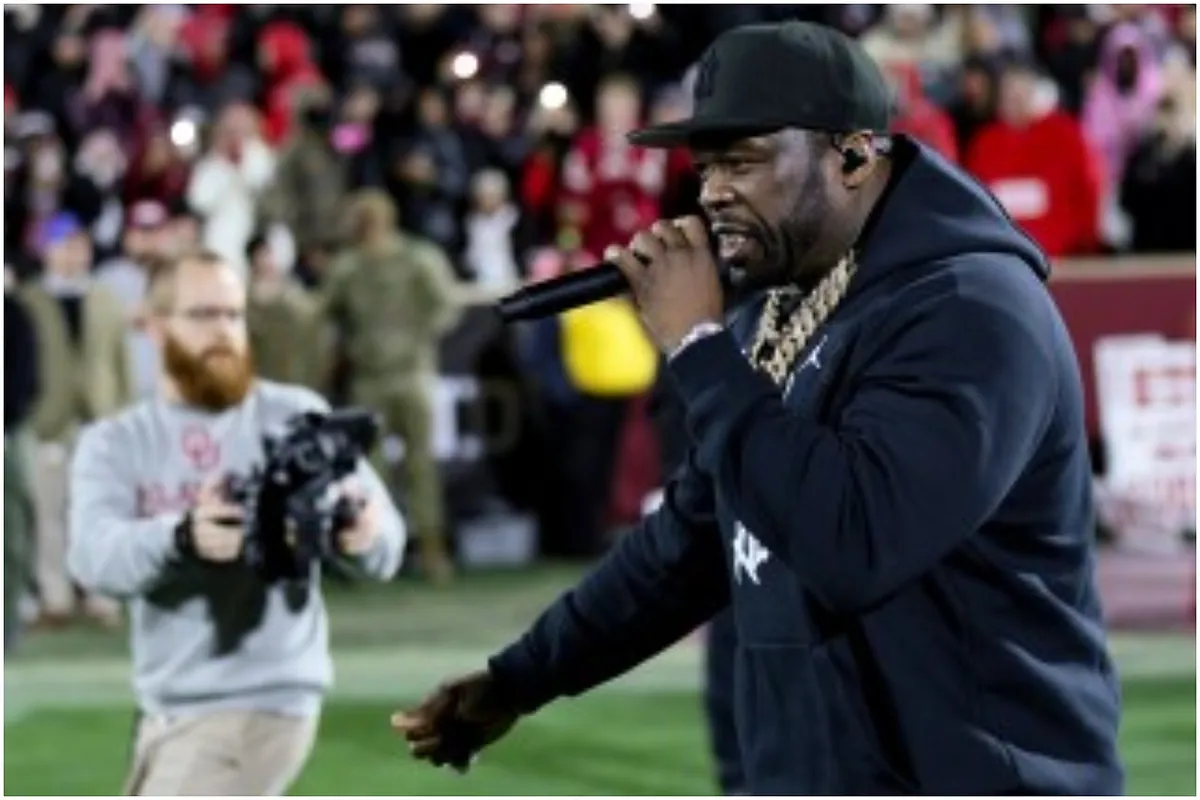
As of 2026, Curtis "50 Cent" Jackson holds a verified estimated net worth of $40 million to $60 million. While this figure is significantly lower than his mid-2000s peak following the Vitamin Water sale, it represents a remarkable financial recovery and a successful pivot from music to a diversified empire spanning television production, spirits, and real estate.
The financial trajectory of Curtis Jackson is one of the most analyzed in the entertainment industry. Unlike many of his peers who rely on touring and streaming, Jackson has built a "recession-proof" portfolio centered on ownership and executive production. To understand his current 2026 valuation, one must look past the headlines of his 2015 bankruptcy and examine the lucrative residuals of the Power universe and the expanding footprint of Sire Spirits.
The Evolution of 50 Cent’s Financial Empire
The foundation of 50 Cent’s wealth was built on one of the most successful debut runs in hip-hop history. His 2003 album, Get Rich or Die Tryin', sold over 13 million copies globally, followed by the multi-platinum success of The Massacre. However, Jackson’s financial genius was revealed not in the recording studio, but in the boardroom.
In the early 2000s, Jackson opted for an equity stake in Glacéau (the parent company of Vitamin Water) in exchange for becoming their spokesperson and developing the "Formula 50" flavor. When Coca-Cola acquired Glacéau for $4.1 billion in 2007, Jackson’s minority stake reportedly netted him between $60 million and $100 million after taxes. This single deal fundamentally changed the blueprint for celebrity endorsements, shifting the focus from flat fees to equity-based partnerships.
By 2026, the "Vitamin Water money" has long been reinvested. Jackson’s current wealth is categorized into four primary pillars: media production, premium spirits, music royalties, and his recent massive expansion into physical film studio infrastructure.
G-Unit Film & Television: The Powerhouse of Wealth
The most significant contributor to 50 Cent's net worth in 2026 is his media empire. G-Unit Film & Television Inc. has evolved from a small production house into a dominant force in premium cable and streaming.
Jackson’s partnership with Starz, which began with the original Power series in 2014, resulted in one of the most successful franchises in television history. By 2026, the Power universe—including Book II: Ghost, Raising Kanan, and Force—continues to generate massive residuals and executive producer fees. Industry analysts estimate that his initial multi-year deal with Starz was worth upwards of $150 million.
Furthermore, Jackson’s 2024/2025 expansion into Shreveport, Louisiana, has significantly increased his asset valuation. The launch of G-Unit Studios in Shreveport involves a long-term lease of a massive city-owned facility, which Jackson is transforming into a production hub. This move provides significant tax incentives and a physical real estate footprint that serves as a hedge against the volatility of the entertainment market.
Sire Spirits: Le Chemin du Roi and Branson Cognac
A verified breakdown of Jackson’s wealth must include his highly successful venture into the spirits industry. Through his company, Sire Spirits, Jackson owns and manages two primary brands: Le Chemin du Roi (Champagne) and Branson Cognac.
Unlike celebrities who simply "front" a brand, Jackson maintains deep operational control. Sire Spirits has secured high-profile distribution deals and official partnerships with major sports franchises, including the Houston Rockets, Sacramento Kings, and the Indiana Pacers. These partnerships integrate his brands into stadium suites and concessions, ensuring a steady B2B revenue stream that complements retail sales.
In recent years, Jackson navigated a complex legal battle involving Beam Suntory regarding an alleged embezzlement scheme by intermediaries. The resolution of these legal matters and the continued expansion of Sire Spirits into international markets remain core components of his annual income.
The 2015 Bankruptcy: Fact vs. Fiction
To accurately assess 50 Cent’s net worth in 2026, it is essential to contextualize his 2015 Chapter 11 bankruptcy filing. Often misunderstood as "going broke," the filing was a strategic move to restructure debts following a $7 million legal judgment regarding a private video and a $17 million judgment related to a failed headphone deal (Sleek Audio).
At the time of filing, Jackson reported assets between $10 million and $50 million. In 2017, he was discharged from bankruptcy after paying off $22 million in debt five years ahead of schedule. He achieved this through a combination of a $13.65 million legal malpractice settlement and liquidating specific underperforming assets. The bankruptcy served as a financial "hard reset," allowing him to protect his core business entities while satisfying creditors.
Verified Asset Breakdown (Estimated 2026)
The following table provides a breakdown of the various sectors contributing to Curtis Jackson’s current financial standing.
| Asset Category | Estimated Value / Contribution | Key Components |
|---|---|---|
| Media Production | $25M - $35M | G-Unit Film & TV, Power residuals, BMF, Fox deal |
| Sire Spirits | $15M - $20M | Le Chemin du Roi, Branson Cognac (Equity & Profits) |
| Music Catalog | $5M - $8M | Royalties for Get Rich or Die Tryin', The Massacre |
| Real Estate & Studios | $10M - $15M | G-Unit Studios (Shreveport), Personal Holdings |
| Endorsements/Misc | $2M - $5M | Clothing (G-Unit), Brand partnerships, Podcast deals |
| Liabilities | (-$5M to -$10M) | Operational costs, legal retainers, tax obligations |
Note: These figures represent estimated equity and projected annual valuations as of 2026, adjusted for market fluctuations in the media and spirits sectors.
Music Catalog and Performance Revenue
While 50 Cent has not released a traditional studio album in several years, his music remains a lucrative "passive" asset. In the streaming era, his hits like "In Da Club" and "Candy Shop" consistently generate billions of streams.
In 2026, legacy acts like 50 Cent command massive performance fees for international tours and private events. He remains a top-tier festival headliner, often earning between $500,000 and $1 million per show. While some artists have opted to sell their publishing catalogs for immediate nine-figure sums, Jackson has historically retained significant control over his masters and publishing, providing him with long-term financial security.
Real Estate and Personal Investments
Jackson’s real estate history is most famously noted by the sale of his 52-room mansion in Farmington, Connecticut (formerly owned by Mike Tyson). After years on the market, it sold in 2019 for $2.9 million, with the proceeds donated to his G-Unity Foundation.
Currently, his investments are more streamlined. His focus is on commercial real estate related to his production work. The G-Unit Studios in Louisiana represents a shift from "lifestyle" real estate to "utility" real estate. By owning or controlling the space where his shows are filmed, he captures the production costs that would otherwise go to external studios, effectively paying himself for the use of the space.
Analyzing the "Billionaire" Claims
Jackson frequently references "billionaire" status in his social media branding and lyrics. However, verified financial data and SEC filings from his partners do not currently support a ten-figure net worth for 2026.
While the valuation of his companies (if they were to be sold in their entirety) could theoretically approach higher figures, his personal liquidity and net equity are more conservatively placed in the $40M–$60M range. This distinction is common among high-net-worth entrepreneurs whose wealth is tied up in private equity and brand value rather than cash in the bank.
Frequently Asked Questions
Did 50 Cent lose all his money in bankruptcy?
No. The 2015 bankruptcy was a Chapter 11 reorganization, which is used by businesses and wealthy individuals to restructure debt while keeping assets. He successfully paid off $22 million to his creditors and emerged with his most profitable ventures, such as G-Unit Film & TV, intact.
How much did 50 Cent make from Vitamin Water?
While exact figures are private, it is widely verified that Jackson walked away with roughly $60 million to $100 million after Coca-Cola purchased the brand for $4.1 billion in 2007. This remains one of the largest payouts for a celebrity brand partnership in history.
Does 50 Cent own the rights to the Power series?
Jackson is an executive producer and co-creator of the Power universe. While the network (Starz/Lionsgate) owns the primary distribution rights, Jackson receives significant production fees, "points" on the backend profits, and licensing fees through G-Unit Film & Television.
What is the G-Unit Studios in Shreveport?
Launched in earnest by 2024, G-Unit Studios is Jackson's massive film and television production facility in Louisiana. It is designed to host his own productions and those of other companies, leveraging state tax credits to create a profitable infrastructure play.
How does 50 Cent make money in 2026?
His primary income streams include executive producer salaries from multiple TV shows, profits from Sire Spirits (Branson Cognac and Le Chemin du Roi), music streaming royalties, and high-paying international concert appearances.
Practical Takeaway: Diversification as Wealth Protection
For those looking to understand the financial longevity of 50 Cent, the key takeaway is the importance of asset diversification. Jackson successfully transitioned from a high-risk, talent-dependent career (music) into a low-risk, infrastructure-dependent career (TV production and spirits).
By securing equity in the brands he promotes and moving into the "owner" position within the television industry, he has shielded his wealth from the typical decline associated with aging in the entertainment industry. For investors and observers, his 2026 status serves as a case study in using a high-earning period to fund a long-term, sustainable corporate ecosystem.