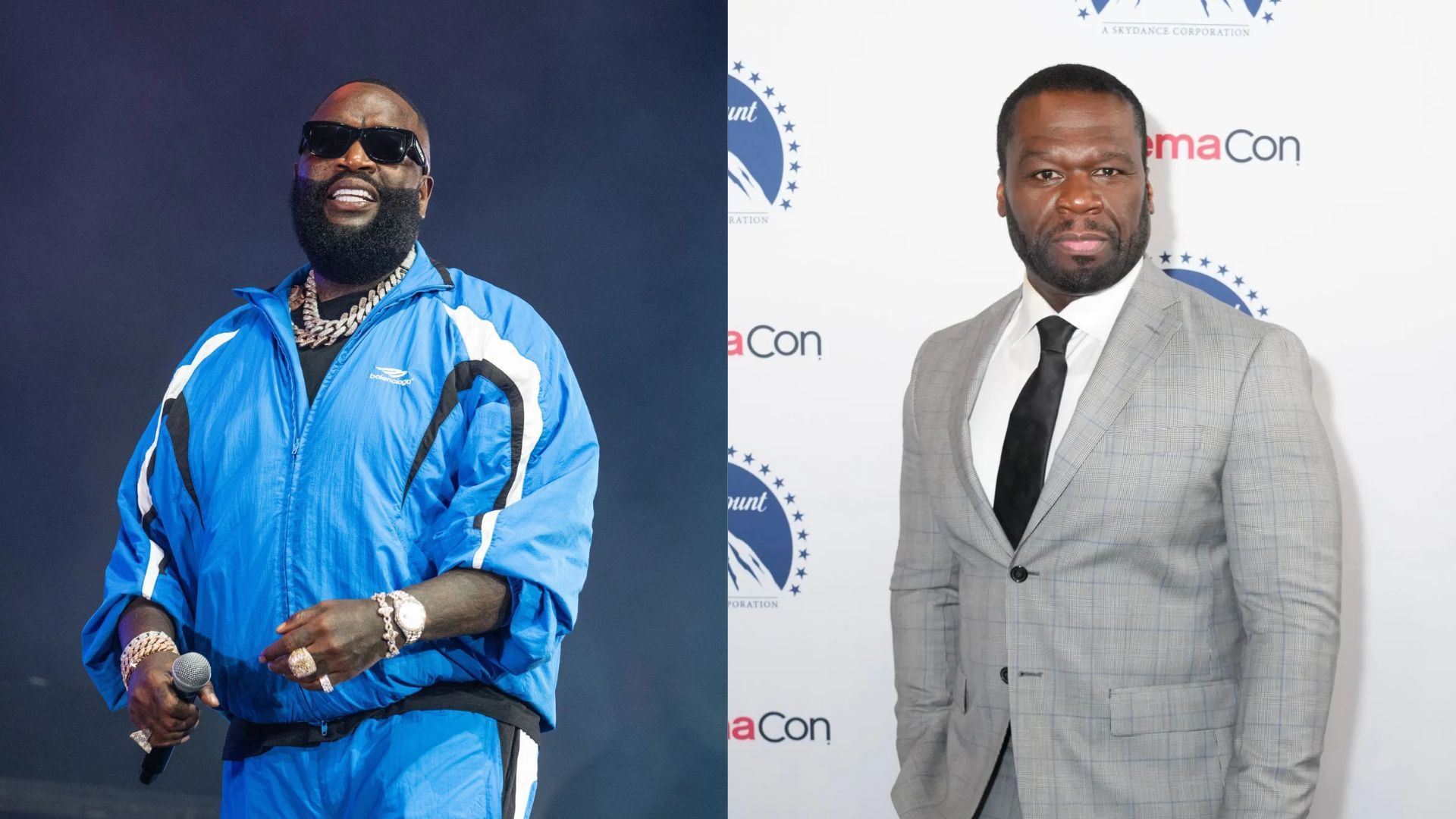
In 2017, 50 Cent’s net worth was estimated to be approximately $15 million. This figure followed the official discharge of his high-profile Chapter 11 bankruptcy case in February 2017, during which he paid out over $22 million to creditors to settle his outstanding legal and personal debts.
The year 2017 marked a pivotal turning point for Curtis "50 Cent" Jackson. After two years of intensive legal scrutiny and a complex restructuring of his assets, the rapper and entrepreneur emerged from bankruptcy court with a "clean slate." To understand how a man once valued at $155 million by Forbes in early 2015 reached a $15 million valuation just two years later, one must look at the mechanics of his reorganization and the specific legal battles that drained his liquid capital.
The Financial Landscape of the 2017 Bankruptcy Discharge
The story of 50 Cent’s 2017 net worth is inseparable from the conclusion of his bankruptcy proceedings. In July 2015, Jackson surprised the financial world by filing for Chapter 11 bankruptcy protection. This move was largely seen as a strategic response to a series of massive legal judgments that threatened his liquidity. By the time the case reached its conclusion in February 2017, Judge Ann Nevins approved the early discharge of his case.
Jackson was originally ordered to pay back $23 million over a period of five years. However, he managed to expedite this process, paying off approximately $22.1 million in total—$8.7 million of his own money and $13.65 million obtained from a legal malpractice settlement. This settlement came after Jackson sued his former lawyers for their handling of a licensing dispute with Sleek Audio. The successful recovery of those funds allowed him to satisfy his creditors much faster than the court had anticipated.
This "reset" meant that while his net worth was significantly lower than his 2008 peak, he was no longer burdened by the tens of millions in liabilities that had triggered the filing. The $15 million estimate provided by financial analysts at the time reflected his remaining assets, brand value, and the equity held in his various business entities after the primary debts were cleared.
Major Factors Impacting His 2017 Valuation
Several heavy-hitting financial blows contributed to the reduction of 50 Cent’s net worth leading into 2017. These were not the result of poor lifestyle spending but were almost entirely driven by courtroom losses.
The Lastonia Leviston Judgment
One of the primary catalysts for the bankruptcy was a $7 million judgment awarded to Lastonia Leviston. The lawsuit centered on a sex tape involving Leviston that Jackson had posted online with disparaging commentary. The jury's decision to award both compensatory and punitive damages forced Jackson to seek protection under Chapter 11 to prevent the immediate seizure of his assets.
The Sleek Audio Dispute
Perhaps more damaging was the long-standing legal battle with Sleek Audio. Jackson had entered a partnership to produce a line of headphones, but after the deal collapsed, Sleek Audio accused him of stealing their designs to launch his own brand, SMS Audio. An arbitrator eventually awarded Sleek Audio more than $16 million (which grew with interest and fees to roughly $18 million). This massive liability was the largest single item on his schedule of debts during the bankruptcy proceedings.
The SunTrust Bank Debt
Jackson also held significant commercial debt, including a multi-million dollar loan from SunTrust Bank. While this was a more standard form of business liability, it added to the total $36 million in debt he initially reported against assets he claimed were worth roughly $20 million at the time of the 2015 filing.
Business Assets and Revenue Streams in 2017
Despite the legal turmoil, 50 Cent remained a prolific businessman throughout 2017. His net worth remained in the double-digit millions because his core business engines never actually stopped running.
| Asset Category | Estimated Status in 2017 | Description |
|---|---|---|
| G-Unit Records | Active / Reduced Scale | Continued to generate royalties from his extensive back catalog. |
| Starz Development Deal | High Growth | The success of the TV show Power became a major revenue pillar. |
| Effen Vodka | Divestment / Equity | Rumors circulated of a $60 million sale; Jackson later clarified he remained an owner. |
| SMS Audio | Restructured | The headphone line continued but faced stiff competition from Beats by Dre. |
| Real Estate | Liquidating | His 50,000-square-foot Farmington mansion was a significant, if costly, asset. |
| Legal Settlement | $13.65 Million | A major cash infusion used to pay off bankruptcy creditors. |
The Power of Television: The Starz Partnership
By 2017, Jackson’s career had shifted heavily toward television production. Power, the hit drama on the Starz network, was in its prime. Jackson served as both an executive producer and a star (playing the character Kanan Stark). This partnership was instrumental in his financial recovery. Unlike his music career, which had seen diminishing returns in the streaming era, his production company, G-Unit Film & Television, was proving to be an exceptionally lucrative vehicle.
The Effen Vodka "Sale" Confusion
In mid-2017, reports surfaced that 50 Cent had sold his stake in Effen Vodka for $60 million. Jackson fueled these rumors with cryptic social media posts. However, subsequent reports and statements indicated that while there may have been a restructuring of his deal with the brand, he remained closely associated with it. Regardless of the exact payout, his involvement with the spirits industry provided a steady stream of promotional income and equity growth that bolstered his post-bankruptcy standing.
Comparing Wealth: 2015 Peak vs. 2017 Reality
To understand the scale of the change, one must look at the trajectory of his wealth. In the mid-2000s, Jackson was one of the wealthiest individuals in hip-hop, largely due to his minority stake in Vitaminwater. When Coca-Cola acquired Glacéau (Vitaminwater's parent company) in 2007 for $4.1 billion, 50 Cent reportedly walked away with a sum estimated between $60 million and $100 million after taxes.
By early 2015, Forbes estimated his total net worth at $155 million, placing him just behind Diddy and Dr. Dre. However, the bankruptcy filing revealed that his liquid assets were far lower than the public had assumed. The $15 million figure in 2017 represented a "real-world" valuation—the amount of wealth he actually controlled after all creditors were satisfied and his assets were appraised by court-appointed experts.
This drop from $155 million to $15 million was not a loss of "cash" so much as a correction of market valuation and the settlement of massive liabilities. It is important to note that net worth is a calculation of total assets minus total liabilities; when your liabilities include $36 million in legal judgments, your net worth naturally craters until those debts are cleared.
The Strategy Behind Chapter 11 Reorganization
Critics often misunderstood 50 Cent’s bankruptcy as "going broke." In reality, Chapter 11 is a reorganization strategy used by wealthy individuals and corporations to freeze litigation and restructure debt. By filing for bankruptcy, Jackson was able to halt the collection efforts of Lastonia Leviston and Sleek Audio, giving him the breathing room to negotiate lower settlements or pay them back over time through his ongoing earnings.
According to a report from the Wall Street Journal, the discharge of his case in 2017 proved the success of this strategy. He did not lose his houses or his companies; instead, he used his future earnings and legal settlements to pay off his past mistakes. This allowed him to maintain his brand identity as a "mogul" while satisfying the court's requirements.
FAQ
How much was 50 Cent worth at his peak?
At his peak, shortly after the Vitaminwater sale in 2007 and during his dominance in the music industry, his net worth was estimated to be as high as $150 million to $155 million. This was driven by a combination of music sales, touring, and savvy equity investments.
Why did 50 Cent file for bankruptcy if he had money?
50 Cent filed for Chapter 11 bankruptcy in 2015 as a legal strategy to protect his assets from being seized immediately following a $7 million sex-tape judgment and an $18 million dispute with Sleek Audio. Chapter 11 allowed him to reorganize his finances and pay creditors over time rather than all at once.
Did 50 Cent really make $60 million from Effen Vodka in 2017?
While 50 Cent posted on social media suggesting a massive $60 million payday for selling his stake in Effen Vodka, these reports were never fully verified by the brand's parent company, Beam Suntory. It is widely believed he restructured his deal or sold a portion of his interest, but he remained a brand ambassador and stakeholder.
How did 50 Cent pay off his bankruptcy so quickly?
He was able to pay off $22.1 million ahead of schedule primarily due to a $13.65 million settlement he won in a legal malpractice lawsuit against his former attorneys. He combined this settlement with his earnings from television production and other business ventures to satisfy his creditors by February 2017.
What was 50 Cent’s main source of income in 2017?
By 2017, his primary income had shifted from music to television and film. His deal with the Starz network for the show Power was highly lucrative. Additionally, he continued to earn from his G-Unit brand, SMS Audio, and various endorsement deals in the spirits and lifestyle sectors.
Rebuilding the Empire Post-2017
Emerging from bankruptcy in 2017 with a net worth of $15 million provided 50 Cent with the foundation to rebuild his massive fortune. For readers tracking celebrity finances or entrepreneurial recovery, the lesson of 50 Cent’s 2017 status is one of financial resilience. He effectively "bought" his freedom from legal liabilities for $22 million, leaving him with $15 million in clean assets and a high-functioning production company.
For those looking to understand the mechanics of high-net-worth recovery, the key action is to distinguish between liquid cash and asset valuation. In 2017, 50 Cent focused on liquidity—using settlements to clear debt—which allowed his long-term assets (like his TV production deals) to appreciate in value without the threat of seizure. By the end of 2017, he was no longer a "bankrupt" rapper, but a debt-free media executive poised for a massive financial comeback in the years that followed.