Financial advisors for high-net-worth (HNW) families provide sophisticated wealth orchestration that transcends basic investment advice. They focus on advanced tax mitigation, multi-generational estate planning, alternative investment access, proactive risk management, and the coordination of a family’s entire financial ecosystem to ensure long-term legacy preservation and growth.
1. Advanced Tax Strategy and Structural Optimization
For high-net-worth investors, taxes are often the single largest "expense" affecting the long-term growth of their wealth. In 2026, the complexity of the tax landscape—characterized by shifting capital gains rates and the evolution of previous tax reforms—demands more than simple annual filing. Specialist financial advisors employ proactive tax-loss harvesting and gain-offsetting strategies that occur year-round, rather than just in December.
Advisors at this level analyze the location of assets, not just the allocation. By placing tax-inefficient assets, such as high-yield bonds or actively managed funds, into tax-advantaged accounts and keeping tax-efficient growth stocks in taxable accounts, they maximize after-tax returns. Furthermore, they facilitate the use of sophisticated vehicles such as Charitable Remainder Trusts (CRTs) or Donor-Advised Funds (DAFs) to provide immediate tax deductions while supporting long-term philanthropic goals.
In 2026, advisors are particularly focused on the "tax-alpha" generated through direct indexing. This involves owning the individual underlying securities of an index to capture specific losses that can be used to offset gains elsewhere in a massive portfolio. For families with concentrated stock positions—often a result of corporate leadership or the sale of a business—advisors implement hedging strategies or exchange funds to diversify exposure without triggering immediate, massive capital gains liabilities.
2. Multi-Generational Estate Planning and Legacy Governance
Wealthy families often view their capital through a lens of decades and generations rather than fiscal quarters. Financial advisors acting for HNW clients serve as the "wealth architect," working alongside estate attorneys to design structures that minimize transfer taxes while ensuring the family’s values are preserved. This includes the management of Irrevocable Life Insurance Trusts (ILITs), Grantor Retained Annuity Trusts (GRATs), and Spousal Lifetime Access Trusts (SLATs).
As of 2026, the strategic use of these trusts is critical for freezing asset values for estate tax purposes. Advisors ensure that the funding of these vehicles is executed correctly and that the underlying investments are appropriate for the trust's specific time horizon and distribution rules. Beyond the legal documents, advisors facilitate "family governance" meetings. These sessions educate the next generation (Gen 2 and Gen 3) on financial literacy, the responsibilities of wealth, and the specific intentions of the family’s matriarch or patriarch.
Effective legacy planning also involves the curation of a "Family Mission Statement." Advisors help families define what their wealth is for—whether that is entrepreneurial seed funding for grandchildren, charitable impact, or maintaining a specific lifestyle across generations. By formalizing these goals, the advisor helps prevent the "shirtsleeves to shirtsleeves in three generations" phenomenon that frequently depletes family fortunes.
3. Access to Alternative Investments and Private Markets
High-net-worth investors typically have different liquidity needs and risk tolerances than the average retail investor. Consequently, their portfolios often look significantly different. Financial advisors provide the necessary due diligence and access to "Alternative Investments" that are generally unavailable to the public. In 2026, this includes private equity, venture capital, private credit, and institutional-grade real estate.
The role of the advisor here is twofold: access and vetting. Because the performance gap between the top-quartile and bottom-quartile managers in private equity is vast, the advisor’s ability to conduct deep-dive research into a fund’s track record, fee structure, and operational integrity is vital. They help HNW families build a "core and satellite" portfolio where the core consists of traditional liquid assets, and the satellite consists of illiquid alternatives aimed at capturing a "liquidity premium"—the higher expected return for locking capital away for 5 to 10 years.
Furthermore, advisors manage the complex reporting requirements associated with these investments, such as managing capital calls and interpreting K-1 tax forms. By integrating alternatives into a holistic plan, they reduce the portfolio’s overall correlation with the public stock market, providing a buffer during periods of high volatility or economic downturns.
4. Comprehensive Risk Management and Asset Protection
For the wealthy, risk management extends far beyond purchasing a standard life insurance policy. It involves protecting the family’s balance sheet from litigation, catastrophic loss, and operational failures. Financial advisors coordinate with specialized insurance brokers to implement high-limit umbrella liability policies, which are essential in an increasingly litigious environment.
Asset protection also involves the physical and legal structuring of holdings. Advisors may recommend the use of Limited Liability Companies (LLCs) or Family Limited Partnerships (FLPs) to hold certain assets, such as real estate or private businesses. This not only provides a layer of protection from personal creditors but can also facilitate easier transfer of ownership interests to heirs.
In 2026, advisors are also increasingly focused on cybersecurity and "identity risk" for HNW families. Wealthy individuals are primary targets for sophisticated phishing and social engineering attacks. A dedicated advisor ensures that the family’s financial accounts have institutional-grade security protocols, multi-factor authentication, and that "white glove" identity theft protection is in place. They also review "key person" insurance for family businesses to ensure that the sudden loss of a leader does not result in a liquidity crisis or the forced sale of a cherished enterprise.
5. Holistic "Financial Quarterbacking" and Concierge Services
Perhaps the most valuable but least discussed role of the HNW advisor is that of the "Financial Quarterback." High-net-worth families often employ multiple professionals: CPAs, estate attorneys, business consultants, and private bankers. Without a central coordinator, these professionals often work in silos, leading to conflicting advice or missed opportunities.
The financial advisor sits at the center of this circle, ensuring that the tax strategy aligns with the estate plan, and the investment portfolio supports the cash flow needs identified by the CPA. They provide a consolidated view of the family's entire net worth, including "non-financial" assets like fine art, private aircraft, or multi-jurisdictional real estate.
This holistic oversight includes:
- Cash Flow Management: Ensuring liquidity for large purchases or tax payments without disrupting long-term investment strategies.
- Philanthropic Coordination: Vetting non-profits and managing the technical aspects of high-impact giving.
- Business Succession Planning: Helping a founder transition out of their company, whether through an IPO, a sale to a third party, or a transition to family members.
- Lending Solutions: Arranging for securities-backed lines of credit (SBLOCs) or specialized mortgages that allow the family to borrow against their portfolio at institutional rates rather than selling assets and triggering taxes.
| Service Feature | Standard Financial Planning | HNW/Wealth Family Advisory |
|---|---|---|
| Primary Goal | Retirement & Education Savings | Legacy, Growth & Preservation |
| Investment Scope | Stocks, Bonds, ETFs | Alts, Private Equity, Direct Indexing |
| Tax Planning | Annual IRA/401(k) Review | Structural Mitigation & Tax-Alpha |
| Estate Focus | Basic Will & Beneficiaries | Multi-Tiered Trusts & Governance |
| Reporting | Monthly Brokerage Statements | Consolidated Net Worth Reporting |
| Coordination | Self-directed or Minimal | Centralized "Quarterback" Model |
| Minimum Assets | Typically $0 - $500k | Often $5M - $25M+ |
Frequently Asked Questions
What is the minimum net worth required to work with a high-net-worth advisor?
Most specialized wealth management firms and private banks require a minimum of $5 million to $10 million in investable assets. While some "mass-affluent" advisors work with clients starting at $1 million, the specialized structural, tax, and alternative investment services described above typically become cost-effective and necessary once a household moves into the $10 million+ range. For those with $30 million or more, "Ultra-High-Net-Worth" (UHNW) services or a dedicated Family Office structure are more common.
How do advisors for wealthy families typically charge for their services?
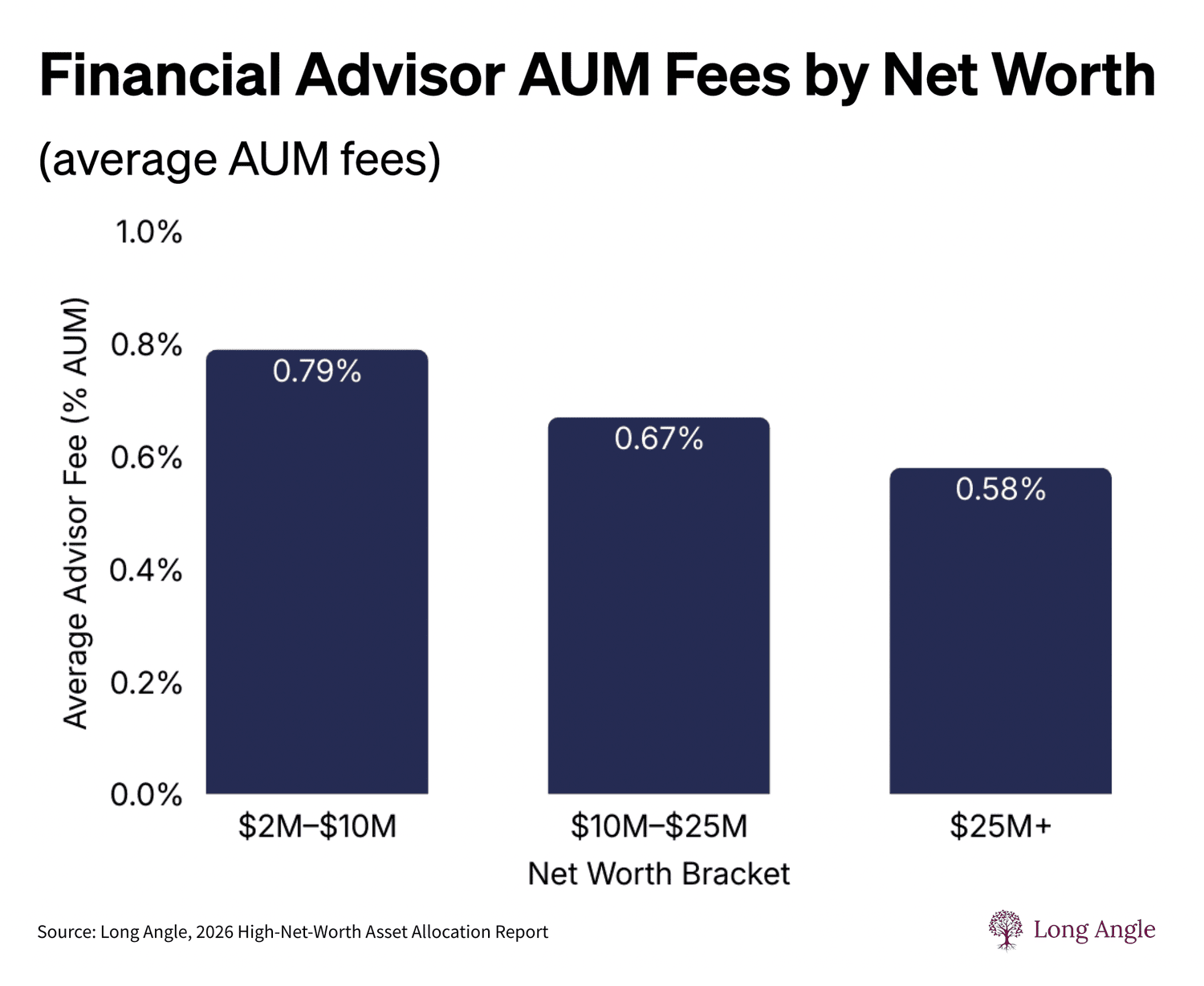
Advisors generally use one of three models: an Assets Under Management (AUM) fee, a flat annual retainer, or a performance-based fee for specific private investments. For HNW families, the AUM fee often follows a tiered "sliding scale" (e.g., 0.80% on the first $10M, 0.50% on the next $10M). Flat retainers are becoming more popular in 2026 for families who require extensive consulting on non-liquid assets like private businesses or real estate where an AUM fee is difficult to calculate.
Can an advisor help with a "liquidity event," such as selling a business?
Yes, this is one of the most critical times to engage a HNW advisor. Ideally, the advisor should be involved 18 to 24 months before the sale. They help structure the business to be more "tax-efficient" for a buyer, assist in the due diligence process, and plan for the sudden influx of cash to ensure it is shielded from unnecessary taxation and immediately put to work according to the family’s long-term goals.
What is the difference between a wealth manager and a Multi-Family Office (MFO)?
A wealth manager primarily focuses on the investment and financial planning aspects of a client's life. A Multi-Family Office (MFO) provides a broader, more "concierge" level of service that can include everything from paying household bills and managing domestic staff to overseeing the family’s private foundation and organizing global travel. MFOs typically serve families with $50 million or more in assets who require a dedicated team to manage the complexities of their lifestyle.
How do HNW advisors handle international or cross-border issues?
For families with citizenships, property, or business interests in multiple countries, HNW advisors work with international tax and legal specialists to navigate "treaty shopping," Foreign Bank Account Reporting (FBAR), and the complexities of the Global Intangible Low-Taxed Income (GILTI) rules. They ensure that the family remains compliant with all jurisdictions while avoiding double taxation of their global assets.
Why is family governance emphasized so much for wealthy families?
Wealth often dissipates over generations because of lack of communication or conflicting values among heirs. Advisors facilitate governance to create a framework for decision-making. This includes determining how "joint" assets like a family vacation home are managed and setting the criteria for when and how heirs can access trust funds for entrepreneurial or educational endeavors.
Selecting the Right Partner for Your Family Wealth
The transition from traditional investment management to high-net-worth wealth orchestration is a significant step. When evaluating a potential advisor in 2026, families should look beyond investment performance and prioritize "conflict-free" advice. This often means seeking out a Registered Investment Advisor (RIA) who operates under a strict fiduciary standard, meaning they are legally obligated to act in the client's best interest at all times.
Your next action should be to conduct a "gap analysis" of your current financial situation. Determine if your existing tax, legal, and investment professionals are communicating with one another. If you find yourself acting as the intermediary between your CPA and your broker, or if you have not reviewed your trust structures in the last three years, it is likely time to interview a wealth advisor who specializes in the unique needs of high-net-worth families. Look for credentials such as the Certified Private Wealth Advisor (CPWA®) or the Chartered Family Office Specialist (CFOS) to ensure the team has the technical depth required for complex estates.