For a truly cinematic outdoor experience in 2026, the top 4K projector picks include the Samsung The Premiere LSP9T for ultra-short-throw brilliance, the Epson Pro Cinema LS12000 for professional-grade brightness, and the XGIMI Horizon Ultra for versatile, high-fidelity color. Achieving stunning nighttime viewing requires balancing a minimum of 2,200 ANSI lumens with high-dynamic-range (HDR) support to ensure deep blacks and vibrant highlights against the backdrop of the night sky.
The Evolution of 4K Outdoor Projection Requirements
By 2026, the transition from 1080p to 4K in the outdoor theater space has become the standard for enthusiasts. When projecting onto screens that often exceed 120 inches, the pixel density of 4K (3840 x 2160) is essential to prevent "screen door effect," where the individual pixels become visible to the audience. However, resolution alone does not guarantee a stunning image. The outdoor environment introduces variables that indoor home theaters rarely face, such as shifting ambient light, humidity, and the lack of reflective wall surfaces.
To maximize a 4K image outdoors, the projector must possess a high ANSI lumen rating. While 1,500 lumens might suffice in a pitch-black basement, outdoor environments—even at night—are rarely perfectly dark. Moonlight, streetlamps, and security lighting can wash out low-brightness units. In 2026, the industry benchmark for "stunning" outdoor 4K viewing starts at 2,200 ANSI lumens, with premium models pushing toward 3,000. Furthermore, the light source matters; laser-phosphor engines have largely replaced traditional lamps in high-end picks due to their instant-on capability, 20,000-hour lifespans, and superior color maintenance over time.
Critical Technical Specifications for Nighttime Clarity
Understanding the technical nuances of 4K projectors is vital before investing in a backyard setup. Not all "4K" is created equal, and the outdoor setting amplifies the differences between various projection technologies.
Resolution: Native vs. Pixel Shifting
Most consumer 4K projectors use Pixel Shifting technology (such as TI’s DLP XPR or Epson’s 4K PRO-UHD). This technique oscillates the imaging chip at incredibly high speeds to display 8.3 million pixels on the screen. While "Native 4K" projectors exist, they are significantly more expensive and often physically larger. For outdoor use, high-quality pixel-shifting projectors are preferred because they offer a balanced price-to-performance ratio without sacrificing the perceived sharpness necessary for 150-inch inflatable screens.
High Dynamic Range (HDR10 and Dolby Vision)
HDR is the secret to "stunning" visuals. It allows for a wider range between the darkest shadows and the brightest highlights. In an outdoor setting, HDR helps the image "pop" against the dark surroundings. Look for projectors that support HDR10+ or Dolby Vision. Dolby Vision, in particular, uses dynamic metadata to optimize the image frame-by-frame, which is incredibly helpful when dealing with the unpredictable contrast levels of an open-air theater.
Color Space and Gamut
Nighttime viewing allows for better color saturation than daytime viewing. Top-tier projectors in 2026 often cover 90% or more of the DCI-P3 color gamut, which is the standard used in commercial cinemas. Using a projector with a wide color gamut ensures that the lush greens of a forest or the deep oranges of an explosion look lifelike rather than muddy.
Top 4K Projector Picks for 2026 Nighttime Cinema
The following models represent the pinnacle of outdoor-capable 4K projection as of 2026, categorized by their specific strengths in a backyard environment.
1. Samsung The Premiere LSP9T (The High-End UST Choice)
The LSP9T remains a powerhouse for those who want a "stealth" setup. As an Ultra-Short Throw (UST) projector, it sits just inches away from the screen. This is ideal for outdoor patios where you don't want guests walking in front of the light beam. Its triple-laser light source delivers 2,800 ANSI lumens and is one of the few projectors capable of reaching the full BT.2020 color space.
2. Epson Pro Cinema LS12000 (The Long-Throw King)
For massive backyard "drive-in" experiences, the LS12000 is unmatched. It utilizes a 3LCD laser engine, which eliminates the "rainbow effect" some viewers see with DLP projectors. With 2,700 lumens of both color and white brightness, it maintains incredible vibrancy even on 200-inch screens. Its motorized lens shift makes it easy to align the image on temporary outdoor screens.
3. XGIMI Horizon Ultra (The Smart All-Rounder)
This model popularized the use of "Dual Light" technology—combining Laser and LED light sources to maximize color accuracy and eye comfort. It supports Dolby Vision and features advanced Intelligent Screen Adaptation (ISA) 3.0, which automatically handles focus, keystone, and even avoids obstacles like wall ornaments or trees if you are projecting directly onto a wall.
4. BenQ TK700STi (The Gaming and Sports Specialist)
If your nighttime viewing involves live sports or 4K gaming, the TK700STi is the go-to. It offers a low input lag of 16ms at 4K/60Hz. Its 3,000 ANSI lumen brightness is among the highest in its class, ensuring that the image remains crisp even if you have the porch lights on or a fire pit crackling nearby.
4K Outdoor Projector Comparison Table
| Model | Light Source | Brightness (ANSI) | Best For | Key Connectivity |
|---|---|---|---|---|
| Samsung LSP9T | Triple Laser | 2,800 | Ultra-Short Throw / Patios | HDMI 2.1 (eARC), Wi-Fi 6 |
| Epson LS12000 | Laser (3LCD) | 2,700 | Large Screens (150"+) | Dual HDMI 2.1, Ethernet |
| XGIMI Horizon Ultra | Laser/LED Hybrid | 2,300 | Ease of Setup / Portability | Android TV 11, Optical Audio |
| BenQ TK700STi | Lamp (Long Life) | 3,000 | Gaming & Live Sports | HDMI 2.0b, RS232 |
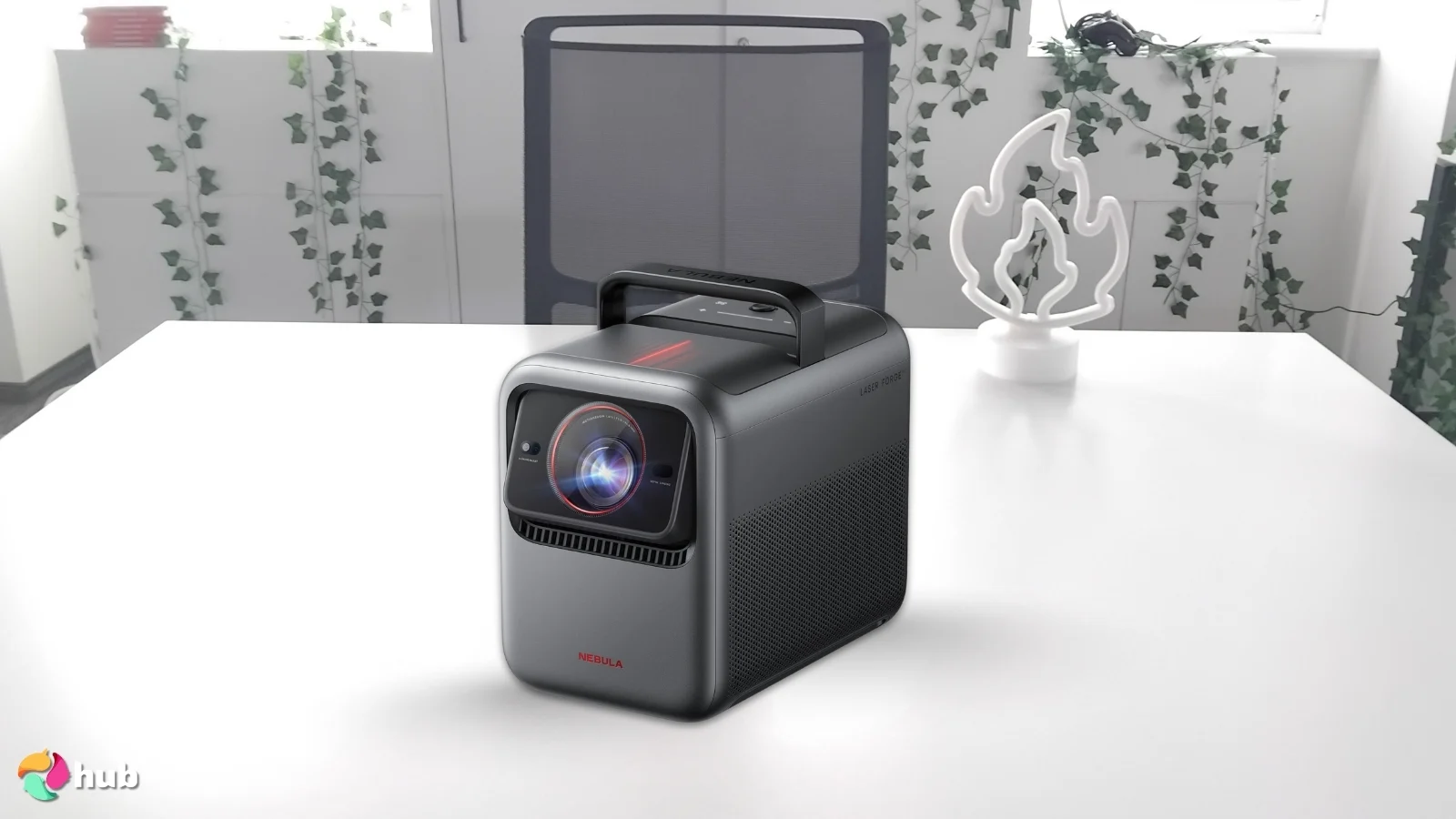
| Anker Nebula Cosmos 4K | Laser | 2,200 | All-in-One Portability | Built-in 30W Speakers |
Essential Accessories for an Outdoor 4K Experience
A high-end projector is only half the battle. To ensure the 4K resolution isn't wasted, the environment and supporting hardware must be optimized.
- Ambient Light Rejecting (ALR) Screens: While traditional white screens work, an ALR screen is designed to reflect light coming from the projector while absorbing light from other angles (like the moon or house lights). This significantly boosts contrast.
- External Audio Solutions: Most projectors have weak internal speakers. For a "stunning" experience, use a dedicated soundbar or a pair of powered PA speakers. In 2026, many projectors support Bluetooth 5.2 or Wi-Fi 6 for low-latency wireless audio, though a wired HDMI eARC connection remains the most reliable for Dolby Atmos.
- Weatherproof Enclosures: Most 4K projectors are not IP-rated for permanent outdoor installation. Unless you plan to bring the unit inside after every movie, a climate-controlled, ventilated projector hush box is required to protect the optics from dew, dust, and insects.
- Stable Power Supply: 4K laser projectors can draw significant power. Ensure you are using a high-quality, grounded extension cord (14-gauge or thicker) to prevent voltage drops that can cause the projector to flicker or shut down.
Overcoming Common Outdoor Viewing Challenges
Even with top-tier hardware, the outdoors presents unique obstacles that can degrade a 4K image if not addressed.
Managing Thermal Shut-Downs
High-brightness 4K projectors generate significant heat. On warm summer nights, a projector's internal fans may struggle. Ensure the unit has at least 12 inches of clearance on all sides for airflow. Avoid placing the projector on grass, which can block intake vents; use a hard, flat surface like a folding table or a dedicated projector stand.
Signal Integrity over Long Distances
If your media player (like an Apple TV 4K or Blu-ray player) is located inside the house, you may need a long cable run. Standard HDMI cables often fail to carry a full 4K HDR signal over 15 feet. For outdoor setups, use Active Optical HDMI (AOC) cables, which use fiber optics to maintain signal integrity over distances up to 100 feet without lag or sparkles.
The "Bug" Factor
Projector beams are massive magnets for nocturnal insects. To prevent moths and beetles from flying in front of the lens or entering the chassis, place a small yellow "bug light" or a pheromone trap several yards away from the projector. This draws the insects away from your expensive glass optics.
Atmospheric Interference
Humidity and "air shimmer" can occasionally soften a 4K image. On very humid nights, moisture can condense on the lens. Keep a clean, microfiber lens cloth handy and ensure the projector has reached outdoor ambient temperature before you start the calibration process to prevent fogging inside the lens assembly.
FAQ
Can I leave my 4K projector outside overnight?
No, most high-end 4K projectors are precision electronic instruments that are sensitive to moisture and temperature fluctuations. Unless the unit is specifically rated for permanent outdoor use (which is rare for 4K models) or housed in a professional-grade, climate-controlled enclosure, you should bring it indoors after every use to prevent internal corrosion and lens fungus.
Is 3,000 lumens enough for viewing before sunset?
Generally, no. Even 3,000 ANSI lumens will struggle against direct or even indirect late-afternoon sunlight. For a "stunning" 4K image, you should wait until "Civil Twilight" (about 20–30 minutes after sunset) when the sky has darkened sufficiently for the projector’s contrast to take effect.
Do I need a special screen for 4K outdoors?
While a flat white bedsheet can work in a pinch, it will significantly degrade a 4K signal. Sheets are porous, meaning much of the light (and detail) passes through the fabric rather than reflecting back to your eyes. A dedicated PVC or vinyl projector screen—ideally with a gain of 1.1 to 1.3—is necessary to preserve the sharpness and color accuracy of a 4K image.
Why is my 4K projector blurry in the corners?
This is often caused by "keystone distortion" or improper leveling. When you use digital keystone correction to square the image, you are effectively throwing away pixels, which reduces 4K clarity. For the best nighttime viewing, physically align the projector so it is perfectly level and centered with the screen, minimizing the need for digital adjustments.
Is a laser projector better than a lamp projector for outdoor use?
Yes, laser projectors are generally superior for outdoor settings. They offer more consistent brightness, wider color gamuts, and they don't require expensive bulb replacements. Most importantly, lasers are more resilient to the frequent "power-on/power-off" cycles that often happen during outdoor events.
Expert Recommendation for Your Backyard Theater
If you are building an outdoor theater in 2026, the best balance of performance and reliability is found in the Epson Pro Cinema LS12000. Its 3LCD technology ensures that the vibrant colors of 4K HDR content are not lost in the open air, and its high brightness handles light pollution better than most competitors. For those with limited space, the Samsung The Premiere LSP9T offers a transformative experience that turns any flat exterior wall into a world-class cinema with minimal setup. Regardless of the model you choose, prioritize a high-quality ALR screen and a dedicated sound system to ensure the 4K resolution provides the "stunning" impact it is capable of delivering.